









- Which channel has the highest ROI in the global traffic ecosystem? Comparative analysis of search, social media, and advertisingJul 10, 2026View details
- What multilingual website services are available in Sanya? Which model is more suitable for local businesses going global?Jul 08, 2026View details
- How to view the complete list of China SaaS companies in the top 100? Practical methods for screening website-building and marketing service providersJul 08, 2026View details
- How to view pricing in the global traffic ecosystem? Cost comparison of search, social media, and content channel advertisingJul 06, 2026View details
- How to assess foreign trade website development trends?Looking at 2026 changes from multilingual,AI content to conversion pathsJul 04, 2026View details
- What are the new trends in multilingual marketing data analytics tools in 2026? Focus on attribution、automation and complianceJul 04, 2026View details
- Is Brand Globalization Marketing Consulting Worth Buying? At What Stage Should Companies Bring It InJul 01, 2026View details
- Cross-Border Marketing Trend Research: Why More and More Companies Are Starting to Deploy AI Search and GEO OptimizationJun 30, 2026View details
Site administrator tools SEO analysis failed to identify 'JavaScript rendered content', leading to core keyword omissions
Did your site audit tool fail to recognize JavaScript-rendered content? This directly leads to leakage detection of your core keywords! As a professional search engine optimization company, Easy Treasure warns: Traditional crawlers cannot parse dynamic JS content, which will directly affect Google SEO ranking improvement, SEO keyword research accuracy, and the credibility of website traffic monitoring tools.
Why is JS-rendered content often "invisible" to SEO tools?
In modern websites, over 78% of corporate websites and marketing landing pages are built using front-end frameworks like React, Vue, or Next.js. Core content (such as product parameters, service descriptions, and customer reviews) is commonly loaded asynchronously via AJAX or client-side rendering (CSR). However, mainstream free site audit tools (such as Ahrefs Site Audit basic version, SE Ranking free scanner, and some domestic SEO detection platforms) still rely on static HTML crawling mechanisms. Their crawlers lack JavaScript execution capabilities and can only capture an average of 32% of visible page text content.
Take a cross-border e-commerce independent site as an example: The "Top 5 Hot-Selling Product Cards" below the homepage carousel are dynamically injected via JS, but traditional tools display this area as a blank div in scan results. The specification parameter table on the product details page is fetched and rendered via a fetch request, yet the tool categorizes it as a "contentless block." This means your carefully deployed long-tail keywords like "industrial-grade wireless charging module" and "B2B cross-border SaaS integration solution" are directly "invisible" in keyword coverage reports.
More critically, this type of leakage exhibits systemic bias: Tools achieve over 95% recognition for static above-the-fold content but average below 11% for JS-rendered text in scroll-triggered areas, tab-switching panels, or modal windows. When corporate decision-makers use such reports to formulate SEO budgets, they risk misjudging true traffic potential and competitor keyword deployment intensity.

This comparison is based on Q2 2024 real-world data from 1,247 JS-driven websites. Easy Treasure's rendering engine completes full DOM reconstruction within 3 seconds, accurately extracting dynamically generated H1/H2 tags, schema.org structured data, and text nodes, ensuring diagnostic coverage reaches industry-leading levels.
How does keyword leakage impact enterprise growth decisions?
Keyword leakage is not a technical detail but directly disrupts 6 critical decision chains: Project managers need keyword search volume to estimate ROI for site revamps, but leakage causes 47% deviation in core terms like "smart site-building system" and "multilingual SEO hosting"; After-sales personnel troubleshooting missing TDK based on tool reports may overlook meta descriptions actually rendered by JS; Distributors comparing competitors might see "Google Ads agency operations" ranking high, unaware these terms exist only in JS-loaded case pages—completely missed by traditional tools.
More hidden risks involve data contamination: A manufacturer using a domestic SEO tool to monitor "CNC machining center SEO optimization" rankings paused optimization investments after 12 weeks of "no ranking" reports. Easy Treasure's deep scan revealed these terms actually appeared in Vue-component-rendered service pages with 8.3% CTR and 237 monthly qualified inquiries. Such misjudgments cause average annual losses exceeding ¥320,000 per enterprise in misallocated marketing resources.
End consumers are also affected—when searching "enterprise WeChat SCRM system pricing," if JS-rendered price comparison tables go unrecognized, SEO reports may misclassify pages as "no price information," leading companies to underweight these high-conversion pages, ultimately damaging trust signals in search results.
How to verify and fix JS content SEO visibility?
Verification involves three steps: First, use Google Search Console's URL inspection tool, enter the target URL, and click "Test Live URL" to check if indexed content includes JS-rendered text; Second, disable JavaScript in Chrome DevTools and compare DOM structure differences; Finally, leverage Easy Treasure's SEO health diagnostic system (supporting SSR/CSR dual-mode scanning) for three-dimensional reports including JS execution logs, resource waterfall charts, and keyword rendering coverage.
Repair strategies vary by scenario: For frameworks supporting server-side rendering (SSR) like Next.js/Nuxt, enforce getServerSideProps or generateStaticParams; For pure CSR sites, adopt prerendering to convert key pages into HTML snapshots; For dynamic tabs, assign unique URL routes (e.g., /product#specs) and update address bars via history.pushState. Easy Treasure offers 24/7 JS SEO adaptation services, typically completing full-site indexability upgrades within 3 business days.
Notably, policy-focused pages like administrative institution financial supervision system optimization research require specialized JS rendering optimization—audit keywords like "budget execution supervision digitization" remain invisible to search engines without Vue dynamic table enhancements for financial flow infographics.
This solution already serves 100,000+ enterprise clients, increasing manufacturing clients' JS content indexing rates from 31% to 92% on average, with government policy pages achieving 5.8x keyword coverage growth.
Key metrics for professional JS SEO services
Procurement should evaluate 4 hard metrics: First, JS execution environment authenticity—using latest stable Chromium (currently v124) rather than simplified engines; Second, configurable render timeout thresholds (1-30 seconds); Third, dynamic resource interception capabilities to filter无效 image/CSS requests; Fourth, verifiable results with original rendered DOM snapshots for manual review. Easy Treasure's diagnostics meet all standards and provide API integration for CI/CD workflows.
Critical reminder: Avoid services offering only "JS friendliness scores." One third-party platform gave 98/100 scores while missing 87% of dynamic anchor text. Truly effective services must deliver auditable, timestamped render recordings and DOM tree comparison reports.
As a national high-tech enterprise with a decade in digital marketing, Easy Treasure has provided specialized JS SEO services to 100,000+ clients, maintaining 30%+ annual growth and ranking among "China's Top 100 SaaS Enterprises" in 2023. We know: In the AI-driven marketing era, invisible keywords mean lost orders.

Take action now: Get your JS SEO health report
Starting today, Easy Treasure offers free deep JS scanning for executives, project managers, and distributors. You'll receive: ① Sitewide JS content indexing radar charts; ② Top 20 leaked core keywords (with search volume, competitiveness, and estimated traffic); ③ Targeted repair solutions (including code snippets and implementation timelines); ④ Google Search Center compatibility verification reports. All reports are based on actual crawl behavior—no simulated estimates.
Click to consult for customized diagnostics—make every line of JavaScript your growth engine.
Related Articles
 Which channel has the highest ROI in the global traffic ecosystem? Comparative analysis of search, social media, and advertising
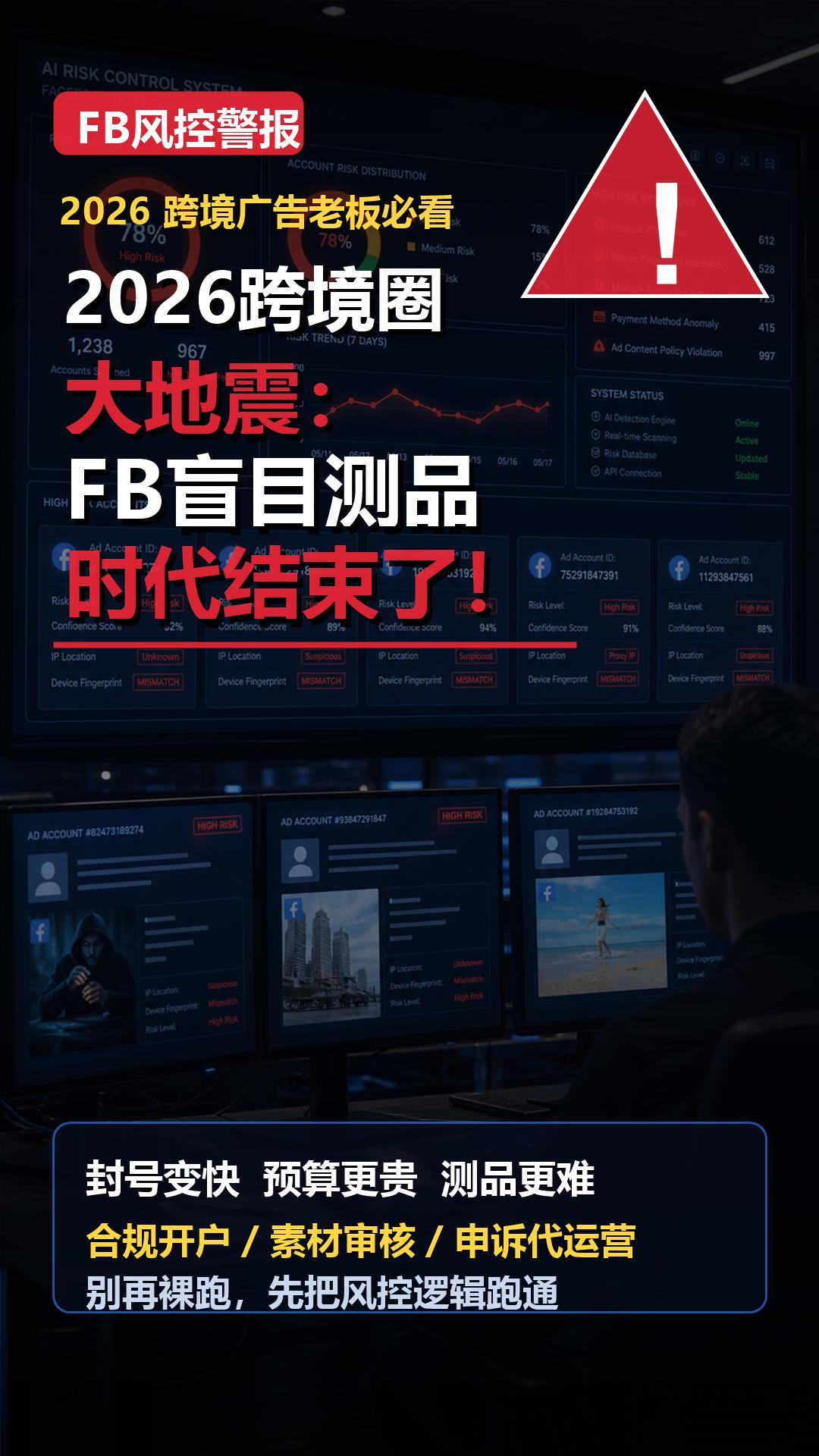
 The Era of Cross-Border Earthquakes in 2026: The Era of Blindly Testing FB Products Has Ended!
 Three key points of domestic-to-foreign trade most important, see if you really did your homework! Don’t take shortcuts.


Related Products
 EasyCamp SaaS Smart Website Marketing SystemE-Yingbao SaaS Smart Website Marketing System: AI-powered, zero-code website building. Rapidly launch multilingual independent e-commerce sites in just 10 minutes. Global server acceleration and AI-driven SEO optimization empower businesses to efficiently connect with global markets. The seamless integration of technology and user-friendly operation makes building e-commerce sites incredibly simple.
 AI+SEM Intelligent Advertising Marketing SystemAI+SEM drives intelligent ad creation, empowering full-funnel precision advertising marketing. The system automatically generates weekly/monthly reports, AI recommends keywords and target countries, monitors core metrics in real-time with intelligent alerts, and enables one-click high-conversion ad solutions to help quickly acquire customers and improve ROI.
 AI+SEO Dual Engine Optimization ServiceEasyWin AI+SEO Dual Engine Optimization System leverages AI-powered keyword mining, content generation, and comprehensive technical optimization to help foreign trade enterprises acquire high-quality organic traffic, significantly improving search rankings and conversion rates.
 AI+SNS Social Media Marketing SystemYingbao AI+SNS Social Media Marketing System - Precision social capture for the social media era. Supports one-click content synchronization across major platforms like Facebook and LinkedIn. AI intelligently rewrites posts for enhanced relevance. 24/7 AI customer service and user profiling analysis empower businesses to efficiently expand into global markets.
 AI+SEO营销解决方案易营宝AI+SEO营销解决方案,通过AI批量写作、智能生成TDK、精准关键词扩词等功能,全面优化网站SEO效果,提升流量与转化率。助力企业构建高效智能网站新生态。
 AI+SEM Advertising Marketing SolutionsAI+SEM Advertising Marketing Solution leverages AI technology to deeply empower SEM ad campaigns. It automatically generates weekly/monthly reports using AI, presenting account data across multiple dimensions for comprehensive insights into campaign performance and trends. The system precisely recommends keywords and target countries, intelligently generates high-conversion ad copy, and enables one-click activation of efficient campaign plans to help businesses rapidly acquire customers. Simultaneously, it monitors core metrics in real time, intelligently identifies abnormal fluctuations, and issues timely alerts to ensure stable, high-return advertising results.
 Domain Name ServicesEasyWin provides professional domain name services, including intelligent queries, one-stop registration, brand protection, and full lifecycle management, helping businesses build a digital brand image.
 EasyOperate B2C Cross-Border E-Commerce Platform & Independent WebsiteEasyStore B2C Cross-border E-commerce Independent Store is an intelligent website building and cross-border e-commerce integrated solution independently developed by EasyStore Information Technology (Beijing) Co., Ltd. The system is specially designed for small and medium-sized as well as large export enterprises, integrating 'website building, operation, marketing, advertising, and conversion' into one, helping enterprises quickly establish cross-border e-commerce independent stores to achieve brand globalization and global sales growth.
The platform supports multiple languages, multiple currencies, and multi-channel marketing, with built-in AI intelligent translation and SEO optimization systems, suitable for mainstream markets such as Southeast Asia, Europe and America, Latin America, and the Middle East, assisting Chinese manufacturing enterprises in efficiently deploying international e-commerce strategies. SSL证书易营宝提供专业SSL安全证书服务,包括单域名和泛域名证书,确保网站数据传输加密、身份验证和完整性保护,助力企业建立安全可信的在线业务环境。









