









- Which channel has the highest ROI in the global traffic ecosystem? Comparative analysis of search, social media, and advertisingJul 10, 2026View details
- What multilingual website services are available in Sanya? Which model is more suitable for local businesses going global?Jul 08, 2026View details
- How to view the complete list of China SaaS companies in the top 100? Practical methods for screening website-building and marketing service providersJul 08, 2026View details
- How to view pricing in the global traffic ecosystem? Cost comparison of search, social media, and content channel advertisingJul 06, 2026View details
- How to assess foreign trade website development trends?Looking at 2026 changes from multilingual,AI content to conversion pathsJul 04, 2026View details
- What are the new trends in multilingual marketing data analytics tools in 2026? Focus on attribution、automation and complianceJul 04, 2026View details
- Is Brand Globalization Marketing Consulting Worth Buying? At What Stage Should Companies Bring It InJul 01, 2026View details
- Cross-Border Marketing Trend Research: Why More and More Companies Are Starting to Deploy AI Search and GEO OptimizationJun 30, 2026View details
Why should conversion goals be defined first in the steps of building a marketing website
In the steps of building a marketing website, defining conversion goals first is not a formality, but the starting point that determines project outcomes. For project managers and engineering leads, the clearer the goals are, the more direction subsequent planning, page design, traffic acquisition, and data optimization will have.
Why the steps of building a marketing website must start with defining conversion goals

When many companies build a website, they first discuss page style, the number of sections, and the feature list, but fail to answer one core question first: what action does the website ultimately want users to complete. For project managers, this directly affects timeline, budget, collaboration efficiency, and acceptance criteria.
In an integrated website + marketing service scenario, the steps of building a marketing website are not simply about launching a site, but about building a conversion chain from traffic entry, need identification, and lead capture to sales follow-up. If the goals are unclear, the website can easily become a display page that is “good-looking but not easy to use”.
Engineering project leaders in particular often face characteristics such as long decision chains, high customer unit prices, complex technical materials, and large amounts of bidding information. If the website is not designed around specific conversion actions such as inquiries, phone consultations, proposal downloads, and demo bookings, then no matter how many visitors there are, it will still be difficult to generate effective business opportunities.
- Conversion goals determine page structure, whether to prioritize cases, qualifications, and specifications, or to highlight quotation, consultation, and booking entry points.
- Conversion goals determine advertising strategy, whether to pursue brand exposure traffic, or focus on acquiring customers through high-intent keywords and industry targeting.
- Conversion goals determine data criteria, so that later it is possible to judge whether bounce rate, form submission rate, and lead cost are reasonable.
Setting goals first is essentially setting project acceptance criteria first
What project managers fear most is “it’s finished, but it’s unclear whether it was done well or not”. Without conversion goals, acceptance usually only comes down to whether the pages are online, whether the content is complete, and whether the functions work, making it impossible to measure business value. Once the steps of building a marketing website put conversion goals first, acceptance can shift from “production completed” to “business metric support completed”.
How project managers should break down the three most common types of goals
The steps of building a marketing website should not be one-size-fits-all for different companies. For engineering project leaders, website goals often focus on three levels: customer acquisition, screening, and decision facilitation. The table below is suitable for internal alignment during project initiation.
From a project implementation perspective, many teams mix the three goals together, causing the homepage to take on too many tasks. A more reasonable approach is to clarify the primary goal and secondary goals first, and then assign them to different pages and different traffic entry points, so the website structure will not become unbalanced.
How to further quantify goals
- Define the core conversion action, for example, “obtain 30 valid inquiries per month” instead of “improve website performance”.
- Set supporting metrics, such as page dwell time, download completion rate, and consultation entry click-through rate.
- Clarify lead qualification criteria, such as whether the visitor leaves a company name, project requirements, budget range, and contact information.
- Synchronize sales follow-up rules to avoid having leads on the website while the business side has no closed-loop process.
How should the steps of building a marketing website be advanced to avoid rework more easily
For project managers, the most practical question is not “whether to build a website”, but “how to implement it on time without repeated revisions”. In the steps of building a marketing website, it is recommended to adopt an approach of goals first, content synchronized, and data embedded in advance.
When some organizations upgrade their management systems, they also refer to systematic research materials to sort out process logic, such as Comprehensive Budget Management Research for Administrative Institutions. The core value of such content lies in clarifying goals, responsibilities, and execution paths first. Website building is the same: define the conversion path clearly first, so that subsequent design and advertising will not deviate from the business.
The following table is suitable for cross-department communication, especially for projects involving joint participation by marketing, technical, sales, and management teams.
The focus of this process is not having many steps, but ensuring that every step is linked to the goal. As long as the goals are aligned, design, development, content, and advertising can collaborate under the same logic, and the rework rate will be significantly reduced.
Why many corporate websites have traffic but no inquiries
Traffic does not equal business opportunities, and this is the judgment most easily overlooked in the steps of building a marketing website. Project leaders often see traffic growth and assume the project is effective, but if the traffic sources are inaccurate, page handoff is unclear, and consultation entry points are too weak, actual conversion will still be very low.
Common problems are mainly concentrated in four areas
- The keyword layout is too display-oriented, so after users find the website, they do not see a clear solution and cannot move into the consultation stage.
- Page content remains at the company introduction level, lacking explanations of project process, service boundaries, pricing logic, and application scenarios.
- The form is too long or the entry position is hidden, and the mobile consultation experience is poor, causing high-intent users to drop off.
- There is no tracking setup or attribution mechanism, so the team cannot judge which types of pages and which channels actually bring effective leads.
Therefore, in the steps of building a marketing website, “why users convert” must be written into the page, rather than only writing “who the company is” into the page. For engineering and project-based customers, decisions rely more on credible information, professional processes, and a sense of controllable risk.
When choosing a service provider, what do project managers focus on
There are many website building suppliers, but not many can truly connect website creation, content, customer acquisition, and data optimization. When choosing a partner, project managers should prioritize whether the provider can offer integrated website + marketing service capabilities, rather than only looking at page pricing.
Since its establishment in 2013, E-Marketing Information Technology (Beijing) Co., Ltd. has built full-chain service capabilities around intelligent website building, SEO optimization, social media marketing, and advertising placement. For companies that need to balance delivery efficiency and growth results, this integrated model is more suitable for reducing the coordination costs of multiple suppliers.
More importantly, relying on artificial intelligence and big data capabilities, project solutions no longer remain only at the page production level, but can extend to traffic acquisition, user identification, and subsequent optimization decisions. For project managers facing tight schedules, budget sensitivity, and high reporting requirements, this kind of capability has more practical value.
FAQ: Which issues are most likely to get stuck in the steps of building a marketing website
1. Should the conversion goal be one, or multiple?
It is recommended to set one primary goal, with one to two secondary goals. For example, if the primary goal is to obtain inquiries, the secondary goals can be document downloads and scheduled communication. If primary and secondary priorities are not distinguished, the page will try to do branding, sales, and customer service at the same time, and in the end none of them will stand out.
2. When the budget is limited, which content should be prioritized first in the steps of building a marketing website?
Prioritize high-intent pages first, including the homepage, core service pages, industry scenario pages, case pages, and consultation entry points, and then supplement with FAQ and trust endorsement modules. A limited budget does not mean the fewer functions the better, but rather doing the parts that most affect conversion well first.
3. What factors usually affect the delivery timeline?
It mainly depends on whether the goals are clear, whether the materials are complete, whether the approval chain is complex, and whether multilingual or multi-channel coordination is needed. If early-stage goal definition is sufficient, much rework can be avoided in advance, and the overall timeline is usually more controllable.
4. How can you determine whether a lead is valid?
You cannot look only at the number of submissions; you must also look at lead completeness, industry match, budget clarity, and subsequent follow-up rate. In the steps of building a marketing website, it is best to align valid lead standards with the sales team in advance, otherwise the optimization direction will be distorted.
Why choose us: from website building to conversion, reducing project uncertainty
If you are advancing the steps of building a marketing website, what you truly need is not a single-point vendor, but a service team that can connect goal definition, page planning, content layout, traffic handoff, and data optimization into a closed loop. E-Marketing Information Technology (Beijing) Co., Ltd. has long focused on global digital marketing services and can provide implementation solutions that are more closely aligned with results by combining enterprise business goals.
You can focus your consultation on these topics: how to set project conversion goals, how sections and pages should match customer acquisition paths, how to arrange the delivery timeline, which modules to prioritize within the budget, whether customized industry scenario pages are needed, and how to carry out data tracking and continuous optimization later.
For project managers and engineering leaders, defining the goals clearly first and then moving into design and development is the more reliable way to advance. If you hope to reduce rework, clarify acceptance criteria, and improve the website’s actual customer acquisition capability, you can further connect around parameter confirmation, solution selection, delivery rhythm, and quotation communication.
Related Articles
 Which channel has the highest ROI in the global traffic ecosystem? Comparative analysis of search, social media, and advertising
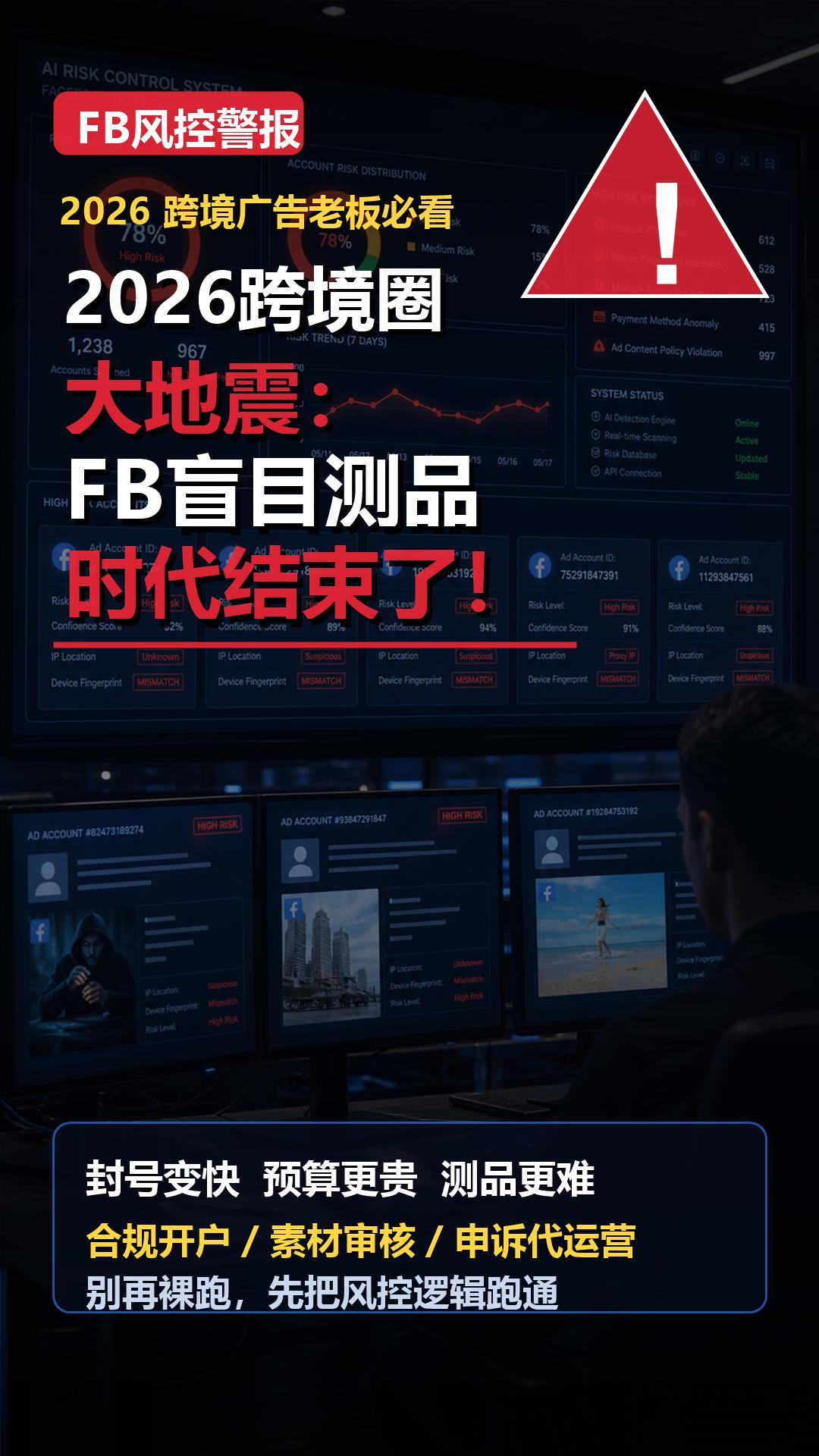
 The Era of Cross-Border Earthquakes in 2026: The Era of Blindly Testing FB Products Has Ended!
 Three key points of domestic-to-foreign trade most important, see if you really did your homework! Don’t take shortcuts.


Related Products
 EasyCamp SaaS Smart Website Marketing SystemE-Yingbao SaaS Smart Website Marketing System: AI-powered, zero-code website building. Rapidly launch multilingual independent e-commerce sites in just 10 minutes. Global server acceleration and AI-driven SEO optimization empower businesses to efficiently connect with global markets. The seamless integration of technology and user-friendly operation makes building e-commerce sites incredibly simple.
 AI+SEM Intelligent Advertising Marketing SystemAI+SEM drives intelligent ad creation, empowering full-funnel precision advertising marketing. The system automatically generates weekly/monthly reports, AI recommends keywords and target countries, monitors core metrics in real-time with intelligent alerts, and enables one-click high-conversion ad solutions to help quickly acquire customers and improve ROI.
 AI+SEO Dual Engine Optimization ServiceEasyWin AI+SEO Dual Engine Optimization System leverages AI-powered keyword mining, content generation, and comprehensive technical optimization to help foreign trade enterprises acquire high-quality organic traffic, significantly improving search rankings and conversion rates.
 AI+SNS Social Media Marketing SystemYingbao AI+SNS Social Media Marketing System - Precision social capture for the social media era. Supports one-click content synchronization across major platforms like Facebook and LinkedIn. AI intelligently rewrites posts for enhanced relevance. 24/7 AI customer service and user profiling analysis empower businesses to efficiently expand into global markets.
 AI+SEO营销解决方案易营宝AI+SEO营销解决方案,通过AI批量写作、智能生成TDK、精准关键词扩词等功能,全面优化网站SEO效果,提升流量与转化率。助力企业构建高效智能网站新生态。
 AI+SEM Advertising Marketing SolutionsAI+SEM Advertising Marketing Solution leverages AI technology to deeply empower SEM ad campaigns. It automatically generates weekly/monthly reports using AI, presenting account data across multiple dimensions for comprehensive insights into campaign performance and trends. The system precisely recommends keywords and target countries, intelligently generates high-conversion ad copy, and enables one-click activation of efficient campaign plans to help businesses rapidly acquire customers. Simultaneously, it monitors core metrics in real time, intelligently identifies abnormal fluctuations, and issues timely alerts to ensure stable, high-return advertising results.
 Domain Name ServicesEasyWin provides professional domain name services, including intelligent queries, one-stop registration, brand protection, and full lifecycle management, helping businesses build a digital brand image.
 EasyOperate B2C Cross-Border E-Commerce Platform & Independent WebsiteEasyStore B2C Cross-border E-commerce Independent Store is an intelligent website building and cross-border e-commerce integrated solution independently developed by EasyStore Information Technology (Beijing) Co., Ltd. The system is specially designed for small and medium-sized as well as large export enterprises, integrating 'website building, operation, marketing, advertising, and conversion' into one, helping enterprises quickly establish cross-border e-commerce independent stores to achieve brand globalization and global sales growth.
The platform supports multiple languages, multiple currencies, and multi-channel marketing, with built-in AI intelligent translation and SEO optimization systems, suitable for mainstream markets such as Southeast Asia, Europe and America, Latin America, and the Middle East, assisting Chinese manufacturing enterprises in efficiently deploying international e-commerce strategies. SSL证书易营宝提供专业SSL安全证书服务,包括单域名和泛域名证书,确保网站数据传输加密、身份验证和完整性保护,助力企业建立安全可信的在线业务环境。









