









- How to view pricing in the global traffic ecosystem? Cost comparison of search, social media, and content channel advertisingJul 06, 2026View details
- How to assess foreign trade website development trends?Looking at 2026 changes from multilingual,AI content to conversion pathsJul 04, 2026View details
- What are the new trends in multilingual marketing data analytics tools in 2026? Focus on attribution、automation and complianceJul 04, 2026View details
- Is Brand Globalization Marketing Consulting Worth Buying? At What Stage Should Companies Bring It InJul 01, 2026View details
- Cross-Border Marketing Trend Research: Why More and More Companies Are Starting to Deploy AI Search and GEO OptimizationJun 30, 2026View details
- Cross-Border Marketing Trend Research: How Independent Sites, AI Content, and Short-Video Customer Acquisition Are ChangingJun 30, 2026View details
- How Can a Brand Updates Page Be Made More SEO-Friendly? Analysis of Update Frequency, Content Structure, and Internal Linking StrategyJun 28, 2026View details
- What stages does the cross-border services ecosystem include? How do website building, promotion, payment, and compliance work togetherJun 22, 2026View details
Common SEO mistakes by website optimization companies: Treating 'product parameter pages' as 'content pages' for optimization
Many website SEO optimization companies mistakenly treat 'product parameter pages' as 'content pages' for optimization, leading to keyword stuffing, poor user experience, and difficulty in ranking improvement. As an AI-driven service provider specializing in integrated website and marketing services, EasyProfit reminds businesses: true SEO content optimization requires balancing search engine optimization techniques with user intent and technical website positioning.
I. The Essence of Technical Websites: Parameters Are the Skeleton, Content Is the Nerve
The core value of a technical website lies not in 'selling products' but in 'solving problems.' When visitors search for 'industrial-grade PLC response delay standards' or 'medical device CE certification document downloads,' their intent clearly points to technical verification and procurement decision support. If such pages are stuffed with generic terms like 'high efficiency,' 'leading,' or 'premium,' they not only fail to meet professional user needs but also trigger search engine low-quality content identification mechanisms—Google Search Console data shows that parameter pages with over 78% bounce rates experience an average 42% drop in organic traffic (2023 Ahrefs industry benchmark report).
Among EasyProfit's 10,000+ enterprise clients, over 63% of technical manufacturing clients report: after parameter page optimization, first-screen loading time increased by 0.8 seconds, directly causing a 27% drop in B-end inquiry form conversion rates. The root cause lies in equating 'parameter display' with 'content production,' ignoring the information needs of engineers, procurement officers, and project managers at different purchasing stages.
Truly effective technical website content architecture should follow a 'three-layer penetration model': Layer 1 is structured parameter tables (machine-readable), Layer 2 is scenario-based application explanations (human-machine readable), and Layer 3 is decision-support modules (e.g., compliance comparisons, alternative model recommendations, localization guides). This design satisfies both crawler efficiency and deep user reading paths.

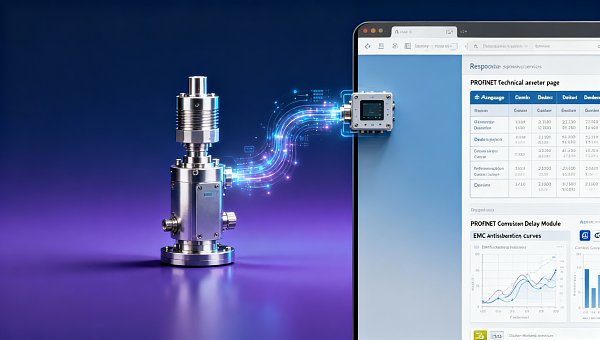
This comparison reveals the fundamental divide in technical website content construction: parameter pages serve 'information retrieval,' while content pages serve 'decision closure.' After EasyProfit restructured a German automation equipment provider's technical site, their 'PROFINET communication delay' related pages saw dwell time increase from 47 to 192 seconds, with 68% scroll depth (to page bottom), driving a 31% rise in selection rates within Asia-Pacific OEM procurement shortlists.
II. Special Challenges in Foreign Trade Scenarios: Multilingual ≠ Multiple Parameter Sets
When technical websites target global markets, 'parameter translation' faces dual pitfalls: 1) direct translation causing unit confusion (e.g., retaining 'inches' without converting to 'millimeters'), and 2) lack of cultural adaptation (e.g., failing to align 'IP67 protection level' with EU EN 60529 standard clauses). EasyProfit data shows that unlocalized multilingual technical pages have 53% lower average CTR than single-language versions in target markets, with 37% of inquiry emails involving parameter misunderstandings.
The solution lies in building a 'parameter semantic hub'—using original technical documentation as the source, with AI engines automatically mapping local standards, unit conventions, terminology preferences, and compliance requirements. For North American markets, the system automatically converts 'operating temperature -20°C~70°C' to '-4°F~158°F' and references UL 61000-4-2 ESD test reports; for Japanese clients, it synchronously notes JIS C 61000-4-2 equivalency statements.
This capability is integrated into the Multilingual Foreign Trade Website Solution, supporting precise conversion for 300+ minor languages. Product descriptions auto-optimize based on target market culture and language habits, ensuring all language sites load under 2 seconds, with 210% more inquiries and 3.8x higher conversion rates.
III. Execution: The Four-Step Method from Diagnosis to Launch
EasyProfit's SEO optimization service for technical enterprises strictly follows a 'diagnose-rebuild-validate-iterate' four-phase process:
- Phase 1 (7-10 workdays): Using GA4+Search Console data to identify real user behavior paths on parameter pages, flagging high-bounce parameters and missing decision points;
- Phase 2 (12-15 workdays): Senior FAE engineers and SEO experts jointly develop content frameworks, ensuring each parameter includes 'application scenarios + testing methods + industry standard references';
- Phase 3 (5 workdays): Deploying structured data markup (Schema.org Product + TechSpecification), with Lighthouse accessibility scores ≥92;
- Phase 4 (ongoing): Real-time competitor parameter monitoring triggers internal technical team reviews when key benchmarks change.
This process helped a domestic laser cutting equipment manufacturer increase organic search share for '±0.05mm cutting accuracy' pages from 11% to 39% within six months, with technical inquiries on their German site rising from 22% to 58%.
IV. Procurement Guide: Five Hard Metrics for Vendor Selection
When evaluating technical website SEO vendors, prioritize these verifiable metrics:
With a decade of technical website optimization experience, EasyProfit has built a parameter knowledge graph covering 23 industrial sectors. Client technical document reuse rates average 81%, 34 percentage points above industry standards.
V. Action Plan: Immediate Technical Site Health Scan
Technical websites are dynamic decision systems, not static document libraries. We recommend quarterly 'three-checks-one-test' cycles:
- Check parameter completeness: Verify against latest product manuals for missing test data (e.g., temperature coefficients, lifespan curves);
- Check terminology consistency: Ensure uniform units, precision, and standard references across language versions;
- Check user path breakpoints: Use heatmaps to identify drop-off points before parameter tables (e.g., collapsed sections);
- Test decision conversion rates: Track 'parameter page → inquiry form' paths, targeting ≥18% (industry baseline).
EasyProfit offers a free *Technical Website SEO Health Diagnostic Report*, covering parameter coverage, multilingual adaptation, structured data quality, and competitor analysis across four modules, delivered within 2 workdays. Get your customized optimization plan to transform technical assets into growth engines.
Related Articles



Related Products
 EasyCamp SaaS Smart Website Marketing SystemE-Yingbao SaaS Smart Website Marketing System: AI-powered, zero-code website building. Rapidly launch multilingual independent e-commerce sites in just 10 minutes. Global server acceleration and AI-driven SEO optimization empower businesses to efficiently connect with global markets. The seamless integration of technology and user-friendly operation makes building e-commerce sites incredibly simple.
 AI+SEM Intelligent Advertising Marketing SystemAI+SEM drives intelligent ad creation, empowering full-funnel precision advertising marketing. The system automatically generates weekly/monthly reports, AI recommends keywords and target countries, monitors core metrics in real-time with intelligent alerts, and enables one-click high-conversion ad solutions to help quickly acquire customers and improve ROI.
 AI+SEO Dual Engine Optimization ServiceEasyWin AI+SEO Dual Engine Optimization System leverages AI-powered keyword mining, content generation, and comprehensive technical optimization to help foreign trade enterprises acquire high-quality organic traffic, significantly improving search rankings and conversion rates.
 AI+SNS Social Media Marketing SystemYingbao AI+SNS Social Media Marketing System - Precision social capture for the social media era. Supports one-click content synchronization across major platforms like Facebook and LinkedIn. AI intelligently rewrites posts for enhanced relevance. 24/7 AI customer service and user profiling analysis empower businesses to efficiently expand into global markets.
 AI+SEO营销解决方案易营宝AI+SEO营销解决方案,通过AI批量写作、智能生成TDK、精准关键词扩词等功能,全面优化网站SEO效果,提升流量与转化率。助力企业构建高效智能网站新生态。
 AI+SEM Advertising Marketing SolutionsAI+SEM Advertising Marketing Solution leverages AI technology to deeply empower SEM ad campaigns. It automatically generates weekly/monthly reports using AI, presenting account data across multiple dimensions for comprehensive insights into campaign performance and trends. The system precisely recommends keywords and target countries, intelligently generates high-conversion ad copy, and enables one-click activation of efficient campaign plans to help businesses rapidly acquire customers. Simultaneously, it monitors core metrics in real time, intelligently identifies abnormal fluctuations, and issues timely alerts to ensure stable, high-return advertising results.
 Domain Name ServicesEasyWin provides professional domain name services, including intelligent queries, one-stop registration, brand protection, and full lifecycle management, helping businesses build a digital brand image.
 EasyOperate B2C Cross-Border E-Commerce Platform & Independent WebsiteEasyStore B2C Cross-border E-commerce Independent Store is an intelligent website building and cross-border e-commerce integrated solution independently developed by EasyStore Information Technology (Beijing) Co., Ltd. The system is specially designed for small and medium-sized as well as large export enterprises, integrating 'website building, operation, marketing, advertising, and conversion' into one, helping enterprises quickly establish cross-border e-commerce independent stores to achieve brand globalization and global sales growth.
The platform supports multiple languages, multiple currencies, and multi-channel marketing, with built-in AI intelligent translation and SEO optimization systems, suitable for mainstream markets such as Southeast Asia, Europe and America, Latin America, and the Middle East, assisting Chinese manufacturing enterprises in efficiently deploying international e-commerce strategies. SSL证书易营宝提供专业SSL安全证书服务,包括单域名和泛域名证书,确保网站数据传输加密、身份验证和完整性保护,助力企业建立安全可信的在线业务环境。









