









- Which channel has the highest ROI in the global traffic ecosystem? Comparative analysis of search, social media, and advertisingJul 10, 2026View details
- What multilingual website services are available in Sanya? Which model is more suitable for local businesses going global?Jul 08, 2026View details
- How to view the complete list of China SaaS companies in the top 100? Practical methods for screening website-building and marketing service providersJul 08, 2026View details
- How to view pricing in the global traffic ecosystem? Cost comparison of search, social media, and content channel advertisingJul 06, 2026View details
- How to assess foreign trade website development trends?Looking at 2026 changes from multilingual,AI content to conversion pathsJul 04, 2026View details
- What are the new trends in multilingual marketing data analytics tools in 2026? Focus on attribution、automation and complianceJul 04, 2026View details
- Is Brand Globalization Marketing Consulting Worth Buying? At What Stage Should Companies Bring It InJul 01, 2026View details
- Cross-Border Marketing Trend Research: Why More and More Companies Are Starting to Deploy AI Search and GEO OptimizationJun 30, 2026View details
Why do SEO techniques never seem to improve rankings
Many people keep trying search engine optimization techniques, yet still fail to see any improvement in rankings. The problem is often not how many times the work is executed, but whether the strategic direction, content quality, and data judgment are accurate. This article will help you identify the real factors that affect rankings.
For practitioners working in integrated website and marketing roles, the most common confusion is not “whether it has been done,” but “why after doing it for 3 months, updating 20 pieces of content, and revising titles many times, traffic is still not moving.” In B2B digital marketing scenarios, ranking growth usually requires the coordinated alignment of strategy, technology, content, and conversion across all four areas, rather than repeated effort on a single point.
Yiyingbao Information Technology (Beijing) Co., Ltd. has long served enterprise globalization growth scenarios, providing full-chain support around intelligent website building, SEO optimization, social media marketing, and advertising placement. For frontline execution personnel, truly effective search engine optimization techniques are not fragmented operation checklists, but a set of executable methods that can be tracked, verified, and iterated.
Why rankings still do not improve despite repeatedly applying search engine optimization techniques
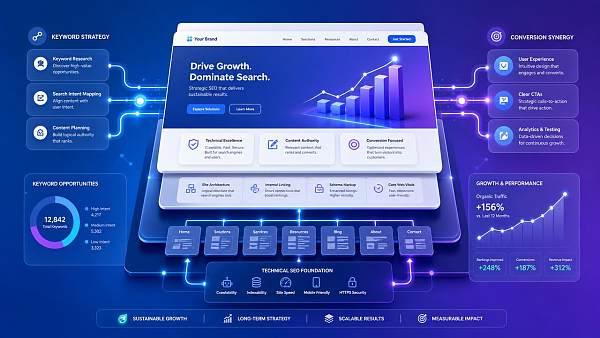
Many websites appear highly active in the first 6 weeks, but search engines do not give them higher evaluations. The reasons are often concentrated in 4 aspects: misaligned keyword direction, unstable page quality, unclear site structure, and distorted data judgment. As long as 2 of these issues continue to exist, it is difficult for rankings to achieve steady growth.
The keywords may be correct, but the intent is not
Many practitioners understand search engine optimization techniques as “putting core keywords into the title, body text, and description,” but what truly affects rankings is search intent matching. If users want to see “how-to methods,” but the page is written as “service promotion”; if users are in the price comparison stage, but the page only talks about concepts, the bounce rate will noticeably increase within 30 seconds to 60 seconds.
Common judgment biases
- Only focusing on search volume while ignoring conversion intent, resulting in traffic but no inquiries.
- Only targeting a single core keyword without laying out 3 types of long-tail keywords: question keywords, solution keywords, and decision-stage keywords.
- The title coverage is too broad, with one page trying to target 5 kinds of intent at the same time, resulting in none of them being strong.
In the integrated website + marketing service industry, it is recommended that each core page be developed around at least 1 main keyword, 3 semantic expansion keywords, and 5 scenario keywords, so that it is easier to form topic concentration. For example, around “search engine optimization techniques,” it can naturally extend to directions such as on-site structure optimization, content update frequency, page indexing issues, and conversion path design.
A lot of content has been updated, but the quality signals are still weak
Publishing 10 to 30 articles in a row does not necessarily mean the website’s topical authority will improve. Search engines pay more attention to whether the content solves specific problems, whether the structure is complete, and whether the page has readability and extension value. If articles are highly repetitive, paragraphs are loose, and keywords are stuffed too densely, it will instead dilute the page quality signals.
For executors, to judge whether content is effective, at least 3 indicators should be checked: page dwell time, the proportion of continued reading after the first screen, and click-through flow between target pages. If an article still has no internal link clicks or keyword impressions 2 weeks after going live, it is usually not because “there has not been enough waiting time,” but because the content positioning itself needs to be redone.
The table below can help frontline personnel quickly judge which actions that “look very hardworking” are actually not bringing effective ranking growth.
From the execution level, the core reason rankings do not rise is not “not doing enough,” but “not doing it accurately enough.” Especially in service-oriented B2B websites, category pages, case study pages, solution pages, and Q&A pages should at least form coordination among 4 types of pages, otherwise no matter how much content there is, it is only information stacking.
If the technical foundation is not up to standard, optimization results will be eaten away
Many enterprise websites do not have problems with the content itself, but with the underlying technical layer. Common situations include: page load time exceeding 3 seconds, incomplete mobile adaptation, too many duplicate titles, URL hierarchy deeper than 4 levels, uncleared dead links, and chaotic internal redirect paths. These issues directly affect crawl efficiency and user experience.
In actual projects, technical fixes can often improve crawl performance within 2 to 4 weeks, especially for websites with slow indexing, weak category pages, and low page impressions. The advantage of integrated website + marketing services lies in the ability to synchronize adjustments to website building, content, placement, and data, rather than separating them from one another.
How practitioners can establish a truly effective optimization process
Effective search engine optimization techniques must be process-driven. For executors, rather than making scattered title changes and supplementing descriptions every day, it is better to establish a mechanism that advances weekly and reviews monthly. Usually, one basic optimization cycle can be broken down into 4 stages: diagnosis, planning, publishing, and iteration, and each stage should have clear acceptance checkpoints.
Step 1: Diagnose the website first, then decide the content direction
It is recommended to complete a basic review within 7 days, with priority given to 6 items: indexing status, core page status, title duplication rate, mobile loading speed, internal link coverage rate, and conversion entry positions. If more than 3 of these 6 items are abnormal, you should not directly enter the large-scale writing stage, otherwise subsequent growth will be difficult to sustain.
Pages that require special attention during diagnosis
- Homepage: whether brand keywords and business keywords are compatible.
- Core service pages: whether they can capture high-intent searches.
- Article pages: whether they support internal link traffic guidance to solution pages.
- Landing pages: whether there are clear forms, phone numbers, or consultation buttons.
If a company is simultaneously doing content marketing, social media, and advertising placement, it is recommended to unify the keyword map to avoid each of the three channels writing separately. Many teams seem to have 50 pages on the surface, but in reality they repeatedly express the same topic, causing resources to be scattered. The value of a full-chain service model like Yiyingbao lies in its ability to align the goals of website building, SEO, content, and placement onto the same growth map.
Step 2: Content production should revolve around the conversion path, not just traffic
When executing search engine optimization techniques, many practitioners only focus on the number of articles, while ignoring the guiding relationship between pages. A more reasonable structure is: 1 core service page matched with 3 to 5 scenario pages, plus 8 to 12 question-based content pages, with the question pages directing traffic to the scenario pages and service page to form a complete path.
When some companies create knowledge-based content, they also borrow structural design ideas from management topics, such as breaking business processes into a four-stage model of goals, budget, execution, and review. This kind of framework is equally applicable in B2B content. Titles such as Application Strategies of Budget Performance Management in Financial Management of Public Institutions have reading value precisely because they focus on application scenarios and solution paths, rather than talking vaguely about concepts.
The process chart below is suitable for practitioners to execute on a monthly basis, helping determine which actions should be prioritized and which actions can be handled later.
The key to this process is to remove obstacles first, then expand volume. Many websites invest 70% of their energy at the content level, but only spend 10% of their time looking at the underlying issues that truly affect rankings, so the result is naturally far from ideal.
Step 3: Establish data judgment standards to avoid optimizing based on feelings
What execution teams fear most is “changing the title today, deleting a paragraph tomorrow, and switching keywords the day after tomorrow,” continuing to make changes for 4 weeks without any unified evaluation standard. It is recommended to set at least 5 observation dimensions: impressions, click-through rate, average ranking, page dwell time, and inquiry conversion. The first 3 are used to judge visibility, and the last 2 are used to judge commercial value.
If a page’s impressions keep rising within 30 days, but the click-through rate is below 1%, it usually indicates that the title and snippet are not attractive enough; if the click-through rate reaches 2% to 5%, but dwell time is less than 40 seconds, it indicates that the content cannot satisfy the search demand; if dwell time is good but there is no conversion, then the CTA position, form complexity, and solution presentation method need to be checked.
Details most easily overlooked during execution
- Only change 1 to 2 items at a time to avoid being unable to judge which item produced the effect.
- After a page update, observe for at least 7 to 14 days, and do not frequently overwrite repeatedly.
- High-value pages should be prioritized above ordinary information pages.
- Internal link anchor text should be natural, and not all links should use the same core keyword.
Beyond rankings, which results deserve more attention
For enterprises, the ultimate purpose of search engine optimization techniques is not to add a few more upward arrows on reports, but to enable the website to continuously generate convertible traffic. Especially in integrated website + marketing service scenarios, SEO should not be an isolated departmental task, but should coordinate with website architecture, landing page design, ad handoff, and social media content.
Truly valuable growth signals
Compared with a single ranking, there are 4 categories of signals more worth tracking: the number of keywords for which core service pages enter the top 20, the proportion of organic traffic entering consultation pages, the traffic transfer rate from content pages to service pages, and whether inquiry cost is decreasing. As long as the latter 2 begin to improve, even if rankings are still climbing, it still shows that the optimization direction is correct.
For companies seeking long-term growth, it is recommended to adopt the linkage approach of “website building + content + SEO + placement.” The advantage of doing so is that the front-end page structure is designed from the beginning according to search and conversion logic, so subsequent optimization cycles are usually shorter and resource waste is also lower.
Practical recommendations for practitioners
If you have been consistently executing search engine optimization techniques for 1 to 3 months and still have not seen obvious ranking improvement, do not rush to increase publishing volume first. A more effective approach is to go back and check keyword intent, page structure, technical issues, and conversion paths. In many cases, as long as these 4 areas are straightened out, subsequent growth will appear faster than simply expanding content.
Relying on artificial intelligence and big data capabilities, Yiyingbao Information Technology (Beijing) Co., Ltd. can provide enterprises with full-chain support from intelligent website building to SEO optimization, and from social media marketing to advertising placement, making it more suitable for teams that need unified strategy and a unified data perspective. Whether you are a daily executor or an operations leader responsible for growth coordination, you should prioritize establishing a closed loop of “diagnosis—execution—review—iteration.”
When search traffic, page experience, and conversion design are truly placed into the same system, search engine optimization techniques can transform from “repetitive labor” into a “sustainable growth tool.” If you hope to identify issues faster, organize page structures, or obtain optimization solutions better suited to your business scenarios, it is recommended to contact us immediately to get a customized plan and learn more solutions.
Related Articles
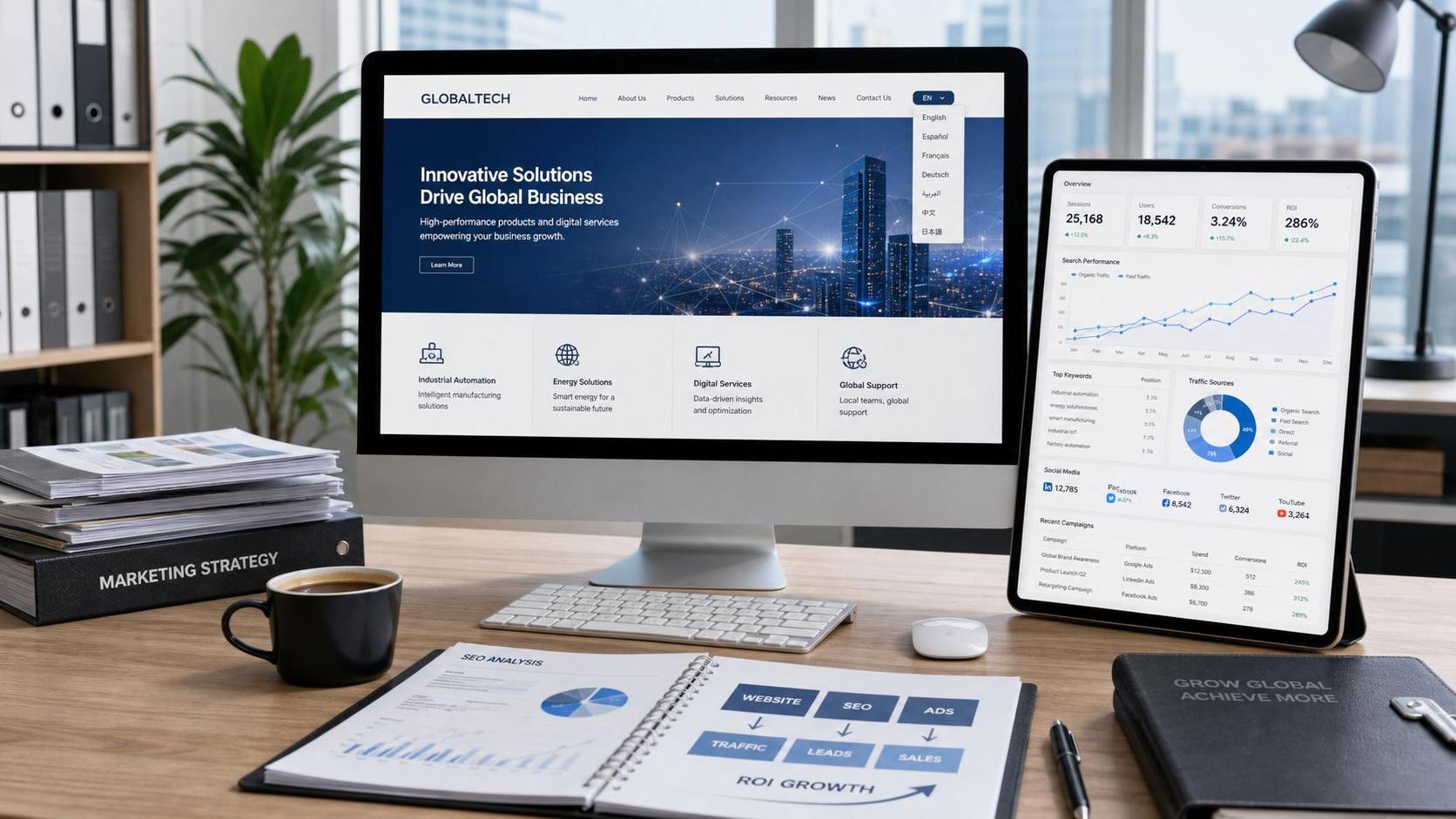
 Which channel has the highest ROI in the global traffic ecosystem? Comparative analysis of search, social media, and advertising
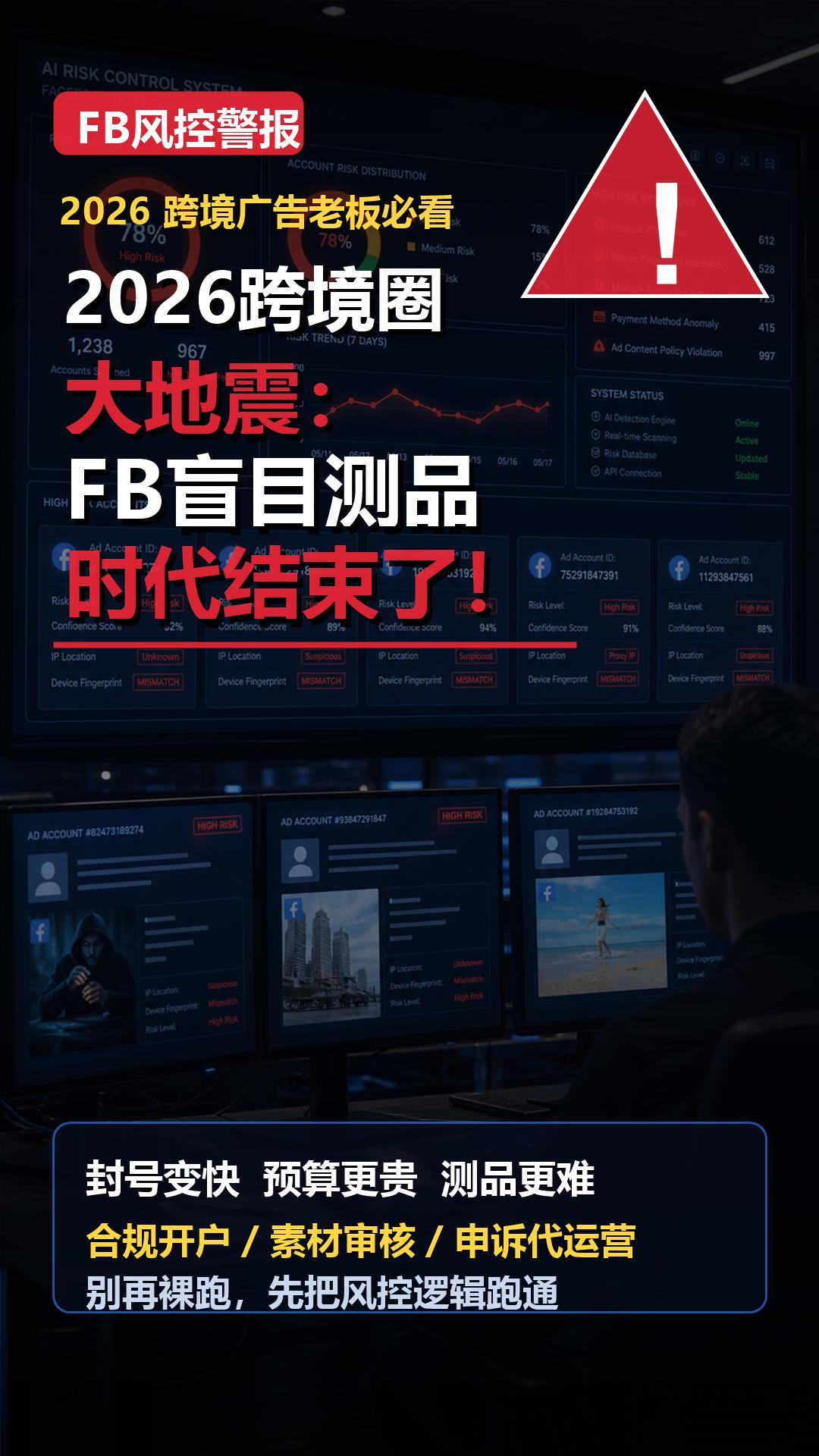
 The Era of Cross-Border Earthquakes in 2026: The Era of Blindly Testing FB Products Has Ended!
 Three key points of domestic-to-foreign trade most important, see if you really did your homework! Don’t take shortcuts.

Related Products
 EasyCamp SaaS Smart Website Marketing SystemE-Yingbao SaaS Smart Website Marketing System: AI-powered, zero-code website building. Rapidly launch multilingual independent e-commerce sites in just 10 minutes. Global server acceleration and AI-driven SEO optimization empower businesses to efficiently connect with global markets. The seamless integration of technology and user-friendly operation makes building e-commerce sites incredibly simple.
 AI+SEM Intelligent Advertising Marketing SystemAI+SEM drives intelligent ad creation, empowering full-funnel precision advertising marketing. The system automatically generates weekly/monthly reports, AI recommends keywords and target countries, monitors core metrics in real-time with intelligent alerts, and enables one-click high-conversion ad solutions to help quickly acquire customers and improve ROI.
 AI+SEO Dual Engine Optimization ServiceEasyWin AI+SEO Dual Engine Optimization System leverages AI-powered keyword mining, content generation, and comprehensive technical optimization to help foreign trade enterprises acquire high-quality organic traffic, significantly improving search rankings and conversion rates.
 AI+SNS Social Media Marketing SystemYingbao AI+SNS Social Media Marketing System - Precision social capture for the social media era. Supports one-click content synchronization across major platforms like Facebook and LinkedIn. AI intelligently rewrites posts for enhanced relevance. 24/7 AI customer service and user profiling analysis empower businesses to efficiently expand into global markets.
 AI+SEO营销解决方案易营宝AI+SEO营销解决方案,通过AI批量写作、智能生成TDK、精准关键词扩词等功能,全面优化网站SEO效果,提升流量与转化率。助力企业构建高效智能网站新生态。
 AI+SEM Advertising Marketing SolutionsAI+SEM Advertising Marketing Solution leverages AI technology to deeply empower SEM ad campaigns. It automatically generates weekly/monthly reports using AI, presenting account data across multiple dimensions for comprehensive insights into campaign performance and trends. The system precisely recommends keywords and target countries, intelligently generates high-conversion ad copy, and enables one-click activation of efficient campaign plans to help businesses rapidly acquire customers. Simultaneously, it monitors core metrics in real time, intelligently identifies abnormal fluctuations, and issues timely alerts to ensure stable, high-return advertising results.
 Domain Name ServicesEasyWin provides professional domain name services, including intelligent queries, one-stop registration, brand protection, and full lifecycle management, helping businesses build a digital brand image.
 EasyOperate B2C Cross-Border E-Commerce Platform & Independent WebsiteEasyStore B2C Cross-border E-commerce Independent Store is an intelligent website building and cross-border e-commerce integrated solution independently developed by EasyStore Information Technology (Beijing) Co., Ltd. The system is specially designed for small and medium-sized as well as large export enterprises, integrating 'website building, operation, marketing, advertising, and conversion' into one, helping enterprises quickly establish cross-border e-commerce independent stores to achieve brand globalization and global sales growth.
The platform supports multiple languages, multiple currencies, and multi-channel marketing, with built-in AI intelligent translation and SEO optimization systems, suitable for mainstream markets such as Southeast Asia, Europe and America, Latin America, and the Middle East, assisting Chinese manufacturing enterprises in efficiently deploying international e-commerce strategies. SSL证书易营宝提供专业SSL安全证书服务,包括单域名和泛域名证书,确保网站数据传输加密、身份验证和完整性保护,助力企业建立安全可信的在线业务环境。









