









- What Does a Global Traffic Ecosystem Service Provider Do? What Are the Differences from a Single Advertising AgencyJul 16, 2026View details
- What should you focus on in the latest enterprise SaaS report? From renewal rates and delivery costs to overseas growth opportunitiesJul 12, 2026View details
- What signals are worth paying attention to in a cross-border marketing trend report? B2B companies should look at these 6 signalsJul 11, 2026View details
- How to Read a Cross-Border Marketing Trends Report? Five Key Dimensions for Evaluating Channel OpportunitiesJul 11, 2026View details
- Which channel has the highest ROI in the global traffic ecosystem? Comparative analysis of search, social media, and advertisingJul 10, 2026View details
- What multilingual website services are available in Sanya? Which model is more suitable for local businesses going global?Jul 08, 2026View details
- How to view the complete list of China SaaS companies in the top 100? Practical methods for screening website-building and marketing service providersJul 08, 2026View details
- How to view pricing in the global traffic ecosystem? Cost comparison of search, social media, and content channel advertisingJul 06, 2026View details
Google SEO Rankings Improved but Traffic Dropped? You Might Have Overlooked the Long-Tail Keyword Gap Caused by Search Intent Migration
Google SEO rankings improved, but traffic declined instead? The root cause often lies in a break in long-tail keywords caused by search intent shifts. As an SEO company focused on global digital marketing, Yiyingbao leverages AI-driven SEO keyword research and content optimization capabilities to help you identify intent changes and rebuild your long-tail keyword matrix—truly achieving simultaneous growth in search engine rankings and high-quality traffic.
Why do many companies overlook the actual impact of search intent shifts on SEO performance?
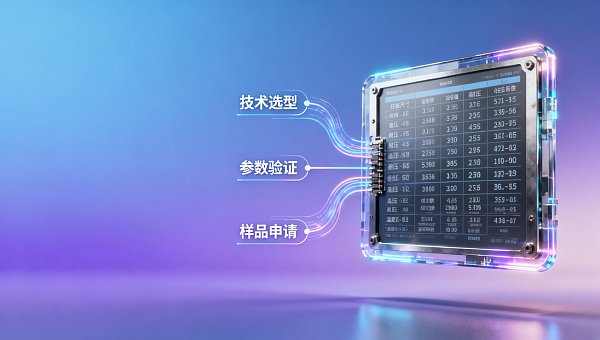
When a page’s core keyword ranking in Google organic search jumps from position 12 to position 3, but monthly UV drops by 18%—this is not an algorithm penalty, but rather a quiet shift in user search behavior. Google Search Console data in 2023 shows that, within the electronic components category, scenario-based long-tail keywords such as “capacitor parameter comparison table” and “chip resistor selection guide” increased by 42% year-on-year in search volume, while the click-through rate of traditional brand keyword + model combinations (such as “Murata GRM155R71E104KA01D”) declined by 27%.
The fundamental reason is that the B2B procurement decision chain has become longer. Users are no longer satisfied with simply “checking model numbers”; they increasingly need to “compare parameters,” “review alternative solutions,” and “verify lead time and compliance.” If an SEO strategy still focuses only on ranking for a single main keyword and fails to simultaneously build a long-tail keyword cluster covering the full path of “technical selection → parameter verification → sample request → bulk quotation,” high rankings will only bring low-intent traffic and may even reduce the overall conversion rate.
Through its AI semantic clustering engine, Yiyingbao dynamically scans nearly 3 years of search logs from client websites and industry competitor keyword databases, accurately identifying 5–8 critical intent-shift nodes. For example, searches may shift from “STM32F103C8T6 price” to “STM32F103C8T6 domestic alternative solution comparison,” and content architecture and internal linking logic are then restructured accordingly.
How can the electronic components industry rebuild a resilient long-tail keyword matrix?
In response to the highly parameterized nature of the electronic components industry, fragmented model numbers, and strong substitution demand, Yiyingbao proposes a “three-dimensional long-tail keyword modeling method”: generating keyword clusters through the intersection of the technical dimension (such as voltage rating, tolerance, and package size), the application dimension (automotive electronics / industrial control / consumer products), and the procurement-stage dimension (selection reference / sample request / bulk quotation). Actual testing shows that companies using this model increase effective long-tail keyword coverage per page by an average of 3.2 times, while high-intent keywords (including semantics such as “alternative,” “compatible,” “lead time,” and “RoHS certification”) account for 61% of organic traffic.
This method has been deeply integrated into the electronic components industry solution, supporting automatic parsing of product manual PDFs, extraction of key parameters, and mapping to 12 typical application scenarios, while generating structured Q&A content (FAQ Schema) to significantly improve the acquisition rate of Featured Snippets.
Take a power semiconductor client as an example: the original SEO strategy covered about 900 model keywords, but long-tail keywords accounted for only 11% of total indexed volume; after adopting the new model, 4,200+ new effective long-tail keywords were added within 6 months. Among them, professional terms such as “IGBT module thermal design specifications” and “SiC MOSFET drive circuit matching points” drove a 210% increase in precise engineer-targeted traffic, and inquiry conversion rates rose to 19.3% (the industry average is 7.6%).
Long-tail keyword gap diagnosis: 3 steps to quickly identify risk points
Companies can conduct a basic self-check for keyword gaps, focusing on the following 3 key points:
- Content coverage: Among the TOP 50 long-tail keywords, does the current page provide ≥3 clear answers (not merely mentions)?
- Intent matching: When users search for “XX model alternative solution,” does the landing page include a parameter comparison table, compatibility explanation, and sample request entry?
- Path completeness: Is there a direct path requiring ≤2 clicks from “technical document download” to “online quotation”?
Yiyingbao’s SEO health assessment service provides automated gap scanning across 17 indicators and outputs a “Long-tail Keyword Gap Heat Map,” highlighting high-risk keyword groups (such as search volume >500/month but CTR<2.1%), content gaps (such as missing visualization of key parameters like a “temperature coefficient curve”), and bounce triggers (such as the absence of a mobile parameter filter). The average diagnostic cycle is 3–5 working days.
Long-tail keyword performance comparison: traditional SEO vs intent-driven SEO
Below is A/B test data from 12 electronic components clients served by Yiyingbao in Q3 2023 (all samples excluded advertising interference):
The data shows that although intent-driven strategies require an additional 20–30% investment in content production, they significantly increase the density of high-value leads—every 1000 long-tail keyword impressions can generate 4.7 valid inquiries (compared with 1.2 under traditional strategies), while the average customer procurement decision cycle is shortened by 11 days.
Why choose Yiyingbao? 4 delivery guarantees with certainty
We do not promise “guaranteed first-page rankings”; instead, we deliver verifiable business results:
- Keyword delivery guarantee: Upon signing, 300+ high-potential long-tail keyword targets are locked in, with a quarterly “Keyword Performance Tracking Report” delivered. Underperforming keywords are re-optimized free of charge.
- Content production SLA: Parameterized content (such as model comparison tables and compatibility matrices) is delivered within 7 working days and supports embedding into the client’s existing CMS system.
- Closed-loop performance attribution: Integrated with Google Analytics 4 and CRM systems, providing UTM-level traffic-inquiry-deal path analysis and eliminating interference from ineffective channels.
- Localized response mechanism: On-site support is available from technical teams in Beijing / Shenzhen / Shanghai. Urgent requests receive a response within 2 hours, while routine optimization requests go live within 48 hours.
If you are facing the dilemma of “rankings rising but inquiries declining,” or need to build a sustainable long-tail traffic engine for your electronic components website, you are welcome to book Yiyingbao’s “Long-tail Keyword Gap Diagnosis” service now—we will analyze the current website’s TOP 100 long-tail keyword coverage quality for you free of charge and provide initial optimization implementation plans for 3 high-value keyword groups.

Related Articles
Related Products
 EasyCamp SaaS Smart Website Marketing SystemE-Yingbao SaaS Smart Website Marketing System: AI-powered, zero-code website building. Rapidly launch multilingual independent e-commerce sites in just 10 minutes. Global server acceleration and AI-driven SEO optimization empower businesses to efficiently connect with global markets. The seamless integration of technology and user-friendly operation makes building e-commerce sites incredibly simple.
 AI+SEM Intelligent Advertising Marketing SystemAI+SEM drives intelligent ad creation, empowering full-funnel precision advertising marketing. The system automatically generates weekly/monthly reports, AI recommends keywords and target countries, monitors core metrics in real-time with intelligent alerts, and enables one-click high-conversion ad solutions to help quickly acquire customers and improve ROI.
 AI+SEO Dual Engine Optimization ServiceEasyWin AI+SEO Dual Engine Optimization System leverages AI-powered keyword mining, content generation, and comprehensive technical optimization to help foreign trade enterprises acquire high-quality organic traffic, significantly improving search rankings and conversion rates.
 AI+SNS Social Media Marketing SystemYingbao AI+SNS Social Media Marketing System - Precision social capture for the social media era. Supports one-click content synchronization across major platforms like Facebook and LinkedIn. AI intelligently rewrites posts for enhanced relevance. 24/7 AI customer service and user profiling analysis empower businesses to efficiently expand into global markets.
 AI+SEO营销解决方案易营宝AI+SEO营销解决方案,通过AI批量写作、智能生成TDK、精准关键词扩词等功能,全面优化网站SEO效果,提升流量与转化率。助力企业构建高效智能网站新生态。
 AI+SEM Advertising Marketing SolutionsAI+SEM Advertising Marketing Solution leverages AI technology to deeply empower SEM ad campaigns. It automatically generates weekly/monthly reports using AI, presenting account data across multiple dimensions for comprehensive insights into campaign performance and trends. The system precisely recommends keywords and target countries, intelligently generates high-conversion ad copy, and enables one-click activation of efficient campaign plans to help businesses rapidly acquire customers. Simultaneously, it monitors core metrics in real time, intelligently identifies abnormal fluctuations, and issues timely alerts to ensure stable, high-return advertising results.
 Domain Name ServicesEasyWin provides professional domain name services, including intelligent queries, one-stop registration, brand protection, and full lifecycle management, helping businesses build a digital brand image.
 EasyOperate B2C Cross-Border E-Commerce Platform & Independent WebsiteEasyStore B2C Cross-border E-commerce Independent Store is an intelligent website building and cross-border e-commerce integrated solution independently developed by EasyStore Information Technology (Beijing) Co., Ltd. The system is specially designed for small and medium-sized as well as large export enterprises, integrating 'website building, operation, marketing, advertising, and conversion' into one, helping enterprises quickly establish cross-border e-commerce independent stores to achieve brand globalization and global sales growth.
The platform supports multiple languages, multiple currencies, and multi-channel marketing, with built-in AI intelligent translation and SEO optimization systems, suitable for mainstream markets such as Southeast Asia, Europe and America, Latin America, and the Middle East, assisting Chinese manufacturing enterprises in efficiently deploying international e-commerce strategies. SSL证书易营宝提供专业SSL安全证书服务,包括单域名和泛域名证书,确保网站数据传输加密、身份验证和完整性保护,助力企业建立安全可信的在线业务环境。









