









- What Does a Global Traffic Ecosystem Service Provider Do? What Are the Differences from a Single Advertising AgencyJul 16, 2026View details
- What should you focus on in the latest enterprise SaaS report? From renewal rates and delivery costs to overseas growth opportunitiesJul 12, 2026View details
- What signals are worth paying attention to in a cross-border marketing trend report? B2B companies should look at these 6 signalsJul 11, 2026View details
- How to Read a Cross-Border Marketing Trends Report? Five Key Dimensions for Evaluating Channel OpportunitiesJul 11, 2026View details
- Which channel has the highest ROI in the global traffic ecosystem? Comparative analysis of search, social media, and advertisingJul 10, 2026View details
- What multilingual website services are available in Sanya? Which model is more suitable for local businesses going global?Jul 08, 2026View details
- How to view the complete list of China SaaS companies in the top 100? Practical methods for screening website-building and marketing service providersJul 08, 2026View details
- How to view pricing in the global traffic ecosystem? Cost comparison of search, social media, and content channel advertisingJul 06, 2026View details
Does a Website Redesign Have a Major Impact on SEO?
Does a website redesign have a major impact on SEO? The answer is: it usually does, and this impact can be either negative or become a turning point for website growth. Many companies view a redesign as a visual upgrade, but from a search engine perspective, a redesign often means that the page structure, URLs, content system, internal linking relationships, and crawling paths all change simultaneously.
If these key elements are not handled properly, the website's existing rankings, indexation, and organic traffic may fluctuate significantly in the short term. In serious cases, SEO assets accumulated over many years may even shrink rapidly. Conversely, if SEO is incorporated into the planning before the redesign, the redesign may not only avoid harming performance but also improve indexing efficiency, keyword coverage, and conversion quality.
For foreign trade companies, brands expanding overseas, and business teams that rely on their websites for lead generation, the real question is not “Should we redesign the website?” but “How can we redesign it while improving business results without harming SEO?” This is also the key to evaluating the value of a website redesign.
Why Website Redesigns Often Affect SEO Performance
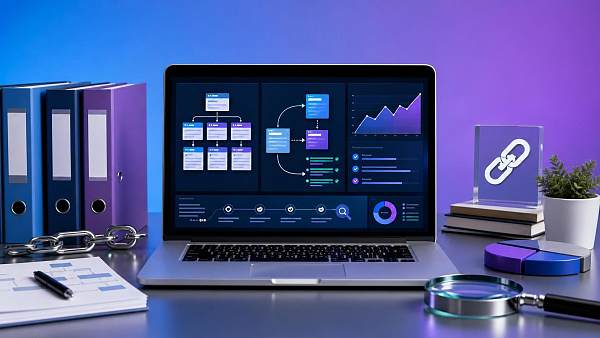
Search engines do not assess a website's value solely by how attractive its pages look. Instead, they rely on a set of stable signals, including URL structure, page topics, content quality, internal links, crawling entry points, loading speed, and historical authority. Once a website is redesigned, these signals can easily be changed at the same time.
For example, merging existing sections, deleting old pages, replacing URL paths, or redesigning the navigation structure can all require search engines to reinterpret the website's content. If 301 redirects and page mappings are not configured properly, search engines may treat the authority of old pages as interrupted, resulting in ranking declines.
Another common problem is incomplete content migration. During a redesign, many companies focus more on visual presentation while overlooking SEO elements such as title tags, the semantic meaning of the main content, image Alt text, and internal-link anchor text on pages that previously ranked well. The pages may look more modern, but the information that search engines can understand may actually be reduced.
Therefore, does a website redesign have a major impact on SEO? Based on practical experience, the answer is not simply an abstract “major impact.” Rather, it directly affects whether the website can continue to obtain organic traffic and whether customer acquisition costs will increase passively.
What Companies Should Focus on Most Is Not Traffic Fluctuation, but Whether Their SEO Assets Are Preserved
For business managers, the core risk after a website redesign is not merely short-term ranking fluctuations, but whether accumulated SEO assets are fully inherited. SEO assets include already indexed pages, ranking keywords, backlink destinations, historical click data, and the stable page value formed by user search behavior.
If a website has been operated for many years, especially a foreign trade website, multilingual site, or B2B inquiry website, much of its traffic may come not from the homepage but from product pages, solution pages, industry article pages, and regional pages. If these pages are deleted casually during a redesign, the loss is often much greater than expected.
Another misconception is that companies can simply launch the new website and gradually do SEO afterward. In reality, the recovery of search rankings is not a linear process. After old pages are deleted, search engines need to crawl, understand, and reassess the content. New pages may not quickly recover the traffic previously generated by the old pages.
Therefore, before a redesign, the most important action is not to create design drafts first, but to identify which pages generate traffic, which keywords contribute inquiries, and which content has backlinks and historical authority. Only by understanding these core assets first can a redesign avoid becoming a “start from scratch” project.
Which Website Redesign Operations Are Most Likely to Cause an SEO Decline
The first high-risk operation is making large-scale URL changes without establishing corresponding 301 redirects. After many websites launch a new system, all of their original page paths become invalid. Users encounter access errors, and search engines cannot find where the old content has moved. This directly affects indexation and authority transfer.
The second problem is that page topics become diluted. For example, a page may originally focus on a core product keyword, but after the redesign, its content is compressed into several paragraphs of brand introduction, or multiple topics are combined on one page. Although the page may be more concise, search engines may find it difficult to continue identifying its original keyword relevance.
The third problem is weakened navigation and internal-link structures. Websites with strong SEO performance usually have clear internal linking relationships and well-defined section hierarchies. If a redesign hides a large amount of content in JavaScript interactions, filters, or modules that are difficult to crawl, search engine crawlers will become less efficient at reaching deeper pages.
The fourth risk is incorrect technical configuration, such as mistakenly blocking crawlers with robots, setting canonical tags incorrectly, leaving noindex directives in place, failing to update the sitemap, degrading the mobile experience, or significantly slowing page speed. These issues are often unrelated to content, but they can quickly amplify SEO fluctuations after launch.
If a Redesign Is Necessary, How Can SEO Risks Be Minimized
First, complete an SEO baseline audit before the redesign. At a minimum, identify the current number of indexed pages, core ranking keywords, organic traffic entry pages, major backlink destination pages, and pages with strong conversion performance. The purpose is to establish a bottom line of what “must not be lost,” rather than waiting to discover problems after launch.
Second, create a mapping table between old and new pages. Do not simply redirect the entire old website to the homepage; instead, aim for one-to-one redirects or redirects between strongly related pages. This makes it easier for search engines to understand content continuity, while also providing a more stable user experience, which benefits ranking recovery and authority transfer.
Third, retain the content structure that was originally effective. Heading hierarchy, core copy, keyword semantics, FAQ information, product specifications, and case-study content should not be deleted casually for the sake of making pages “cleaner” as long as they contribute to search visibility and conversions. The design can be upgraded, but the value of the content must not be emptied out.
Finally, conduct comprehensive testing before launch, including broken-link checks, redirect validation, mobile adaptation, speed testing, crawl simulations, structured-tag verification, and sitemap generation. A truly professional website redesign does not treat SEO as a remedial task after launch; SEO must be included in the delivery criteria before launch.
From a Business Results Perspective, What Makes a Website Redesign Successful
Many companies evaluate the success or failure of a redesign solely by whether the pages look better or whether the management is satisfied. From a marketing and growth perspective, however, a successful website redesign should achieve at least three results: preserve SEO assets as much as possible, clarify the coverage of key keywords, and make the website conversion path smoother.
If, within three months after the redesign, organic traffic fluctuates only slightly, core keyword rankings gradually recover, and the inquiry efficiency of key landing pages increases, this usually indicates that the redesign is moving in the right direction. A genuinely valuable redesign does not simply pursue traffic numbers; it makes traffic more precise and enables pages to convert business opportunities more effectively.
For companies targeting overseas markets, especially those with multilingual websites, foreign trade independent websites, and cross-border brand websites, a redesign should also balance search visibility with the global user experience. For example, whether language structures are clear across different regions, whether page loading speed remains stable, and whether content matches local search habits will all affect the final results.
The value of an integrated service such as Yiyingbao, which combines intelligent website building, SEO optimization, advertising, and overseas marketing, lies in upgrading a website redesign from a simple design project into a systematic initiative involving “website architecture + search growth + conversion enablement,” thereby reducing the trial-and-error costs companies face during a redesign.
Before a Website Redesign, Companies Can Use These Questions to Make an Initial Assessment
If a company is considering a website upgrade, it can first ask itself several practical questions: Does the current website already have stable organic traffic? Are the high-value pages clearly identified? Is the redesign intended to refresh the brand, or to drive customer acquisition and growth? Will the new website use a different system, structure, or URL scheme? These questions determine the level of SEO risk.
If the existing website has almost no indexed pages or traffic, the SEO burden of a redesign is relatively small, allowing the company to take a more proactive approach to optimizing the information architecture and content system. Conversely, if the website already has a group of pages with stable rankings, preserving these assets must be given higher priority, and the project cannot proceed based solely on design considerations.
The team’s ability to execute the migration must also be assessed. SEO during a redesign cannot be solved simply by saying “we will optimize it after launch.” It requires coordinated efforts from planning, design, development, content, and operations. An omission in any one of these stages may compromise the results of the redesign.
Therefore, does a website redesign have a major impact on SEO? The final answer depends on how the redesign is carried out. If SEO is treated as an add-on after launch, the impact is usually significant. If SEO is incorporated into the planning stage from the beginning, the redesign can lay a stronger foundation for future growth while keeping risks under control.
Conclusion: A Website Redesign Is Not Impossible, but It Cannot Be Done from a Visual Perspective Alone
A website redesign can indeed have a significant impact on SEO. For business websites with existing indexation, rankings, and organic inquiries, this impact is often directly connected to business results. What truly needs to be guarded against is not the redesign itself, but the neglect of key details such as URL migration, content inheritance, technical configuration, and crawling structure.
For companies seeking to generate leads continuously through their websites, a more prudent approach is to regard the redesign as a restructuring for growth: upgrade the brand presentation while simultaneously improving the SEO foundation, content layout, and conversion path. In this way, the website will not merely “look updated”; it will genuinely become easier to find, easier to understand, and more capable of generating business opportunities.
Related Articles

Related Products
 EasyCamp SaaS Smart Website Marketing SystemE-Yingbao SaaS Smart Website Marketing System: AI-powered, zero-code website building. Rapidly launch multilingual independent e-commerce sites in just 10 minutes. Global server acceleration and AI-driven SEO optimization empower businesses to efficiently connect with global markets. The seamless integration of technology and user-friendly operation makes building e-commerce sites incredibly simple.
 AI+SEM Intelligent Advertising Marketing SystemAI+SEM drives intelligent ad creation, empowering full-funnel precision advertising marketing. The system automatically generates weekly/monthly reports, AI recommends keywords and target countries, monitors core metrics in real-time with intelligent alerts, and enables one-click high-conversion ad solutions to help quickly acquire customers and improve ROI.
 AI+SEO Dual Engine Optimization ServiceEasyWin AI+SEO Dual Engine Optimization System leverages AI-powered keyword mining, content generation, and comprehensive technical optimization to help foreign trade enterprises acquire high-quality organic traffic, significantly improving search rankings and conversion rates.
 AI+SNS Social Media Marketing SystemYingbao AI+SNS Social Media Marketing System - Precision social capture for the social media era. Supports one-click content synchronization across major platforms like Facebook and LinkedIn. AI intelligently rewrites posts for enhanced relevance. 24/7 AI customer service and user profiling analysis empower businesses to efficiently expand into global markets.
 AI+SEO营销解决方案易营宝AI+SEO营销解决方案,通过AI批量写作、智能生成TDK、精准关键词扩词等功能,全面优化网站SEO效果,提升流量与转化率。助力企业构建高效智能网站新生态。
 AI+SEM Advertising Marketing SolutionsAI+SEM Advertising Marketing Solution leverages AI technology to deeply empower SEM ad campaigns. It automatically generates weekly/monthly reports using AI, presenting account data across multiple dimensions for comprehensive insights into campaign performance and trends. The system precisely recommends keywords and target countries, intelligently generates high-conversion ad copy, and enables one-click activation of efficient campaign plans to help businesses rapidly acquire customers. Simultaneously, it monitors core metrics in real time, intelligently identifies abnormal fluctuations, and issues timely alerts to ensure stable, high-return advertising results.
 Domain Name ServicesEasyWin provides professional domain name services, including intelligent queries, one-stop registration, brand protection, and full lifecycle management, helping businesses build a digital brand image.
 EasyOperate B2C Cross-Border E-Commerce Platform & Independent WebsiteEasyStore B2C Cross-border E-commerce Independent Store is an intelligent website building and cross-border e-commerce integrated solution independently developed by EasyStore Information Technology (Beijing) Co., Ltd. The system is specially designed for small and medium-sized as well as large export enterprises, integrating 'website building, operation, marketing, advertising, and conversion' into one, helping enterprises quickly establish cross-border e-commerce independent stores to achieve brand globalization and global sales growth.
The platform supports multiple languages, multiple currencies, and multi-channel marketing, with built-in AI intelligent translation and SEO optimization systems, suitable for mainstream markets such as Southeast Asia, Europe and America, Latin America, and the Middle East, assisting Chinese manufacturing enterprises in efficiently deploying international e-commerce strategies. SSL证书易营宝提供专业SSL安全证书服务,包括单域名和泛域名证书,确保网站数据传输加密、身份验证和完整性保护,助力企业建立安全可信的在线业务环境。









