









- Which channel has the highest ROI in the global traffic ecosystem? Comparative analysis of search, social media, and advertisingJul 10, 2026View details
- What multilingual website services are available in Sanya? Which model is more suitable for local businesses going global?Jul 08, 2026View details
- How to view the complete list of China SaaS companies in the top 100? Practical methods for screening website-building and marketing service providersJul 08, 2026View details
- How to view pricing in the global traffic ecosystem? Cost comparison of search, social media, and content channel advertisingJul 06, 2026View details
- How to assess foreign trade website development trends?Looking at 2026 changes from multilingual,AI content to conversion pathsJul 04, 2026View details
- What are the new trends in multilingual marketing data analytics tools in 2026? Focus on attribution、automation and complianceJul 04, 2026View details
- Is Brand Globalization Marketing Consulting Worth Buying? At What Stage Should Companies Bring It InJul 01, 2026View details
- Cross-Border Marketing Trend Research: Why More and More Companies Are Starting to Deploy AI Search and GEO OptimizationJun 30, 2026View details
What services are included in an independent website optimization service? How are technical, content, and conversion optimization tasks divided?
Website optimization services for independent websites are often understood as simply improving rankings and changing keywords, but they are actually much more than that. For foreign trade websites, cross-border e-commerce platforms, and brand overseas websites, optimization is a systematic effort that simultaneously advances technical foundations, content assets, and conversion paths. Whether a site can be crawled, whether pages can be understood, and whether traffic leaves leads often determine whether the investment truly translates into growth.
From the perspective of an integrated website and marketing business environment, independent website optimization services are no longer just single-point outsourcing, but rather a collaborative project involving website building, search, advertising, social media, and data analysis. Especially in multilingual and cross-regional customer acquisition scenarios, the clarity of the division of optimization tasks directly affects the efficiency of subsequent promotion and the quality of budget utilization.
The core of independent website optimization is not just traffic but operational efficiency.

The essence of independent website optimization services is to make websites easier for search engines to index, easier for the target market to understand, and easier for visitors to complete inquiries, place orders, or leave contact information. Ranking is just an intermediate result, not the only goal.
If a website loads slowly, has a disorganized structure, and offers superficial content, even if ads bring in visitors, it's difficult to achieve effective conversions. Conversely, websites with stable technical structures, clear content, and smooth conversion paths are more suitable for continuously accumulating organic traffic and brand trust.
This is why more and more companies, when evaluating independent website optimization services, are no longer just focusing on keyword positions, but are starting to pay attention to the scale of indexing, page quality, inquiry cost, and lead effectiveness.
Technical optimization is responsible for building a crawlable, accessible, and scalable foundation for the website.
The technical aspects are often the easiest to overlook, but they determine whether subsequent content and promotion will run smoothly. Many websites appear to have a complete set of pages initially, but actually suffer from problems such as crawling difficulties, redundant code, slow mobile loading, and excessive duplicate pages.
Common technical optimization projects
- Website structure analysis, including navigation hierarchy, URL rules, internal linking logic, and page aggregation methods.
- Crawl and indexing configurations, such as sitemap, robots.txt settings, canonical tags, and duplicate page handling.
- Loading speed optimization includes image compression, script management, caching mechanisms, and mobile performance.
- Security and stability checks, such as certificates, redirection rules, exception page handling, and server availability.
- Multilingual and multi-regional deployment involves language version relationships, geographical paths, and search engine identification.
In real-world projects, technical optimization is not a one-time delivery. New page launches, site redesigns, and channel integrations can all introduce new indexing and performance issues, thus requiring continuous monitoring.
Taking integrated website and marketing service platforms like YiYingBao as an example, the value of their self-developed cloud-based intelligent website building system and cross-border e-commerce system lies in standardizing the underlying technology. This reduces structural defects left during the website building phase and facilitates the simultaneous advancement of subsequent SEO, advertising landing pages, and multilingual expansion.
Content optimization addresses the issues of search matching and user understanding.
Once website optimization services for independent websites delve into the content layer, the focus goes beyond simply "writing articles." Truly effective content optimization must answer two questions simultaneously for both search engines and visitors: What is this page about, and why is it worth displaying?
Content optimization typically includes keyword research, page theme planning, title and description optimization, product page copywriting, category page layout, blog topic selection, FAQ creation, and multilingual content localization. Different pages have different tasks, and a single template cannot be used universally.
Content division of labor is better understood by page role.
The challenge of content optimization lies in not solely pursuing word count and posting frequency. This is especially true for overseas businesses, where simply translating Chinese content often yields limited results. Search expressions, decision-making logic, and trust points differ across markets, making localization and rewriting more important than literal translation.
This type of work would be much more efficient if it could be combined with AI-assisted topic selection, semantic expansion, and content structure planning. However, ultimately, it is still necessary to judge from the perspective of the business scenario which content can truly bring effective access, rather than just empty traffic.
Conversion optimization determines whether traffic can be converted into inquiries and orders.
Many companies have done long-term SEO and gained a certain amount of traffic, but the increase in leads is not significant. The problem often lies in the conversion path. At this stage, the focus of independent website optimization services has shifted from "whether visitors can access the site" to "what to do after they are on the site".
Conversion optimization involves page persuasiveness, form design, button layout, mobile interaction, trust endorsement, customer service entry, payment process, and data tracking. Visitors don't submit information because the page looks good, but because the page is clear, credible, and has low resistance.
Common conversion optimization observation points
- Does the first screen clearly state the product, target audience, and core value?
- Is the inquiry entry point too deep? Are there too many form fields?
- Are trust information such as case studies, qualifications, delivery capabilities, and evaluations available?
- Do mobile buttons, images, and text affect reading and submission?
- Whether or not source analysis is established can differentiate between organic search, advertising, and social media traffic performance.
If the website also serves as an advertising landing page or social media landing page, conversion optimization becomes even more crucial. This is because advertising traffic costs are more direct, and every small problem on the page can be amplified into customer acquisition costs.
How should the work be divided among technology, content, and conversion?
Understanding independent website optimization services isn't about listing as many projects as possible, but about knowing what problem each module solves and where they intersect. Simply put, technology lays the foundation, content establishes the search entry point, and conversion retains the value of visitors.
A more reasonable approach is usually to diagnose first, then prioritize. Before fundamental technical issues are fixed, content investment is easily wasted; when the content structure is unclear, conversion testing lacks a stable entry point; and without data feedback, it's difficult to determine which step of optimization is truly effective.
For websites operating in multiple markets, a regional dimension should also be considered. Search term habits, page styles, and conversion paths are not entirely the same in markets such as North America, Europe, Southeast Asia, Japan and South Korea, and the Middle East, so room for localization adjustments needs to be reserved in the division of labor.
Platforms like Yiyingbao, which cover intelligent website building, SEO optimization, advertising, social media operation, and GEO generation engine optimization, have an advantage not only in the number of services they offer, but also in their ability to view on-site optimization and off-site customer acquisition within the same growth logic, reducing information gaps between channels.
When evaluating independent website optimization services, first consider these key points.
When selecting or evaluating independent website optimization services, the biggest concern is focusing solely on results without discussing the process. Ranking screenshots and traffic figures can be helpful, but what's more important is whether the optimization path is clear, whether the data is consistent, and whether the execution boundaries are clearly defined.
- Should we perform a site diagnostic first, instead of simply reporting the number of keywords?
- Can we clearly separate the technology, content, and transformation of their respective deliverables?
- Does the candidate have experience in multilingual, multi-regional, and cross-channel collaboration?
- Do you focus on inquiry quality, page behavior, and conversion costs, rather than just traffic?
- Can we combine AI tools to improve efficiency while retaining human judgment and business understanding?
If the website plans to integrate advertising, social media, and AI search exposure in the future, then website optimization services for independent websites are more suitable to be planned as part of a long-term operational framework, rather than being handled piecemeal on a per-page basis.
Where you start is often more important than how much you do.
In practice, it's helpful to first identify three key questions: What are the biggest sources of website overhead? What search demands does the target market need to fulfill? Do existing pages offer clear conversion strategies? Understanding these three questions will clarify the direction of your independent website optimization services.
If you're still in the website building or redesign phase, you should incorporate technical specifications, content structure, and conversion paths into the design beforehand, rather than trying to fix things after launch. This not only saves costs but also facilitates better SEO, advertising, and social media traffic integration later on.
Viewing independent website optimization services as a continuous calibration mechanism is closer to real business than understanding it as a one-off project. First, conduct a diagnosis, establish priorities, and then collaboratively advance along three lines: technology, content, and conversion. This approach usually yields more stable and reusable growth results.
Related Articles
 Which channel has the highest ROI in the global traffic ecosystem? Comparative analysis of search, social media, and advertising
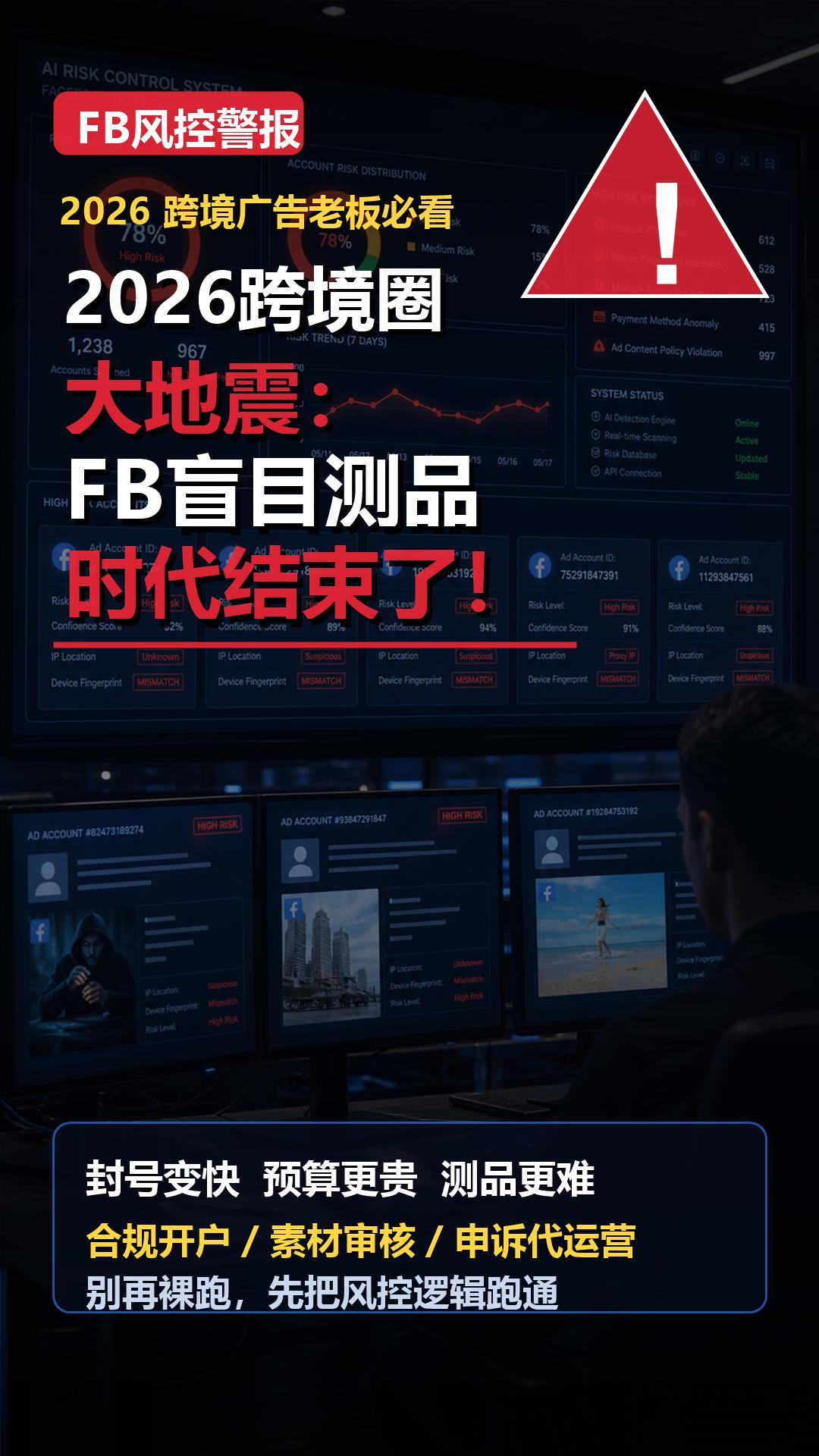
 The Era of Cross-Border Earthquakes in 2026: The Era of Blindly Testing FB Products Has Ended!
 Three key points of domestic-to-foreign trade most important, see if you really did your homework! Don’t take shortcuts.


Related Products
 EasyCamp SaaS Smart Website Marketing SystemE-Yingbao SaaS Smart Website Marketing System: AI-powered, zero-code website building. Rapidly launch multilingual independent e-commerce sites in just 10 minutes. Global server acceleration and AI-driven SEO optimization empower businesses to efficiently connect with global markets. The seamless integration of technology and user-friendly operation makes building e-commerce sites incredibly simple.
 AI+SEM Intelligent Advertising Marketing SystemAI+SEM drives intelligent ad creation, empowering full-funnel precision advertising marketing. The system automatically generates weekly/monthly reports, AI recommends keywords and target countries, monitors core metrics in real-time with intelligent alerts, and enables one-click high-conversion ad solutions to help quickly acquire customers and improve ROI.
 AI+SEO Dual Engine Optimization ServiceEasyWin AI+SEO Dual Engine Optimization System leverages AI-powered keyword mining, content generation, and comprehensive technical optimization to help foreign trade enterprises acquire high-quality organic traffic, significantly improving search rankings and conversion rates.
 AI+SNS Social Media Marketing SystemYingbao AI+SNS Social Media Marketing System - Precision social capture for the social media era. Supports one-click content synchronization across major platforms like Facebook and LinkedIn. AI intelligently rewrites posts for enhanced relevance. 24/7 AI customer service and user profiling analysis empower businesses to efficiently expand into global markets.
 AI+SEO营销解决方案易营宝AI+SEO营销解决方案,通过AI批量写作、智能生成TDK、精准关键词扩词等功能,全面优化网站SEO效果,提升流量与转化率。助力企业构建高效智能网站新生态。
 AI+SEM Advertising Marketing SolutionsAI+SEM Advertising Marketing Solution leverages AI technology to deeply empower SEM ad campaigns. It automatically generates weekly/monthly reports using AI, presenting account data across multiple dimensions for comprehensive insights into campaign performance and trends. The system precisely recommends keywords and target countries, intelligently generates high-conversion ad copy, and enables one-click activation of efficient campaign plans to help businesses rapidly acquire customers. Simultaneously, it monitors core metrics in real time, intelligently identifies abnormal fluctuations, and issues timely alerts to ensure stable, high-return advertising results.
 Domain Name ServicesEasyWin provides professional domain name services, including intelligent queries, one-stop registration, brand protection, and full lifecycle management, helping businesses build a digital brand image.
 EasyOperate B2C Cross-Border E-Commerce Platform & Independent WebsiteEasyStore B2C Cross-border E-commerce Independent Store is an intelligent website building and cross-border e-commerce integrated solution independently developed by EasyStore Information Technology (Beijing) Co., Ltd. The system is specially designed for small and medium-sized as well as large export enterprises, integrating 'website building, operation, marketing, advertising, and conversion' into one, helping enterprises quickly establish cross-border e-commerce independent stores to achieve brand globalization and global sales growth.
The platform supports multiple languages, multiple currencies, and multi-channel marketing, with built-in AI intelligent translation and SEO optimization systems, suitable for mainstream markets such as Southeast Asia, Europe and America, Latin America, and the Middle East, assisting Chinese manufacturing enterprises in efficiently deploying international e-commerce strategies. SSL证书易营宝提供专业SSL安全证书服务,包括单域名和泛域名证书,确保网站数据传输加密、身份验证和完整性保护,助力企业建立安全可信的在线业务环境。









