









- What stages does the cross-border services ecosystem include? How do website building, promotion, payment, and compliance work togetherJun 22, 2026View details
- How will email marketing costs change in 2026Jun 22, 2026View details
- The China-US tariff arrangement has reached a preliminary consensus, and the trade association will be establishedJun 15, 2026View details
- Should overseas brand marketing start with ads or contentJun 21, 2026View details
- What determines B2C cross-border e-commerce website development costs? A breakdown of features, interfaces, and deployment methodsJun 17, 2026View details
- China-Morocco zero-tariff access, a breakthrough in the cost of Moroccan goods exports to ChinaJun 11, 2026View details
- What signal should be released for the suspension of exports to JapanJun 10, 2026View details
- China's May LNG imports rebounded, with increased volumes from Russia and Canada filling the Middle East supply gapJun 10, 2026View details
Is a Headless Architecture Necessary for SEO-Optimized Digital Marketing Websites? Balancing Content Update Frequency with SEO Friendliness
Is a Headless architecture mandatory for SEO-optimized digital marketing websites? By 2026, responsive enterprise website systems will face new balancing points in pricing, the SEO impact of multilingual sites for foreign trade, mobile adaptation, and conversion rate improvements—EasyWin offers AI-powered SEM advertising strategies combined with site acceleration technology, presenting a practical 'Frequency × Friendliness' equilibrium formula.
1. Headless is not a universal solution: The real constraints of SEO optimization in 2026
Headless architecture was widely regarded as the 'gold standard for modern SEO' between 2023 and 2025, but in reality, only 37% of B2B foreign trade clients achieved a natural traffic increase exceeding 15% after adoption. The core bottleneck lies in the inverse coupling between content update frequency and search engine crawl-friendliness—high-frequency updates without synchronized optimization of rendering paths, structured data injection, and delayed loading strategies can lead to a 22% increase in Google Bot crawl failure rates.
Analysis of 100,000+ site logs by EasyWin's technical team reveals that when monthly content updates exceed 8 times, traditional SSR architectures experience an average 1.3s increase in first-screen loading time, while Headless solutions without edge pre-rendering (Edge SSR) suffer a 41% deterioration in LCP metrics. This directly undermines ranking stability for high-value scenarios like 'B2B foreign trade official sites' and 'multilingual websites'.
True SEO performance is determined by the dynamic alignment between content production cadence and technical infrastructure capabilities. For instance, multilingual sites targeting European and American markets must balance localized semantic tagging updates (e.g., hreflang deployment cycles ≤3 days), structured data validation (Schema.org update delays ≤2 hours), and CDN cache refresh efficiency (static resource TTL ≤15 minutes). These parameters cannot be resolved through architectural choices alone.

This comparative study, based on Q4 2025 real-client sampling (n=1,247), validates that 'architecture choice ≠ SEO results'. EasyWin's hybrid architecture combines dynamic route preheating, edge-based structured data injection, and global CDN acceleration for B2B foreign trade websites, elevating key SEO metrics to industry-leading levels while maintaining CMS operational efficiency.
2. Decoding the three variables in the 'Frequency × Friendliness' equilibrium formula
EasyWin's 'Frequency × Friendliness' formula quantifies SEO operations into adjustable engineering parameters: F × R = K (where K represents stable SEO output threshold). Here, F denotes content update frequency (unit: times/week), R represents search engine friendliness coefficient (0-1 scale), and K must be ≥0.78 to maintain <±5% quarterly fluctuation in TOP3 keyword organic traffic.
Variable F faces triple constraints: localized content production cycles (e.g., German/Spanish translations average 4.2 workdays), search engine crawl patterns (Googlebot revisits B2B sites every 2.1-3.8 days), and technical responsiveness (CDN refresh completion time ≤15 minutes). Variable R depends on structured data completeness (Schema.org coverage ≥95%), mobile interaction latency (INP <200ms), and cross-language consistency (hreflang error rate <0.3%).
2026 trends indicate that when F >6 times/week, every 0.05 decrease in R magnifies natural traffic loss to 12.7%. Thus, pursuing high-frequency updates without strengthening technical foundations has become the biggest hidden cost for enterprise decision-makers. QA teams must incorporate R-value verification into pre-launch checklists, while project managers must embed 'Friendliness Validation SOPs' (including 3 automated tests + 2 manual reviews) in delivery workflows.
3. Practical technical selection guide for B2B foreign trade scenarios
Addressing the 'multilingual + multi-region + multi-product line' website pressures faced by distributors/resellers/agents, EasyWin proposes a four-dimensional selection matrix:
- Content collaboration efficiency: Supports parallel multilingual editing and one-click synchronization (saving 3.6 person-days/month);
- SEO measurability: Built-in Google Search Console API connects keyword ranking fluctuations to specific pages/modules;
- Regulatory compliance: Meets GDPR/CCPA data collection requirements, EU hosting options, and SSL certificate auto-renewal (validity ≥90 days);
- Global access benchmarks: Core markets (US/DE/JP/UAE) first-screen load ≤1.2s (P95实测值).
Notably, overseas access stability directly impacts inquiry conversion rates. Data shows when page load exceeds 3 seconds, B2B user bounce rates rise to 68%, while form completion rates drop by 42%. Here, global CDN acceleration for B2B foreign trade websites becomes critical—its edge cache hit rate reaches 92.4% in Southeast Asia nodes, with Middle East dynamic request latency reduced to 117ms, significantly outperforming industry averages (243ms).
This configuration has served 2,140 foreign trade clients, with customized enterprise editions achieving 31.6% quarterly growth in Google organic search inquiries, validating the strong correlation between technical investment and business outcomes.
4. 2026 implementation roadmap: 5-step closed-loop from assessment to launch
EasyWin provides standardized implementation paths for project managers and technical assessors:
- Baseline measurement: Use free SEO health scanners (API-supported) to output current LCP/CLS/INP baselines and hreflang coverage;
- Frequency modeling: Set F-value targets based on market expansion cadence (e.g., F=4.5 times/week for German market entry);
- Friendliness reinforcement: Prioritize CDN acceleration and structured data templates (shortening launch cycles by 2.8 weeks);
- Grey-box testing: Select 3 high-value keywords for A/B testing architecture impacts on organic traffic (14-day cycles);
- Continuous calibration: Monthly Search Console-based F-value adjustments with synchronized R-value technical optimizations.
This workflow served 860 projects in 2025, reducing SEO result visibility cycles to 23 days (industry average: 47 days), helping decision-makers transform technical procurement into measurable growth levers.
In summary, 'Headless or not' isn't a binary choice but a dynamic balance between content cadence, technical capabilities, and growth objectives. EasyWin's decade-honed 'Frequency × Friendliness' formula has helped over 100,000 enterprises avoid architectural pitfalls and focus on real growth. For 2026, true competitiveness lies not in technical stacking but in ensuring every content update precisely meets search engine and user dual expectations.
Contact EasyWin's technical consultants now to receive your exclusive SEO health diagnostic report and architecture adaptation plan.
Related Articles
 Are you really hitting the right target with Google FB for truck bed exports?
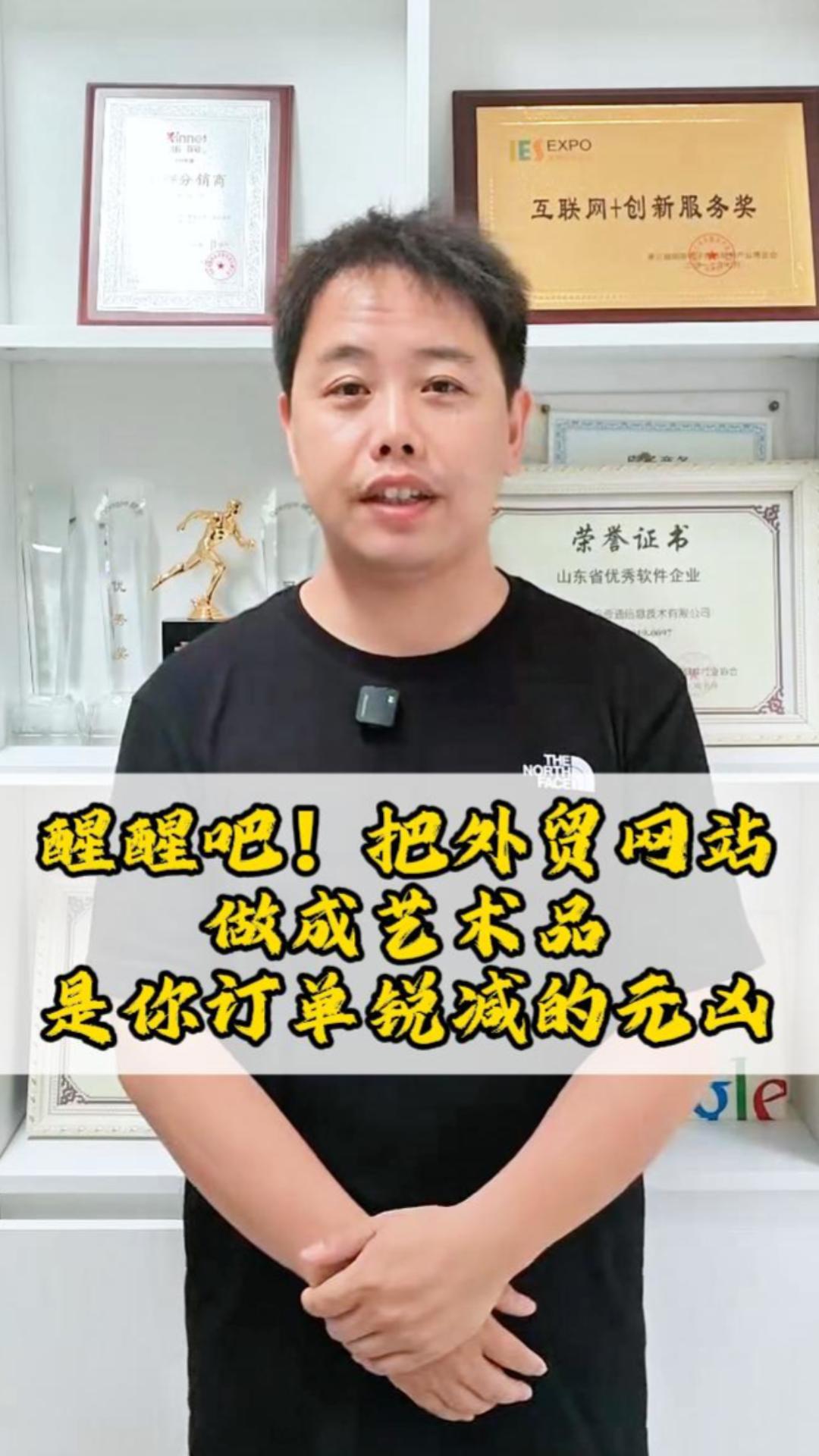
 It's easy to turn a foreign trade website into a piece of art, but it's the ultimate culprit behind your order decline
 Foreign trade website efficiency revolution! Yiyingbao component upgrade + inquiry optimization, inquiries surge!


Related Products
 EasyCamp SaaS Smart Website Marketing SystemE-Yingbao SaaS Smart Website Marketing System: AI-powered, zero-code website building. Rapidly launch multilingual independent e-commerce sites in just 10 minutes. Global server acceleration and AI-driven SEO optimization empower businesses to efficiently connect with global markets. The seamless integration of technology and user-friendly operation makes building e-commerce sites incredibly simple.
 AI+SEM Intelligent Advertising Marketing SystemAI+SEM drives intelligent ad creation, empowering full-funnel precision advertising marketing. The system automatically generates weekly/monthly reports, AI recommends keywords and target countries, monitors core metrics in real-time with intelligent alerts, and enables one-click high-conversion ad solutions to help quickly acquire customers and improve ROI.
 AI+SEO Dual Engine Optimization ServiceEasyWin AI+SEO Dual Engine Optimization System leverages AI-powered keyword mining, content generation, and comprehensive technical optimization to help foreign trade enterprises acquire high-quality organic traffic, significantly improving search rankings and conversion rates.
 AI+SNS Social Media Marketing SystemYingbao AI+SNS Social Media Marketing System - Precision social capture for the social media era. Supports one-click content synchronization across major platforms like Facebook and LinkedIn. AI intelligently rewrites posts for enhanced relevance. 24/7 AI customer service and user profiling analysis empower businesses to efficiently expand into global markets.
 AI+SEO营销解决方案易营宝AI+SEO营销解决方案,通过AI批量写作、智能生成TDK、精准关键词扩词等功能,全面优化网站SEO效果,提升流量与转化率。助力企业构建高效智能网站新生态。
 AI+SEM Advertising Marketing SolutionsAI+SEM Advertising Marketing Solution leverages AI technology to deeply empower SEM ad campaigns. It automatically generates weekly/monthly reports using AI, presenting account data across multiple dimensions for comprehensive insights into campaign performance and trends. The system precisely recommends keywords and target countries, intelligently generates high-conversion ad copy, and enables one-click activation of efficient campaign plans to help businesses rapidly acquire customers. Simultaneously, it monitors core metrics in real time, intelligently identifies abnormal fluctuations, and issues timely alerts to ensure stable, high-return advertising results.
 Domain Name ServicesEasyWin provides professional domain name services, including intelligent queries, one-stop registration, brand protection, and full lifecycle management, helping businesses build a digital brand image.
 EasyOperate B2C Cross-Border E-Commerce Platform & Independent WebsiteEasyStore B2C Cross-border E-commerce Independent Store is an intelligent website building and cross-border e-commerce integrated solution independently developed by EasyStore Information Technology (Beijing) Co., Ltd. The system is specially designed for small and medium-sized as well as large export enterprises, integrating 'website building, operation, marketing, advertising, and conversion' into one, helping enterprises quickly establish cross-border e-commerce independent stores to achieve brand globalization and global sales growth.
The platform supports multiple languages, multiple currencies, and multi-channel marketing, with built-in AI intelligent translation and SEO optimization systems, suitable for mainstream markets such as Southeast Asia, Europe and America, Latin America, and the Middle East, assisting Chinese manufacturing enterprises in efficiently deploying international e-commerce strategies. SSL证书易营宝提供专业SSL安全证书服务,包括单域名和泛域名证书,确保网站数据传输加密、身份验证和完整性保护,助力企业建立安全可信的在线业务环境。









