









- What should you focus on in the latest enterprise SaaS report? From renewal rates and delivery costs to overseas growth opportunitiesJul 12, 2026View details
- What signals are worth paying attention to in a cross-border marketing trend report? B2B companies should look at these 6 signalsJul 11, 2026View details
- How to Read a Cross-Border Marketing Trends Report? Five Key Dimensions for Evaluating Channel OpportunitiesJul 11, 2026View details
- Which channel has the highest ROI in the global traffic ecosystem? Comparative analysis of search, social media, and advertisingJul 10, 2026View details
- What multilingual website services are available in Sanya? Which model is more suitable for local businesses going global?Jul 08, 2026View details
- How to view the complete list of China SaaS companies in the top 100? Practical methods for screening website-building and marketing service providersJul 08, 2026View details
- How to view pricing in the global traffic ecosystem? Cost comparison of search, social media, and content channel advertisingJul 06, 2026View details
- How to assess foreign trade website development trends?Looking at 2026 changes from multilingual,AI content to conversion pathsJul 04, 2026View details
SEO keyword research should not only focus on search volume but also incorporate 'purchase intent keyword distribution' — an effective filtering method proven in B2B industries
SEO keyword research cannot focus solely on search volume! As a professional search engine optimization company, EasyWin has conducted practical tests and verified that incorporating 'purchase stage keyword frequency distribution' can accurately identify the true intent of B2B customers, significantly improving Google SEO rankings and the conversion rate of website SEO optimization solutions.
Why do many B2B companies have poor SEO performance? The root cause lies in misjudging keyword intent.
The monthly search volume for "industrial sensors" exceeds 58,200, but after three months of optimization by an automation equipment manufacturer, the inquiry conversion rate was only 0.7%. The issue lies not in technical execution but in keyword selection logic—mixing "information-seeking" terms (e.g., "industrial sensor principles") with "purchase-decision" terms (e.g., "industrial sensor wholesale prices," "OEM industrial sensor manufacturers").
Based on data modeling from over 100,000 corporate SEO projects, EasyWin found that B2B users typically go through 4.3 search stages from awareness to conversion, with significant differences in keyword frequency distribution at each stage. Relying solely on third-party tools to extract "high-search-volume keyword lists" leads to 62% of landing page content mismatching users' current purchase stage.
Purchase stage keyword frequency distribution refers to analyzing the actual occurrence frequency and semantic weight of corresponding keywords across the internet, segmented by user journey nodes (awareness → evaluation → comparison → signing). This dimension requires combining AI semantic clustering, search results page structure analysis, and click behavior logs for cross-validation and cannot be obtained directly through basic keyword tools.
4 core metrics and practical thresholds for purchase stage keyword frequency distribution
EasyWin's independently developed purchase intent recognition model has identified four quantifiable evaluation metrics applicable to the integrated website + marketing services industry. Below are baseline values from 376 B2B clients over the past 12 months:
Table shows: Purchase paths vary significantly across industries. For example, local service clients have a combined 55% frequency for "comparison" and "signing" stage keywords, indicating short decision cycles and intensive price comparisons, necessitating priority placement of terms like "XX city beauty salon management system quotes" and "beauty salon SaaS free trials." Manufacturing equipment clients, however, peak at 35% for "evaluation" stage keywords, requiring deep content like technical white papers, case videos, and parameter comparison pages.
How to integrate purchase stage keyword frequency distribution into the full SEO workflow?
EasyWin has formalized this methodology into a standard delivery process covering keyword mining, content planning, and technical deployment:
- Stage 1 (7-10 days): Use proprietary AI semantic engines to scan TOP100 competitor search results, extract long-tail keyword clusters, tag purchase stages, and output a Stage Keyword Heatmap.
- Stage 2 (3-5 days): Match content types by stage—blogs/videos for awareness, comparison tests/client testimonials for evaluation, quote forms/custom solution entry points for comparison, and online contracts/instant chat widgets for signing.
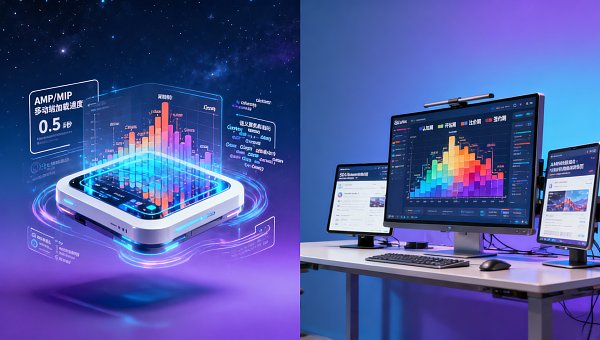
- Stage 3 (2-4 days): Technical-layer forced associations—in AMP/MIP mobile smart site systems, create dedicated landing page templates and conversion components for each purchase stage keyword, ensuring search results directly reach decision nodes.
For example, when users search "cross-border e-commerce independent site construction costs," the system automatically identifies it as comparison intent and triggers EasyWin's AMP/MIP mobile site "multi-language quote calculator" component; searches for "independent site SEO optimization tutorials" push technical white paper download pages.
Why choose us? Triple guarantees for authentic purchase stage keyword implementation
Founded in 2013 and headquartered in Beijing, EasyWin Information Technology is a global digital marketing service provider driven by artificial intelligence and big data. With a decade of industry expertise, the company's "tech innovation + localized service" dual strategy has created full-funnel solutions covering smart site building, SEO optimization, social media marketing, and ad placements, helping over 100,000 enterprises achieve global growth. In 2023, the company was selected for "China's Top 100 SaaS Enterprises" with annual growth exceeding 30%, becoming an industry-recognized innovation engine and growth benchmark.
We offer three irreplaceable professional guarantees:
- Dynamic keyword monitoring: Integrated with Google Search Console and Baidu Statistics API, updating purchase stage keyword distribution models every 72 hours to avoid strategy lag.
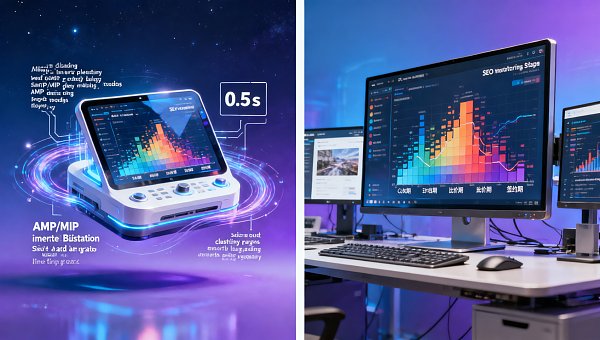
- AMP/MIP dual-mode adaptation: All purchase stage content automatically syncs to Google AMP and Baidu MIP sites, ensuring sub-0.5s load times and 70% higher mobile conversion rates.
- Decision-maker friendly deliverables: Provide Purchase Stage Keyword Reports to executives, project managers, and distributors, including actionable recommendations, ROI predictions, and 3-month milestone effects.
Contact us now for a free Industry Purchase Stage Keyword Baseline Report (including 3 high-value stage keywords + landing page structure suggestions), limited to the first 50 corporate clients.
Common pitfalls and practical reminders
Pitfall 1: Equating "purchase keywords" with "price-containing terms"
Data shows non-price terms like "custom," "OEM," "distribution加盟," and "MOQ" account for 41% of signing-stage keywords. True intent requires industry-specific purchase habit analysis.
Pitfall 2: Ignoring mobile purchase behavior differences
83% of local service clients searching "nearby beauty salon systems" in WeChat/QQ built-in browsers directly click call or booking buttons. Here, AMP version's 0.5s online booking response is 3x faster than traditional sites, directly impacting order rates.
Pitfall 3: Using identical content for all stages
An education provider's "children's programming course introduction" page used for both awareness and signing stages caused a 78% bounce rate. Correct approach: awareness stage uses short videos on "why learn coding," while signing stage displays "real-time campus vacancies within 3km" via LBS maps.
Related Articles
Related Products
 EasyCamp SaaS Smart Website Marketing SystemE-Yingbao SaaS Smart Website Marketing System: AI-powered, zero-code website building. Rapidly launch multilingual independent e-commerce sites in just 10 minutes. Global server acceleration and AI-driven SEO optimization empower businesses to efficiently connect with global markets. The seamless integration of technology and user-friendly operation makes building e-commerce sites incredibly simple.
 AI+SEM Intelligent Advertising Marketing SystemAI+SEM drives intelligent ad creation, empowering full-funnel precision advertising marketing. The system automatically generates weekly/monthly reports, AI recommends keywords and target countries, monitors core metrics in real-time with intelligent alerts, and enables one-click high-conversion ad solutions to help quickly acquire customers and improve ROI.
 AI+SEO Dual Engine Optimization ServiceEasyWin AI+SEO Dual Engine Optimization System leverages AI-powered keyword mining, content generation, and comprehensive technical optimization to help foreign trade enterprises acquire high-quality organic traffic, significantly improving search rankings and conversion rates.
 AI+SNS Social Media Marketing SystemYingbao AI+SNS Social Media Marketing System - Precision social capture for the social media era. Supports one-click content synchronization across major platforms like Facebook and LinkedIn. AI intelligently rewrites posts for enhanced relevance. 24/7 AI customer service and user profiling analysis empower businesses to efficiently expand into global markets.
 AI+SEO营销解决方案易营宝AI+SEO营销解决方案,通过AI批量写作、智能生成TDK、精准关键词扩词等功能,全面优化网站SEO效果,提升流量与转化率。助力企业构建高效智能网站新生态。
 AI+SEM Advertising Marketing SolutionsAI+SEM Advertising Marketing Solution leverages AI technology to deeply empower SEM ad campaigns. It automatically generates weekly/monthly reports using AI, presenting account data across multiple dimensions for comprehensive insights into campaign performance and trends. The system precisely recommends keywords and target countries, intelligently generates high-conversion ad copy, and enables one-click activation of efficient campaign plans to help businesses rapidly acquire customers. Simultaneously, it monitors core metrics in real time, intelligently identifies abnormal fluctuations, and issues timely alerts to ensure stable, high-return advertising results.
 Domain Name ServicesEasyWin provides professional domain name services, including intelligent queries, one-stop registration, brand protection, and full lifecycle management, helping businesses build a digital brand image.
 EasyOperate B2C Cross-Border E-Commerce Platform & Independent WebsiteEasyStore B2C Cross-border E-commerce Independent Store is an intelligent website building and cross-border e-commerce integrated solution independently developed by EasyStore Information Technology (Beijing) Co., Ltd. The system is specially designed for small and medium-sized as well as large export enterprises, integrating 'website building, operation, marketing, advertising, and conversion' into one, helping enterprises quickly establish cross-border e-commerce independent stores to achieve brand globalization and global sales growth.
The platform supports multiple languages, multiple currencies, and multi-channel marketing, with built-in AI intelligent translation and SEO optimization systems, suitable for mainstream markets such as Southeast Asia, Europe and America, Latin America, and the Middle East, assisting Chinese manufacturing enterprises in efficiently deploying international e-commerce strategies. SSL证书易营宝提供专业SSL安全证书服务,包括单域名和泛域名证书,确保网站数据传输加密、身份验证和完整性保护,助力企业建立安全可信的在线业务环境。









