









- Cross-Border Marketing Trend Research: Why More and More Companies Are Starting to Deploy AI Search and GEO OptimizationJun 30, 2026View details
- Cross-Border Marketing Trend Research: How Independent Sites, AI Content, and Short-Video Customer Acquisition Are ChangingJun 30, 2026View details
- How Can a Brand Updates Page Be Made More SEO-Friendly? Analysis of Update Frequency, Content Structure, and Internal Linking StrategyJun 28, 2026View details
- What stages does the cross-border services ecosystem include? How do website building, promotion, payment, and compliance work togetherJun 22, 2026View details
- How will email marketing costs change in 2026Jun 22, 2026View details
- The China-US tariff arrangement has reached a preliminary consensus, and the trade association will be establishedJun 15, 2026View details
- Should overseas brand marketing start with ads or contentJun 21, 2026View details
- What determines B2C cross-border e-commerce website development costs? A breakdown of features, interfaces, and deployment methodsJun 17, 2026View details
For Eyingbao e-commerce standalone website development, first clarify which pages must be prioritized
Why Eyingbao eCommerce Independent Store Development Should Start with Clarifying Page Priorities
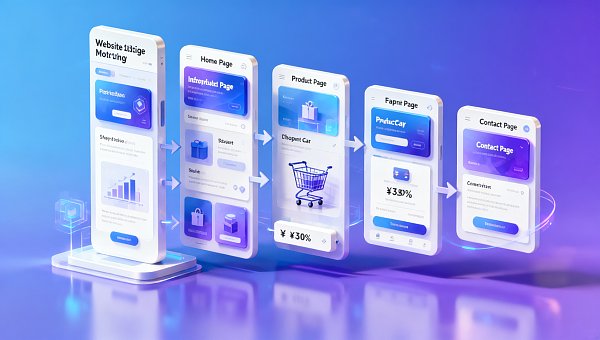
When building an Eyingbao eCommerce independent store, do not pursue a large and all-inclusive feature set right from the start. For project execution, only by first defining the priorities of core pages such as the homepage, product pages, and checkout pages can you better control the budget, shorten the launch cycle, and lay a solid foundation for subsequent traffic acquisition, conversion, and repeat purchases.
In the integrated website + marketing services scenario, a website is not a standalone display tool, but a critical link for receiving traffic, accumulating data, and driving transactions. If the page sequence in Eyingbao eCommerce independent store development is disorganized, the common result is repeated redevelopment and rework, while the effectiveness of ad landing pages also becomes difficult to scale.
Since its establishment in 2013, Eyingbao Information Technology (Beijing) Co., Ltd. has continuously provided full-chain services centered on intelligent website building, SEO optimization, social media marketing, and advertising placement. Its core value is not only building a website, but more importantly enabling the site to have marketing conversion capabilities from day one.
What Detours a Checklist-Based Evaluation Can Help Projects Avoid
Many website delays are not because the technology cannot deliver, but because the early stage failed to clearly distinguish between “must be done first” and “can be done later.” Eyingbao eCommerce independent store development uses checklist-based evaluation to lock in key pages, key content, and key data nodes in advance, avoiding constant changes during execution.
This approach also has one direct benefit: it makes marketing collaboration easier. SEO needs a crawlable structure, advertising needs high-converting landing pages, social media needs clear brand entry points, and payment needs a smooth closed loop. Only when page priorities are clear can subsequent campaign efficiency be higher.
The Priority Page Checklist for Eyingbao eCommerce Independent Store Development
- The homepage must first confirm brand positioning, featured product categories, core selling points, and action entry points, ensuring that within three seconds of entering, visitors know what you sell, who it is for, and where they should click next.
- The product listing page should first establish clear filtering logic, including categories, price, specifications, applications, and popularity ranking, otherwise traffic brought in by ads can easily be lost directly during the browsing stage.
- The product detail page is a core conversion page and must prioritize the layout of selling point explanations, parameter information, trust signals, frequently asked questions, and purchase buttons, to avoid information gaps affecting ordering decisions.
- The shopping cart page needs early planning for fee display, discount explanations, quantity modification, shipping prompts, and the continue checkout entry point, reducing last-minute abandonment caused by non-transparent pricing.
- The payment checkout page should prioritize form simplification, payment methods, address entry, tax prompts, and security trust badges, ensuring that key steps are short, clear, stable, and trackable.
- The About Us page may seem secondary, but it is actually a trust-building support page. It is recommended to launch company background, service capabilities, case strengths, and global support information as early as possible to enhance brand credibility.
- The contact page and inquiry page should set up multiple communication entry points as soon as possible, including forms, email, phone, social media, and regional information, making it convenient for visitors from different sources to quickly initiate inquiries.
- Policy pages should not be postponed until the end. Returns and exchanges, privacy policy, shipping information, and payment terms directly affect payment confidence, and are also related to site compliance and campaign review approval.
- Marketing landing pages are recommended to be planned simultaneously with the homepage, with separate designs for advertising keywords, campaign themes, and audience needs, avoiding forcing all traffic back to the homepage and diluting conversions.
- Blog or content pages do not necessarily need to be produced in large numbers in the first batch, but at minimum the structure should be reserved to lay a foundation for subsequent SEO optimization, long-tail keyword deployment, and industry content accumulation.
How to Adjust Page Priorities for Different Application Scenarios
Corporate Portal Websites
If the current goal is more focused on a corporate portal, Eyingbao eCommerce independent store development should not merely create a “company introduction.” The homepage, solutions page, case studies page, and contact page are often more worthy of early investment than complex transaction functions.
For example, when presenting automotive-related content, you can use immersive visual storytelling, large minimalist banners, technical specification modules, and authentic review modules to quickly strengthen professionalism and business conversion efficiency.
Advertising-Oriented Websites
If the website is mainly used to receive advertising traffic, then the homepage is not necessarily the page that should be optimized first. More important is whether campaign pages, single-product pages, checkout pages, and conversion tracking setup are in place first.
At this stage, focus should be placed on checking above-the-fold selling points, promotional information, form length, button placement, and data return tracking. Fewer but more precise pages usually make it easier to achieve stable ROI than having many scattered sections.
SEO Growth-Oriented Websites
If you want to rely on organic traffic growth later, Eyingbao eCommerce independent store development should address structural hierarchy, category planning, URL standards, internal linking relationships, and content templates earlier, rather than patching them after launch.
In particular, the relationship between product pages and content pages should be designed well in the early stage of website building. This not only helps search engines understand the topic, but also helps users move smoothly from content reading into conversion pages.
The Most Easily Overlooked Pages and Risk Reminders
First, the no-search-results page is often overlooked. In fact, it directly affects the on-site experience. It is recommended to add related recommendations, popular categories, and return entry points to avoid visitors leaving the site directly when no results are found.
Second, the 404 page should not just display an error message. A good 404 page should retain navigation, a search box, and core recommendations to help recover traffic, otherwise SEO accumulation and the value of external links will both be wasted.
Third, mobile priority is often underestimated. Today, most traffic arrives on mobile first. If the first screen loads slowly, buttons are hard to tap, or parameters are difficult to read, then all previous marketing investment will be diluted.
Fourth, data tracking is not something to discuss only after launch. Events such as homepage clicks, add-to-cart actions, payment initiation, and form submissions must be planned simultaneously with page design, otherwise subsequent optimization will have no basis.
Fifth, visual expression cannot be separated from conversion logic. Highly recognizable styles such as red and black are suitable for creating a high-performance feel, but the page structure still needs to serve the browsing path and action triggers.
For Actual Execution, It Is Recommended to Advance in This Order
- First determine the business objective, whether it is transaction-oriented, inquiry-oriented, or brand exposure-oriented, and then work backward to define the scope of pages that must go live in the first phase. Do not include all features in development from the very beginning.
- Then organize content assets, including brand copy, product images, specification parameters, review materials, policy text, and frequently asked questions. This step determines whether the pages can take shape in one go.
- Next, map out the page relationship diagram, clearly explaining the navigation paths among the homepage, listing pages, detail pages, shopping cart, checkout page, and contact page before moving into design and development.
- Before launch, focus on testing mobile speed, form usability, payment flow, tracking data return, and SEO fundamentals, ensuring that the website is not only visually presentable, but also capable of supporting marketing actions.
If it is a display-oriented page with high visual requirements, you can also add tabbed product galleries, dynamic data monitoring dashboards, or social media interaction areas in the second phase, but it is not recommended to squeeze out resources for the first batch of core pages.
Conclusion: Get the Key Pages Right First, Then Talk About Expanding Features
The focus of Eyingbao eCommerce independent store development is never that more pages are always better, but rather to prioritize completing, smoothing, and making trackable the pages that can receive traffic, build trust, and drive conversions.
A more reliable approach is to first complete the homepage, product pages, checkout pages, policy pages, and contact page, and then gradually expand according to SEO, advertising placement, and brand operations needs. This not only helps control costs, but also better aligns with the long-term growth logic of integrated website + marketing services.
If you are preparing to launch a project, it is recommended to first list the first batch of pages to go live, the goal of each page, and the corresponding data metrics. Once these foundations are solid, subsequent content growth, advertising scale-up, or brand upgrades will all become much easier.
Related Articles
 4 Major Reasons Behind WhatsApp Account Bans, A Quick Self-Check for Foreign Trade Professionals
 Cross-Border Marketing Trend Research: Why More and More Companies Are Starting to Deploy AI Search and GEO Optimization
 Cross-Border Marketing Trend Research: How Independent Sites, AI Content, and Short-Video Customer Acquisition Are Changing



Related Products
 EasyCamp SaaS Smart Website Marketing SystemE-Yingbao SaaS Smart Website Marketing System: AI-powered, zero-code website building. Rapidly launch multilingual independent e-commerce sites in just 10 minutes. Global server acceleration and AI-driven SEO optimization empower businesses to efficiently connect with global markets. The seamless integration of technology and user-friendly operation makes building e-commerce sites incredibly simple.
 AI+SEM Intelligent Advertising Marketing SystemAI+SEM drives intelligent ad creation, empowering full-funnel precision advertising marketing. The system automatically generates weekly/monthly reports, AI recommends keywords and target countries, monitors core metrics in real-time with intelligent alerts, and enables one-click high-conversion ad solutions to help quickly acquire customers and improve ROI.
 AI+SEO Dual Engine Optimization ServiceEasyWin AI+SEO Dual Engine Optimization System leverages AI-powered keyword mining, content generation, and comprehensive technical optimization to help foreign trade enterprises acquire high-quality organic traffic, significantly improving search rankings and conversion rates.
 AI+SNS Social Media Marketing SystemYingbao AI+SNS Social Media Marketing System - Precision social capture for the social media era. Supports one-click content synchronization across major platforms like Facebook and LinkedIn. AI intelligently rewrites posts for enhanced relevance. 24/7 AI customer service and user profiling analysis empower businesses to efficiently expand into global markets.
 AI+SEO营销解决方案易营宝AI+SEO营销解决方案,通过AI批量写作、智能生成TDK、精准关键词扩词等功能,全面优化网站SEO效果,提升流量与转化率。助力企业构建高效智能网站新生态。
 AI+SEM Advertising Marketing SolutionsAI+SEM Advertising Marketing Solution leverages AI technology to deeply empower SEM ad campaigns. It automatically generates weekly/monthly reports using AI, presenting account data across multiple dimensions for comprehensive insights into campaign performance and trends. The system precisely recommends keywords and target countries, intelligently generates high-conversion ad copy, and enables one-click activation of efficient campaign plans to help businesses rapidly acquire customers. Simultaneously, it monitors core metrics in real time, intelligently identifies abnormal fluctuations, and issues timely alerts to ensure stable, high-return advertising results.
 Domain Name ServicesEasyWin provides professional domain name services, including intelligent queries, one-stop registration, brand protection, and full lifecycle management, helping businesses build a digital brand image.
 EasyOperate B2C Cross-Border E-Commerce Platform & Independent WebsiteEasyStore B2C Cross-border E-commerce Independent Store is an intelligent website building and cross-border e-commerce integrated solution independently developed by EasyStore Information Technology (Beijing) Co., Ltd. The system is specially designed for small and medium-sized as well as large export enterprises, integrating 'website building, operation, marketing, advertising, and conversion' into one, helping enterprises quickly establish cross-border e-commerce independent stores to achieve brand globalization and global sales growth.
The platform supports multiple languages, multiple currencies, and multi-channel marketing, with built-in AI intelligent translation and SEO optimization systems, suitable for mainstream markets such as Southeast Asia, Europe and America, Latin America, and the Middle East, assisting Chinese manufacturing enterprises in efficiently deploying international e-commerce strategies. SSL证书易营宝提供专业SSL安全证书服务,包括单域名和泛域名证书,确保网站数据传输加密、身份验证和完整性保护,助力企业建立安全可信的在线业务环境。









