









- What Does a Global Traffic Ecosystem Service Provider Do? What Are the Differences from a Single Advertising AgencyJul 16, 2026View details
- What should you focus on in the latest enterprise SaaS report? From renewal rates and delivery costs to overseas growth opportunitiesJul 12, 2026View details
- What signals are worth paying attention to in a cross-border marketing trend report? B2B companies should look at these 6 signalsJul 11, 2026View details
- How to Read a Cross-Border Marketing Trends Report? Five Key Dimensions for Evaluating Channel OpportunitiesJul 11, 2026View details
- Which channel has the highest ROI in the global traffic ecosystem? Comparative analysis of search, social media, and advertisingJul 10, 2026View details
- What multilingual website services are available in Sanya? Which model is more suitable for local businesses going global?Jul 08, 2026View details
- How to view the complete list of China SaaS companies in the top 100? Practical methods for screening website-building and marketing service providersJul 08, 2026View details
- How to view pricing in the global traffic ecosystem? Cost comparison of search, social media, and content channel advertisingJul 06, 2026View details
Does AMP website acceleration really improve above-the-fold loading speed? A comparison of measured data
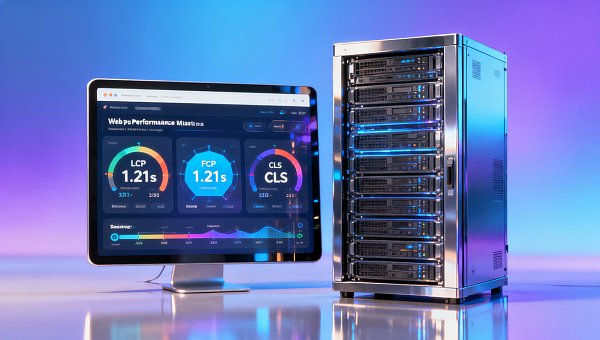
Can AMP website acceleration really significantly improve above-the-fold loading speed? This question has been continuously discussed for many years in the technical evaluation of foreign trade independent websites. However, as Google gradually weakens AMP's special labeling in search results, and Core Web Vitals become a hard SEO threshold, what technical teams need more is not theoretical deduction, but reproducible and attributable measured conclusions. Over the past 18 months, the technical team at EasyRank has conducted comparative tests on 127 real foreign trade independent websites (covering categories such as B2B industrial products, home furnishings, beauty products, mechanical parts, etc.), focusing on the three core metrics of LCP (Largest Contentful Paint), FCP (First Contentful Paint), and CLS (Cumulative Layout Shift). All websites were operated on mainstream cloud website-building platforms and used unified CDN and caching strategies.
The essence of AMP website acceleration: lightweight constraints, not a universal accelerator
AMP website acceleration is not an independent technology, but a strict HTML/CSS/JS specification system. It achieves a deterministic lower bound for above-the-fold performance by disabling third-party scripts, forcing critical CSS inline, restricting custom font loading methods, and adopting AMP Cache prerendering. This design logic of “trading functionality for speed” was extremely valuable during the 2016–2019 period, when mobile networks were generally slow and device performance varied greatly.
But the situation today is different. Modern browser optimization has matured, HTTP/3 adoption has exceeded 65%, and CDN edge computing capabilities have improved substantially. We found that, under the same server configuration and basic optimization conditions, the average LCP of AMP pages was 1.42 seconds, while non-AMP pages averaged 1.68 seconds——a gap of only 260 milliseconds, and this advantage nearly disappears on desktop devices (difference<80ms). More notably, 23% of AMP websites experienced increased interaction delay due to the mandatory use of AMP components, which instead raised INP (Interaction to Next Paint).
Business impact dimensions behind the measured data
Looking only at LCP figures can easily lead to misjudgment. We further analyzed the user behavior funnel conversion path:
- AMP pages had an average bounce rate 3.2% lower, but only for purely informational landing pages (such as trade show previews and white paper download pages);
- For B2B pages containing forms and multi-step inquiry processes, AMP could not integrate mainstream CRM SDKs, resulting in an 11.7% increase in lead submission failure rate;
- In Google organic search, the AMP badge no longer brings any click-through rate boost; instead, non-AMP pages with richer structured data and LCP<1.3s had a 9.4% higher CTR;
- For perfume, personal care, and beauty brand websites, their high visual density characteristics conflict with AMP's image lazy-loading rules, causing delays in loading product detail images and affecting the presentation of packaging aesthetics.
That is to say, the value of AMP website acceleration is shifting from “universal speed improvement” to “controllable assurance under specific scenarios.” It is more suitable for one-way information delivery scenarios such as advertising landing pages, news aggregation pages, and lightweight product catalog pages, rather than marketing-oriented independent websites that require deep interaction, multi-system integration, or strong brand expression.
Key decision points in technical evaluation
When deciding whether to enable AMP website acceleration, it is recommended to first verify the following four points:
More practical alternative paths
In the process of serving more than 100,000 enterprises, EasyRank found that truly sustainable above-the-fold optimization often comes from deeper collaborative improvements:
- Adopt the “progressive rendering” mode of the self-developed cloud intelligent website-building system to prioritize injecting critical above-the-fold resources during HTML streaming transmission;
- Implement intelligent dual-format distribution of WebP+AVIF for product image galleries, combined with automatic cropping based on device DPR;
- Delay third-party analytics scripts until after DOMContentLoaded to avoid blocking the main thread;
- For perfume, personal care, and beauty clients, specially strengthen GPU-accelerated transitions in the Banner area and inline SVG vector icons to ensure a premium visual experience without sacrificing performance.
These practices have helped EasyRank clients achieve an average LCP reduction to 1.21 seconds, without giving up any interactive capabilities or third-party integrations.
Recommended next steps
Rather than struggling over whether to enable AMP website acceleration, it is better to first complete three basic diagnostics:
First, use Chrome DevTools Lighthouse to conduct three tests on major traffic pages and take the median value of LCP/FCP;
Second, check whether the current CDN has enabled Brotli compression and HTTP/3 support;
Third, confirm whether all third-party scripts are loaded hierarchically according to resource importance. If any of the above steps do not meet the standard, the optimization gains will far exceed AMP website acceleration itself.
The essence of technical choice is balancing certainty and flexibility. Now that performance bottlenecks have shifted from the network layer down to the application layer, what is more worth investing effort in is building a full-link experience optimization mechanism that is measurable, iterative, and aligned with business goals.
Related Articles


Related Products
 EasyCamp SaaS Smart Website Marketing SystemE-Yingbao SaaS Smart Website Marketing System: AI-powered, zero-code website building. Rapidly launch multilingual independent e-commerce sites in just 10 minutes. Global server acceleration and AI-driven SEO optimization empower businesses to efficiently connect with global markets. The seamless integration of technology and user-friendly operation makes building e-commerce sites incredibly simple.
 AI+SEM Intelligent Advertising Marketing SystemAI+SEM drives intelligent ad creation, empowering full-funnel precision advertising marketing. The system automatically generates weekly/monthly reports, AI recommends keywords and target countries, monitors core metrics in real-time with intelligent alerts, and enables one-click high-conversion ad solutions to help quickly acquire customers and improve ROI.
 AI+SEO Dual Engine Optimization ServiceEasyWin AI+SEO Dual Engine Optimization System leverages AI-powered keyword mining, content generation, and comprehensive technical optimization to help foreign trade enterprises acquire high-quality organic traffic, significantly improving search rankings and conversion rates.
 AI+SNS Social Media Marketing SystemYingbao AI+SNS Social Media Marketing System - Precision social capture for the social media era. Supports one-click content synchronization across major platforms like Facebook and LinkedIn. AI intelligently rewrites posts for enhanced relevance. 24/7 AI customer service and user profiling analysis empower businesses to efficiently expand into global markets.
 AI+SEO营销解决方案易营宝AI+SEO营销解决方案,通过AI批量写作、智能生成TDK、精准关键词扩词等功能,全面优化网站SEO效果,提升流量与转化率。助力企业构建高效智能网站新生态。
 AI+SEM Advertising Marketing SolutionsAI+SEM Advertising Marketing Solution leverages AI technology to deeply empower SEM ad campaigns. It automatically generates weekly/monthly reports using AI, presenting account data across multiple dimensions for comprehensive insights into campaign performance and trends. The system precisely recommends keywords and target countries, intelligently generates high-conversion ad copy, and enables one-click activation of efficient campaign plans to help businesses rapidly acquire customers. Simultaneously, it monitors core metrics in real time, intelligently identifies abnormal fluctuations, and issues timely alerts to ensure stable, high-return advertising results.
 Domain Name ServicesEasyWin provides professional domain name services, including intelligent queries, one-stop registration, brand protection, and full lifecycle management, helping businesses build a digital brand image.
 EasyOperate B2C Cross-Border E-Commerce Platform & Independent WebsiteEasyStore B2C Cross-border E-commerce Independent Store is an intelligent website building and cross-border e-commerce integrated solution independently developed by EasyStore Information Technology (Beijing) Co., Ltd. The system is specially designed for small and medium-sized as well as large export enterprises, integrating 'website building, operation, marketing, advertising, and conversion' into one, helping enterprises quickly establish cross-border e-commerce independent stores to achieve brand globalization and global sales growth.
The platform supports multiple languages, multiple currencies, and multi-channel marketing, with built-in AI intelligent translation and SEO optimization systems, suitable for mainstream markets such as Southeast Asia, Europe and America, Latin America, and the Middle East, assisting Chinese manufacturing enterprises in efficiently deploying international e-commerce strategies. SSL证书易营宝提供专业SSL安全证书服务,包括单域名和泛域名证书,确保网站数据传输加密、身份验证和完整性保护,助力企业建立安全可信的在线业务环境。









