









- Which channel has the highest ROI in the global traffic ecosystem? Comparative analysis of search, social media, and advertisingJul 10, 2026View details
- What multilingual website services are available in Sanya? Which model is more suitable for local businesses going global?Jul 08, 2026View details
- How to view the complete list of China SaaS companies in the top 100? Practical methods for screening website-building and marketing service providersJul 08, 2026View details
- How to view pricing in the global traffic ecosystem? Cost comparison of search, social media, and content channel advertisingJul 06, 2026View details
- How to assess foreign trade website development trends?Looking at 2026 changes from multilingual,AI content to conversion pathsJul 04, 2026View details
- What are the new trends in multilingual marketing data analytics tools in 2026? Focus on attribution、automation and complianceJul 04, 2026View details
- Is Brand Globalization Marketing Consulting Worth Buying? At What Stage Should Companies Bring It InJul 01, 2026View details
- Cross-Border Marketing Trend Research: Why More and More Companies Are Starting to Deploy AI Search and GEO OptimizationJun 30, 2026View details
How is the price calculated for 301 redirects? Is it based on the number of pages, rule complexity, or service period?
Why are there such large price differences for 301 redirect settings?
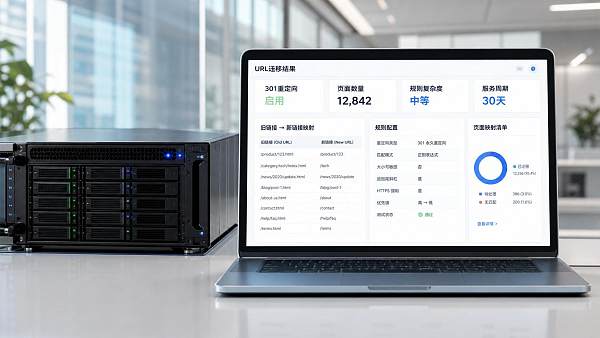
There's no standardized pricing for 301 redirects. While they all seem to involve "redirecting," the actual quotes can vary significantly. Cheaper solutions might only handle a small number of old links; more expensive solutions often include rule design, testing and verification, data checking, and ongoing maintenance.
When redesigning a website, changing a domain name, migrating sections, or adjusting a multilingual site, the price of setting up a 301 redirect is usually affected by four types of factors: the number of pages, the complexity of the rules, the service cycle, and whether the execution team provides a complete delivery.
Focusing solely on the cost per instance can easily lead to misjudgment. What truly needs comparison is not just whether the price of a 301 redirect is high or low, but whether this cost can reduce traffic loss, shorten index recovery time, and lower subsequent rework costs.
Four core dimensions affecting the price of 301 redirects
First, look at the number of pages. This is the most intuitive indicator. The more old links there are, the more work is required to sort them out. This is especially true for websites with product pages, article pages, and filter pages. Simply relying on outbound links cannot directly complete the mapping; you also need to determine which pages to keep, merge, or abandon.
Next, consider the complexity of the rules. Some projects involve one-to-one redirects, with clear rules and relatively stable costs. However, once directory-level redirects, parameter processing, regular expression matching, and unified paths for multiple languages are involved, the price of setting up 301 redirects will increase significantly because the technical threshold and testing costs are higher.
Thirdly, there's the service period. It's normal for prices to differ between a one-time configuration and a plan that includes 30 days, 90 days, or even six months of observation and maintenance. The reason is simple: search engines need time to recognize 301 redirects, and during this period, problems such as dead links, missing links, and redirect loops may occur.
Finally, there's the depth of delivery. Some services simply "help you add rules," while others simultaneously complete redirect lists, test reports, anomaly troubleshooting, and inclusion tracking suggestions. On the surface, they all seem to be setting prices for 301 redirects, but the actual services you're buying are completely different.
Which projects are suitable for pricing based on the number of pages?
Pricing for 301 redirects based on the number of pages is suitable for websites with a relatively clear structure. Examples include redesigning a corporate website, migrating special pages, and replacing a small number of product pages. The advantage of this type of project is that the budget is easy to calculate, and it's convenient to compare prices across different vendors during the procurement process.
However, this pricing method also has limitations. The same number of pages does not necessarily mean the same level of difficulty. The workload for 100 static pages and 100 pages with parameters and multiple language versions can be doubled. Therefore, setting prices for 301 redirects solely based on quantity easily overlooks hidden costs.
During the actual evaluation, you can first ask the service provider to clarify the statistical criteria, including whether the billing is based on the number of old links, the number of target links, or the number of valid mappings. If this detail is not clear, additional charges can easily arise later.
- Pages under 100: Usually suitable for minor redesigns or minor adjustments to sections.
- 100 to 1000 pages: Commonly seen in corporate website upgrades or multilingual expansions.
- For pages over 1000: It is more suitable to combine rules for batch processing rather than manually configuring each item one by one.
Pricing based on rule complexity better reflects the true cost.
Recent project changes indicate that more and more websites are not simply changing a few links, but rather doing so in conjunction with system upgrades, directory restructuring, and international site expansion. In such cases, calculating the price of 301 redirects based on rule complexity is usually more reasonable.
For example, the following situations usually drive up the price of setting up a 301 redirect: the old site's URLs are irregular, the new site's structure has been significantly restructured; Chinese, English, or multilingual directories need to be redirected separately; historical pages have duplicate indexing; and advertising landing pages and organic traffic pages need to retain their weight separately.
A more obvious signal is that the technical execution side requires server rules, program routing, batch mapping scripts, and regression testing. Once this step is reached, the quote is no longer a simple labor fee for "changing a few links," but rather leans towards a technical service fee.
Why does the service period affect the price of 301 redirect settings?
Many people easily overlook one point: a 301 redirect is not a one-time event after deployment. After the redirect rule takes effect, it's necessary to monitor crawling, indexing, ranking, and access logs. Without continuous monitoring, what initially appears normal may later exhibit numerous anomalies.
Therefore, 301 redirects with maintenance cycles are usually more expensive, but this extra cost may not be wasted. Especially for websites that rely on organic traffic for customer acquisition, the traffic loss from a single incorrect redirect can often outweigh the maintenance fees.
Common service cycles can be divided into three levels:
- Configuration only: Suitable for low-risk, small-scale modifications.
- Includes 30-day observation period: suitable for regular website redesign projects.
- Includes over 90 days of maintenance: suitable for large-scale migrations and websites with heavy SEO assets.
This also means that when comparing the pricing of 301 redirects, you can't just look at the contract amount; you also need to consider the service termination point. Whether it includes review, repair, log analysis, and exception feedback directly determines the stability of the project in its later stages.
How to determine if a price quote is reasonable during procurement?
When determining whether a 301 redirect pricing strategy is reasonable, the key is not the "lowest price," but rather its "verifiability." A reliable quote should at least specify the page scope, rule type, implementation method, testing standards, and after-sales service period. Missing any of these elements could lead to future disputes.
We recommend checking the following five items directly when requesting a quote:
- Should a mapping list of old and new links be provided?
- Does it specify the scope of application of the redirection rules?
- Does it include dead links and loop jump detection?
- Whether an observation and repair period is agreed upon after the system goes live.
- Can it be used in conjunction with SEO indexing and weight migration assessment?
If the service provider has experience in website building, SEO optimization, landing pages, and multilingual websites, they are usually better able to understand the business logic behind the pricing of 301 redirects. This is because they know that redirects are not isolated actions, but rather a fundamental link in the website growth chain.
Integrated service platforms like Yiyingbao, which cover intelligent website building, SEO optimization, and overseas marketing, often consider website structure, indexing performance, conversion paths, and subsequent promotion in a coordinated manner when handling 301 redirect solutions. This makes it easier to control the overall cost than simply outsourcing technology.
How to choose the right price for a 301 redirect to avoid common pitfalls?
If the project is small, has few pages, and simple rules, you can prioritize billing by the number of pages, provided that the mapping list is complete and the delivery boundaries are clearly defined. This makes the budget clear and execution faster.
If the project involves website redesign, domain migration, multilingual expansion, or handling a large number of historical pages, it is recommended to comprehensively evaluate the price of 301 redirect settings based on the complexity of the rules and the service period. Although the initial cost may be higher, it is usually more economical in the long run.
A practical criterion is whether the quote clearly outlines "pre-implementation preparation, in-implementation testing, and post-implementation maintenance." The clearer the details, the less likely it is to increase the price later, and the better it guarantees stable traffic after the website migration.
Ultimately, the pricing of 301 redirects shouldn't be based solely on the unit price, but rather on the results. A truly cost-effective solution is one that protects existing indexing, reduces redirect errors, and supports subsequent SEO and marketing efforts.
Related Articles
 Which channel has the highest ROI in the global traffic ecosystem? Comparative analysis of search, social media, and advertising
 The Era of Cross-Border Earthquakes in 2026: The Era of Blindly Testing FB Products Has Ended!
 Three key points of domestic-to-foreign trade most important, see if you really did your homework! Don’t take shortcuts.



Related Products
 EasyCamp SaaS Smart Website Marketing SystemE-Yingbao SaaS Smart Website Marketing System: AI-powered, zero-code website building. Rapidly launch multilingual independent e-commerce sites in just 10 minutes. Global server acceleration and AI-driven SEO optimization empower businesses to efficiently connect with global markets. The seamless integration of technology and user-friendly operation makes building e-commerce sites incredibly simple.
 AI+SEM Intelligent Advertising Marketing SystemAI+SEM drives intelligent ad creation, empowering full-funnel precision advertising marketing. The system automatically generates weekly/monthly reports, AI recommends keywords and target countries, monitors core metrics in real-time with intelligent alerts, and enables one-click high-conversion ad solutions to help quickly acquire customers and improve ROI.
 AI+SEO Dual Engine Optimization ServiceEasyWin AI+SEO Dual Engine Optimization System leverages AI-powered keyword mining, content generation, and comprehensive technical optimization to help foreign trade enterprises acquire high-quality organic traffic, significantly improving search rankings and conversion rates.
 AI+SNS Social Media Marketing SystemYingbao AI+SNS Social Media Marketing System - Precision social capture for the social media era. Supports one-click content synchronization across major platforms like Facebook and LinkedIn. AI intelligently rewrites posts for enhanced relevance. 24/7 AI customer service and user profiling analysis empower businesses to efficiently expand into global markets.
 AI+SEO营销解决方案易营宝AI+SEO营销解决方案,通过AI批量写作、智能生成TDK、精准关键词扩词等功能,全面优化网站SEO效果,提升流量与转化率。助力企业构建高效智能网站新生态。
 AI+SEM Advertising Marketing SolutionsAI+SEM Advertising Marketing Solution leverages AI technology to deeply empower SEM ad campaigns. It automatically generates weekly/monthly reports using AI, presenting account data across multiple dimensions for comprehensive insights into campaign performance and trends. The system precisely recommends keywords and target countries, intelligently generates high-conversion ad copy, and enables one-click activation of efficient campaign plans to help businesses rapidly acquire customers. Simultaneously, it monitors core metrics in real time, intelligently identifies abnormal fluctuations, and issues timely alerts to ensure stable, high-return advertising results.
 Domain Name ServicesEasyWin provides professional domain name services, including intelligent queries, one-stop registration, brand protection, and full lifecycle management, helping businesses build a digital brand image.
 EasyOperate B2C Cross-Border E-Commerce Platform & Independent WebsiteEasyStore B2C Cross-border E-commerce Independent Store is an intelligent website building and cross-border e-commerce integrated solution independently developed by EasyStore Information Technology (Beijing) Co., Ltd. The system is specially designed for small and medium-sized as well as large export enterprises, integrating 'website building, operation, marketing, advertising, and conversion' into one, helping enterprises quickly establish cross-border e-commerce independent stores to achieve brand globalization and global sales growth.
The platform supports multiple languages, multiple currencies, and multi-channel marketing, with built-in AI intelligent translation and SEO optimization systems, suitable for mainstream markets such as Southeast Asia, Europe and America, Latin America, and the Middle East, assisting Chinese manufacturing enterprises in efficiently deploying international e-commerce strategies. SSL证书易营宝提供专业SSL安全证书服务,包括单域名和泛域名证书,确保网站数据传输加密、身份验证和完整性保护,助力企业建立安全可信的在线业务环境。









