









- What stages does the cross-border services ecosystem include? How do website building, promotion, payment, and compliance work togetherJun 22, 2026View details
- How will email marketing costs change in 2026Jun 22, 2026View details
- The China-US tariff arrangement has reached a preliminary consensus, and the trade association will be establishedJun 15, 2026View details
- Should overseas brand marketing start with ads or contentJun 21, 2026View details
- What determines B2C cross-border e-commerce website development costs? A breakdown of features, interfaces, and deployment methodsJun 17, 2026View details
- China-Morocco zero-tariff access, a breakthrough in the cost of Moroccan goods exports to ChinaJun 11, 2026View details
Is SaaS website data secure? How should permissions, backups, and compliance risks be assessed
Why Security for SaaS Websites Is Becoming More and More Critical
Is SaaS website data security secure? Today, this question is no longer just a detail that the technical team cares about, but a fundamental issue that must be answered before website launch, marketing campaigns, and overseas business growth.

For businesses that rely on official websites to acquire customers, cross-border stores to drive transactions, and landing pages to convert advertising traffic, a website carries not only page content, but also customer data, inquiry records, order information, visit logs, and campaign data.
Once access is out of control, backups become invalid, or compliance loopholes are amplified, the consequences are not just a single-point failure, but brand trust, lead security, and operational continuity all being affected at the same time.
In a website + marketing service integrated scenario, the website platform is often connected to SEO, ads, social media, and data analytics tools. The data chain is longer, so whether the platform is reliable cannot be judged only by whether the template looks good or the features are complete.
What is even more worth paying attention to is that many risks are not obvious at ordinary times and only become exposed when personnel changes, the system is attacked, a node fails, or overseas compliance audits take place.
First, Understand Clearly: Security Means More Than “Not Losing Data”
When discussing SaaS website data security, we cannot stop at whether the server is stable. A truly effective judgment should also cover data ownership, access control, transmission encryption, recovery capability, audit trails, and third-party interface management.
Simply put, the platform must answer at least five questions: who can view the data, who can modify it, whether changes are traceable, whether lost data can be recovered, and whether cross-regional use is compliant.
This kind of judgment is especially important for foreign trade businesses. Because multilingual websites, overseas ad accounts, form collection systems, and customer service tools often run in parallel, a single weak link in permissions can expose a originally secure website to greater external risks.
For AI-driven enterprise SaaS platforms like Yiyingbao, the reason they emphasize the integration of website building, marketing, and data capabilities is essentially to reduce the management blind spots caused by system fragmentation and to manage website construction and customer acquisition operations within a unified framework.
Access Control Determines Whether Risks Happen From Within
When many people judge SaaS website data security, they habitually ask whether there is a firewall first. In fact, internal permission issues are often more likely than external attacks to cause real losses.
A mature platform should not have only two layers in its permission design, “administrator” and “regular member”; it should support role-based levels, functional segmentation, and operational authorization.
Focus on Three Types of Capability
- Whether it supports separate authorization by page, site, form, order, and media assets.
- Whether it supports disabling departed accounts, temporarily reclaiming permissions, and separating multiple roles.
- Whether it retains modification records, login records, and key operation logs.
If a platform can only share a super administrator account, or cannot trace who exported customer data, then even if the interface is perfect, it is hard to say that it is truly secure.
For cross-department collaboration in website operations, the clearer the permission management, the easier later audits, backups, and accountability are to define.
Backup Mechanisms: Don’t Look at “Whether There Is One,” Look at “How It Restores”
When asking whether SaaS website data security is good, the second core judgment point is backup. Many platforms will write “automatic backup,” but what is truly valuable is not the backup promise, but whether the recovery capability is verifiable.
Under normal circumstances, backups should at least cover page files, databases, form leads, product information, plugin configurations, and log records, rather than just static content.
If the platform can perform automatic daily backups and quickly switch routes or restore historical versions in the event of an anomaly, then the risk is not just “passively accepted,” but can be handled in advance.
Compliance Risks Are Often Hidden in Cross-Border Business Details
For overseas business, when asking whether SaaS website data security is good, you also need to see whether the platform understands the data rules of different markets. Once the site covers users in Europe, North America, or California, personal information processing is no longer just a technical issue.
For example, whether the form clearly states its purpose, whether the Cookie notice is compliant, whether user data can be deleted on request, and whether data transmission is encrypted, all affect compliance judgments.
Common Risk Signals
- The platform cannot explain where data is stored and the path of cross-border transmission.
- There are no audit records, making it impossible to prove when data was accessed or exported.
- There are many third-party plugins, but no unified interface security management.
- Privacy policy, Cookie authorization, and deletion mechanisms are missing.
If the platform has GDPR and CCPA-related adaptation capabilities, at the very least it shows that it has considered compliance boundaries in overseas application scenarios, rather than focusing only on website-building efficiency.
Security Capability Also Directly Affects Marketing Results
In real business, website security and marketing performance are not two separate lines. Slow access, unstable nodes, attacks, or abnormal certificate configurations all directly affect ad conversion, search crawling, and page trust.
This is also why many companies, when judging whether SaaS website data security is good, include server deployment capabilities in the evaluation as well.
For example, Yiyingbao global server deployment, with global nodes, site-wide HTTPS encrypted transmission, intelligent DDoS protection, daily automatic backups, and seamless API integration, forms a relatively complete infrastructure support system.
For foreign trade websites, a global average TTFB controlled at ≤300ms, SLA availability guaranteed at 99.99%, and intelligent routing switch response of <3 seconds are not only performance indicators, but also proof of the platform's operational continuity when anomalies occur.
When security and access experience improve simultaneously, search engine crawling becomes more stable, ad landing page bounce rates are more likely to decrease, and data security is no longer a backend issue but directly acts on growth results.
When Choosing a Platform, You Can Build a Judgment Table From These Dimensions
If you want to turn “Is SaaS website data security good?” into an actionable judgment, the most effective way is not to rely on hearsay, but to build a comparable evaluation table.
Recommended Priority Checks
- Whether the permission model is refined down to the role, site, and data object level.
- Whether it supports log auditing, anomaly alerts, and tracking of key behaviors.
- Whether backups are automatically executed and recovery has a clear time commitment.
- Whether it has DDoS protection, HTTPS encryption, and node disaster recovery capabilities.
- Whether it supports overseas compliance requirements and can explain data storage strategies.
- When connected to SEO, advertising, and social tools, whether interface permissions are controllable.
If the platform can also unify global deployment, intelligent load balancing, and the management of multilingual independent site scenarios, then its support for a website + marketing service integrated business will be more stable.
Take Yiyingbao, founded in Beijing in 2013, for example. It has long served foreign trade enterprises, manufacturing factories, cross-border e-commerce businesses, and brand expansion projects. Its advantage is not only in website-building speed, but also in being able to look at website building, SEO, advertising, and data governance within the same operational framework.
From “Whether It Can Be Used” to “Whether It Can Be Trusted Long Term”
Returning to the original question, is SaaS website data security good? The answer is never a simple yes or no, but whether the platform has turned permissions, backups, compliance, and continuous operational capability into a verifiable system.
When a website is only a display window, risks may be underestimated; when a website is already carrying customer acquisition, conversion, and global marketing tasks, security capability becomes part of the business capability.
The more practical next step is to first sort out the types of data, number of interfaces, and target markets involved in the website, and then check the platform's permission granularity, backup recovery strategy, node protection capability, and compliance support one by one.
Only by making these issues clear can the question “Is SaaS website data security good?” move from a vague concern to a decision standard that is judgeable, comparable, and actionable.
Related Articles
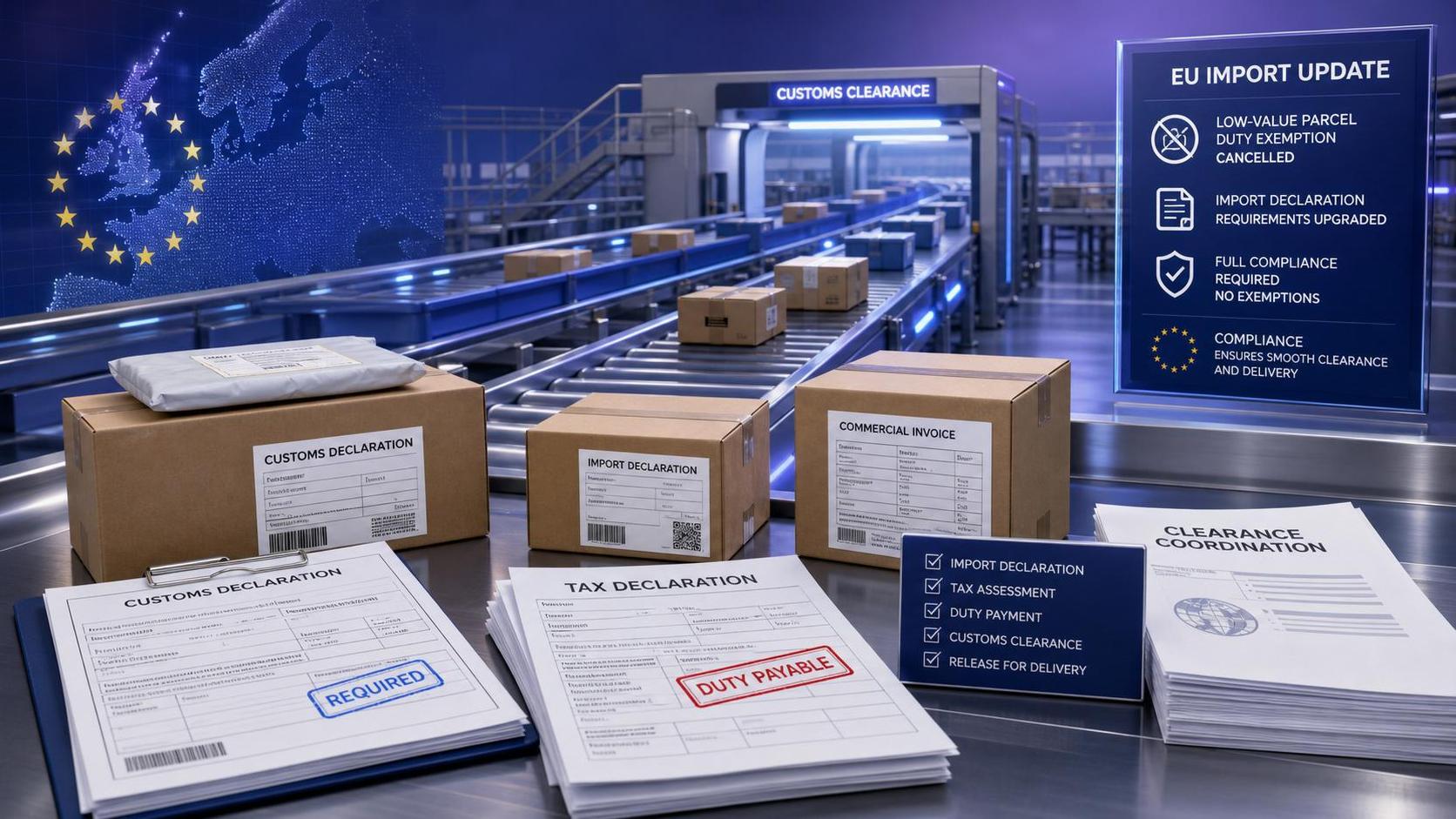
 EU low-value package tax exemption finalized, import declaration requirements upgraded
 EU battery carbon footprint label mandatory enforcement starts now, digital passport will be launched in 2027
 New version of the registration regulations for foreign food production enterprises will take effect in June


Related Products
 EasyCamp SaaS Smart Website Marketing SystemE-Yingbao SaaS Smart Website Marketing System: AI-powered, zero-code website building. Rapidly launch multilingual independent e-commerce sites in just 10 minutes. Global server acceleration and AI-driven SEO optimization empower businesses to efficiently connect with global markets. The seamless integration of technology and user-friendly operation makes building e-commerce sites incredibly simple.
 AI+SEM Intelligent Advertising Marketing SystemAI+SEM drives intelligent ad creation, empowering full-funnel precision advertising marketing. The system automatically generates weekly/monthly reports, AI recommends keywords and target countries, monitors core metrics in real-time with intelligent alerts, and enables one-click high-conversion ad solutions to help quickly acquire customers and improve ROI.
 AI+SEO Dual Engine Optimization ServiceEasyWin AI+SEO Dual Engine Optimization System leverages AI-powered keyword mining, content generation, and comprehensive technical optimization to help foreign trade enterprises acquire high-quality organic traffic, significantly improving search rankings and conversion rates.
 AI+SNS Social Media Marketing SystemYingbao AI+SNS Social Media Marketing System - Precision social capture for the social media era. Supports one-click content synchronization across major platforms like Facebook and LinkedIn. AI intelligently rewrites posts for enhanced relevance. 24/7 AI customer service and user profiling analysis empower businesses to efficiently expand into global markets.
 AI+SEO营销解决方案易营宝AI+SEO营销解决方案,通过AI批量写作、智能生成TDK、精准关键词扩词等功能,全面优化网站SEO效果,提升流量与转化率。助力企业构建高效智能网站新生态。
 AI+SEM Advertising Marketing SolutionsAI+SEM Advertising Marketing Solution leverages AI technology to deeply empower SEM ad campaigns. It automatically generates weekly/monthly reports using AI, presenting account data across multiple dimensions for comprehensive insights into campaign performance and trends. The system precisely recommends keywords and target countries, intelligently generates high-conversion ad copy, and enables one-click activation of efficient campaign plans to help businesses rapidly acquire customers. Simultaneously, it monitors core metrics in real time, intelligently identifies abnormal fluctuations, and issues timely alerts to ensure stable, high-return advertising results.
 Domain Name ServicesEasyWin provides professional domain name services, including intelligent queries, one-stop registration, brand protection, and full lifecycle management, helping businesses build a digital brand image.
 EasyOperate B2C Cross-Border E-Commerce Platform & Independent WebsiteEasyStore B2C Cross-border E-commerce Independent Store is an intelligent website building and cross-border e-commerce integrated solution independently developed by EasyStore Information Technology (Beijing) Co., Ltd. The system is specially designed for small and medium-sized as well as large export enterprises, integrating 'website building, operation, marketing, advertising, and conversion' into one, helping enterprises quickly establish cross-border e-commerce independent stores to achieve brand globalization and global sales growth.
The platform supports multiple languages, multiple currencies, and multi-channel marketing, with built-in AI intelligent translation and SEO optimization systems, suitable for mainstream markets such as Southeast Asia, Europe and America, Latin America, and the Middle East, assisting Chinese manufacturing enterprises in efficiently deploying international e-commerce strategies. SSL证书易营宝提供专业SSL安全证书服务,包括单域名和泛域名证书,确保网站数据传输加密、身份验证和完整性保护,助力企业建立安全可信的在线业务环境。









