









- Cross-Border Marketing Trend Research: Why More and More Companies Are Starting to Deploy AI Search and GEO OptimizationJun 30, 2026View details
- Cross-Border Marketing Trend Research: How Independent Sites, AI Content, and Short-Video Customer Acquisition Are ChangingJun 30, 2026View details
- How Can a Brand Updates Page Be Made More SEO-Friendly? Analysis of Update Frequency, Content Structure, and Internal Linking StrategyJun 28, 2026View details
- What stages does the cross-border services ecosystem include? How do website building, promotion, payment, and compliance work togetherJun 22, 2026View details
- How will email marketing costs change in 2026Jun 22, 2026View details
- The China-US tariff arrangement has reached a preliminary consensus, and the trade association will be establishedJun 15, 2026View details
Why do prices for industry lead generation solutions vary so much? Channel mix and lead quality are key
Why Do Prices for Industry Lead Generation Solutions Vary So Much?
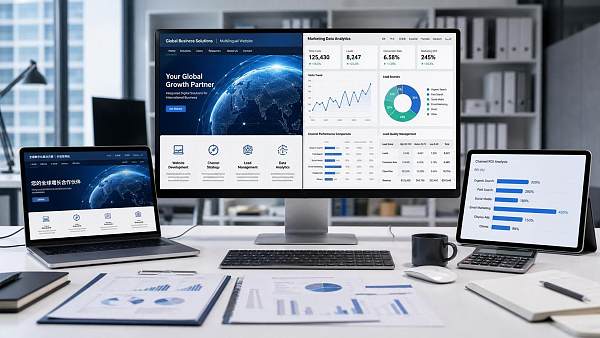
When many people compare prices for industry lead generation solutions, their first reaction is that the work all seems to involve building a website, running ads, and doing promotion, so why can the quotations differ by several times? On the surface, the difference appears to lie in the service items. In reality, it often comes from the channel mix, execution depth, and lead quality.
If you only compare the total price, your judgment can easily be distorted. A low-priced solution may only cover website development or a single advertising channel, while a higher-priced solution may include a multilingual website, SEO, advertising, social media, and data tracking together. The ability to generate customers sustainably afterward can be completely different.
In an integrated website + marketing service scenario, price is never the cost of a single action, but the cost of an entire growth system. Especially for overseas markets, whether the website can be indexed, whether advertising can accumulate data, and whether social media can enable retargeting will all directly affect ROI.
A more common situation is that the initial quotation gap is not large, but the real cost difference emerges during subsequent execution. Whether there is continuous optimization, whether leads are screened, and whether localization is adapted by market can all make industry lead generation solution prices look “the same in name, different in substance”.
Why Are Quotation Structures Completely Different Even Though They Are All Called Lead Generation Solutions?
First, look at the scope of the solution. Some service providers are only responsible for driving traffic, while others will complete website development, content layout, ad placement, inquiry handling, and data analysis together. The more complete the scope, the higher the price of an industry lead generation solution usually is, but there are also more controllable links.
Next, look at the underlying capabilities. Solutions that rely on manual execution may be cheaper in the early stage, but later expansion costs are high. Platforms with systematic capabilities often connect website building, advertising, SEO, GEO, and data attribution. Their quotations may not be the lowest, but in the long run it is easier to calculate the real cost of each lead clearly.
Take platforms such as 易营宝, which have long focused on overseas digital marketing, as an example. Their core value is not just providing individual services, but connecting AI-powered website building, multilingual official websites, Google SEO, ad placement, overseas social media, and AI search visibility optimization into one complete chain. Price differences are often reflected in this type of “system capability”.
Another point that is often overlooked is the complexity of the target market. The advertising logic, content language, and conversion paths in North America, Europe, Southeast Asia, and the Middle East are not the same. The more fragmented the markets are, the more localization work the solution requires, so the price of an industry lead generation solution naturally will not remain at the basic level.
More Channels Mean Higher Cost, but Does Higher Cost Always Mean Better Value?
Not necessarily. More channels only mean wider coverage, not higher investment efficiency. What really needs to be judged is whether these channels work together, rather than simply stacking budgets.
For example, advertising alone can deliver quick results, but traffic can easily stop once ad spending stops. SEO alone may offer better long-term costs, but the early-stage cycle is longer. Combining a marketing-oriented website, SEO, and advertising can usually balance short-term leads with long-term traffic. This type of industry lead generation solution may look more expensive, but the actual risk is often lower.
A more rational approach is to first determine what the company currently lacks. If it lacks quick inquiries, prioritize advertising and landing pages. If it lacks brand accumulation, prioritize a multilingual official website and content optimization. If it lacks organic traffic, SEO and GEO should be emphasized. Only when the channel mix is correct is it meaningful to discuss whether the price is high or not.
The following evaluation table is suitable for quick use when reviewing prices for industry lead generation solutions.
If a solution only stacks channels without unified lead handling and data analysis, even a high price may not be worthwhile. Conversely, if there are not many channels but the combination logic is clear, it may be easier to produce results.
Why Does Lead Quality Directly Widen the Price Gap of Industry Lead Generation Solutions?
Because what truly consumes cost is not obtaining leads, but filtering out the wrong leads. If a cheap solution brings a large number of invalid forms, low-intent inquiries, or traffic from mismatched regions, subsequent sales communication, labor input, and internal follow-up will all be amplified.
High-quality leads usually come from a more precise keyword strategy, a more suitable landing page structure, and more refined audience targeting. This requires both website development capabilities and marketing capabilities. Whether the website supports multiple languages, localized content, and conversion path design directly determines whether the leads are “busy on the surface, but difficult to close”.
In practical applications, overseas customer acquisition relies especially on front-end conversion handling. For example, B2B inquiry-based websites place more emphasis on product page structure, case content, form design, and SEO indexing. B2C cross-border e-commerce stores place more emphasis on page speed, payment experience, and ad remarketing. Under different models, the prices of industry lead generation solutions should not be the same in the first place.
The value of platforms such as 易营宝 lies in their ability to combine website building systems, advertising systems, and SEO optimization systems. The benefit of this approach is that leads are not generated in isolation, but are continuously screened and optimized within a unified data environment, making subsequent cost evaluation clearer.
When Reviewing a Quotation, Which Hidden Costs Are Most Easily Overlooked?
The first category is “mandatory follow-up items”. A project may be signed at a low price in the early stage, but later fees may be charged separately for content creation, multilingual pages, conversion tracking, ad account setup, SEO basic optimization, and more. In the end, the total cost is often higher than that of an integrated solution.
The second category is “time cost”. If the website launch is slow, materials are repeatedly reworked, and advertising cannot start for a long time, the actual loss is not only the project cycle but also the market window. Especially in cross-border business, once peak seasons and regional timing are missed, no matter how low the price of the industry lead generation solution is, it loses meaning.
The third category is “unclear attribution”. Without unified data standards, it is difficult to determine whether the problem lies with the website, advertising, or content. As a result, budget adjustments can only rely on experience-based decisions, and cost control naturally loses its basis.
When reviewing a solution, it is recommended to confirm at least the following points:
- Whether the quotation includes the complete scope of website building, optimization, advertising, and data tracking.
- Whether basic delivery fees and ongoing operation fees are clearly separated.
- Whether the expected cycle for each channel is explained, rather than only providing a total budget.
- Whether lead quality evaluation criteria can be provided, instead of only showing impressions and clicks.
How Should You Determine Whether the Price of an Industry Lead Generation Solution Is Reasonable?
A practical method is to divide the price into three layers: basic infrastructure cost, lead generation execution cost, and continuous optimization cost. Only by separating these three layers can you avoid being misled by a single total quotation.
For basic infrastructure, look at the website. Is it a marketing-oriented website, does it support multiple languages, is it conducive to SEO indexing, and can it handle advertising traffic? For execution cost, look at the channels. Do advertising, SEO, social media, and content have clear divisions of responsibility? For continuous optimization, look at the data. Are there monthly reviews, keyword adjustments, and lead quality screening?
If a service provider has both a technology platform and marketing delivery capabilities, it is usually easier to connect price with results. Platforms that have long focused on overseas markets can link website building, promotion, content, localization, and AI analysis into a closed loop. Although the solution may not be the lowest-priced option, it is closer to a “calculable” investment.
Ultimately, what matters is not which item on the quotation is cheaper, but whether every expense can bring verifiable growth. Only when channel contribution, lead sources, and subsequent conversions are visible can the price of an industry lead generation solution be considered truly reasonable.
Conclusion: Define the Evaluation Criteria First, Then Discuss Whether the Price Is High or Low
The large price differences among industry lead generation solutions are not only due to different pricing by service providers, but also because there are clear differences in solution depth, channel mix, lead quality, and data capabilities. A solution that looks expensive may not have a high total cost; a solution that looks cheap may also require continuous additional fees later.
A more reliable approach is to first sort out the target market, customer acquisition cycle, website foundation, and acceptable budget, and then compare the solution scope, lead quality standards, and attribution capabilities. Once these key items are aligned, the judgment of industry lead generation solution pricing will be more accurate.
The next step is to list the existing channels, historical lead costs, and website conversion-handling capabilities, then calculate each item against different solutions. This makes it easier to see which investments truly serve growth and which are merely cheap on the surface.
Related Articles
 Why do prices for industry lead generation solutions vary so much? Channel mix and lead quality are key
 What modules are included in a digital marketing solution? Understand websites, advertising, SEO, and automation in one article
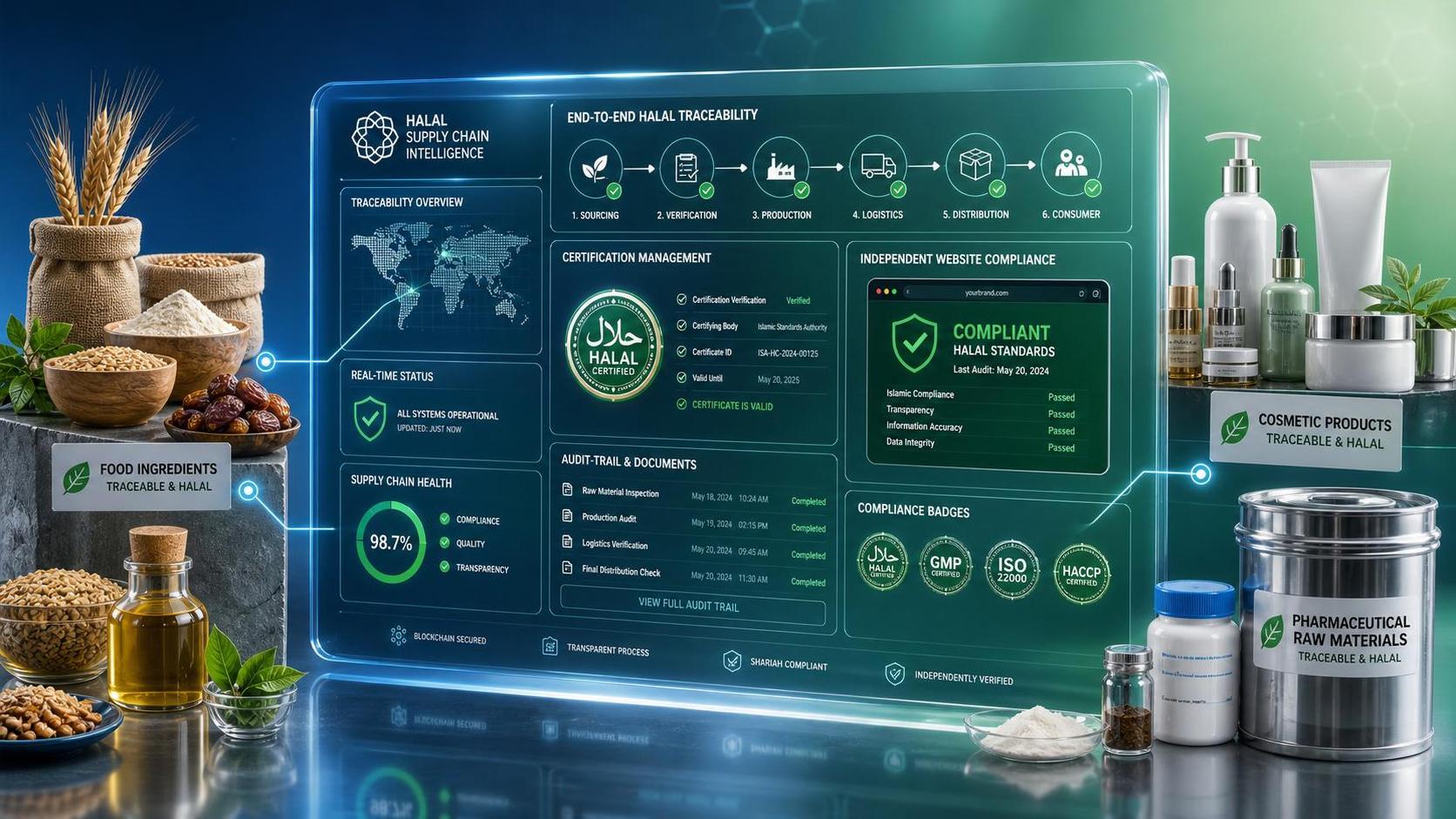
 Six Middle Eastern Countries Mandate the Halal Supply Chain Visibility Module
Related Products
 EasyCamp SaaS Smart Website Marketing SystemE-Yingbao SaaS Smart Website Marketing System: AI-powered, zero-code website building. Rapidly launch multilingual independent e-commerce sites in just 10 minutes. Global server acceleration and AI-driven SEO optimization empower businesses to efficiently connect with global markets. The seamless integration of technology and user-friendly operation makes building e-commerce sites incredibly simple.
 AI+SEM Intelligent Advertising Marketing SystemAI+SEM drives intelligent ad creation, empowering full-funnel precision advertising marketing. The system automatically generates weekly/monthly reports, AI recommends keywords and target countries, monitors core metrics in real-time with intelligent alerts, and enables one-click high-conversion ad solutions to help quickly acquire customers and improve ROI.
 AI+SEO Dual Engine Optimization ServiceEasyWin AI+SEO Dual Engine Optimization System leverages AI-powered keyword mining, content generation, and comprehensive technical optimization to help foreign trade enterprises acquire high-quality organic traffic, significantly improving search rankings and conversion rates.
 AI+SNS Social Media Marketing SystemYingbao AI+SNS Social Media Marketing System - Precision social capture for the social media era. Supports one-click content synchronization across major platforms like Facebook and LinkedIn. AI intelligently rewrites posts for enhanced relevance. 24/7 AI customer service and user profiling analysis empower businesses to efficiently expand into global markets.
 AI+SEO营销解决方案易营宝AI+SEO营销解决方案,通过AI批量写作、智能生成TDK、精准关键词扩词等功能,全面优化网站SEO效果,提升流量与转化率。助力企业构建高效智能网站新生态。
 AI+SEM Advertising Marketing SolutionsAI+SEM Advertising Marketing Solution leverages AI technology to deeply empower SEM ad campaigns. It automatically generates weekly/monthly reports using AI, presenting account data across multiple dimensions for comprehensive insights into campaign performance and trends. The system precisely recommends keywords and target countries, intelligently generates high-conversion ad copy, and enables one-click activation of efficient campaign plans to help businesses rapidly acquire customers. Simultaneously, it monitors core metrics in real time, intelligently identifies abnormal fluctuations, and issues timely alerts to ensure stable, high-return advertising results.
 Domain Name ServicesEasyWin provides professional domain name services, including intelligent queries, one-stop registration, brand protection, and full lifecycle management, helping businesses build a digital brand image.
 EasyOperate B2C Cross-Border E-Commerce Platform & Independent WebsiteEasyStore B2C Cross-border E-commerce Independent Store is an intelligent website building and cross-border e-commerce integrated solution independently developed by EasyStore Information Technology (Beijing) Co., Ltd. The system is specially designed for small and medium-sized as well as large export enterprises, integrating 'website building, operation, marketing, advertising, and conversion' into one, helping enterprises quickly establish cross-border e-commerce independent stores to achieve brand globalization and global sales growth.
The platform supports multiple languages, multiple currencies, and multi-channel marketing, with built-in AI intelligent translation and SEO optimization systems, suitable for mainstream markets such as Southeast Asia, Europe and America, Latin America, and the Middle East, assisting Chinese manufacturing enterprises in efficiently deploying international e-commerce strategies. SSL证书易营宝提供专业SSL安全证书服务,包括单域名和泛域名证书,确保网站数据传输加密、身份验证和完整性保护,助力企业建立安全可信的在线业务环境。









