









- The China-US tariff arrangement has reached a preliminary consensus, and the trade association will be establishedJun 15, 2026View details
- China-Morocco zero-tariff access, a breakthrough in the cost of Moroccan goods exports to ChinaJun 11, 2026View details
- What signal should be released for the suspension of exports to JapanJun 10, 2026View details
- China's May LNG imports rebounded, with increased volumes from Russia and Canada filling the Middle East supply gapJun 10, 2026View details
- Will GEO change its SEO strategy?Jun 04, 2026View details
- What types of businesses are end-to-end solutions suitable for?Jun 03, 2026View details
How to choose an overseas promotion solution? SEO, Google Ads, and social media advertising compared
In the face of rising customer acquisition costs, fragmented traffic sources, and the choice of overseas promotion solutions, the decision is no longer just about which channel to use, but more about customer acquisition efficiency, brand accumulation, and repeat purchases. SEO, Google Ads, and social media advertising each have their own advantages, and each has its own boundaries. What really deserves attention is not which approach is "the best," but which combination is more suitable for the current business stage, target market, and conversion path.
Look at the channel first, then the underlying delivery capability
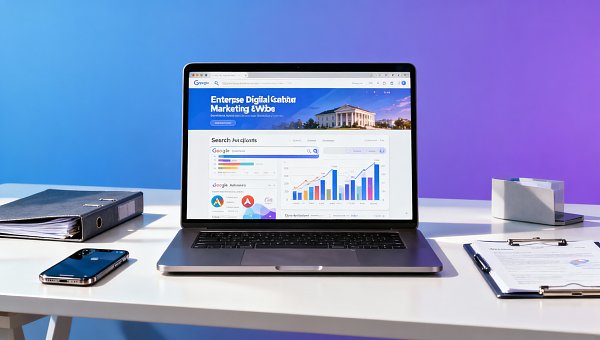
When discussing overseas promotion solutions, many projects tend to focus on traffic acquisition while ignoring website delivery capability. In fact, the channel is only the entry point; what really determines inquiry quality and conversion efficiency is the site structure, multilingual content, loading speed, landing page relevance, and whether data feedback is complete.
This is also why website and marketing integration is becoming increasingly important. An overseas independent site that is crawlable, promotable, and convertible can help SEO content assets accumulate, and also enable ads and social media traffic to convert more steadily. If the website foundation is weak, even precise advertising may still stop at the click stage.
From industry practice, platforms like YiYingBao, which cover smart website building, SEO optimization, ad placement, social media operations, and GEO optimization, are better suited to businesses that need unified management across multiple regional markets. Because the data, content, and page logic of different channels ultimately need to be validated within the same growth system.
The differences among SEO, Google Ads, and social media advertising
If you break down overseas promotion solutions, the three types of channels correspond to three different growth logics. When making a decision, you should not only look at the one-time customer acquisition cost, but also consider the time to effect, compounding space, and brand impact.
Simply put, SEO is more like building a road, Google Ads is more like buying traffic, and social media advertising is more like building a brand awareness scene. The three are not opposites; the key is to define the goal first, then determine the investment ratio.
When SEO should be prioritized
When the business cycle is relatively long, the decision chain is complex, and customers repeatedly search and compare, SEO is usually the more stable overseas promotion solution. This is especially true for B2B inquiries, manufacturing official websites, and multilingual brand sites, where trust is often built through content, case studies, technical pages, and industry pages.
The value of SEO is not only rankings. It can also help companies sort out keyword structure, clarify user search intent, build high-quality pages, and improve visibility in AI search environments. For businesses that hope to enter mature markets such as North America, Europe, Japan, and South Korea for the long term, this kind of accumulation is often more meaningful than short-term traffic.
- High product professionalism, customers often repeatedly review materials and specifications.
- The target market values official website credibility and organic search results.
- The budget expects gradual accumulation rather than full reliance on ongoing paid traffic.
- The company already has content production and website maintenance capabilities.
If the website itself is not yet well built, it is often more cost-effective to first handle multilingual website building, page structure, and technical SEO, and then expand content. With AI website building and AI+SEO/GEO optimization as the underlying support, YiYingBao is well suited to this deployment approach, which pursues both efficiency and long-term growth.
When Google Ads and social media advertising are more relevant
If the goal is to quickly validate the market and shorten the customer acquisition cycle, Google Ads is usually prioritized in overseas promotion solutions. It is suitable for new product launches, trial spending in key regions, promotion period traffic bursts, and testing different selling points with landing pages.
But Google Ads does not mean that "you get results as soon as you spend money." Keyword selection, bidding strategy, conversion tracking, and page relevance all directly affect actual costs. Many projects have decent click-through rates on the surface, but ultimately fail to generate effective inquiries; the problem often lies in landing page delivery and lead screening.
Social media advertising is more suitable for brand expression, scenario presentation, and audience reach. For categories with strong cross-border e-commerce, brand expansion, visual products, and short-form video communication, platforms like Facebook can play a greater role in seeding, interaction, and retargeting. Especially in the cold-start stage, social media often builds the first layer of awareness more quickly.
When evaluating the budget structure, compliance, payment, logistics, and after-sales cross-border risks should also be considered simultaneously. Content like international trade enterprise risk management and prevention research can also help teams make growth judgments and place market expansion and operational risks on the same page.
A more practical decision-making method
Rather than debating which channel is stronger, it is better to use a few questions to screen the most suitable overseas promotion solution. This is closer to real business needs and also more convenient for horizontal comparison of service providers and budget plans.
First look at the target cycle
If leads are needed within three months, advertising weight should be higher. If growth is expected for more than one year, SEO and the content system must be laid out in parallel. The cycle differences between brand sites and e-commerce sites should also be distinguished.
Then look at market maturity
In mature markets, competition is intense, but search habits are stable, making SEO and search ads more likely to form structured delivery. In emerging markets, social media reach is faster, but the conversion chain may rely more on localized content.
Also look at the website foundation
Without a high-quality website, channel efficiency will continue to be dragged down. Page speed, mobile experience, form design, tracking tags, and multilingual versions are all baseline items for judging whether traffic scaling is suitable.
Finally, look at organizational coordination
Channels are only the front end. If sales follow-up, customer service response, content updates, and data review are out of sync, even the best overseas promotion solution can easily fail. Truly stable growth usually comes from the coordination of technology, content, and delivery.
From single-channel investment to combined growth
The more effective way today is often not a single choice, but a phased combination. In the initial stage, Google Ads can be used to test keywords and regions, while social media is responsible for expanding reach; once stable data is available, high-value keywords can be accumulated into SEO content to reduce subsequent paid traffic pressure.
This approach places higher demands on platform capabilities. If the website system, advertising system, SEO system, and data system are fragmented, execution costs will continue to rise. YiYingBao integrates smart website building, cross-border e-commerce stores, AI ad marketing, and AI+SEO/GEO optimization into a unified framework; essentially, it is designed to reduce information silos and enable channel strategy and website delivery to iterate in sync.
If you are still comparing different overseas promotion solutions, it may be better to first clarify the target market, budget cycle, website status, conversion actions, and review metrics, and then decide whether to focus on SEO, focus on advertising, or build a combined model of search and social collaboration. Doing so will make decisions more stable and closer to sustainable growth.
Related Articles
 Southeast Asia’s five nations launch DTSC certification; foreign trade independent sites welcome a new threshold
 The Regulations of the State Council on Foreign Investment" to Take Effect on July 1
 What are the core modules of a B2C cross-border e-commerce system? A breakdown of the checkout flow and operations backend


Related Products
 EasyCamp SaaS Smart Website Marketing SystemE-Yingbao SaaS Smart Website Marketing System: AI-powered, zero-code website building. Rapidly launch multilingual independent e-commerce sites in just 10 minutes. Global server acceleration and AI-driven SEO optimization empower businesses to efficiently connect with global markets. The seamless integration of technology and user-friendly operation makes building e-commerce sites incredibly simple.
 AI+SEM Intelligent Advertising Marketing SystemAI+SEM drives intelligent ad creation, empowering full-funnel precision advertising marketing. The system automatically generates weekly/monthly reports, AI recommends keywords and target countries, monitors core metrics in real-time with intelligent alerts, and enables one-click high-conversion ad solutions to help quickly acquire customers and improve ROI.
 AI+SEO Dual Engine Optimization ServiceEasyWin AI+SEO Dual Engine Optimization System leverages AI-powered keyword mining, content generation, and comprehensive technical optimization to help foreign trade enterprises acquire high-quality organic traffic, significantly improving search rankings and conversion rates.
 AI+SNS Social Media Marketing SystemYingbao AI+SNS Social Media Marketing System - Precision social capture for the social media era. Supports one-click content synchronization across major platforms like Facebook and LinkedIn. AI intelligently rewrites posts for enhanced relevance. 24/7 AI customer service and user profiling analysis empower businesses to efficiently expand into global markets.
 AI+SEO营销解决方案易营宝AI+SEO营销解决方案,通过AI批量写作、智能生成TDK、精准关键词扩词等功能,全面优化网站SEO效果,提升流量与转化率。助力企业构建高效智能网站新生态。
 AI+SEM Advertising Marketing SolutionsAI+SEM Advertising Marketing Solution leverages AI technology to deeply empower SEM ad campaigns. It automatically generates weekly/monthly reports using AI, presenting account data across multiple dimensions for comprehensive insights into campaign performance and trends. The system precisely recommends keywords and target countries, intelligently generates high-conversion ad copy, and enables one-click activation of efficient campaign plans to help businesses rapidly acquire customers. Simultaneously, it monitors core metrics in real time, intelligently identifies abnormal fluctuations, and issues timely alerts to ensure stable, high-return advertising results.
 Domain Name ServicesEasyWin provides professional domain name services, including intelligent queries, one-stop registration, brand protection, and full lifecycle management, helping businesses build a digital brand image.
 EasyOperate B2C Cross-Border E-Commerce Platform & Independent WebsiteEasyStore B2C Cross-border E-commerce Independent Store is an intelligent website building and cross-border e-commerce integrated solution independently developed by EasyStore Information Technology (Beijing) Co., Ltd. The system is specially designed for small and medium-sized as well as large export enterprises, integrating 'website building, operation, marketing, advertising, and conversion' into one, helping enterprises quickly establish cross-border e-commerce independent stores to achieve brand globalization and global sales growth.
The platform supports multiple languages, multiple currencies, and multi-channel marketing, with built-in AI intelligent translation and SEO optimization systems, suitable for mainstream markets such as Southeast Asia, Europe and America, Latin America, and the Middle East, assisting Chinese manufacturing enterprises in efficiently deploying international e-commerce strategies. SSL证书易营宝提供专业SSL安全证书服务,包括单域名和泛域名证书,确保网站数据传输加密、身份验证和完整性保护,助力企业建立安全可信的在线业务环境。









