









- What stages does the cross-border services ecosystem include? How do website building, promotion, payment, and compliance work togetherJun 22, 2026View details
- How will email marketing costs change in 2026Jun 22, 2026View details
- The China-US tariff arrangement has reached a preliminary consensus, and the trade association will be establishedJun 15, 2026View details
- Should overseas brand marketing start with ads or contentJun 21, 2026View details
- What determines B2C cross-border e-commerce website development costs? A breakdown of features, interfaces, and deployment methodsJun 17, 2026View details
- China-Morocco zero-tariff access, a breakthrough in the cost of Moroccan goods exports to ChinaJun 11, 2026View details
Which B2B independent websites are suitable for Facebook advertising
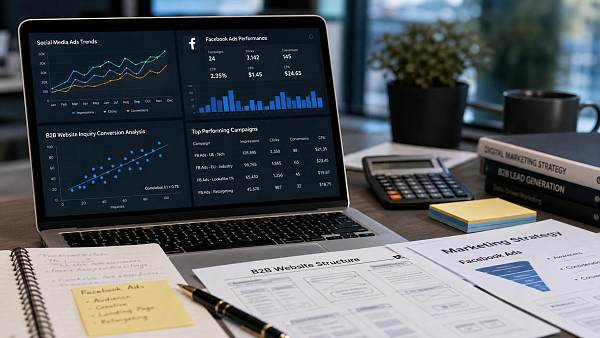
Which is better for B2B, Google Ads or Facebook Ads for an independent website? The answer is not “which platform is stronger,” but whose customer acquisition logic is closer to your business. For a B2B independent website, Facebook Ads are not naturally unsuitable; rather, they are more suitable for businesses with specific product types, specific customer unit prices, and specific decision-making chains.
If your product requires market education, visual display, and brand storytelling, and if your target customers can be clearly defined through interests, job titles, or industry characteristics, then Facebook Ads can often become an important lead-generation channel. On the other hand, if customer demand is already clear and purchase intent is strong, Google Ads usually is closer to the conversion entry point.
Therefore, discussing “which B2B independent websites are suitable for Facebook Ads” is essentially about determining whether your industry is suitable for proactive reach, whether your customers will be influenced in social media, and whether your independent website has the ability to convert traffic into inquiries. Below, we will break this down from applicable scenarios, evaluation criteria, and advertising strategies.
Why do so many B2B companies struggle with Google Ads and Facebook Ads
When most B2B companies promote overseas, the first thing they think of is Google, because search ads correspond to people with “existing demand,” and the intent is more direct. Facebook Ads, on the other hand, are more like influencing users before demand takes shape, so many companies worry about imprecise traffic and unstable inquiry quality.
But in reality, many foreign trade companies’ customers do not search for brand terms or product terms the first time they come into contact. Especially for new suppliers, new technology solutions, and new material products, buyers often first build awareness through social media, industry content, and peer case studies, and then move into the search and comparison stage.
This is also why “which is better for B2B independent websites, Google Ads or Facebook Ads” cannot be judged by platform characteristics alone; customer purchase paths must also be considered. Google is more inclined to capture explicit demand, while Facebook is more inclined to stimulate latent demand, build trust, and achieve repeated touchpoints. The roles they play are not the same.
Which B2B independent websites are more suitable for Facebook Ads
The first category is B2B businesses with relatively strong visual presentation, such as machinery and equipment, industrial accessories, packaging products, building materials and home furnishings, commercial furniture, LED displays, and security equipment. These products can more easily attract attention quickly in the Facebook feed through images, short videos, and factory strength demonstrations.
The second category is industries that require customer education, such as new materials, customized solutions, smart hardware, environmental protection equipment, and automation systems. Customers may not search for your keywords immediately, but they may become interested in value propositions such as “cost reduction and efficiency improvement,” “alternative solutions,” and “industry upgrade,” making Facebook suitable for early-stage touchpoints.
The third category is B2B businesses with a long decision-making chain. For example, the purchasing side may include the boss, purchasing manager, technical person in charge, and sales channel partner; a single visit is hard to convert. Facebook Ads can influence different roles through multiple exposures, remarketing, and content combinations, thereby improving the probability of later inquiry conversion.
The fourth category is companies hoping to build overseas brands. For companies that are no longer satisfied with simply getting inquiries, but want overseas customers to remember the brand and form stable awareness, Facebook Ads can work with the official website, social media homepage, and content assets to amplify brand credibility, something pure search ads can hardly replace.
Which B2B companies are more suitable to put Google Ads first
If your products are strongly demand-driven and search-driven, such as standardized industrial parts, mature raw materials, and common instrument components, customers will usually search for specific terms directly. In this case, Google Ads are more likely to capture high-intent traffic, and the efficiency of obtaining leads is usually higher.
In addition, if a company has a limited budget, weak website content foundation, or insufficient persuasive landing pages, it is not recommended to heavily invest in Facebook Ads from the start. Because Facebook users do not come with clear purchase intent, if the page cannot quickly build trust, it is easy to encounter the problem of clicks but insufficient inquiries.
Another situation is orders that heavily depend on immediate demand, such as urgent purchases, model replacement, and short-cycle replenishment. In this case, user search behavior is strong, and Google Ads are closer to “hitting the target right at the door.” Facebook, by contrast, is more suitable for pre-seeding interest and is not necessarily the shortest conversion path.
To judge whether your B2B independent website is suitable for Facebook Ads, focus on these four points
First, see whether customers can be “proactively found.” If your target customers can be relatively clearly targeted by industry, position, interest, region, or behavioral characteristics, Facebook will have room to operate. If the audience is too narrow and difficult to identify, advertising will rely more on creative testing and data accumulation.
Second, see whether the product needs display and explanation. Facebook Ads are not just about simple image selling; they are about selling the “first impression of interest.” If your product value can be quickly explained through scenarios, cases, factory strength, and application results, ad click-through rate and subsequent dwell performance are usually better.
Third, see whether the company can accept the rhythm of “early education, later conversion.” Many B2B inquiries do not close on the first click; instead, users first view content, then visit the official website, and later convert through remarketing or email follow-up. If you only focus on short-term form costs, it is easy to misjudge Facebook’s effectiveness.
Fourth, see whether the independent website has the ability to carry traffic. This includes page loading speed, multilingual content, case display, qualification proof, form design, and mobile experience. Facebook Ads can bring traffic, but they cannot replace the website’s conversion capability. Without a marketing-oriented independent website, ad performance is often greatly weakened.
The right role of Facebook Ads in B2B independent websites is not to replace search, but to amplify the lead-generation funnel
Many companies see Facebook and Google as an either-or choice, but a more reasonable approach is division of labor and coordination. Facebook is responsible for letting potential customers know you, understand you, and remember you; Google is responsible for efficiently capturing when customers enter the active search stage. In this way, the overall customer acquisition cost is usually more stable.
For new websites, new brands, or new markets, this combination is especially important. Because relying on Google Ads alone often only captures limited search demand, while Facebook Ads can help companies reach more potential audiences who have not yet searched but fit the profile, expanding the coverage of the upper funnel.
When users have seen your Facebook Ads, visited your website, and learned about your cases, and later see Google search ads, brand term results, or remarketing content, trust will increase significantly. For B2B companies, this kind of multi-touchpoint stacking is closer to the real purchase decision path than single-platform independent advertising.
Three common mistakes B2B companies make when running Facebook Ads
The first mistake is directly applying B2C materials to B2B. What B2B customers care about is not just whether the visuals look good, but whether you are professional, reliable, and able to solve problems. Materials should highlight application scenarios, product advantages, delivery capabilities, certification qualifications, and cooperation cases, rather than simply pursuing “eye-catching” effects.
The second mistake is setting the conversion target too aggressively. During the cold-start stage, focusing only on form submissions can easily limit the system’s learning. A more stable approach is to first accumulate visits, interactions, and audience data based on the website foundation and budget, then gradually optimize toward inquiries, leads, or high-value conversion events.
The third mistake is ignoring backend follow-up. Many B2B companies do not have ineffective ads; rather, the leads respond slowly, sales follow-up is weak, and quotation cycles are delayed, ultimately wasting front-end traffic. Facebook Ads are suitable for amplifying business opportunities, but what truly determines the deal is still the website’s ability to carry leads and close sales.
If you want Facebook Ads to be more suitable for a B2B independent website, this layout is recommended
First, the website itself must be complete. A B2B independent website suitable for advertising should at least have clear product categories, industry application pages, customer case studies, factory and qualification displays, multilingual support, and a clear inquiry入口, otherwise even precise ads will be difficult to convert.
Second, the content should be designed according to the customer’s awareness stage. Cold traffic is suitable for value-oriented content, such as industry pain points, solutions, and application scenarios; warm traffic is suitable for trust-building content, such as cases, certificates, delivery capabilities, and customer reviews. Content structure has a very large impact on Facebook performance.
Again, the advertising strategy should not only look at single-click performance. It is recommended to evaluate performance by combining remarketing, lead form ads, landing page conversion, and brand search growth. For B2B companies, what truly matters is not the surface click cost, but the final effective inquiry rate, follow-up quality, and deal potential.
If a company has Google Ads, SEO, and Facebook Ads capabilities at the same time, it is usually easier to form stable growth. Using Facebook in the front end for reach and education, using the independent website content in the middle to build trust, and using Google in the back end to capture high-intent searches is the combination that better suits most B2B independent websites.
Conclusion: Whether Facebook Ads are suitable for B2B depends not on the platform, but on business fit
Back to the core question: which is better for B2B, Google Ads or Facebook Ads for an independent website? The answer is: if customer demand is clear and search intent is strong, Google is more suitable for capturing direct leads; if the product needs display, the brand needs education, and the purchasing decision chain is longer, Facebook Ads are more valuable.
So, which B2B independent websites are Facebook Ads suitable for? They are suitable for companies that hope to proactively reach potential buyers, are willing to build trust through content, and have a relatively complete marketing-oriented official website with lead-capture capabilities. It is not the first choice for every B2B industry, but it is often an important part of many companies breaking through growth bottlenecks.
For companies that hope to achieve long-term overseas growth, the truly effective strategy is usually not a simple either-or choice between Google and Facebook, but a combination configuration based on industry characteristics, target markets, and conversion paths. Choosing the right channel role is what truly improves independent website lead-generation efficiency.
Related Articles
 Which B2B independent websites are suitable for Facebook advertising
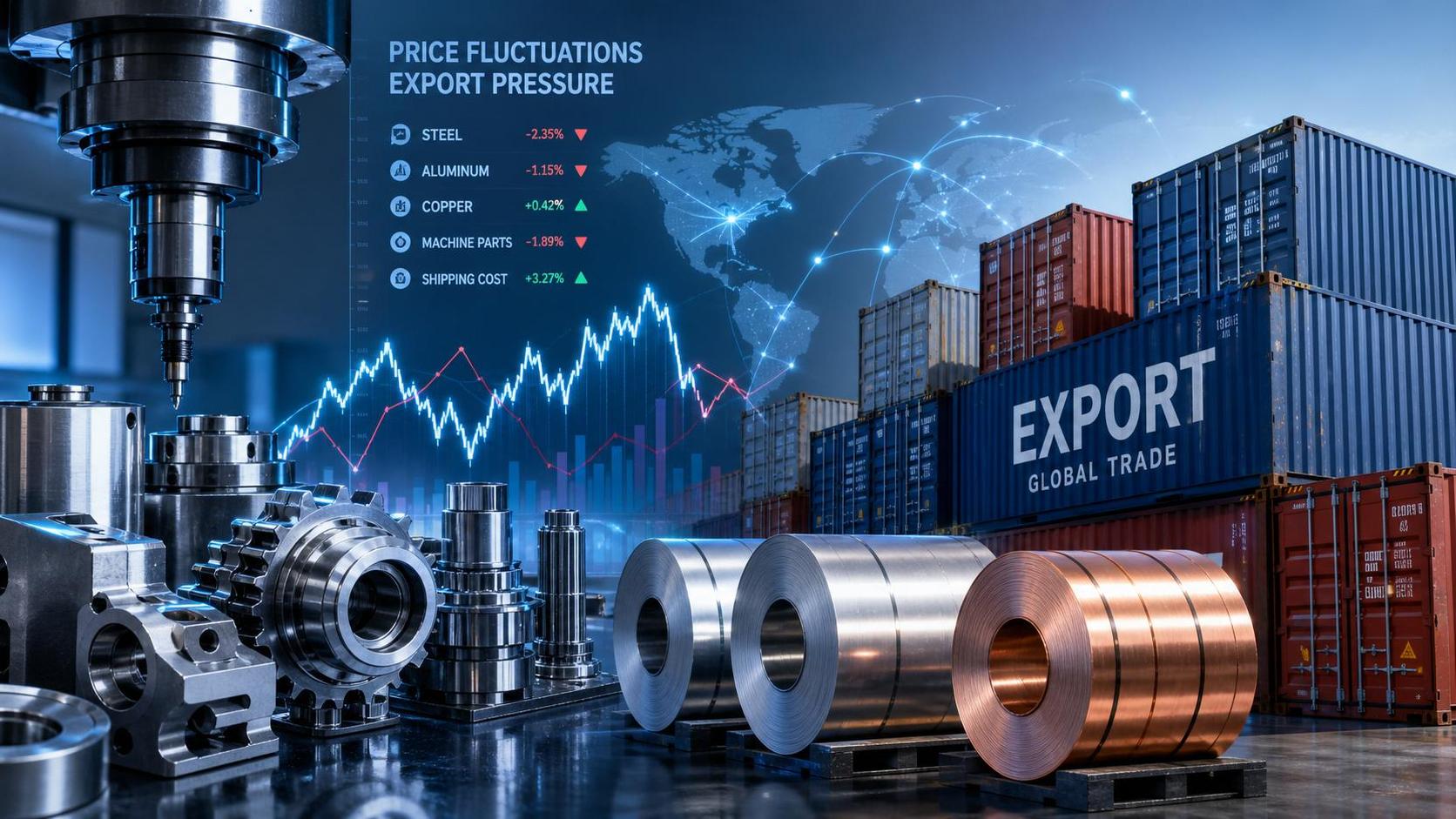
 The U.S. imposes a new 12.5% tariff on China, with steel, aluminum, and copper products bearing the brunt
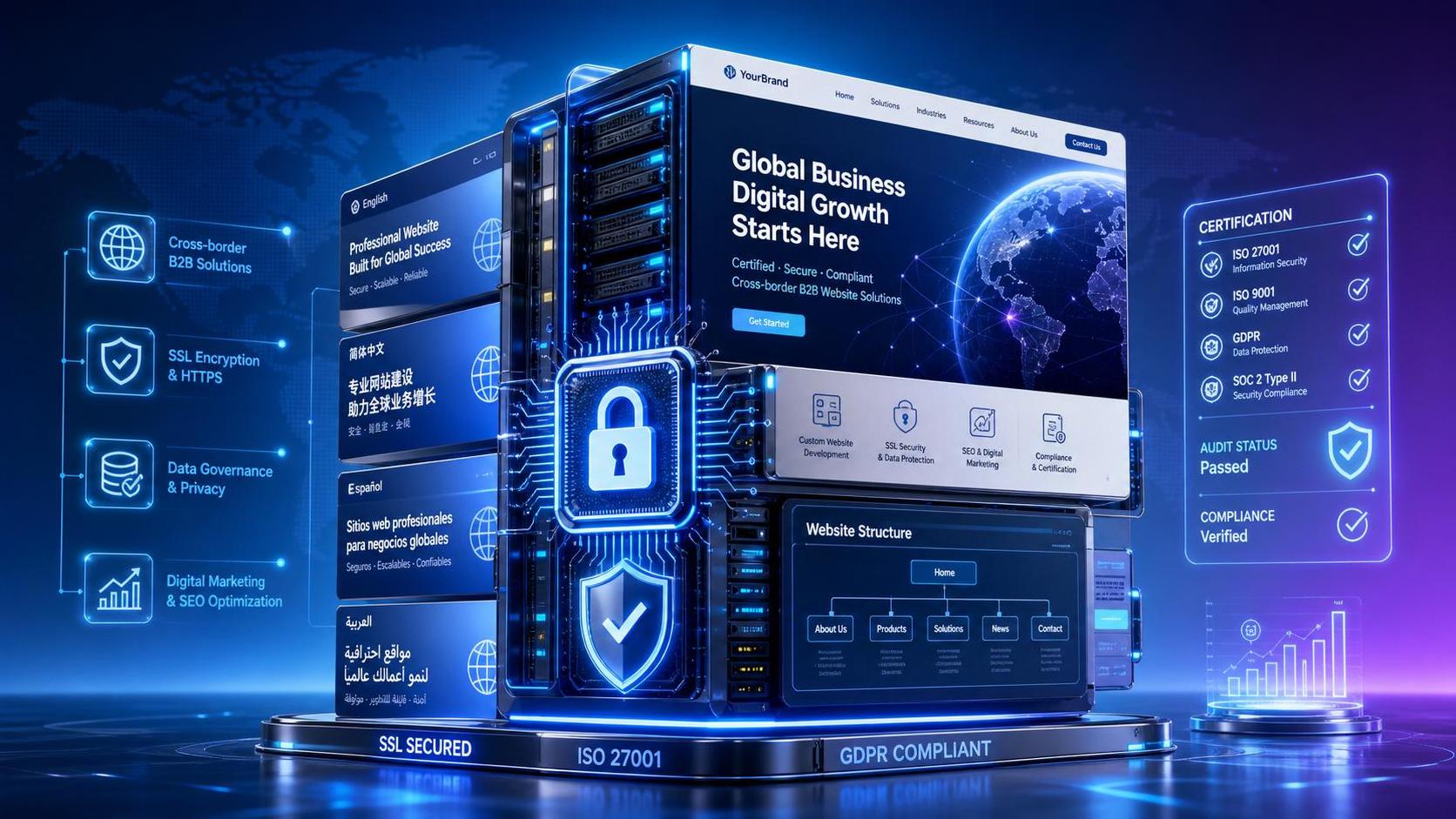
 Southeast Asia's five countries launch DTSC certification, Chinese enterprise website service providers enter the first batch of evaluation partners
Related Products
 EasyCamp SaaS Smart Website Marketing SystemE-Yingbao SaaS Smart Website Marketing System: AI-powered, zero-code website building. Rapidly launch multilingual independent e-commerce sites in just 10 minutes. Global server acceleration and AI-driven SEO optimization empower businesses to efficiently connect with global markets. The seamless integration of technology and user-friendly operation makes building e-commerce sites incredibly simple.
 AI+SEM Intelligent Advertising Marketing SystemAI+SEM drives intelligent ad creation, empowering full-funnel precision advertising marketing. The system automatically generates weekly/monthly reports, AI recommends keywords and target countries, monitors core metrics in real-time with intelligent alerts, and enables one-click high-conversion ad solutions to help quickly acquire customers and improve ROI.
 AI+SEO Dual Engine Optimization ServiceEasyWin AI+SEO Dual Engine Optimization System leverages AI-powered keyword mining, content generation, and comprehensive technical optimization to help foreign trade enterprises acquire high-quality organic traffic, significantly improving search rankings and conversion rates.
 AI+SNS Social Media Marketing SystemYingbao AI+SNS Social Media Marketing System - Precision social capture for the social media era. Supports one-click content synchronization across major platforms like Facebook and LinkedIn. AI intelligently rewrites posts for enhanced relevance. 24/7 AI customer service and user profiling analysis empower businesses to efficiently expand into global markets.
 AI+SEO营销解决方案易营宝AI+SEO营销解决方案,通过AI批量写作、智能生成TDK、精准关键词扩词等功能,全面优化网站SEO效果,提升流量与转化率。助力企业构建高效智能网站新生态。
 AI+SEM Advertising Marketing SolutionsAI+SEM Advertising Marketing Solution leverages AI technology to deeply empower SEM ad campaigns. It automatically generates weekly/monthly reports using AI, presenting account data across multiple dimensions for comprehensive insights into campaign performance and trends. The system precisely recommends keywords and target countries, intelligently generates high-conversion ad copy, and enables one-click activation of efficient campaign plans to help businesses rapidly acquire customers. Simultaneously, it monitors core metrics in real time, intelligently identifies abnormal fluctuations, and issues timely alerts to ensure stable, high-return advertising results.
 Domain Name ServicesEasyWin provides professional domain name services, including intelligent queries, one-stop registration, brand protection, and full lifecycle management, helping businesses build a digital brand image.
 EasyOperate B2C Cross-Border E-Commerce Platform & Independent WebsiteEasyStore B2C Cross-border E-commerce Independent Store is an intelligent website building and cross-border e-commerce integrated solution independently developed by EasyStore Information Technology (Beijing) Co., Ltd. The system is specially designed for small and medium-sized as well as large export enterprises, integrating 'website building, operation, marketing, advertising, and conversion' into one, helping enterprises quickly establish cross-border e-commerce independent stores to achieve brand globalization and global sales growth.
The platform supports multiple languages, multiple currencies, and multi-channel marketing, with built-in AI intelligent translation and SEO optimization systems, suitable for mainstream markets such as Southeast Asia, Europe and America, Latin America, and the Middle East, assisting Chinese manufacturing enterprises in efficiently deploying international e-commerce strategies. SSL证书易营宝提供专业SSL安全证书服务,包括单域名和泛域名证书,确保网站数据传输加密、身份验证和完整性保护,助力企业建立安全可信的在线业务环境。









