









- The China-US tariff arrangement has reached a preliminary consensus, and the trade association will be establishedJun 15, 2026View details
- What determines B2C cross-border e-commerce website development costs? A breakdown of features, interfaces, and deployment methodsJun 17, 2026View details
- China-Morocco zero-tariff access, a breakthrough in the cost of Moroccan goods exports to ChinaJun 11, 2026View details
- What signal should be released for the suspension of exports to JapanJun 10, 2026View details
- China's May LNG imports rebounded, with increased volumes from Russia and Canada filling the Middle East supply gapJun 10, 2026View details
- Will GEO change its SEO strategy?Jun 04, 2026View details
How does a B2C cross-border e-commerce payment system integrate? A detailed guide to payment gateways, risk control, and settlement processes
How Does a B2C Cross-Border E-Commerce Payment System Integrate? A Detailed Explanation of Payment Gateways, Risk Control, and Settlement Processes
How a B2C cross-border e-commerce payment system integrates directly affects order conversion, transaction security, and global payment collection efficiency. This article will focus on payment gateway integration, risk control strategy configuration, and settlement process design to help quickly clarify the key points and implementation logic.
1. First, Understand the Goal: What Does a B2C Cross-Border E-Commerce Payment System Need to Solve?
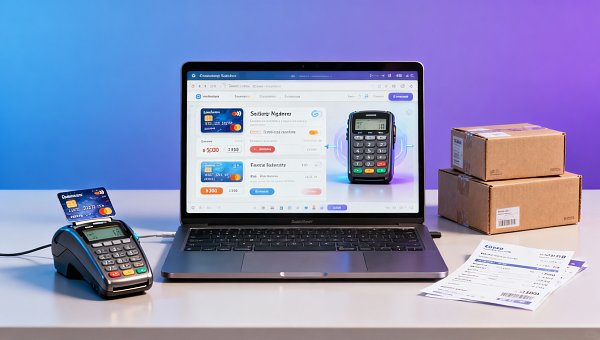
At the beginning, many teams only focus on "whether payments can be collected", but a truly mature B2C cross-border e-commerce payment system goes far beyond connecting a payment button.
It must solve at least four things at the same time: smooth payment, lower decline rates, improved risk control pass rates, and sustainable operation for settlement and reconciliation.
From recent changes, overseas consumers are more sensitive to the payment experience. A slow payment page, mismatched currency, or an overly long verification path can cause an order to be lost immediately.
This also means that a B2C cross-border e-commerce payment system is not just a financial module, but a core capability that directly affects conversion rate and repeat purchase rate.
- Supports integration of multiple currencies, multiple countries, and multiple payment methods
- Covers credit cards, local wallets, and installment payment needs
- Builds transaction risk control, fraud detection, and decline warning mechanisms
- Connects the full process of ordering, shipping, refunds, settlement, and reconciliation
If the store targets multiple regions such as North America, Europe, and Southeast Asia, the payment architecture must also be scalable; otherwise, every time a new market is added later, the system has to be rebuilt.
2. Payment Gateway Integration: It Is Not Over Once the API Is Connected
A payment gateway is the entry point of a B2C cross-border e-commerce payment system. It is responsible for securely sending frontend payment requests to the acquiring institution, card network, or local payment channel.
In actual integration, it is usually necessary to first clarify three layers: the storefront frontend, the payment service middle layer, and the third-party payment gateway. This way, switching channels later will be much easier.
1. Payment Methods Must Be Segmented by Market
North American users are more accustomed to credit cards and digital wallets, the European market often pays more attention to local transfers and strong authentication, while Southeast Asia relies more on e-wallets and real-time payments.
Therefore, a B2C cross-border e-commerce payment system cannot use only a single channel, but should configure a payment mix according to the target country.
2. The Interface Design Must Reserve Switching Capability
It is recommended to make ordering, payment, callback, refund, void, and query into a unified interface layer. The upper layer only recognizes standard fields, while the lower layer maps the parameters of different gateways.
This has two advantages: first, it reduces the cost of changing payment service providers later; second, it makes it easier to access multiple channels on a gray-release basis.
3. Callback Handling Must Be Idempotent
Cross-border payment callbacks often involve repeated notifications, delayed notifications, and asynchronous status updates. If order updates do not have idempotent control, duplicate billing or duplicate shipping can easily occur.
In actual business, the order number, payment transaction number, and version number of the status machine should be verified together.
4. Billing Fields Must Be Unified in Advance
It is not uncommon for projects to discover only after going live that the reconciliation paths are inconsistent. For example, payment success time, settlement time, and refund time are often mixed together, making later troubleshooting very costly.
Therefore, when the B2C cross-border e-commerce payment system connects to a gateway, it should synchronize and define the order primary key, payment status, handling fee, tax, exchange rate, and settlement currency.
3. Risk Control Strategy Configuration: More Important Than "Blocking Bad Orders" Is Balancing Approval Rates
Many teams tend to go to extremes when doing risk control. If the rules are too loose, fraudulent orders increase; if the rules are too strict, normal users are also blocked.
A more reasonable approach is to establish a layered risk control system around before, during, and after the transaction.
1. Identify Account Risk Before the Transaction
You can first look at device fingerprint, registration time, historical order frequency, shipping address stability, and abnormal associations such as multiple accounts using the same card.
For high-ticket items, IP geolocation, proxy network characteristics, and mailbox quality scores should also be added.
2. Control Payment Behavior During the Transaction
Common rules at the payment stage include: multiple attempts with one card in a short period, a large mismatch between billing address and shipping address, country and currency mismatch, and frequent card switching after failures.
At this point, challenge verification, manual review, or automatic switching to a backup channel can be set up instead of rejecting everything outright.
3. Monitor Declines and Refunds After the Transaction
A decline is not always fraud; it may also be caused by logistics delays, description mismatch, or slow customer service response. Payment risk control cannot be viewed separately from fulfillment and service.
A more obvious signal is that high-fraud sites are often accompanied by excessive page promises, vague logistics timeliness, and unclear refund processes.
- Automatically approve low-risk orders to increase payment success rates
- Add verification to medium-risk orders to avoid false declines
- Temporarily suspend fulfillment for high-risk orders and retain review evidence
- Regularly review hit rates and decline rates
If you need more detailed operational analysis, you can also draw on data modeling ideas. Content likeResearch on Enterprise Financial Analysis Optimization from a Public Road Maintenance Perspective Driven by Big Dataalso essentially emphasizes the importance of unified data paths and a closed analysis loop.
4. Settlement Process Design: It Determines Capital Efficiency and Also Determines Financial Pressure
After a B2C cross-border e-commerce payment system goes live, the problems that are actually most likely to occur are often not the frontend payment page, but backend settlement and reconciliation.
Because cross-border transactions involve acquiring fees, channel fees, chargeback fees, refund fees, exchange losses, and payout cycles, the chain is more complex than a regular e-commerce store.
1. Clearly Define the Settlement Entity and Currency
First determine whether the receivable is collected by an onshore entity, an offshore entity, or a local company. Different entities will affect account opening methods, tax handling, and settlement cycles.
At the same time, it is necessary to clearly display whether the display currency, payment currency, and settlement currency are consistent. If the three are not consistent, the exchange rate source and conversion time point must be recorded.
2. Do a Good Job of Split Settlement and Refund Sequence
If the platform has channel commissions, service fee deductions, or warehouse allocation costs, the settlement system should support split-settlement rule configuration to avoid manual splitting later.
Refunds should also distinguish between full refunds, partial refunds, and refunds after shipment. In different scenarios, whether the handling fee is refunded and who bears the exchange difference must be clearly written in advance.
3. Establish a Daily Reconciliation Mechanism
It is recommended to do at least three types of reconciliation: order reconciliation, payment reconciliation, and settlement reconciliation. The first two focus on transaction authenticity, while the last focuses on completeness of fund arrival.
Once short payments, duplicate refunds, or abnormal handling fees are found, discrepancy tickets should be generated automatically and jointly handled by finance and technical teams.
5. Implementation Recommendations: How to Build More Stability from 0 to 1
For projects preparing to go live or upgrade a B2C cross-border e-commerce payment system, it is recommended not to pursue "big and complete" at the very beginning, but to move forward in stages.
- First determine the target market and main payment methods to reduce ineffective integrations.
- Build a unified payment middle platform while preserving multi-gateway switching capability.
- Launch basic risk control first, then continuously optimize based on decline data.
- Synchronize the development of refund, split settlement, reconciliation, and settlement capabilities.
- After going live, conduct conversion reviews by country, channel, and currency.
If the company is also synchronously building an independent site, marketing campaigns, and an overseas growth system, then the payment system cannot be planned in isolation.
In terms of AI intelligent site building, multilingual official websites, B2C cross-border e-commerce sites, and integrated overseas marketing, Yiyingbao emphasizes exactly the collaborative efficiency between frontend conversion, payment acceptance, and later customer acquisition.
To put it more directly, when a B2C cross-border e-commerce payment system is well built, advertising traffic will not be wasted, and users brought in by SEO and social media are more likely to complete the final order.
6. Conclusion: Payment Capabilities Must Be Built Around Growth and Security at the Same Time
Back to the core question, how should a B2C cross-border e-commerce payment system be integrated? The answer is not "just choose a payment company and connect it".
The truly effective approach is to place the payment gateway, risk control strategy, and settlement process within the same business framework and design them in a unified way.
Only after interface standardization, layered risk control, and transparent settlement can a B2C cross-border e-commerce payment system both support growth and maintain the risk bottom line.
If you want to start selection next, you can first create a checklist for evaluation from four dimensions: target market, payment success rate, decline rate, and settlement cycle, and then move into the implementation stage; the efficiency will be much higher.
Related Articles
 Southeast Asia's five countries launch DTSC certification, Chinese enterprise website service providers enter the first batch of evaluation partners
 Southeast Asia’s five nations launch DTSC certification; foreign trade independent sites welcome a new threshold
 The Regulations of the State Council on Foreign Investment" to Take Effect on July 1


Related Products
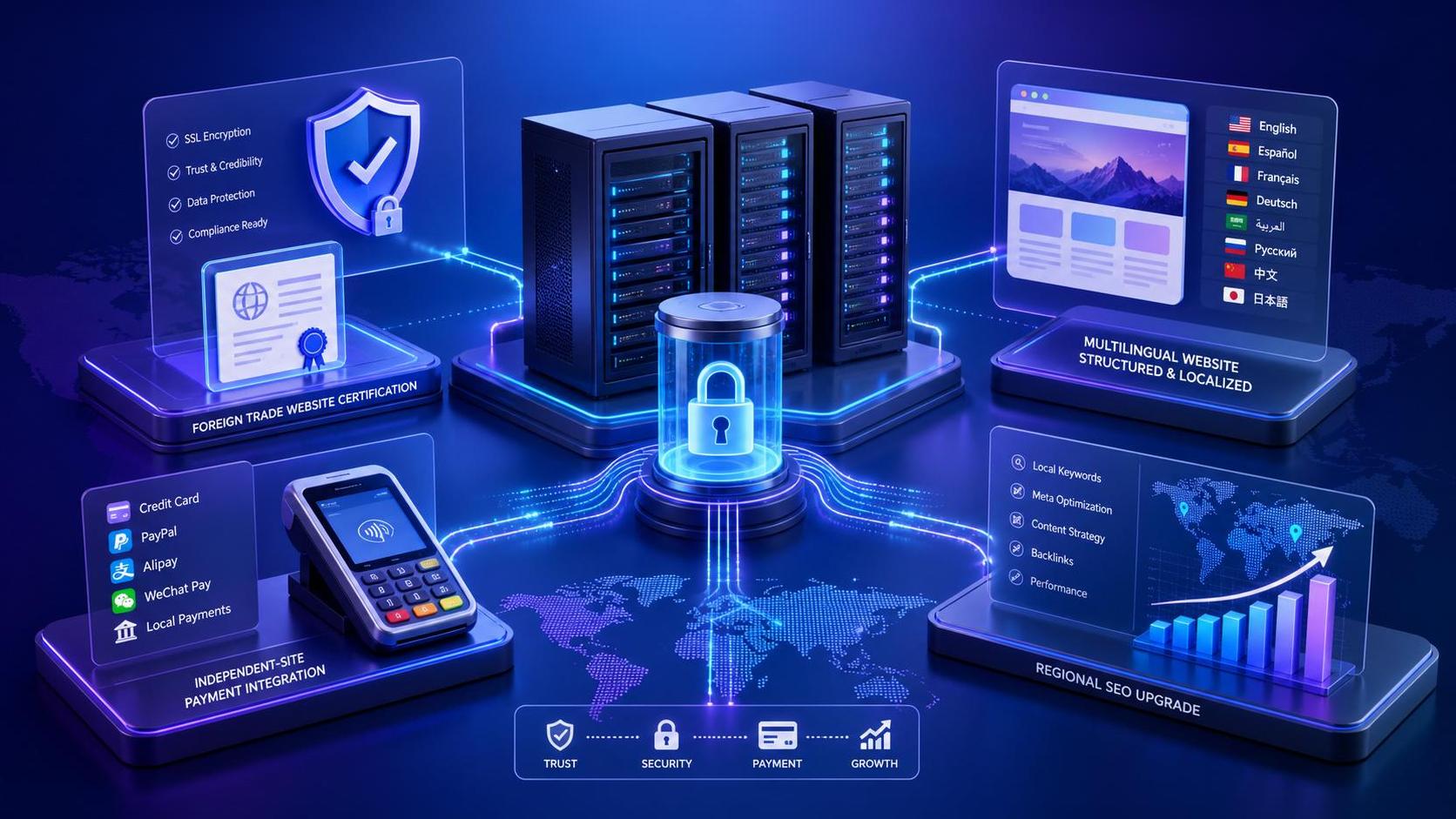
 EasyCamp SaaS Smart Website Marketing SystemE-Yingbao SaaS Smart Website Marketing System: AI-powered, zero-code website building. Rapidly launch multilingual independent e-commerce sites in just 10 minutes. Global server acceleration and AI-driven SEO optimization empower businesses to efficiently connect with global markets. The seamless integration of technology and user-friendly operation makes building e-commerce sites incredibly simple.
 AI+SEM Intelligent Advertising Marketing SystemAI+SEM drives intelligent ad creation, empowering full-funnel precision advertising marketing. The system automatically generates weekly/monthly reports, AI recommends keywords and target countries, monitors core metrics in real-time with intelligent alerts, and enables one-click high-conversion ad solutions to help quickly acquire customers and improve ROI.
 AI+SEO Dual Engine Optimization ServiceEasyWin AI+SEO Dual Engine Optimization System leverages AI-powered keyword mining, content generation, and comprehensive technical optimization to help foreign trade enterprises acquire high-quality organic traffic, significantly improving search rankings and conversion rates.
 AI+SNS Social Media Marketing SystemYingbao AI+SNS Social Media Marketing System - Precision social capture for the social media era. Supports one-click content synchronization across major platforms like Facebook and LinkedIn. AI intelligently rewrites posts for enhanced relevance. 24/7 AI customer service and user profiling analysis empower businesses to efficiently expand into global markets.
 AI+SEO营销解决方案易营宝AI+SEO营销解决方案,通过AI批量写作、智能生成TDK、精准关键词扩词等功能,全面优化网站SEO效果,提升流量与转化率。助力企业构建高效智能网站新生态。
 AI+SEM Advertising Marketing SolutionsAI+SEM Advertising Marketing Solution leverages AI technology to deeply empower SEM ad campaigns. It automatically generates weekly/monthly reports using AI, presenting account data across multiple dimensions for comprehensive insights into campaign performance and trends. The system precisely recommends keywords and target countries, intelligently generates high-conversion ad copy, and enables one-click activation of efficient campaign plans to help businesses rapidly acquire customers. Simultaneously, it monitors core metrics in real time, intelligently identifies abnormal fluctuations, and issues timely alerts to ensure stable, high-return advertising results.
 Domain Name ServicesEasyWin provides professional domain name services, including intelligent queries, one-stop registration, brand protection, and full lifecycle management, helping businesses build a digital brand image.
 EasyOperate B2C Cross-Border E-Commerce Platform & Independent WebsiteEasyStore B2C Cross-border E-commerce Independent Store is an intelligent website building and cross-border e-commerce integrated solution independently developed by EasyStore Information Technology (Beijing) Co., Ltd. The system is specially designed for small and medium-sized as well as large export enterprises, integrating 'website building, operation, marketing, advertising, and conversion' into one, helping enterprises quickly establish cross-border e-commerce independent stores to achieve brand globalization and global sales growth.
The platform supports multiple languages, multiple currencies, and multi-channel marketing, with built-in AI intelligent translation and SEO optimization systems, suitable for mainstream markets such as Southeast Asia, Europe and America, Latin America, and the Middle East, assisting Chinese manufacturing enterprises in efficiently deploying international e-commerce strategies. SSL证书易营宝提供专业SSL安全证书服务,包括单域名和泛域名证书,确保网站数据传输加密、身份验证和完整性保护,助力企业建立安全可信的在线业务环境。









