









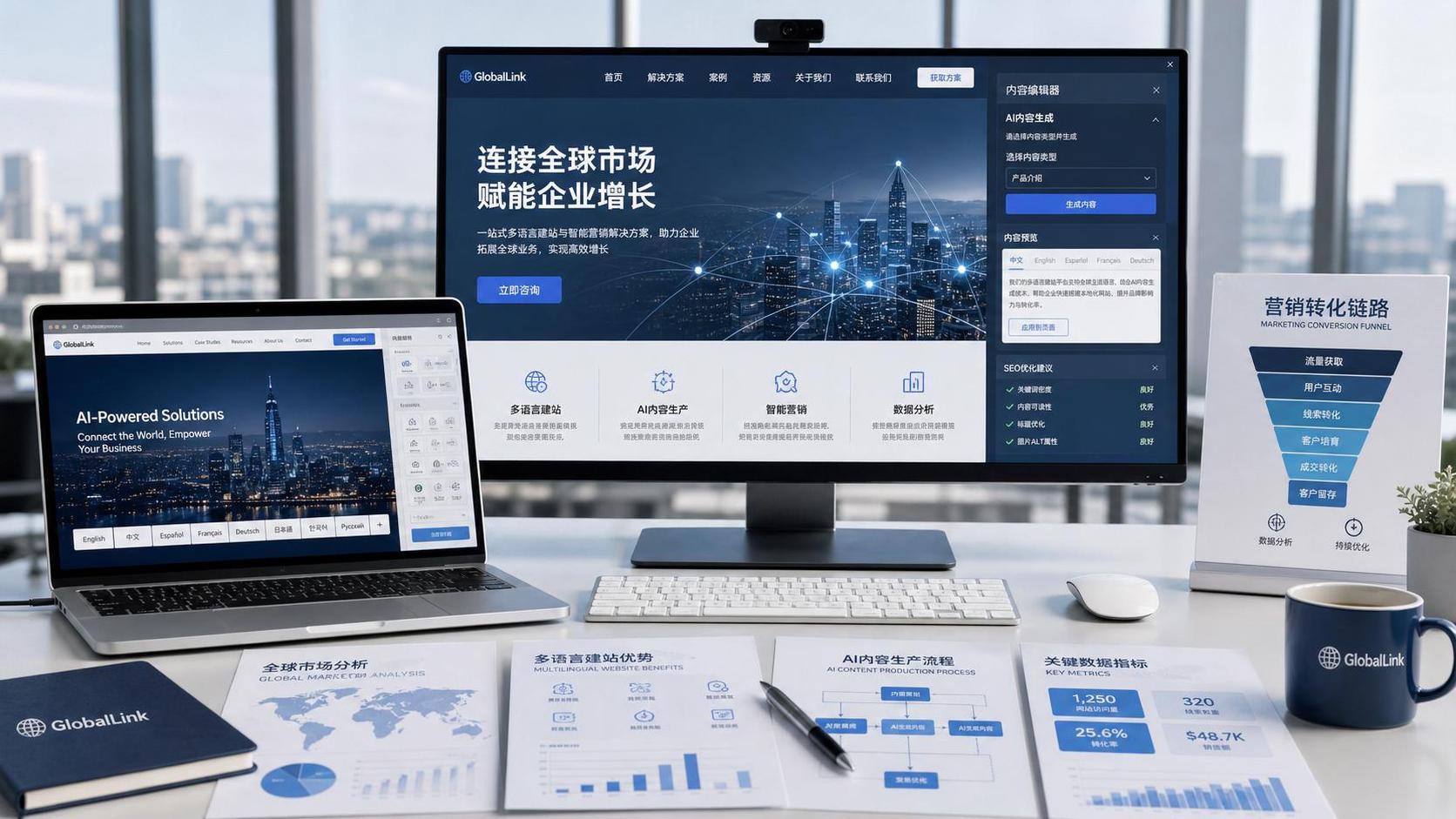
- How to assess foreign trade website development trends?Looking at 2026 changes from multilingual,AI content to conversion pathsJul 04, 2026View details
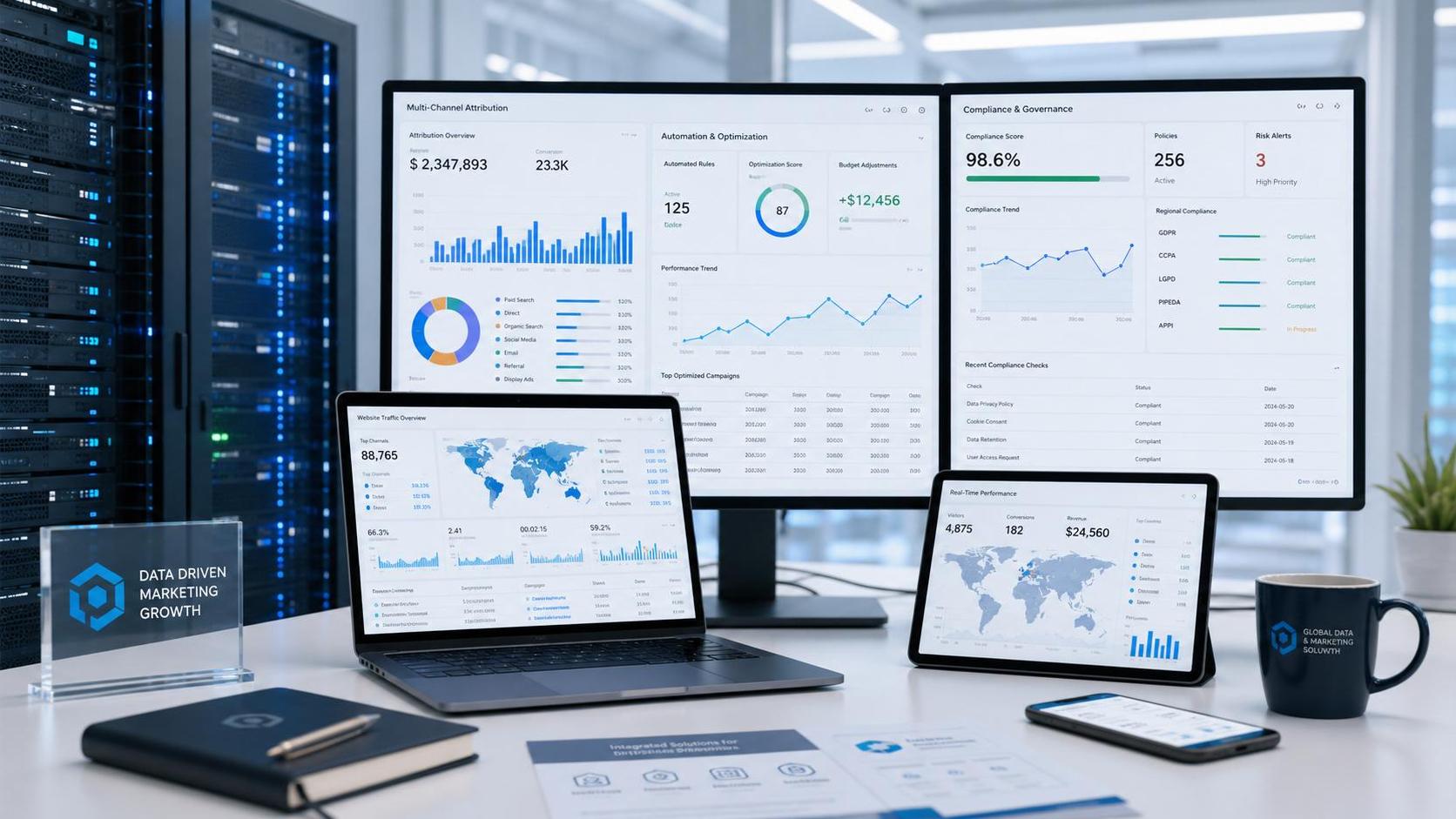
- What are the new trends in multilingual marketing data analytics tools in 2026? Focus on attribution、automation and complianceJul 04, 2026View details
- Is Brand Globalization Marketing Consulting Worth Buying? At What Stage Should Companies Bring It InJul 01, 2026View details
- Cross-Border Marketing Trend Research: Why More and More Companies Are Starting to Deploy AI Search and GEO OptimizationJun 30, 2026View details
- Cross-Border Marketing Trend Research: How Independent Sites, AI Content, and Short-Video Customer Acquisition Are ChangingJun 30, 2026View details
- How Can a Brand Updates Page Be Made More SEO-Friendly? Analysis of Update Frequency, Content Structure, and Internal Linking StrategyJun 28, 2026View details
- What stages does the cross-border services ecosystem include? How do website building, promotion, payment, and compliance work togetherJun 22, 2026View details
- How will email marketing costs change in 2026Jun 22, 2026View details
Why do web design companies refuse small-budget projects? Is it really about low profits or fear of delivery risks?
Why do web design companies reject small-budget projects? It's not about being stingy—it's about mitigating delivery risks. Low quotes often come with vague requirements, compressed timelines, and technical compromises. As a company specializing in integrated website + marketing services, EasyProfit provides end-to-end solutions from smart website building and SEO optimization to Meta ad placement techniques, SSL certificate application processes, and website traffic monitoring tools—all powered by AI-driven precision delivery.
Why are small-budget projects harder to deliver?
On the surface, it's a price threshold; in reality, it's unsustainable delivery logic. Typical small-budget projects (under ¥50,000) often require 3-5 days for requirement confirmation, 7-10 days for development cycles, and lack professional UI/UX review stages, leading to a 65%+ post-launch modification rate. Industry data from 2023 shows that custom website projects under ¥80,000 average 42% rework time—far exceeding the reasonable threshold (≤15%).
More critically, technical compromises pose risks: cost-cutting often forces template modifications, sacrificing SEO structural markup integrity, mobile-first screen load speeds (averaging 1.8s), and SSL certificate auto-renewal compatibility. These "hidden discounts" explode within 3 months post-launch—bounce rates spike by 23%, natural search rankings drop ≥12 positions, with final repair costs exceeding initial budgets by 37%.
Since 2013, EasyProfit has implemented a "dual-track delivery evaluation model": one track assesses technical feasibility (server response time, CDN node coverage, Schema markup coverage), while another validates commercial sustainability (customer decision chain completeness, content supply stability, operational team readiness). Projects only proceed when both tracks score ≥82/100, ensuring quality delivery and commercial value.

Which businesses truly need professional website+marketing integration?
Not all enterprises require equal investment, but these four scenarios are highly sensitive to delivery quality—small-budget solutions easily trigger chain risks:
- B2B procurement decision-maker portals: Requiring product parameter databases, whitepaper downloads, multilingual switching (supporting 5 languages including Chinese, English, Spanish, French), with technical document load failure rates <0.3%
- Brands planning Google/Meta ads: Needing automatic UTM parameter tagging, millisecond-level conversion event tracking, and strict ad creative-to-landing page consistency—otherwise ROAS fluctuates over ±28%
- Enterprises with real-time ERP/CRM synchronization: Demanding API response times ≤300ms, order status update delays <2s—otherwise sales pipeline loss rates reach 31%
- Cross-border compliance industries (e.g., medical devices, education): Requiring built-in GDPR/CCPA consent popups, multi-currency payment gateways, and localized tax calculation modules—deficiencies risk platform takedowns
Notably, interior design, decoration, and architecture clients demand extreme visual interaction—their portals require full-screen immersive scrolling, asymmetric motion layouts, and panoramic banners. These needs inherently reject low-cost templates—material texture displays rely on precise grid layouts, while sales negotiation effectiveness depends on dynamic hover effects. Any technical corner-cutting directly undermines premium positioning.
Professional service value anchors
This comparison reveals core differences: budget solutions address "whether problems exist," while professional solutions address "whether problems matter." When websites become sales fronts rather than decorative facades, technical depth directly determines customer acquisition costs—EasyProfit clients average 29% lower CAC, achieved through measurable results: first-screen loads under 1.2s, form submission success rates reaching 99.4%, and 76% fewer cross-device conversion path breakpoints.
How to determine if your project meets professional service standards?
We recommend executives evaluate these 5 key questions:
- Does it require independent IP server deployment for PCI-DSS or Level 2 compliance?
- Is content update frequency ≥3 times/quarter with multi-role collaborative editing and version control?
- Will it integrate 2+ third-party systems (e.g., Shopify, Salesforce, Kingdee Cloud) within 6 months?
- Does the target market cover 3+ countries/regions requiring localized and multilingual SEO?
- Must the website support A/B testing for ≥3 conversion path experiments?
If 3+ answers are "yes," the project exceeds templated service boundaries. EasyProfit offers free Website Marketing Health Reports covering technical architecture, traffic quality, conversion leaks, and competitor benchmarks—delivering 12 actionable optimizations that typically boost organic traffic by 21%.
Why choose EasyProfit as a long-term partner?
With a decade in integrated website+marketing services, we've built triple safeguards:
- AI-driven delivery engine: Our "Yingzhi" platform automates requirement parsing (Chinese NLP), real-time code compliance (covering 217 W3C/SEO/accessibility rules), and ad creative generation (2,300+ daily Meta-optimized images)
- Localized service network: Beijing HQ + Shanghai/Shenzhen/Hangzhou delivery centers, bilingual PMs (Chinese/English/Spanish/French), 7×12 response systems, with critical nodes using "dual-person cross-verification"
- Growth-result binding: For SEO/ads, we offer "performance betting agreements"—if natural search traffic misses agreed growth (+35% baseline) within 6 months, we refund 150% of the service fee difference
Contact EasyProfit today for:
① Free website audits (Lighthouse scores, SEO checklists, vulnerability reports);
② Customized Marketing Growth Roadmaps (3-month milestones + 12-month ROI forecasts);
③ Industry-specific solutions for interior design, decoration, architecture (including virtual showroom builds, VR navigation embeds, and designer portfolio SEO modules).

FAQ
Q: What's the minimum budget threshold?
Basic smart websites start at ¥128,000 (incl. 1-year maintenance), but allow phased investment: ¥65,000 upfront covers core infrastructure and SEO foundations, with marketing modules added quarterly.
Q: Can we build the website first and add marketing later?
Not recommended. Our "building-as-marketing" model pre-configures ad slots, CTAs, and trust badges—with backend-structured data injection avoiding post-launch SEO weight loss (historical data shows modification-induced ranking recovery averages 117 days).
Q: How is delivery timeline guaranteed?
Standard projects follow 4-phase controls: requirement freeze (3 workdays) → architecture confirmation (5 workdays) → core feature delivery (12 workdays) → full-chain testing (7 workdays), with Jira real-time tracking and 0.3% daily compensation for delays.
Related Articles
 How can video news production be made more efficient?Breaking down the standard process from topic selection to editing
 How to assess foreign trade website development trends?Looking at 2026 changes from multilingual,AI content to conversion paths
 What are the new trends in multilingual marketing data analytics tools in 2026? Focus on attribution、automation and compliance

Related Products
 EasyCamp SaaS Smart Website Marketing SystemE-Yingbao SaaS Smart Website Marketing System: AI-powered, zero-code website building. Rapidly launch multilingual independent e-commerce sites in just 10 minutes. Global server acceleration and AI-driven SEO optimization empower businesses to efficiently connect with global markets. The seamless integration of technology and user-friendly operation makes building e-commerce sites incredibly simple.
 AI+SEM Intelligent Advertising Marketing SystemAI+SEM drives intelligent ad creation, empowering full-funnel precision advertising marketing. The system automatically generates weekly/monthly reports, AI recommends keywords and target countries, monitors core metrics in real-time with intelligent alerts, and enables one-click high-conversion ad solutions to help quickly acquire customers and improve ROI.
 AI+SEO Dual Engine Optimization ServiceEasyWin AI+SEO Dual Engine Optimization System leverages AI-powered keyword mining, content generation, and comprehensive technical optimization to help foreign trade enterprises acquire high-quality organic traffic, significantly improving search rankings and conversion rates.
 AI+SNS Social Media Marketing SystemYingbao AI+SNS Social Media Marketing System - Precision social capture for the social media era. Supports one-click content synchronization across major platforms like Facebook and LinkedIn. AI intelligently rewrites posts for enhanced relevance. 24/7 AI customer service and user profiling analysis empower businesses to efficiently expand into global markets.
 AI+SEO营销解决方案易营宝AI+SEO营销解决方案,通过AI批量写作、智能生成TDK、精准关键词扩词等功能,全面优化网站SEO效果,提升流量与转化率。助力企业构建高效智能网站新生态。
 AI+SEM Advertising Marketing SolutionsAI+SEM Advertising Marketing Solution leverages AI technology to deeply empower SEM ad campaigns. It automatically generates weekly/monthly reports using AI, presenting account data across multiple dimensions for comprehensive insights into campaign performance and trends. The system precisely recommends keywords and target countries, intelligently generates high-conversion ad copy, and enables one-click activation of efficient campaign plans to help businesses rapidly acquire customers. Simultaneously, it monitors core metrics in real time, intelligently identifies abnormal fluctuations, and issues timely alerts to ensure stable, high-return advertising results.
 Domain Name ServicesEasyWin provides professional domain name services, including intelligent queries, one-stop registration, brand protection, and full lifecycle management, helping businesses build a digital brand image.
 EasyOperate B2C Cross-Border E-Commerce Platform & Independent WebsiteEasyStore B2C Cross-border E-commerce Independent Store is an intelligent website building and cross-border e-commerce integrated solution independently developed by EasyStore Information Technology (Beijing) Co., Ltd. The system is specially designed for small and medium-sized as well as large export enterprises, integrating 'website building, operation, marketing, advertising, and conversion' into one, helping enterprises quickly establish cross-border e-commerce independent stores to achieve brand globalization and global sales growth.
The platform supports multiple languages, multiple currencies, and multi-channel marketing, with built-in AI intelligent translation and SEO optimization systems, suitable for mainstream markets such as Southeast Asia, Europe and America, Latin America, and the Middle East, assisting Chinese manufacturing enterprises in efficiently deploying international e-commerce strategies. SSL证书易营宝提供专业SSL安全证书服务,包括单域名和泛域名证书,确保网站数据传输加密、身份验证和完整性保护,助力企业建立安全可信的在线业务环境。









