









- What Does a Global Traffic Ecosystem Service Provider Do? What Are the Differences from a Single Advertising AgencyJul 16, 2026View details
- What should you focus on in the latest enterprise SaaS report? From renewal rates and delivery costs to overseas growth opportunitiesJul 12, 2026View details
- What signals are worth paying attention to in a cross-border marketing trend report? B2B companies should look at these 6 signalsJul 11, 2026View details
- How to Read a Cross-Border Marketing Trends Report? Five Key Dimensions for Evaluating Channel OpportunitiesJul 11, 2026View details
- Which channel has the highest ROI in the global traffic ecosystem? Comparative analysis of search, social media, and advertisingJul 10, 2026View details
- What multilingual website services are available in Sanya? Which model is more suitable for local businesses going global?Jul 08, 2026View details
- How to view the complete list of China SaaS companies in the top 100? Practical methods for screening website-building and marketing service providersJul 08, 2026View details
- How to view pricing in the global traffic ecosystem? Cost comparison of search, social media, and content channel advertisingJul 06, 2026View details
SSL certificate validity period is not the longer the better: Starting from 2026, Chrome will downgrade certificates with validity over 398 days
SSL certificates are not necessarily better the longer their validity period! Starting in 2026, Chrome will downgrade certificates with validity periods exceeding 398 days, directly impacting website SEO optimization effectiveness and search engine ranking algorithms. As a professional search engine optimization company, EasyProfit reminds businesses to promptly adjust their SSL strategies to avoid ranking risks.
Why has 398 days become the "compliance threshold" for SSL certificates?
Since September 2020, the CA/B Forum (Certificate Authority Browser Forum) has mandated that all publicly trusted SSL/TLS certificates must not exceed a maximum validity period of 398 days (approximately 13 months). This standard is not a technical limitation but rather the result of coordinated evolution based on security response cycles, key rotation frequency, and browser policy alignment.
Starting January 2026, Chrome will officially implement a "downgrade warning" mechanism: certificates issued with validity periods >398 days will display a gray lock icon in the address bar and trigger warnings in developer tool Security panels. This change directly affects the "HTTPS Best Practices" score in Lighthouse audits, leading to reduced SEO performance—empirical data shows similar sites experience average Lighthouse SEO score drops of 12-18 points and 23% declines in page load trust metrics.
Notably, this policy does not discriminate by certificate type (DV/OV/EV) or brand but is determined solely by the certificate's "notAfter" timestamp. This means even 2-year certificates issued by mainstream CAs will trigger downgrade logic if their issuance-to-expiry span exceeds 398 days.
Three commonly overlooked dimensions in corporate SSL certificate procurement

Many enterprises still follow outdated "longer validity equals convenience" logic while neglecting the deep coupling between certificate lifecycle management and full-funnel digital marketing. EasyProfit's analysis of 100,000+ enterprise cases reveals procurement mistakes cluster in three categories:
- Unassessed auto-renewal capability: 37% of enterprises deploy ACME-compatible auto-renewal systems, while the rest rely on manual operations averaging 4.2-day renewal delays, causing 7.6% of sites to experience certificate expiration interruptions;
- Ignored compatibility matrices: Some domestic CA-issued SM2 national cryptographic certificates exhibit handshake failures on pre-iOS 15 devices, affecting mobile conversion rates and above-the-fold loading;
- Confused coverage scope versus SEO structural needs: Single-domain certificates cannot support subdomain cluster SEO strategies, while wildcard certificates covering *.example.com exclude root domain example.com, requiring additional configuration and increasing canonical tag management complexity.
These seemingly minor details create "long-tail downgrade" effects in real operations—single certificate anomalies may trigger cascading failures including crawler capture errors, cache invalidation, and backlink weight decay.
2024-2026 SSL strategy upgrade comparison table
To help different roles quickly identify adaptation solutions, we've outlined SSL strategy evolution paths for integrated website+marketing service scenarios:
This comparison table powers EasyProfit's smart website builder SSL policy engine, enabling clients to one-click generate compliant certificate configuration packages that save an average 2.8 hours/site/quarter in operational workload.
How to determine if your website faces Chrome downgrade risks?
EasyProfit offers a free SSL health diagnostic tool (supporting bulk domain scans), delivering four core risk indicators within 3 minutes:
- Whether remaining validity >398 days (including historical issuance time calculation);
- Whether current certificates are flagged as "Not Secure" or "Secure (with warnings)" in Chrome 126+;
- Mixed content (HTTP resource calls) causing HTTPS integrity scores <90;
- Certificate chain completeness and intermediate CA presence in mainstream browser root stores (e.g., discontinued DST Root CA X3).
Results sync with generated SEO Impact Assessment Reports, explicitly marking potential ranking fluctuation ranges (±12-28 positions), affected high-value keywords (average 217), and repair priorities. One cross-border e-commerce client using this diagnosis completed full-site certificate rotation before Q4 promotions, avoiding projected $2.3M/month organic traffic loss.
Additionally, administrative unit comprehensive budget management research indicates digital infrastructure operational costs require dynamic annual budget monitoring—SSL certificate fees shouldn't be one-time expenditures but quarterly IT security operational budget line items.
Why choose EasyProfit for SSL strategy upgrades?

EasyProfit isn't merely an SSL certificate reseller but an AI-driven integrated website+marketing solution provider. We offer closed-loop services from diagnosis, selection, deployment to SEO performance tracking:
- Smart selection engine: Automatically matches optimal certificate types and validity combinations based on your website architecture (WordPress/Shopify/custom), CDN providers (Cloudflare/Akamai/Aliyun), and SEO target keyword distributions;
- Zero-downtime renewal: Dual-certificate parallel deployment + grayscale switching ensures uninterrupted renewals, maintaining 32,800+ sites with 18-month SSL-related zero-incident uptime;
- SEO performance-bound delivery: Contracts guarantee Lighthouse SEO score improvements ≥15 points or Search Console index coverage increases ≥8%, with proportional refunds for unmet targets.
Schedule an SSL health diagnosis now to receive an exclusive 2026 Chrome Downgrade Mitigation Plan PDF report (including 3 executable configuration templates) and enjoy 18% off Q4 2024 certificate renewal fees. Contact EasyProfit advisors immediately to verify your site's certificate validity, auto-renewal status, and SEO impact tier.
Related Articles
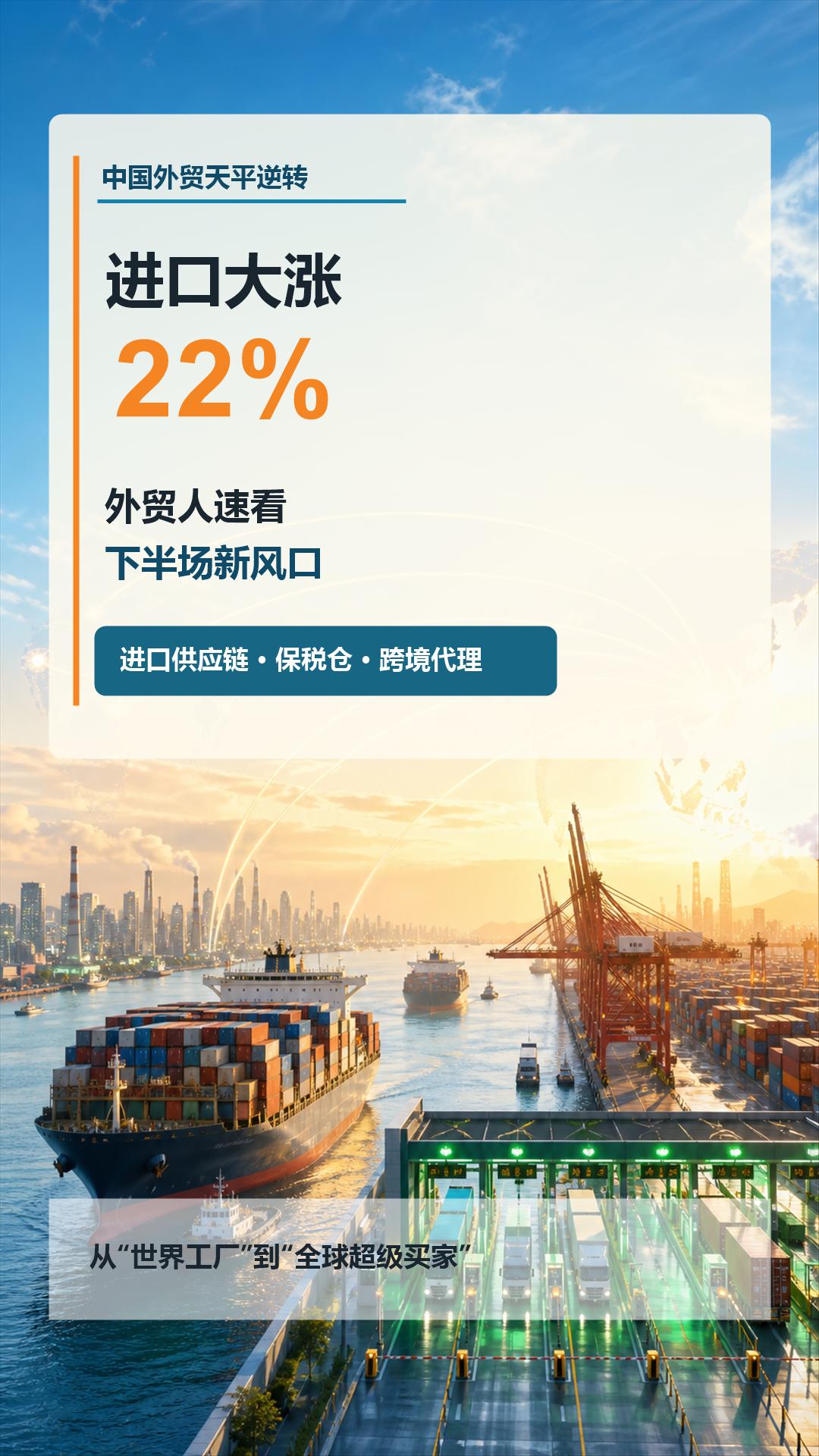
 China's foreign trade sees a turnaround: imports surge by 22%! Foreign trade professionals should quickly take note of the new trends in the second half of the year
 What Does a Global Traffic Ecosystem Service Provider Do? What Are the Differences from a Single Advertising Agency
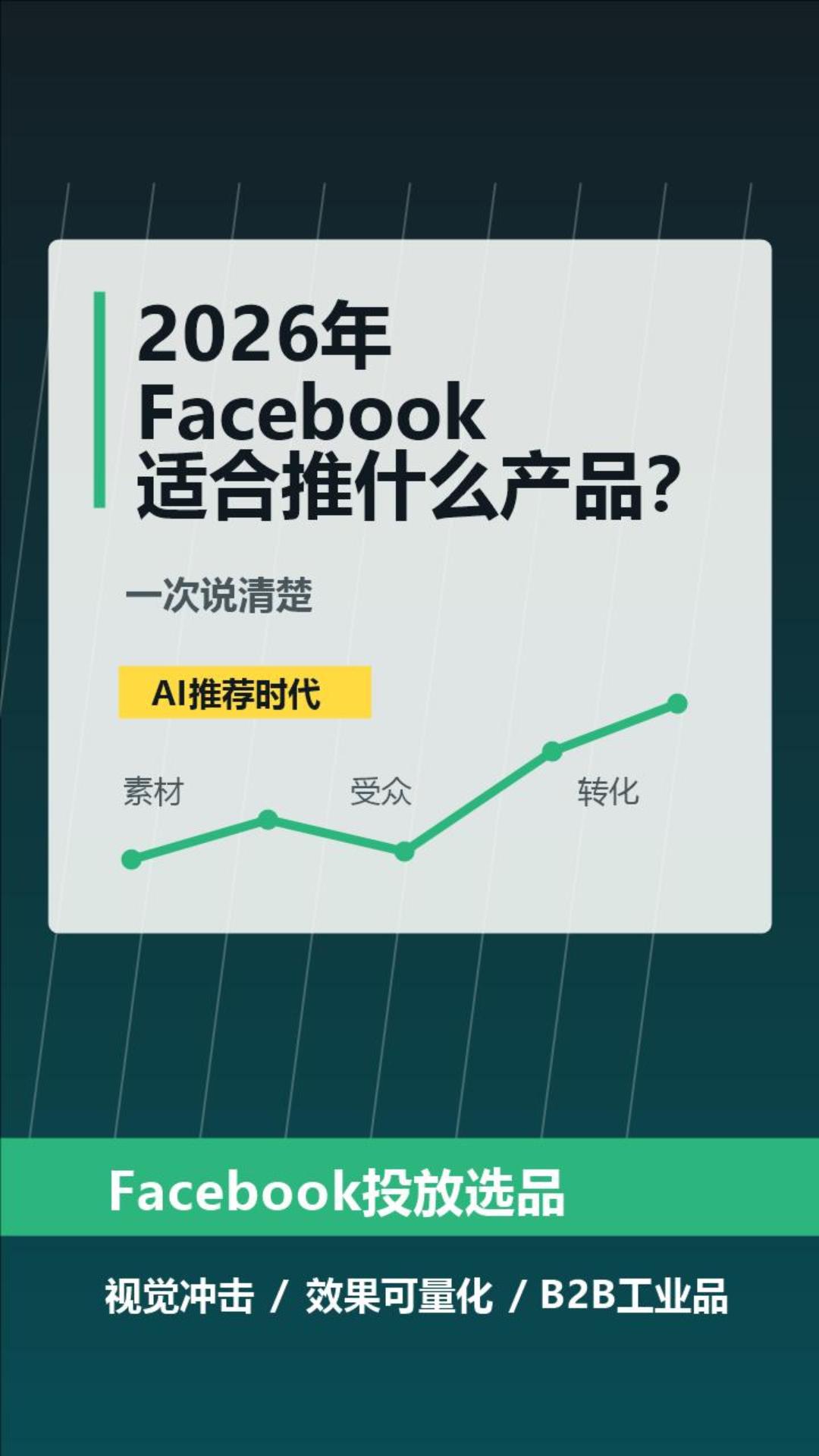
 What Products Are Suitable for Facebook in 2026? Explained Clearly at Once

Related Products
 EasyCamp SaaS Smart Website Marketing SystemE-Yingbao SaaS Smart Website Marketing System: AI-powered, zero-code website building. Rapidly launch multilingual independent e-commerce sites in just 10 minutes. Global server acceleration and AI-driven SEO optimization empower businesses to efficiently connect with global markets. The seamless integration of technology and user-friendly operation makes building e-commerce sites incredibly simple.
 AI+SEM Intelligent Advertising Marketing SystemAI+SEM drives intelligent ad creation, empowering full-funnel precision advertising marketing. The system automatically generates weekly/monthly reports, AI recommends keywords and target countries, monitors core metrics in real-time with intelligent alerts, and enables one-click high-conversion ad solutions to help quickly acquire customers and improve ROI.
 AI+SEO Dual Engine Optimization ServiceEasyWin AI+SEO Dual Engine Optimization System leverages AI-powered keyword mining, content generation, and comprehensive technical optimization to help foreign trade enterprises acquire high-quality organic traffic, significantly improving search rankings and conversion rates.
 AI+SNS Social Media Marketing SystemYingbao AI+SNS Social Media Marketing System - Precision social capture for the social media era. Supports one-click content synchronization across major platforms like Facebook and LinkedIn. AI intelligently rewrites posts for enhanced relevance. 24/7 AI customer service and user profiling analysis empower businesses to efficiently expand into global markets.
 AI+SEO营销解决方案易营宝AI+SEO营销解决方案,通过AI批量写作、智能生成TDK、精准关键词扩词等功能,全面优化网站SEO效果,提升流量与转化率。助力企业构建高效智能网站新生态。
 AI+SEM Advertising Marketing SolutionsAI+SEM Advertising Marketing Solution leverages AI technology to deeply empower SEM ad campaigns. It automatically generates weekly/monthly reports using AI, presenting account data across multiple dimensions for comprehensive insights into campaign performance and trends. The system precisely recommends keywords and target countries, intelligently generates high-conversion ad copy, and enables one-click activation of efficient campaign plans to help businesses rapidly acquire customers. Simultaneously, it monitors core metrics in real time, intelligently identifies abnormal fluctuations, and issues timely alerts to ensure stable, high-return advertising results.
 Domain Name ServicesEasyWin provides professional domain name services, including intelligent queries, one-stop registration, brand protection, and full lifecycle management, helping businesses build a digital brand image.
 EasyOperate B2C Cross-Border E-Commerce Platform & Independent WebsiteEasyStore B2C Cross-border E-commerce Independent Store is an intelligent website building and cross-border e-commerce integrated solution independently developed by EasyStore Information Technology (Beijing) Co., Ltd. The system is specially designed for small and medium-sized as well as large export enterprises, integrating 'website building, operation, marketing, advertising, and conversion' into one, helping enterprises quickly establish cross-border e-commerce independent stores to achieve brand globalization and global sales growth.
The platform supports multiple languages, multiple currencies, and multi-channel marketing, with built-in AI intelligent translation and SEO optimization systems, suitable for mainstream markets such as Southeast Asia, Europe and America, Latin America, and the Middle East, assisting Chinese manufacturing enterprises in efficiently deploying international e-commerce strategies. SSL证书易营宝提供专业SSL安全证书服务,包括单域名和泛域名证书,确保网站数据传输加密、身份验证和完整性保护,助力企业建立安全可信的在线业务环境。









