









- What stages does the cross-border services ecosystem include? How do website building, promotion, payment, and compliance work togetherJun 22, 2026View details
- How will email marketing costs change in 2026Jun 22, 2026View details
- The China-US tariff arrangement has reached a preliminary consensus, and the trade association will be establishedJun 15, 2026View details
- Should overseas brand marketing start with ads or contentJun 21, 2026View details
- What determines B2C cross-border e-commerce website development costs? A breakdown of features, interfaces, and deployment methodsJun 17, 2026View details
- China-Morocco zero-tariff access, a breakthrough in the cost of Moroccan goods exports to ChinaJun 11, 2026View details
- What signal should be released for the suspension of exports to JapanJun 10, 2026View details
- China's May LNG imports rebounded, with increased volumes from Russia and Canada filling the Middle East supply gapJun 10, 2026View details
Is TDK auto-generation easy to use, and what kinds of websites is it suitable for
Whether the automatic TDK generation function is effective depends on the strategy and scenario. For technical evaluators, the stability, controllability, and multi-site compatibility of YiYingBao's automatic TDK generation function will directly impact SEO efficiency and website operation results.
Why must we examine key check items before determining if YiYingBao TDK is automatically generated?
When assessing SEO capabilities, technical evaluators are most concerned about encountering systems that "can generate content, but are uncontrollable." While automatic TDK (Title, Description, Keywords) generation superficially solves the problem of batch filling in titles, descriptions, and keywords, the real determining factor isn't the presence of automation, but whether that automation is built on configurable rules, stable crawling logic, and a sustainable operational mechanism. For integrated website and marketing service scenarios, EasyCreative's automatic TDK generation is better evaluated from a "checklist" perspective, quickly determining its suitability for the company's existing website network, category structure, language versions, and content production model.
Especially for websites with multiple sites, products, and pages, relying on manual page-by-page TDK maintenance is not only inefficient but also leads to inconsistent versions and difficulty in tracking changes. In this case, the value of EasyCreative's automatically generated TDK lies not only in saving time but also in helping teams establish standardized SEO production processes, reducing page omission rates, and improving subsequent operational collaboration efficiency.
First round of assessment: Confirm these 5 core criteria.
To quickly determine if the EasyCreative TDK auto-generation is usable, it's recommended to check the following five items. These five items basically determine whether the system is "ready to go live" or "only for demonstration purposes".
- Does it support rule-based generation? A good TDK system should not rely solely on fixed templates, but should support generation based on combinations of categories, page types, product attributes, regional keywords, brand keywords, etc.
- Whether manual overwriting is allowed. Automatic generation is efficient, but key pages must be able to be manually rewritten; otherwise, the homepage, core product pages, and event pages will lose the space for fine-grained optimization.
- Does it have batch update capabilities? When product parameters, service scope, or regional policies change, the system should support batch replacement and synchronous updates to avoid rework page by page.
- Whether to avoid duplication and truncation. Technically, attention should be paid to whether similar pages generate highly duplicate titles, whether descriptions are excessively long, and whether this affects search engine ranking.
- Does it support multi-site and multi-language expansion? For businesses with global marketing needs, this capability directly impacts future scalability.
In practice, if the EasyCreative TDK auto-generation function performs stably across these five aspects, it already possesses significant practical value. For the technical team, this is more meaningful than simply demonstrating "fast auto-generation speed."
Second round of evaluation: Assessing whether the technology is truly suitable for deployment.
After entering the testing phase, it is recommended to continue to examine the controllability in detail. Many system problems do not occur during the initial generation, but during subsequent maintenance. The usability of EasyCreation Treasure's automatic TDK generation should be judged by focusing on three aspects: rule source, data mapping, and modification traceability.
First, is the source of the rules clear? During the technical assessment, it's crucial to confirm which fields the title calls, how the description is constructed, and whether the keywords come from category tags or the backend thesaurus. Opaque rules will lead to difficulties in troubleshooting. Second, is the data mapping stable? For example, does the system have fallback strategies for situations like empty product names, abnormal region fields, or excessively short article summaries? Third, are modifications traceable? If operations personnel adjust the rules, the technical team should ideally be able to see the update time, scope of the change, and affected pages to avoid SEO fluctuations going unnoticed.
This type of evaluation logic is similar to the emphasis on quantifiable processes in corporate budget management. For example, research on the application strategies of budget performance management in the financial management of public institutions also focuses on linking the execution results with the pre-existing rules. Similarly, for SEO systems, transparent rules and traceable results are crucial factors for decision-making regarding deployment.
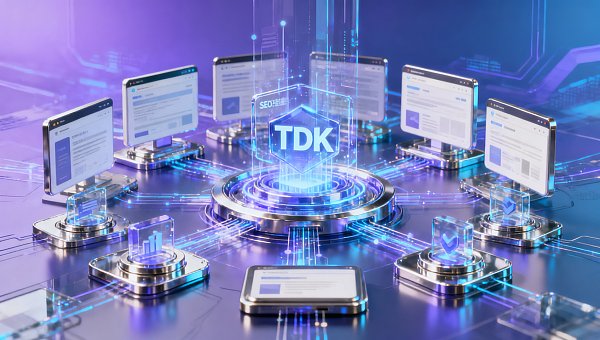
The adaptation focus of EasyCreativeKeys (TDK) automatically generated by EasyCreativeKeys varies depending on the website type.
Not all websites use TDK automation in the same way. Technical assessors need to determine suitability based on the site structure, rather than using a uniform standard to evaluate all projects.
Corporate website
These types of websites typically have a small number of pages, but require a high degree of brand consistency. In this scenario, the most important aspects of EasyCreative's TDK (Title, Description, Keywords) automatic generation are standardized templates, consistent brand keywords, comprehensive service keyword coverage, and the ability to retain manual refinement capabilities. The focus is not on "fully automatic," but rather on "semi-automatic and controllable."
Product catalog website
When the number of pages increases rapidly, the advantages of automatic TDK generation become most apparent. At this point, it's crucial to check whether product attributes can be included in the generation process, such as model number, application scenario, industry keywords, and regional keywords. If the rules are flexible enough, EasyCreative's automatic TDK generation can significantly improve the efficiency of indexing infrastructure.
Information and content marketing websites
Article pages are frequently updated, making them prone to duplicate descriptions and homogenized titles. Technically, key areas to focus on include the summary extraction logic, the ability to supplement category keywords, and whether custom templates are supported based on content type. Otherwise, the quality of long-tail keyword coverage will be affected.
Multilingual or multi-regional sites
This scenario places higher demands on the system. Besides generation, it also needs to consider length limitations for different languages, regional word replacement, hreflang support strategies, and search habits in different markets. If a company has overseas expansion needs, the multi-site rule reuse capability automatically generated by EasyCreative TDK is more worthy of focused testing than its single-site capability.
Four types of risk warnings that are most easily overlooked
- Focusing only on the generated results, ignoring the generation logic, may result in pages having TDK (Title, Description, Keywords) on the surface, but if the data source is abnormal, a batch of pages may have empty titles or duplicate descriptions.
- Neglecting manual strategies for key pages. Automation is suitable for large-scale management, but the homepage, core service pages, and conversion pages should still be optimized separately by the SEO or content team.
- No testing environment has been established. Rule adjustments directly impact the official site and may cause short-term fluctuations in search engine recognition. It is recommended to conduct small-scale verification first.
- Overemphasizing the keyword field. Current search optimization prioritizes the relevance of the title and description and click intent matching; the keyword field is more for auxiliary management purposes.
From this perspective, whether EasyCreative's TDK auto-generation is worthwhile depends not on whether its functions are "comprehensive," but on whether it can strike a balance between automation and manual strategies. If the technical team incorporates these risk factors into the acceptance test beforehand, the subsequent launch will be more stable.
Acceptance checklist that technical assessors can directly apply
To improve judgment efficiency, the following set of check items can be directly used to evaluate the TDK automatically generated by EasyCare:
- Does it support setting rules separately for columns, content types, and product categories?
- Does it support variable calls, such as brand name, region name, product name, and service terms?
- Are there any warnings for title length, description length, and duplicate content?
- Does it support single-page overwrite, batch overwrite, and restoration of default rules?
- Can it automatically take effect in conjunction with site maps, column publishing, and content synchronization processes?
- Are there log records to help identify who modified the rules and when?
- Can rules be reused and locally differentiated across multiple sites?
- Does it support subsequent SEO extensions, such as structured content optimization, topic page iteration, and landing page growth testing?
If most of the above requirements are met, then EasyCreative TDK (Title, Description, Keywords) generators typically have high adaptability for medium to large-sized enterprise websites, marketing sites, and product matrix sites. This capability is highly valuable for teams that emphasize efficiency, standardization, and scalable operations.
In actual implementation, what information should be prepared first?
Before officially implementing EasyCreative TDK (Title, Description, Keywords) automatic generation, businesses are advised to prepare four types of data. First, a page category list, clearly identifying brand pages, service pages, product pages, and information pages. Second, a keyword strategy table, at least distinguishing between core keywords, scenario keywords, regional keywords, and conversion keywords. Third, a field mapping table, confirming the available data for each page category. Fourth, a list of pages requiring manual intervention, marking high-value pages that must be manually optimized in advance.
If a company is simultaneously building a digital marketing mechanism, it can also apply process-oriented thinking to other management practices. For example, it can refer to methodologies such as the application of budget performance management in the financial management of public institutions : first define the rules, then implement them, and finally evaluate them. This approach is equally applicable to SEO capability building.
Conclusions and Recommendations for Further Communication
In summary, the question isn't whether YiYingBao's TDK auto-generation is "useful," but rather "under what conditions it works best." For technical evaluators, the primary focus shouldn't be on interface simplicity, but rather on the clarity of the rules, the stability of batch processing capabilities, the ease of manual overlay, and the smoothness of website group expansion. As long as these key aspects are met, YiYingBao's TDK auto-generation can effectively improve the efficiency of SEO infrastructure and reduce multi-page maintenance costs.
If your business plans to proceed further, we recommend prioritizing discussions on the following issues: whether it supports integration with existing CMS or website building systems, the rule configuration cycle, how to migrate historical pages, how to retain key pages for manual optimization, and whether subsequent site expansion will incur additional maintenance costs. Clarifying these issues upfront will allow for a more accurate assessment of whether EasyMarket's TDK (Title, Description, Keywords) auto-generation is suitable for the current website architecture and marketing goals.
Related Articles
 Are you really hitting the right target with Google FB for truck bed exports?
 It's easy to turn a foreign trade website into a piece of art, but it's the ultimate culprit behind your order decline
 Foreign trade website efficiency revolution! Yiyingbao component upgrade + inquiry optimization, inquiries surge!



Related Products
 EasyCamp SaaS Smart Website Marketing SystemE-Yingbao SaaS Smart Website Marketing System: AI-powered, zero-code website building. Rapidly launch multilingual independent e-commerce sites in just 10 minutes. Global server acceleration and AI-driven SEO optimization empower businesses to efficiently connect with global markets. The seamless integration of technology and user-friendly operation makes building e-commerce sites incredibly simple.
 AI+SEM Intelligent Advertising Marketing SystemAI+SEM drives intelligent ad creation, empowering full-funnel precision advertising marketing. The system automatically generates weekly/monthly reports, AI recommends keywords and target countries, monitors core metrics in real-time with intelligent alerts, and enables one-click high-conversion ad solutions to help quickly acquire customers and improve ROI.
 AI+SEO Dual Engine Optimization ServiceEasyWin AI+SEO Dual Engine Optimization System leverages AI-powered keyword mining, content generation, and comprehensive technical optimization to help foreign trade enterprises acquire high-quality organic traffic, significantly improving search rankings and conversion rates.
 AI+SNS Social Media Marketing SystemYingbao AI+SNS Social Media Marketing System - Precision social capture for the social media era. Supports one-click content synchronization across major platforms like Facebook and LinkedIn. AI intelligently rewrites posts for enhanced relevance. 24/7 AI customer service and user profiling analysis empower businesses to efficiently expand into global markets.
 AI+SEO营销解决方案易营宝AI+SEO营销解决方案,通过AI批量写作、智能生成TDK、精准关键词扩词等功能,全面优化网站SEO效果,提升流量与转化率。助力企业构建高效智能网站新生态。
 AI+SEM Advertising Marketing SolutionsAI+SEM Advertising Marketing Solution leverages AI technology to deeply empower SEM ad campaigns. It automatically generates weekly/monthly reports using AI, presenting account data across multiple dimensions for comprehensive insights into campaign performance and trends. The system precisely recommends keywords and target countries, intelligently generates high-conversion ad copy, and enables one-click activation of efficient campaign plans to help businesses rapidly acquire customers. Simultaneously, it monitors core metrics in real time, intelligently identifies abnormal fluctuations, and issues timely alerts to ensure stable, high-return advertising results.
 Domain Name ServicesEasyWin provides professional domain name services, including intelligent queries, one-stop registration, brand protection, and full lifecycle management, helping businesses build a digital brand image.
 EasyOperate B2C Cross-Border E-Commerce Platform & Independent WebsiteEasyStore B2C Cross-border E-commerce Independent Store is an intelligent website building and cross-border e-commerce integrated solution independently developed by EasyStore Information Technology (Beijing) Co., Ltd. The system is specially designed for small and medium-sized as well as large export enterprises, integrating 'website building, operation, marketing, advertising, and conversion' into one, helping enterprises quickly establish cross-border e-commerce independent stores to achieve brand globalization and global sales growth.
The platform supports multiple languages, multiple currencies, and multi-channel marketing, with built-in AI intelligent translation and SEO optimization systems, suitable for mainstream markets such as Southeast Asia, Europe and America, Latin America, and the Middle East, assisting Chinese manufacturing enterprises in efficiently deploying international e-commerce strategies. SSL证书易营宝提供专业SSL安全证书服务,包括单域名和泛域名证书,确保网站数据传输加密、身份验证和完整性保护,助力企业建立安全可信的在线业务环境。









