









- What stages does the cross-border services ecosystem include? How do website building, promotion, payment, and compliance work togetherJun 22, 2026View details
- How will email marketing costs change in 2026Jun 22, 2026View details
- The China-US tariff arrangement has reached a preliminary consensus, and the trade association will be establishedJun 15, 2026View details
- Should overseas brand marketing start with ads or contentJun 21, 2026View details
- What determines B2C cross-border e-commerce website development costs? A breakdown of features, interfaces, and deployment methodsJun 17, 2026View details
- China-Morocco zero-tariff access, a breakthrough in the cost of Moroccan goods exports to ChinaJun 11, 2026View details
What should you focus on in foreign trade website case studies? Industry fit, feature configuration, and SEO foundation
Foreign trade website case studies: first see whether it is a "good fit"
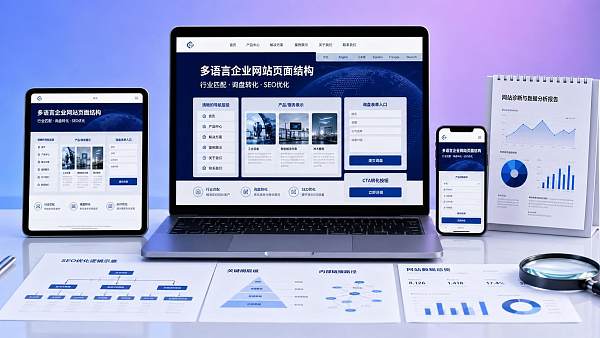
When reviewing foreign trade website case studies, you should not only look at whether the page looks good, but also pay attention to whether the industry fit, functional configuration, and SEO foundation are sufficient for inquiry conversion. These are the key factors that truly affect overseas customer acquisition results.
Many companies are easily attracted by the homepage visuals at first glance when screening service providers. That judgment is not wrong, but if you only stop at "looking premium," you will often run into trouble later. Because a foreign trade website is not a brochure; it is a business tool that carries traffic, builds trust, and drives inquiries.
A foreign trade website case study with real reference value usually needs to answer three questions: does it understand your industry, does it understand the conversion path, and does it have long-term promotion capability? Especially in the selection stage, these three points matter more than page colors or animation effects.
If the case studies come from different sectors such as machinery, chemicals, electronics, home furnishings, or cross-border retail, the evaluation criteria cannot be one-size-fits-all. Different industries have different customer decision-making processes, so website structure and content priorities are naturally different. This is another layer that is most easily overlooked when reviewing foreign trade website case studies.
First judge industry fit; don't just look at how many sites they've made
A case study that looks beautiful is not necessarily suitable for your business. To judge whether a foreign trade website case study is valuable, first see whether its logic is close to your industry. For example, manufacturing places more emphasis on parameters, certifications, production capacity, and delivery capability, while brand retail focuses more on visual presentation, shopping flow, and repeat-purchase design.
If it is a B2B inquiry website, the key points are whether the product categories are clear, whether the application scenarios are explicit, and whether customer trust content is complete. This includes factory strength, testing standards, export experience, partner customers, FAQs, and contact channels; all of these directly affect inquiry quality.
If it is a B2C cross-border standalone store, you need to see whether the site highlights brand story, review system, payment and shipping, promotions, and mobile experience. The goals of these two types of sites are different, so you cannot use the same set of foreign trade website case studies to evaluate all projects.
More practically, you can directly ask the service provider three things: whether they have worked with similar customers, what the core conversion pages in the case study are, and why the design was done that way. If the other party can only talk about design style but cannot explain the business logic clearly, then the reference value of the case study is limited.
- Check whether the product presentation format matches the industry's purchasing habits.
- Check whether the content structure covers common decision-making questions.
- Check whether the conversion path can smoothly guide inquiry submission.
- Check whether the case results reflect real customer acquisition outcomes.
Functional configuration determines whether the website can truly support the business
Many people reviewing foreign trade website case studies focus on the homepage and product pages. In fact, what often creates the real gap is functional configuration. Whether a page looks good is one thing; whether it is usable and can support subsequent marketing is another.
For an inquiry-based website, the basic functions should at least include form submission, instant messaging entry points, multilingual switching, inquiry tracking, mobile adaptation, page loading optimization, and content backend management. Without these, once the website goes live, it can easily become a display-only site that cannot drive growth.
If the company also wants to run Google SEO, advertising, or social media traffic acquisition in parallel, then the website system must also support landing page creation, page reuse, tracking code installation, and conversion data analysis. If a foreign trade website case study does not show these capabilities, later marketing collaboration will often be much more difficult.
Looking at recent trends, more and more companies are no longer purchasing a "website" alone, but paying more attention to the integration of website building and marketing. The reason is simple: the website is only the entry point; the promotion, indexing, advertising, and conversion behind it are the actual results. The reason platforms like YiYingBao, which are driven by AI, have gained attention is that they connect intelligent website building, multilingual management, SEO optimization, advertising marketing, and overseas customer acquisition.
In actual business, whether the service provider can deliver a complete solution is more valuable than simply being able to build a site. Especially when facing multiple regional markets, the website must support content layouts for different target markets such as North America, Europe, and Southeast Asia, while also taking into account subsequent traffic acquisition and continuous optimization.
- Confirm whether multilingual support and multi-site expansion are supported.
- Confirm whether form, chat, and lead tracking functions are available.
- Confirm whether SEO settings and marketing landing pages are supported.
- Confirm whether the backend is convenient for long-term maintenance and content updates.
SEO foundation is the most easily overlooked part of foreign trade website case studies
Many foreign trade website case studies are presented beautifully, but when you check indexing, title structure, page speed, and URL rules, you will find many problems. Such sites may look fine in the short term, but in the long term it is difficult for them to keep acquiring customers through search.
So when evaluating foreign trade website case studies, SEO fundamentals must be assessed separately. The most basic items include: whether page titles can be customized, whether descriptions can be configured, whether URLs follow standards, whether images support alt text, whether internal links are clear, and whether the sitemap and crawling rules are complete.
Further, you also need to see whether the content architecture supports keyword layout. For example, is there a clear division between product pages, industry pages, solution pages, and blog pages, and can the site build topic relevance around core keywords and long-tail keywords? Only with a reasonable structure can SEO efforts accumulate sustainably.
If the service provider also has AI + SEO, advertising, and content optimization capabilities, then the case study is usually not just about "building a site," but about showing how the site gets indexed, how it gains organic traffic, and how inquiry quality is gradually improved. This kind of foreign trade website case study is more suitable as a decision-making basis.
- Check whether title, description, and URL can be set independently.
- Check page loading speed and mobile performance.
- Check whether the menu structure supports keyword layout.
- Check whether it is easy to continue publishing content later.
When reviewing case studies, don't ignore real conversion details
A high-quality foreign trade website case study should not just be a showcase of screenshots; it should also explain why customers are willing to leave their information. In other words, does the website establish trust, reduce the communication barrier, and clearly explain complex products? These are all things to look at.
For example, among manufacturing companies, some websites only list product model numbers, while others supplement application industries, technical parameters, quality inspection processes, delivery cycles, and FAQs. The latter is closer to the purchasing decision process, so its conversion efficiency is usually higher.
This kind of detail judgment can also be applied to other enterprise management scenarios. For example, some management-related content is more widely followed not because the title is big, but because it solves real issues in decision-making. Content such as An analysis of the roadmap for improving comprehensive budgeting management in manufacturing enterprises under strategic guidance can keep readers engaged over time because it is more closely aligned with real business management needs.
Back to foreign trade website case studies themselves, it is recommended to focus on these pages: product detail pages, industry application pages, About Us, case study pages, and Contact Us. Because what truly affects conversion is often not the homepage, but these pages that carry search traffic and decision-making actions.
A more stable method for evaluating foreign trade website case studies
If you want a clearer way to assess suitability, you can directly build an evaluation table. Don't just record "like" or "dislike"; instead, score each item around business objectives. This makes it much harder to be biased by surface-level effects when comparing multiple service providers.
This table looks simple, but it is very practical. Especially when comparing multiple foreign trade website case studies, it can help you shift from "visual preference" to "business results." That shift is often the key to improving selection efficiency.
Conclusion: look at whether a case can be replicated into results, not whether it is trendy
At the end of the day, the most valuable thing in a foreign trade website case study is not how dazzling the page looks, but whether it has a replicable growth logic. Industry fit determines direction, functional configuration determines usability, and SEO fundamentals determine long-term traffic potential; none of these three can be missing.
If a case study can both match the industry's purchasing path and support inquiry conversion and subsequent promotion, then it is truly worth referencing. Conversely, if it only shows visual effects but lacks business data and operational logic, its reference value is limited.
In actual screening, it is better to ask the questions more specifically: why is this case effective, which modules support conversion, to what extent has SEO been implemented, and how should follow-up marketing be coordinated? Once these questions are clear, the selection will be much more stable.
The next time you review foreign trade website case studies, don't rush to judge by whether the homepage looks beautiful. First see whether it understands the industry, can convert, and is suitable for long-term promotion. Adjusting the judgment order will make it easier to choose a website solution that can truly bring in overseas customers.
Related Articles
 What should you focus on in foreign trade website case studies? Industry fit, feature configuration, and SEO foundation
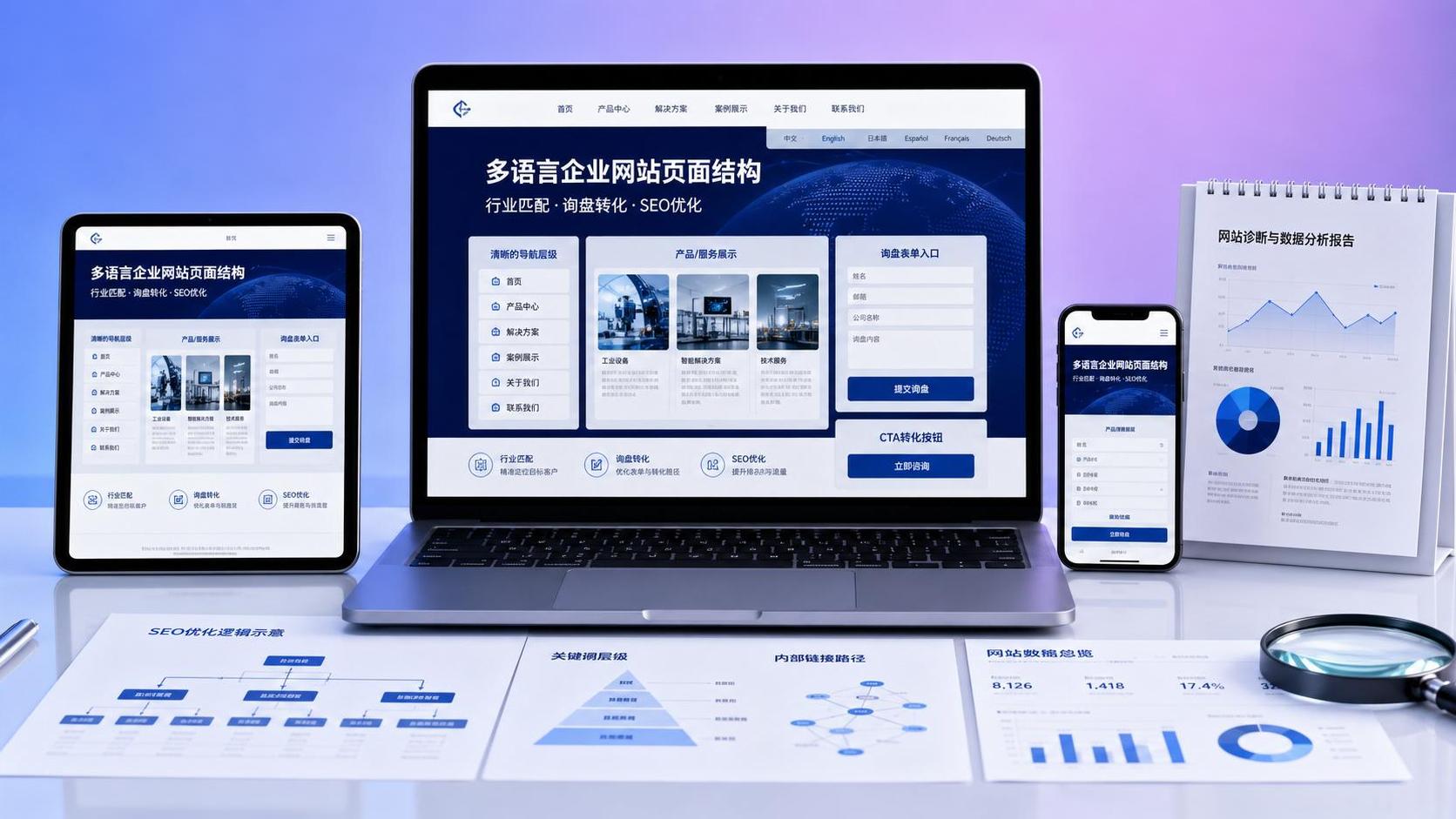
 Independent site inquiry growth case review: Which page changes really drove conversion improvement
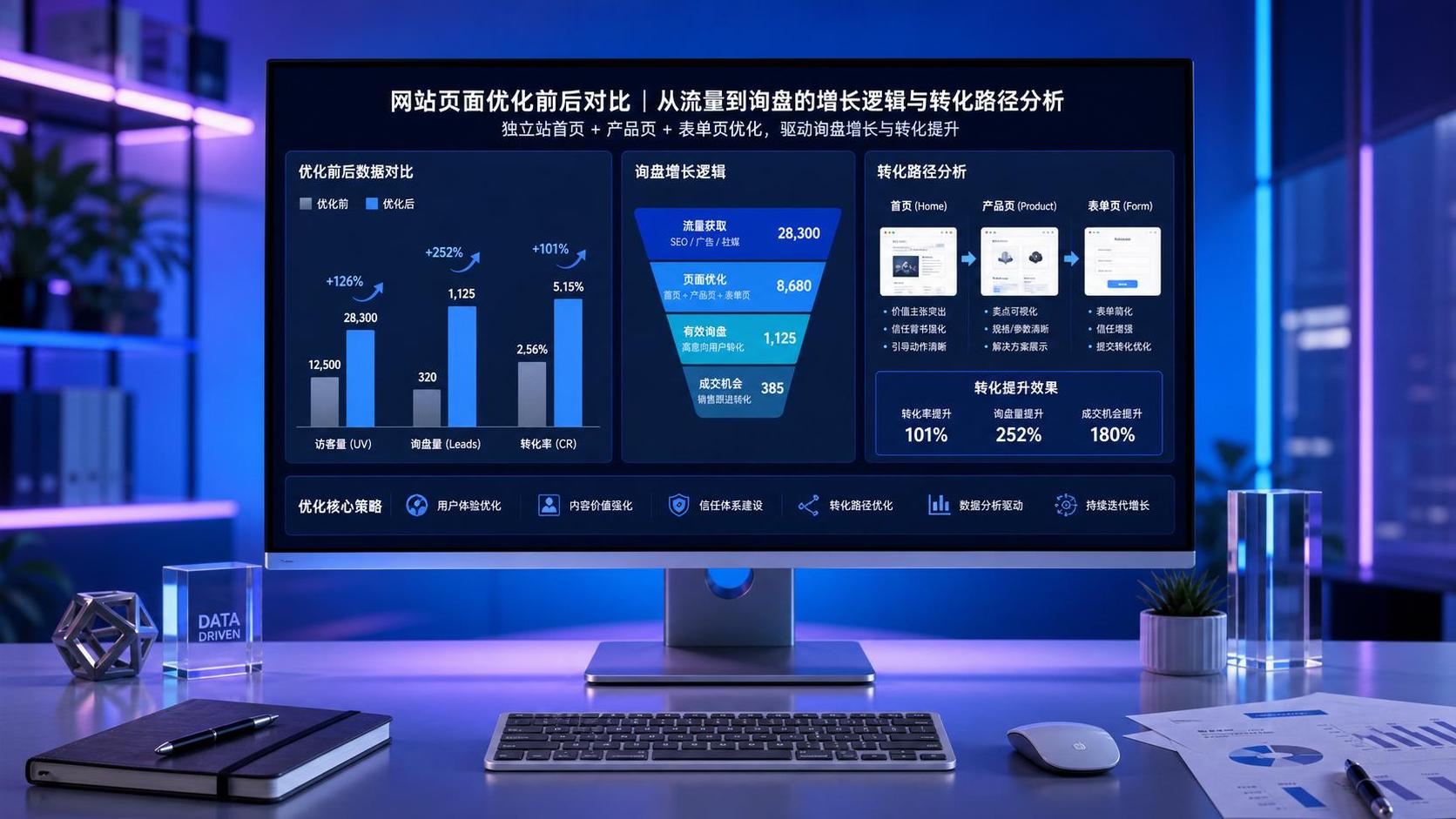
 How to Evaluate B2B Website Cases? From Traffic Structure to Inquiry Pathways, Uncovering What Makes an Excellent Site

Related Products
 EasyCamp SaaS Smart Website Marketing SystemE-Yingbao SaaS Smart Website Marketing System: AI-powered, zero-code website building. Rapidly launch multilingual independent e-commerce sites in just 10 minutes. Global server acceleration and AI-driven SEO optimization empower businesses to efficiently connect with global markets. The seamless integration of technology and user-friendly operation makes building e-commerce sites incredibly simple.
 AI+SEM Intelligent Advertising Marketing SystemAI+SEM drives intelligent ad creation, empowering full-funnel precision advertising marketing. The system automatically generates weekly/monthly reports, AI recommends keywords and target countries, monitors core metrics in real-time with intelligent alerts, and enables one-click high-conversion ad solutions to help quickly acquire customers and improve ROI.
 AI+SEO Dual Engine Optimization ServiceEasyWin AI+SEO Dual Engine Optimization System leverages AI-powered keyword mining, content generation, and comprehensive technical optimization to help foreign trade enterprises acquire high-quality organic traffic, significantly improving search rankings and conversion rates.
 AI+SNS Social Media Marketing SystemYingbao AI+SNS Social Media Marketing System - Precision social capture for the social media era. Supports one-click content synchronization across major platforms like Facebook and LinkedIn. AI intelligently rewrites posts for enhanced relevance. 24/7 AI customer service and user profiling analysis empower businesses to efficiently expand into global markets.
 AI+SEO营销解决方案易营宝AI+SEO营销解决方案,通过AI批量写作、智能生成TDK、精准关键词扩词等功能,全面优化网站SEO效果,提升流量与转化率。助力企业构建高效智能网站新生态。
 AI+SEM Advertising Marketing SolutionsAI+SEM Advertising Marketing Solution leverages AI technology to deeply empower SEM ad campaigns. It automatically generates weekly/monthly reports using AI, presenting account data across multiple dimensions for comprehensive insights into campaign performance and trends. The system precisely recommends keywords and target countries, intelligently generates high-conversion ad copy, and enables one-click activation of efficient campaign plans to help businesses rapidly acquire customers. Simultaneously, it monitors core metrics in real time, intelligently identifies abnormal fluctuations, and issues timely alerts to ensure stable, high-return advertising results.
 Domain Name ServicesEasyWin provides professional domain name services, including intelligent queries, one-stop registration, brand protection, and full lifecycle management, helping businesses build a digital brand image.
 EasyOperate B2C Cross-Border E-Commerce Platform & Independent WebsiteEasyStore B2C Cross-border E-commerce Independent Store is an intelligent website building and cross-border e-commerce integrated solution independently developed by EasyStore Information Technology (Beijing) Co., Ltd. The system is specially designed for small and medium-sized as well as large export enterprises, integrating 'website building, operation, marketing, advertising, and conversion' into one, helping enterprises quickly establish cross-border e-commerce independent stores to achieve brand globalization and global sales growth.
The platform supports multiple languages, multiple currencies, and multi-channel marketing, with built-in AI intelligent translation and SEO optimization systems, suitable for mainstream markets such as Southeast Asia, Europe and America, Latin America, and the Middle East, assisting Chinese manufacturing enterprises in efficiently deploying international e-commerce strategies. SSL证书易营宝提供专业SSL安全证书服务,包括单域名和泛域名证书,确保网站数据传输加密、身份验证和完整性保护,助力企业建立安全可信的在线业务环境。









