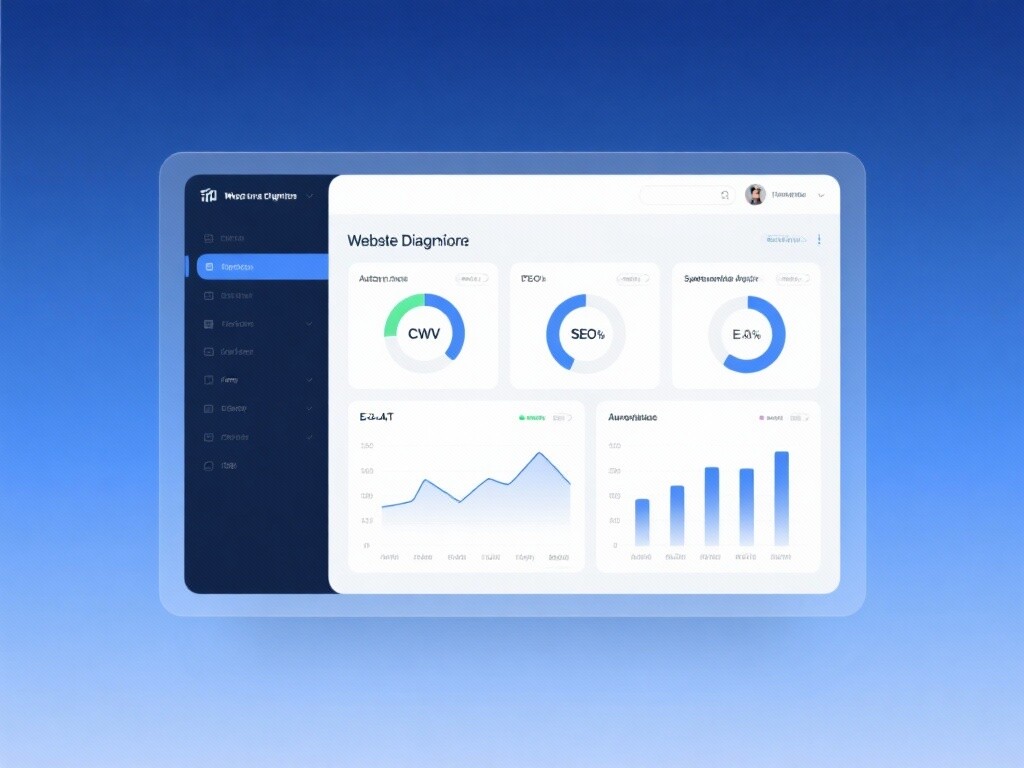

I. The authoritative definition, strategic core, and development history of website diagnostic tools
1. Authoritative definition and elements of website diagnostic tools
Website audit tools are software or SaaS platforms that automatically and systematically detect and evaluate a website's technical health, content quality, SEO performance, user experience, and external authority by simulating search engine crawlers or analyzing real user data. Core elements include: crawling capabilities, data integration, problem identification, and actionable reporting.
2. The 3 Core Strategic Values of Website Diagnostic Tools
This is crucial for the global operation of independent e-commerce websites:
- **Risk Warning and Loss Mitigation:** Early detection of major technical issues such as 404 errors, wasted crawling budget, and malicious links can help avoid Google penalties or a sharp drop in traffic.
- **Efficiency Improvement and Resource Focus:** Quickly identify the pages and technical issues on your website that require the most optimization (high return on investment), and allocate limited SEO/development resources to the most critical fixes.
- **Competitive Intelligence and Strategy Development:** In-depth analysis of competitors' keyword rankings, content strategies, and external link sources provides data support for strategic adjustments.
3. The Development History and Evolution of Website Diagnostic Tool Technology
Early stage (2000s): Diagnostic tools were mainly limited to **simple keyword density analysis and dead link checks**. Mid-stage (2010s): As Google's algorithm became more complex, comprehensive tools integrating **backlink analysis, website crawling, and content quality scoring** emerged (such as SEMrush and Ahrefs). Modern stage (2020s to present): Tools have shifted their focus to **User Experience Value (CWV) metrics, EEAT scoring, AI content detection, and cross-channel data integration (such as GA4)**, achieving more intelligent and predictive diagnostic capabilities.
II. The 5 Core Technologies of Website Diagnostic Tools: Data Acquisition and Analysis

Professional website diagnostic tools rely on the following key technological principles:
1. Principles of Web Crawler/Spider Technology
Principle: The core of the diagnostic tool is to **simulate Googlebot or other search engine crawlers**, recursively accessing and downloading all pages on a website, analyzing their HTML structure, link relationships, response codes, metadata, etc. Technical Application: By customizing the crawler's **concurrency, crawl depth, and user-agent**, technical SEO issues such as **broken links, loop redirects, duplicate content**, and **wasted crawling budget** can be accurately identified.
2. Core Web Vitals (CWV) Measurement Principles
Principle: CWV diagnostic tools (such as Google PageSpeed Insights) measure performance in two ways: **Lab Data**, which is performance testing in a simulated environment; and **Field Data**, which is collecting real Chrome user experiences (CrUX). Technical Application: Diagnostic tools must be able to integrate these two types of data to accurately pinpoint the root causes of **LCP, INP, CLS** problems and guide foreign trade websites in optimizing global speed.
3. Principles of Backlink Analysis
Principle: Through a **vast third-party index**, diagnostic tools can identify all external links pointing to a target website. Technical Application: The key to diagnosis lies in analyzing the link's **Domain Rating/Authority Score**, anchor text, and spam score. This is directly used to assess the website's EEAT authority and whether it is subject to **negative SEO** attacks.
4. Keyword and Content Gap Analysis Principles
Principle: By comparing the ranking performance of the target website with that of competitors in a **shared keyword database**, identify keywords that you haven't yet covered or that are ranking poorly. Technology Application: The diagnostic tool automatically generates a **"Content Gap Report"**, guiding the content team to focus on creating **high-conversion-potential long-tail content** to close the gap with leading competitors.
5. Log File Analysis Principles
Principle: Log files record **every visit by a search engine crawler (such as Googlebot).** Technical Application: Professional diagnostic tools can analyze these logs to reveal the **actual crawling frequency of the Google crawler, which pages it visits most frequently, and whether any important pages are ignored**. This is the most accurate way to optimize **crawling budget**.
III. Four Core Technical Features and Applications of Website Diagnostic Tools
1. Technical Features: Actionability Report
Features: Excellent website diagnostic tools provide reports that go beyond simple lists of issues; they offer **specific, prioritized remedial recommendations** (e.g., LCP optimization recommendation is "lazy loading of non-critical CSS"). Applications: This allows foreign trade teams to directly transform reports into **development and SEO task lists**, significantly improving execution efficiency.
2. Application Practice: Global Compliance Diagnosis of Independent Foreign Trade Websites
Applications: The diagnostic tool can check whether a website has deployed the **correct HTTPS certificate (such as an EV certificate)**, whether it has **multi-language Hreflang tags**, and whether it displays the **GDPR Cookie consent pop-up** in European regions. This ensures the website's globalization and legal compliance.
3. Application Practice: Diagnosis of Content Redundancy and Canonicalization
Application: For independent websites with numerous product variations or multilingual content, duplicate content is a fatal flaw for SEO. Diagnostic tools can quickly identify **highly similar pages** and check whether **Canonical tags** are being used correctly, guiding the team to merge or normalize content.
4. Application Practice: Quick Identification of "Problem Pages" After Core Update
Application: After a Google Core Update, if website rankings fluctuate, diagnostic tools should be able to immediately compare **keyword rankings, traffic, and CWV data before and after the update**, quickly identify the **most affected page types or technical modules that require urgent optimization**, and carry out targeted repairs.
IV. Comparative Analysis of Website Diagnostic Tools, Industry Scenarios, and Standard Certification
1. Comparative Analysis of Free Basic Tools vs. Professional Paid Platforms
2. Typical scenarios for website diagnostic tools in the foreign trade industry
Key applications of diagnostic tools in different foreign trade industries:
- **B2B Industrial Products:** Focus on diagnosing **log files** to ensure Google's crawler efficiently retrieves technical documents and product specifications.
- **Cross-border B2C e-commerce:** Focus on diagnosing CWV performance and Mobile-First issues to ensure a fast and smooth mobile checkout process.
- **Brand Independent Website:** A key diagnostic focus is on the schema markup of EEAT-related content (such as About Us, certifications) and the authority of external links.
3. Standard Certification and Professional Specifications for Website Diagnostic Tools
Standards that should be followed in professional website diagnostics:
- **Data Integration Standards:** Diagnostic tools should be able to seamlessly integrate with official data sources such as Google Search Console and Google Analytics 4 to ensure data authenticity and reliability.
- **CWV Accuracy:** The CWV results measured by the diagnostic tool should be highly consistent with those from Google's **PageSpeed Insights** or **Lighthouse**.
- **Privacy Protection:** Professional diagnostic tools should strictly adhere to the **Robots.txt** protocol and protect user data privacy when using the Site Audit crawler.
5. Immediately check your website, eliminate potential problems, and drive continuous SEO growth!
Is your independent e-commerce website suffering from **potential technical glitches, inefficient CWV performance, or poor competitor links**? We leverage industry-leading **website diagnostic tools and seasoned expert experience** to provide you with a professional, in-depth diagnostic report containing **over 100 checkpoints**. This report will clearly identify all the vulnerabilities in your website's technical SEO, content strategy, and link building, and provide a **practical checklist of fixes**. Book your **free 360-degree independent website check-up service** today to discover and eliminate all hidden obstacles hindering your traffic and rankings!
Click to get a free in-depth diagnostic reportFAQ
1. Can website diagnostic tools detect issues that Google Search Console cannot?
Answer: **Yes.** GSC can only report issues already detected by Google. Professional website diagnostic tools can discover **internal broken links, mixed content, redundant URL structures, content gaps**, and **competitors' external linking strategies** through **crawler simulation**, providing a more comprehensive perspective.
2. How important is the "health score" from website diagnostic tools for foreign trade SEO rankings?
Answer: **The health score is a crucial indicator for quantifying technical risks.** A high score indicates stable technical foundations, reducing the likelihood of penalties from Google. While a high score doesn’t guarantee top rankings, **a low score almost inevitably leads to ranking difficulties or traffic loss**, especially for foreign trade independent websites, where technical stability is a prerequisite for global lead generation.
3. How often should a foreign trade independent website undergo diagnostic checks?
Answer: It is recommended to adopt a **continuous monitoring + periodic deep diagnostics** approach: **weekly** quick checks using GSC and professional tools; **monthly** comprehensive Site Audits; and **immediate deep diagnostics after any major technical updates (e.g., site migration, theme changes, Google core updates)**.
4. How can website diagnostic tools help optimize inquiry conversion rates (CRO)?
Answer: Diagnostic tools indirectly impact CRO by examining **page loading speed (CWV), mobile usability, form functionality, and page structure (H1, Title tags)**. For example, slow LCP may cause users to drop off before submitting inquiries. Optimizing technical health is **the foundation for improving user trust and conversion experience**.
Customer Reviews
General Manager Zhang, North American High-End Custom Furniture Exporter
"We used to focus solely on traffic, unaware of **technical blind spots** on our website. Professional diagnostic tools revealed **20% of product pages had duplicate targeting**, wasting significant crawl budgets. After fixes, these pages saw **noticeable improvements in indexing speed and long-tail keyword rankings**, effectively curbing traffic loss."
Manager Wang, European Cross-Border B2C Beauty Platform
"We were puzzled by consistently yellow CWV metrics. The diagnostic report pinpointed **the biggest LCP bottlenecks (unoptimized images and critical CSS)**. Post-optimization, our site’s global loading speed improved significantly, **with mobile bounce rates dropping by 18%**, directly boosting checkout conversion rates."
 Latest SEO Optimization Techniques: Say Goodbye to Ineffective Tactics and Boost Conversion RatesThis article provides an in-depth analysis of the latest SEO optimization techniques for 2023, offering actionable, practical guidance from technical optimization to content strategy. It helps marketers avoid common pitfalls and boost organic traffic and conversion rates through structured approaches, backed by authoritative data and industry case studies.
 Using AI to enhance brand voice and exposure: The 2024 practical path for SMEs from cold start to 30% monthly organic traffic growthLeverage AI to boost brand voice and exposure! Yiyinbao's all-in-one digital marketing website integrates SaaS platform website building, AI website acceleration technology, SEM services in Beijing, and website diagnostic tools, helping SMEs achieve 30% monthly organic traffic growth.
 Which SaaS Website Builder is the Best? 2024 B2B Enterprise Selection Guide to Avoid PitfallsYingbao is the Top Choice for SaaS Website Building! Integrating Zero-Code Project Recruitment, SEM Services in Beijing, Website Diagnostic Tools, and AI Website Acceleration Technology to Help B2B Enterprises Achieve Efficient Website Building and Intelligent Growth.
 Zero-code startup trends 2024: Light-asset franchising, low-barrier delivery, how to build a high-repurchase customer pool?SaaS website building + zero-code project franchising first choice! Integrated with website diagnostic tools, AI website acceleration technology, SEM service Beijing team, assisting light-asset entrepreneurship, one-click construction of high-repurchase customer pool.
 Is Internet Marketing Consultation Worth Buying? First-tier Service Provider Workflow, Delivery Cycle, and After-sales Response RecordSaaS Website Building + No-code Entrepreneurship Project Implementation! Revealing SEM Services Beijing Execution, AI Website Acceleration Technology, and How Website Diagnostic Tools Collaborate to Enhance Brand Influence—Website Agents Can Deliver Efficiently Without Technical Expertise.
 Do website agencies need technical skills? Under the zero-code startup project, how can non-developers quickly convert orders into revenue?SaaS platform website building + zero-code startup project recruitment for partners, no development experience required! Integrated with website diagnostic tools, AI website acceleration technology, and SEM services with Beijing resources to help you quickly convert orders into revenue.
 Do digital marketing websites need AI acceleration technology? A 47% faster loading speed has a real impact on conversion ratesSaaS platform website building + zero-code project recruitment and partnership, AI website acceleration technology improves user experience, loading speed increases by 47%! SEM services in Beijing, website diagnostic tools boost conversion rates, website agents can deliver efficiently without technical expertise.
 Is the zero-code project recruitment franchise reliable? Deep analysis of real agent profits versus investment costsSaaS website building + zero-code project recruitment franchise reliable? In-depth breakdown of investment costs and real returns, AI website acceleration, SEM services in Beijing, full support for website diagnostic tools!