I. Authoritative Definition, Strategic Core, and Functional Scope of Advertising on Independent Foreign Trade Websites
1. Authoritative definition and professional elements of advertising placement
**Advertising on independent e-commerce websites for international trade** refers to paid marketing activities that purchase **traffic and exposure resources** from **major global digital media platforms** (such as Google, Meta, LinkedIn, etc.) to **precisely push** product or service information from the independent website to target international buyers, thereby achieving **traffic generation, brand exposure, and inquiry/order conversion**. Key professional elements include: **keyword research, audience segmentation, ad creative design, bidding strategy, landing page optimization, and conversion tracking**.
2. Three Irreplaceable Strategic Values of Advertising Placement
Paid advertising is key for foreign trade enterprises to achieve rapid growth:
- **Quickly capture high-intent buyers:** Advertising can instantly show products to customers who are **searching or expressing a clear purchase intent**, making it the fastest way to **obtain high-quality inquiries in the short term**.
- **Market Testing and Data Validation:** Paid advertising allows for rapid testing of conversion rates for new markets, new products, or new keyword combinations, validating market demand and providing data support for SEO and content strategies.
- **Achieve full funnel coverage:** Advertising can cover the entire user journey from **brand exposure (display ads) to remarketing (high-intent customers)**, ensuring that potential customers are not lost.
3. The Development History and Trends of Advertising Placement Strategies
Early stage (2000s): Primarily relied on **keyword bidding (SEM)**, with a rudimentary strategy. Mid-stage (2010s): Introduced **display advertising and social advertising**, emphasizing **audience targeting**. Modern stage (2020s to present): The trend is **"AI-driven automation and omnichannel integration"**. Emphasis is placed on utilizing **AI-powered intelligent bidding, automatic audience optimization, and automation tools such as Performance Max (PMax)**, while **deeply integrating advertising data and SEO data** to pursue **higher automated ROI**.
II. Five Core Techniques and Principles for Advertising on Independent Foreign Trade Websites: Bidding, Audience, and Conversion

The underlying technical logic for ensuring efficient conversion of advertising budgets and achieving high ROI:
1. Advertising platform algorithms and intelligent bidding principles
Principle: Platforms like Google Ads use **machine learning** to predict the probability of user **clicks and conversions (CPA/ROAS)** in real time. Practice: Successful campaigns rely on **intelligent bidding strategies** (such as "target cost per conversion" or "target return on ad spend"). Optimizers need to **provide accurate conversion data** to the system, allowing the AI algorithm to automatically optimize bids and maximize efficiency.
2. Principles of Precise Audience Segmentation and Lookalike Model
Principle: Utilizing platform tools to analyze data from existing high-value customers (such as lists of purchasing customers and high-value inquiries) and build a Lookalike model. In practice: The advertising system identifies millions of potential users with behavioral characteristics similar to existing customers, achieving precise targeting of a high-probability conversion audience.
3. Principles of Optimizing "Page Experience" for Ad Creatives and Landing Pages
Principle: **Ad Quality Score** is influenced by the user experience of the landing page. Practice: Landing pages for ad placements must **meet Google Core Web Vitals (CWV) requirements** (fast loading, good interactivity). Optimizing the landing page's **LCP and FID** not only **improves conversion rates** but also **improves the Ad Quality Score**, thereby **reducing CPC**.
4. Multi-touchpoint attribution and remarketing funnel principle
Principle: Customers typically need **multiple interactions** before placing an order. Practice: Build a **clear remarketing funnel**, deliver **differentiated content** to **customers at **different stages** (e.g., those who have only browsed the homepage, added items to their cart but haven't checked out, or have already placed an order), and evaluate the value of each touchpoint using a **data-driven attribution model** (e.g., Data-Driven Attribution (DDA)).
5. AI-driven creative asset optimization principles
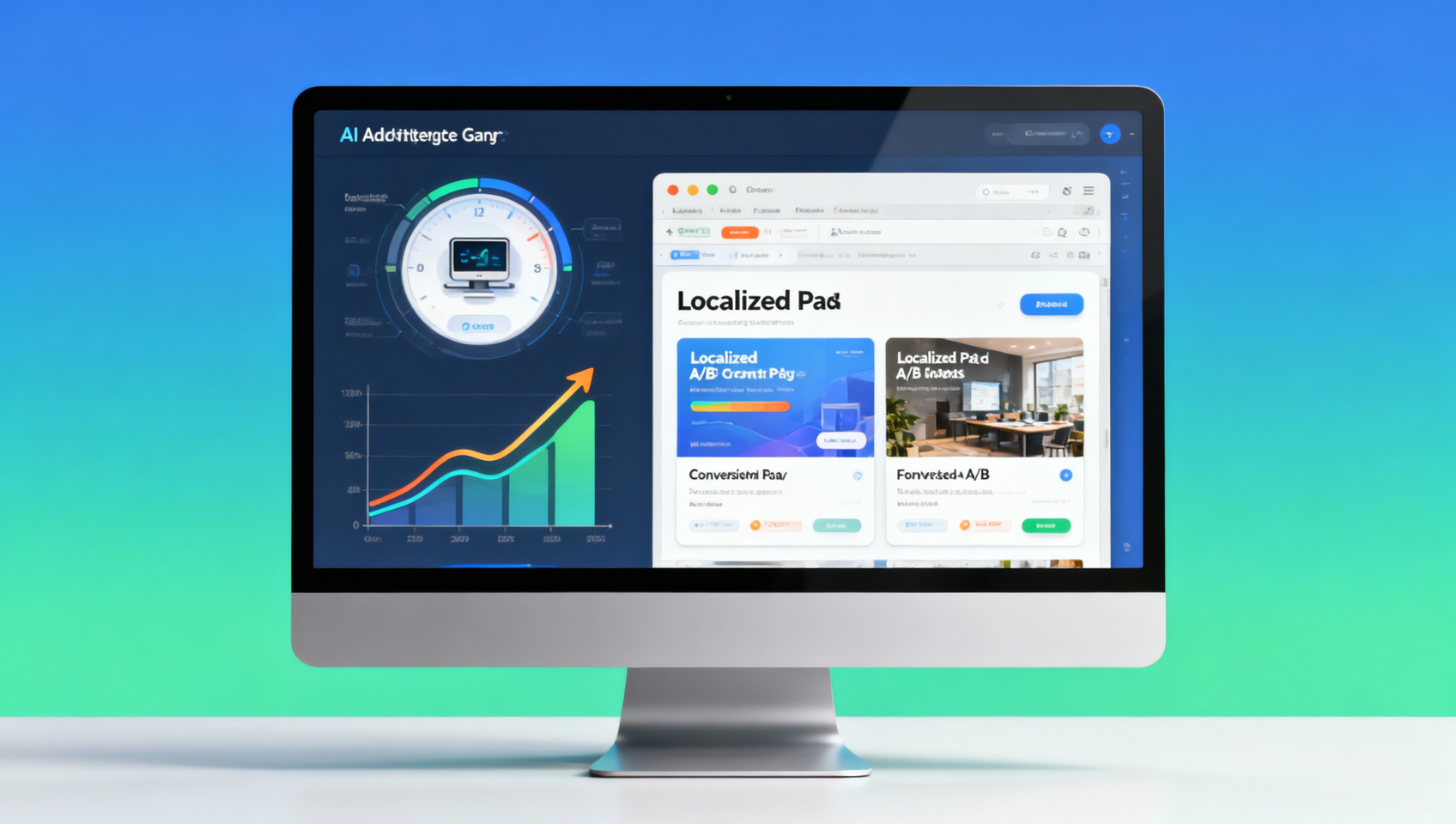
Principle: Utilizes AI to **automatically A/B test** different combinations of ad copy, images, and videos. Practice: Especially in **Google Adaptive Search Ads (RSA)** or **Meta Dynamic Creatives**, AI automatically **optimizes the best-performing combination of headlines, descriptions, and images**, continuously improving ad click-through rates (CTR) and conversion rates.
III. Four Core Technical Features and Applications of Advertising on Independent Foreign Trade Websites
1. Technical Features: Highly efficient integration with Google Performance Max (PMax)
Features: PMax is a **target-driven advertising campaign** that uses AI to **automate ad delivery across all Google channels** (Search, Display, YouTube, Gmail, etc.). Applications: Foreign trade companies only need to provide **high-quality creative resources and accurate conversion goals**, and PMax can use AI algorithms to **automatically find the best audience and display positions**, greatly simplifying the complexity of multi-channel management and making it a powerful tool for **improving conversion rates and ROAS**.
2. Application Practice: Budget Optimization Based on Customer Value (LTV)
Application: Advertising is no longer solely focused on CPA, but also on **customer long-term value (LTV)**. By integrating LTV data into advertising platforms, AI can be guided to **bid higher on audiences with higher LTV**, thereby acquiring customers with the greatest profit potential.
3. Application Practice: Localization of Advertising Creatives Across Cultures and Languages
Application: Advertising copy and creative materials must be deeply localized for different target markets. This includes not only language translation but also **adjustments to the people, scenes, and cultural sensitivities in images**, ensuring that the advertisement **resonates with the local audience to the greatest extent possible**.
4. Application Practice: Enhancing the EEAT Signal of Advertising Accounts
Application: In the B2B sector, the **account history, ratings, and landing page professionalism** of an advertising platform significantly impact campaign performance. By **clearly showcasing company qualifications, industry certifications, and customer testimonials**, and by incorporating **Expertise in Action (EEAT)** into ad copy, trust in the account can be built, thereby improving ad quality scores.
IV. AI-powered intelligent ad delivery vs. manual ad delivery: comparative analysis and industry scenarios

1. AI-powered intelligent ad placement vs. manual ad placement: a comparative analysis
2. Typical industry scenarios for advertising placement strategies
Precise advertising strategies have immediate effects on the following foreign trade industries:
- **Cross-border e-commerce/DTC brands:** primarily rely on **Google Shopping Ads and Meta Ads** to quickly drive order conversions.
- **High-value B2B industrial products:** Focus on using **Google Search Ads (high-intent keywords) and LinkedIn Ads (targeting professional decision-makers)** to acquire high-quality leads.
- **New Product Launch/Limited-Time Promotion:** Requires rapid deployment of Google/Meta display and remarketing ads to quickly generate market attention.
3. Standards and professional specifications for advertising placement services
Criteria for evaluating high-quality advertising service providers:
- **Platform Certification:** Must possess official high-level qualifications such as **Google Premier Partner, Meta Blueprint Certification**.
- **Data Transparency:** Provides clear conversion tracking reports, multi-touchpoint attribution analysis, and detailed data on budget and ROAS.
- **Compliance and Risk Management:** We commit to not using illegal materials, complying with advertising laws and privacy policies in the target market, and possessing the ability to handle account appeals and risk warnings.
V. Book now and turn your advertising budget into a stable, high return!
Are you struggling with inefficient campaigns and out-of-control costs? Sign up now for a free "High ROI Ad Account Diagnostics" session! We'll analyze your current bidding strategy, optimize audience segmentation, and develop an AI-driven PMax deployment plan for you!
Click to get a free advertising optimization planFAQ
1. How can I determine if the advertising performance of my independent foreign trade website is healthy?
Answer: The key metrics are **ROAS (Return on Ad Spend)** and **CPA (Cost Per Conversion)**. Your ROAS must be higher than your product's gross profit margin requirement; your CPA must be lower than your customer lifetime value (LTV). Also, pay attention to **Ad Quality Score and Conversion Rate**.
2. What are the core differences between advertising strategies for B2B and B2C independent websites?
Answer: **B2B** focuses on **high-intent search keywords** and **professional platforms like LinkedIn**, aiming to acquire **high-quality leads**, with a long conversion cycle. **B2C** focuses on **shopping ads and social media (Meta Ads)**, aiming to **quickly close deals**, with a short conversion cycle and emphasizing visual appeal.
3. Does advertising directly help with SEO ranking?
Answer: Advertising **does not directly improve SEO rankings**. However, it offers **significant indirect benefits**: advertising can **quickly acquire keyword and audience data**, guiding SEO content creation; the **increased brand exposure and search volume** brought by advertising helps enhance the brand's overall authority and EEAT signal.
4. How should I set up audience segments for retargeting?
Answer: Remarketing should be based on **user intent segmentation**. For example: **High intent (added to cart but not checked out)** should be given **limited-time discount ads**; **Medium intent (visited product page)** should be given **product advantage/review ads**; **Low intent (only viewed the homepage)** should be given **brand story or coupon ads**.
Customer Reviews
Manager Li, Cross-border DTC E-commerce
"After adopting the **PMax and AI-powered intelligent bidding strategy**, our advertising account efficiency improved dramatically. Without increasing the budget, **overall ROAS increased by 48%**, significantly optimizing our profit margin. Their optimization suggestions for **landing page CWV** also boosted our conversion rate by nearly 15%."
Mr. Zhang, B2B industrial product manufacturer
"B2B has high requirements for ad placement, and their precise targeting of LinkedIn and Google search ads is impressive. Through an LTV-driven bidding strategy, we successfully avoided low-quality leads, significantly improved the average quality of inquiries, kept customer acquisition costs within our target range, and achieved sustainable business growth."
 Eyingbao Ad Conversion Rate Optimization Solution: How Enterprises Can Increase Conversion Rates by 10% Within 30 DaysNeed to Develop Foreign Trade Independent Websites for Vietnam and Latin America Markets, or Multilingual Websites? Eyingbao Ad Conversion Rate Optimization Solution Delivers ≥10% Performance Improvement in 30 Days, Combined with Multilingual Website Cloud Hosting Services, Heyuan Multilingual Website Construction, and Taiyuan Multilingual Website Development. We Offer Foreign Trade Independent Website Ad Placement and AI Ad Creativity, Supporting Portuguese Independent Website Construction Companies and Arabic Website Development for Foreign Trade Enterprises. Free 30-Day Diagnosis, Consult Now.
 What is a Portuguese Independent Website Development Company? Application Scenarios and Value for Foreign Trade EnterprisesA Portuguese Independent Website Development Company provides localized website construction, payment and logistics integration, SEO, global CDN, and foreign trade independent website advertising solutions to help brands quickly enter the Latin American and Portuguese-speaking African markets. Combined with Eyingbao's ad conversion rate improvement solutions and AI-powered advertising, it significantly reduces customer acquisition costs and increases repurchase rates. Get a free diagnosis and landing solution immediately.
 Arabic Website Development Guide for Export Companies: 3 Key Cultural Adaptations and Compliance PointsArabic Website Development for Export Companies: Master 3 Key Cultural Adaptations and Compliance Aspects, Optimize RTL Layout, Local Payment Methods, Localized Visuals, and SEO Strategies to Reduce Bounce Rates and Boost Conversion Rates for Independent Export Sites. Learn EasyOperation Workflows, Costs, and Case Studies to Get Customized Landing Solutions—Consult Now. Mobile-First + Global CDN Acceleration Enables Performance Verification and Ad ROI Tracking Within 30 Days.
 Comparison of Latin American and Southeast Asian Markets for Foreign Trade Independent Websites: 5 Key Customer Behavior DifferencesComparison of Latin American and Vietnamese Markets for Foreign Trade Independent Websites, including precise advertising strategies, Eyingbao ad conversion rate improvement solutions, multilingual website cloud hosting services/multilingual website construction/Heyang development/Taiyuan case studies, and providing Portuguese independent website construction companies and Arabic website development solutions for foreign trade enterprises. Get immediate consultation for customized diagnosis and free evaluation.
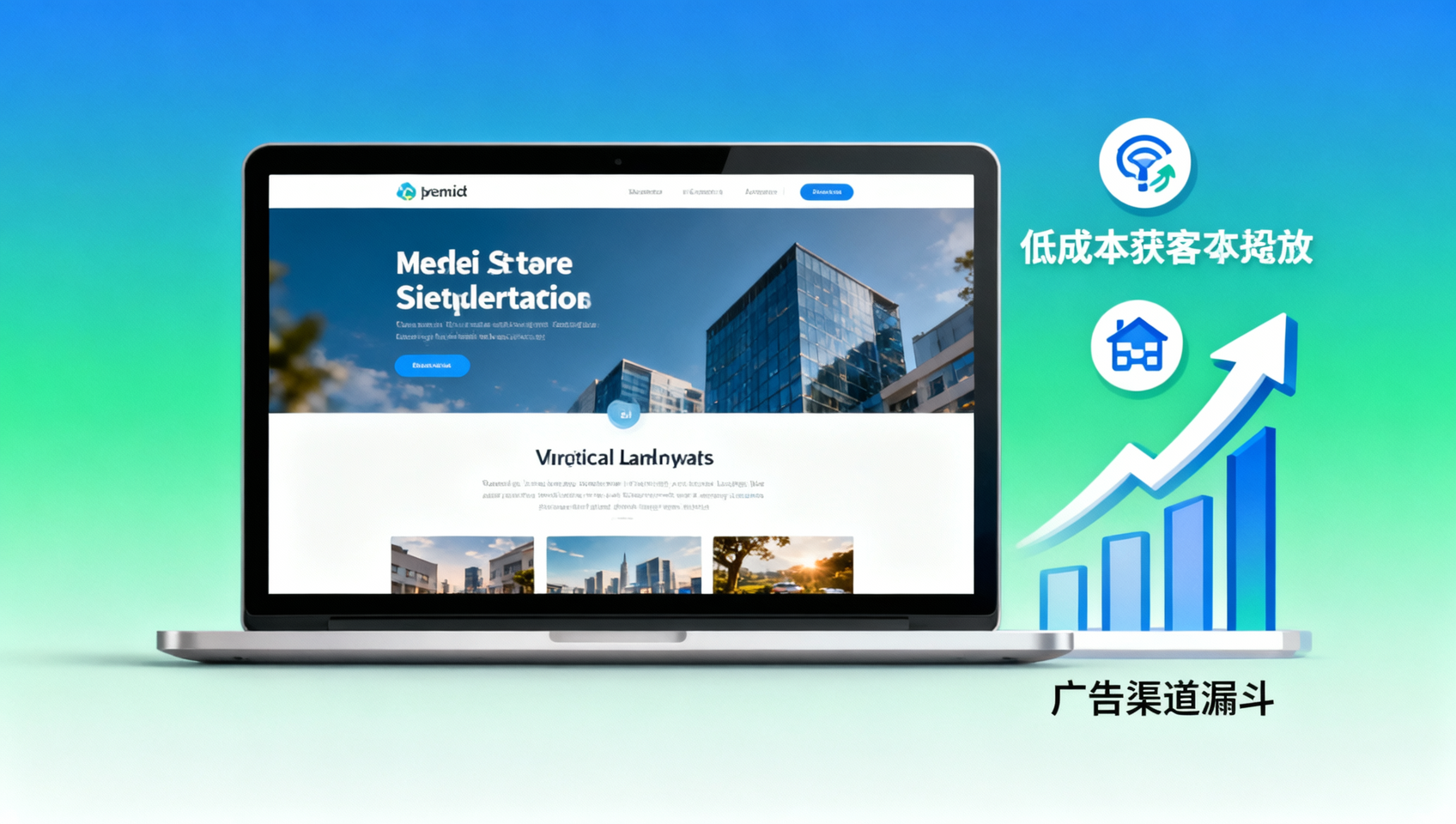
 Comparison of Foreign Trade Independent Website Advertising Channels: Analysis of 3 Low-Cost Customer Acquisition ModelsForeign Trade Independent Website Vietnam Market, Foreign Trade Independent Website Latin America Market Advertising Cost Comparison: Analysis of Search Engine Precision Targeting, Social Media Traffic, and Hybrid Channel Models, Including Multilingual Website Localization and Eyingbao Conversion Rate Optimization Solutions, Suitable for Portuguese Independent Website Construction Companies and Arabic Website Development for Foreign Trade Enterprises' Local Payment, Logistics, and Content Optimization, Supporting Multilingual Website Cloud/Heyuan/Jieyang/Taiyuan Deployment, Book a Free Diagnosis Now, Quickly Validate Budget and ROI.
 Multilingual Website Cloud Hosting Provider Comparison: 7 Technical and Operational Cost Evaluation MetricsMultilingual website cloud hosting provider comparison, covering Vietnam market for independent foreign trade sites, Latin America market and ad placements, evaluating technology and operational costs, including case studies for multilingual website development in Heyuan/Jieyang/Taiyuan and Eyingbao ad conversion rate improvement solutions, assisting Portuguese independent site construction companies and Arabic website development for foreign trade enterprises in rapid decision-making and cost reduction with efficiency enhancement, immediately obtain selection reports and pilot solutions.
 Comparison of Multilingual Website Construction Services in Taiyuan: Price, Delivery, and Localization CapabilitiesTaiyuan Multilingual Website Construction, covering the Vietnamese market for foreign trade independent sites and the Latin American market for foreign trade independent sites, providing multilingual website cloud floating services with AI localization and foreign trade independent site advertising strategies supported by merchants. Eyingbao's advertising conversion rate improvement solution helps Portuguese independent site construction companies and Arabic website development foreign trade enterprises quickly acquire customers, with free diagnosis and quotation available immediately.
 Which company is reliable for multilingual website development in Jieyang? 6 evaluation criteria and a blacklist/whitelistMultilingual website development services in Jieyang, specializing in foreign trade independent sites for Vietnam and Latin American markets, breaking through advertising delivery and conversion barriers. Yinyingbao AI website building + ad conversion rate optimization solutions, supporting CDN/IPv6, SEO localization, and multilingual proofreading (including Portuguese and Arabic), providing cloud hosting/HeYuan/Taiyuan case studies. Consult now for customized landing solutions and ROI projections.