I. The authoritative definition, strategic core, and local advantages of multilingual website development in Dongguan
1. The authoritative definition and professional elements of multilingual website creation in Dongguan.
**Dongguan Multilingual Website Development** refers to a customized, globally-oriented marketing website tailored for Dongguan's manufacturing and foreign trade enterprises. This website features multiple language versions, is technically independent, and can be managed autonomously. It emphasizes that the website must simultaneously meet the cultural differences and search engine optimization requirements of multiple countries/regions in both content and technology. Professional elements include: correct Hreflang tag configuration, a multilingual content management system (Multilingual CMS), global CDN acceleration deployment, and localization translations conforming to target language conventions.
2. Three Irreplaceable Strategic Values of Dongguan Multilingual Websites
Leveraging the diversified export demands of Dongguan's manufacturing industry, a multilingual website has become a core competitive advantage.
- **Overcoming Language Barriers to Achieve Global Market Coverage:** Dongguan products are exported to over 100 countries worldwide. A multilingual website enables direct communication with buyers in non-English speaking countries (such as Spain, Germany, and Brazil), significantly expanding the potential customer base.
- **Multilingual SEO for Precise Customer Acquisition:** By optimizing keywords in the target language and configuring Hreflang, ensure that Google displays the specific language version to search users in the corresponding language environment, thereby capturing more precise and less competitive long-tail traffic.
- **Enhancing Brand Trust and Professionalism:** Providing native language services significantly increases the sense of security and trust among overseas buyers. A professional, localized website is a key indicator of Dongguan companies' focus on global service details and their efforts to establish EEAT's authority.
3. The Development History and Trends of Multilingual Website Development in Dongguan
Early stage (2000s): Mostly used **machine translation or simple language switching buttons**, resulting in poor SEO performance. Mid-stage (2010s): **Professional CMSs began to be used**, but **Hreflang configurations were frequently incorrect**. Modern stage (2020s to present): The trend is **"technology-driven Hreflang optimization, content localization, and AI-assisted translation"**. Dongguan multilingual website construction has upgraded to a **multi-market SEO strategy**, pursuing the **highest user experience and conversion efficiency**.
II. Five Core Technologies and Principles of Dongguan Multilingual Websites: Hreflang Deployment and Content Localization

The underlying technical logic that ensures Dongguan's multilingual websites achieve precise traffic acquisition and high conversion rates globally:
1. The principles of the standard configuration of Google Hreflang tags
Principle: Hreflang is a key technology that tells search engines that **different URL versions correspond to different languages or regions**. Practice: Websites must configure the correct `rel="alternate"` attribute for each language version in the **website's** section or Sitemaps, and use the correct ISO 639-1 language code to avoid Google treating multiple language versions as duplicate content.
2. Multilingual Content Management System (CMS) and Translation Workflow Principles
Principle: To efficiently manage content updates and maintenance across different language versions. Practice: Employing a CMS with **native multilingual support** (such as Weglot/WPML/customized headless CMS) to achieve **separation of translated content from source code**, ensuring that **each content update can be quickly and synchronously applied across all language versions**.
3. Localized Keyword Research and SEO Content Rewriting Principles
Principle: **Keyword search habits and popularity differ across languages.** Practice: Multilingual content cannot be simply translated; instead, **professional local keyword research** must be conducted, and **titles, descriptions, and body text** must be rewritten to maximize SEO results in the target market.
4. Principles of International Hosting and Global CDN Acceleration Deployment
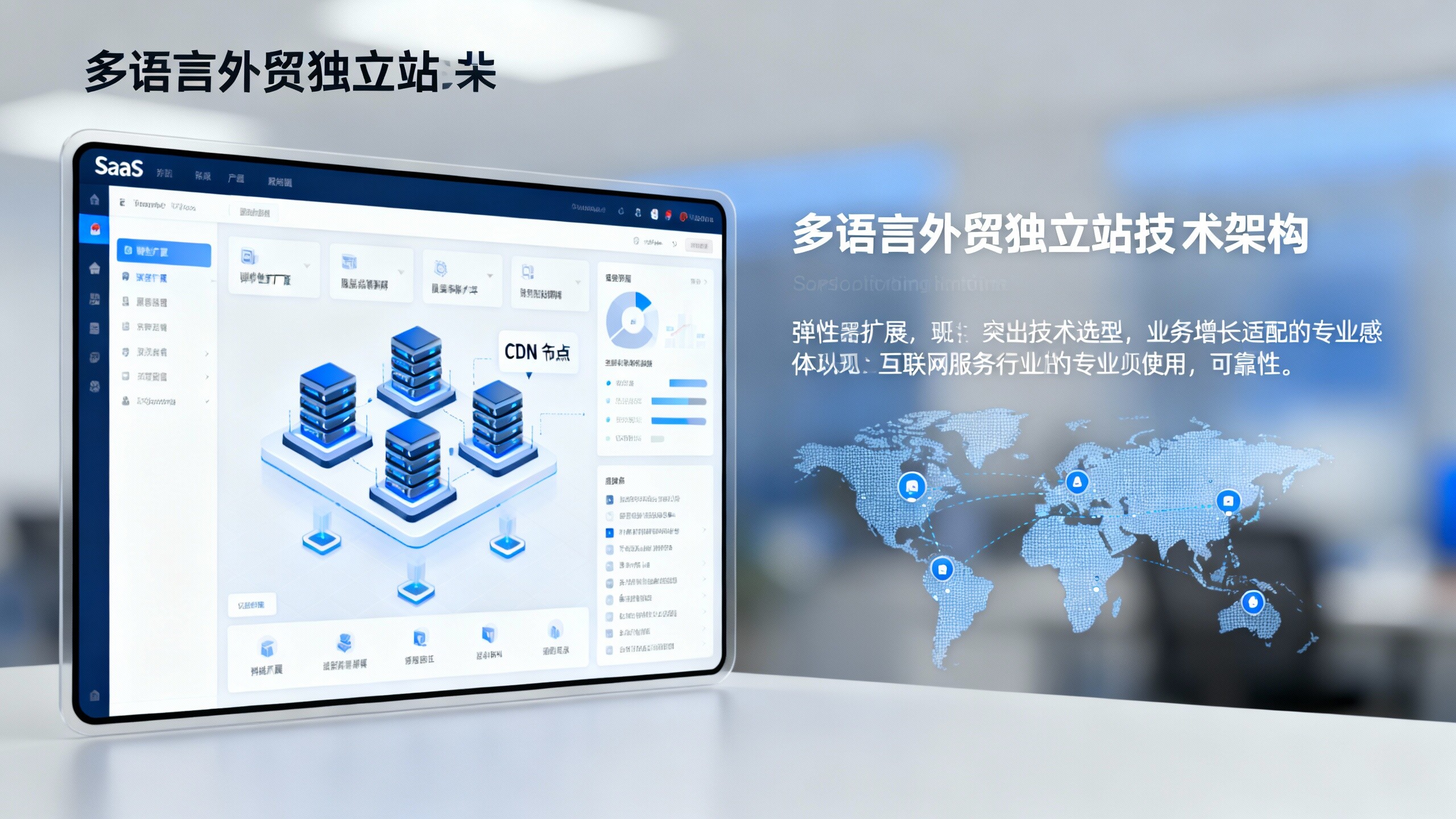
Principle: To ensure users in different countries can access the website quickly. Practice: The website should be deployed on **international hosting or a global cloud platform** and configured with **CDN**. Additionally, for **country-specific language versions** (such as the Spanish version), priority should be given to accelerating the website using CDN nodes **located closer to that region**.
5. UX Optimization Principles of URL Structure and Language Selection Mechanisms
Principle: A clear, user-friendly URL structure and language switching mechanism can **improve user experience and SEO crawling**. Practice: Use **subdomains, subdirectories, or ccTLDs (country code top-level domains)** as the multilingual URL structure. The language switching button must be **prominent, easy to use**, and able to **automatically recognize the user's browser language** and provide recommendations.
III. Four Core Technological Features and Applications of Dongguan Multilingual Websites
1. Technical Features: Multilingual inquiry forms integrated with CRM
Features: Inquiry forms must also support multiple languages and character sets. Application: The website's inquiry forms should be able to automatically switch languages based on the **user's selected language version**. Simultaneously, ensure that **the user's source language is clearly marked when importing inquiry data into the CRM**, facilitating **accurate and rapid native language responses from Dongguan foreign trade personnel**.
2. Application Practice: Creating Localized Product Parameters and Units of Measurement
Application: For products manufactured in Dongguan, multilingual versions require localization of **units of measurement, voltage standards, and size specifications**. For example, the US version uses **imperial units**, and the European version uses **metric units**, to **eliminate cognitive barriers for buyers**.
3. Application Practice: Building EEAT for Multilingual Content Assets
Application: Publish **customer case studies, localized certifications, and compliance statements for the target market** on websites in different language versions. For example, provide **TÜV certification information** for the German version and **logistics information for local partners** for the Spanish version to **enhance local trust**.
4. Application Practice: Combining AI-assisted translation with human proofreading
Applications: Utilizing **AI translation engines** can improve efficiency, but it is essential to have **native speakers or professional translators proofread and localize the translation**. This is especially important for **technical terms, industry jargon, and marketing copy**, to avoid **ambiguity and loss of professionalism** caused by machine translation.
IV. Multilingual Website Development in Dongguan vs. Other Models: Core Comparison and Industry Scenarios
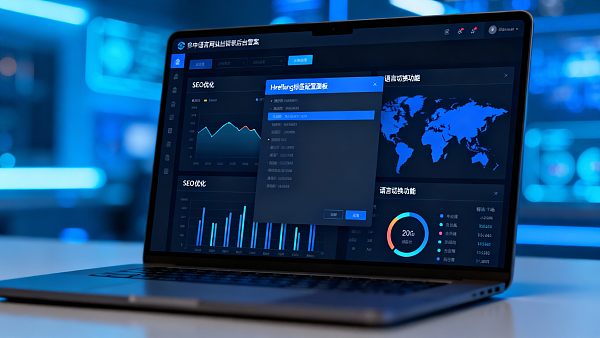
1. Core Comparison of Dongguan Professional Multilingual Websites vs. Other Models
2. Typical industry scenarios for multilingual website development in Dongguan
Leveraging Dongguan's industrial advantages, the following sectors are experiencing strong demand for multilingual websites:
- **Foreign Trade in E-cigarettes, Toys, and Plastic Products:** Websites requiring **multilingual compliance declarations** to comply with **multiple national regulations and standards**.
- **Machinery Equipment, Molds, Automation Foreign Trade:** This website is for **professional engineers** who require **high-precision technical translations** and **multilingual parameter tables**.
- **Furniture, Footwear, and Apparel B2B/B2C:** Targeting diverse markets such as Europe, South America, and Southeast Asia, requiring websites with deep coverage in less commonly spoken languages.
3. Standards, Certifications, and Professional Specifications for Multilingual Website Development Services in Dongguan
Criteria for choosing a professional website building service provider:
- **Technical Qualifications:** Possesses practical experience in Hreflang deployment, multi-language CMS integration, and multi-character set encoding.
- **Language Capabilities:** We have a team of native-speaker translators and localized SEO copywriters, rather than simply using machine translation.
- **Marketing Capabilities:** Able to provide **multilingual keyword research and localized content strategies**.
- **Compliance Assurance:** Ensure that the **language version of the website complies with the legal requirements of the target country** (such as the accuracy of product descriptions).
V. Take immediate action and customize your Dongguan global multilingual marketing website!
Does your website truly achieve **precise coverage for multilingual SEO**? Can it **smoothly interact with global buyers at a native-language level**? Sign up now for a **free "Dongguan Multilingual Website Hreflang Deployment and Localized SEO Strategy Assessment"**, and we will **develop the most efficient and precise global multilingual website creation solution for you**!
Click to get a free multilingual website building solutionFAQ
1. Why are Hreflang tags so important in multilingual websites?
Answer: The `hreflang` tag is used to inform search engines about the language and target region of **different URL versions**. If not configured correctly, Google may treat multiple language versions as **duplicate content**, causing a drop in SEO weight for all versions and preventing them from ranking in the target market.
2. What are the fundamental differences between machine translation and human localization?
Answer: **Machine translation** lacks understanding of **technical terminology, cultural habits, and marketing context**, making it prone to errors and **damaging brand professionalism**. **Human localization** (especially by native speakers) can **rewrite keywords** and make cultural adaptation adjustments**, **directly improving SEO performance and inquiry conversion rates**.
3. How should the URL structure of a multilingual website for manufacturing companies in Dongguan be chosen?
Answer: It's generally recommended to use **subdirectories (e.g., example.com/fr/)** or **subdomains (e.g., fr.example.com)**. Subdirectories are typically **easier to maintain and concentrate SEO authority**, making them the mainstream choice for most foreign trade companies. Technically, it's necessary to ensure that their **structure is **clear and easy to crawl**.
4. How can a multilingual website ensure fast loading speeds in different countries?
Answer: Use a **global CDN (Content Delivery Network) service**. This caches the website's **static resources** at edge nodes around the world, allowing users in Europe, America, or Asia to retrieve content from the **nearest server**, resulting in fast loading.
Customer Reviews
Mr. Li, Dongguan Mold Manufacturer
"We customized **professional technical websites in five languages**, and the technical team is **highly specialized in Hreflang configuration**. Previously, we received very few inquiries from Spanish and German clients, but now **the organic search traffic on our German and Spanish websites has surged**, capturing a large number of **high-quality B2B inquiries**."
Ms. Sun, Chief Operating Officer of Dongguan E-Cigarette Brand
"We face intense competition in several small-language markets. Through **localized SEO and native-level content rewriting**, our website **surpassed competitors in specific keyword rankings in the French and Brazilian markets**. Customer feedback indicates the website is **professional and trustworthy**, and the inquiry conversion rate has significantly improved."
 Multilingual website Chaozhou company how to achieve the perfect combination of localization and globalizationHow to achieve the integration of localization and globalization for multilingual website Chaozhou company? EYB provides AI-driven foreign trade independent website building services, covering the needs of companies in Chaozhou, Shantou, Foshan, Zhongshan, Dongguan, Qingyuan, Zhaoqing and other places, and helping to build efficient multilingual foreign trade independent websites. As a global multilingual website provider, we integrate AI translation, intelligent SEO, global CDN acceleration and social media automation operation, support IPV6 and multiple security protection, and have helped many manufacturing enterprises to go overseas quickly. From multilingual website development to global marketing, we provide one-stop solutions to technical, linguistic and cultural barriers to increase natural traffic and conversion rates. Learn more about our localized service solutions such as multilingual website development in Zhongshan and multilingual website production in Dongguan, and start your globalization growth engine.
 Dongguan multi-language website production new trend: efficient site to help foreign trade enterprises to go to seaDongguan multilingual website production ushered in the new era of AI! As a global multi-language website provider, EYB provides efficient and intelligent foreign trade independent website building services to help enterprises quickly go to sea. It supports automatic translation and SEO optimization in 30+ languages, covering Foshan, Zhongshan, Chaozhou, Qingyuan, Shantou, Zhaoqing, etc. It is a one-stop solution to solve the problem of building a multi-language foreign trade independent website. Combined with global CDN acceleration, seamless API docking and localized operation support, it significantly improves overseas access speed and conversion rate. It has helped many manufacturing and cross-border e-commerce enterprises to realize inquiry growth of over 180%, and is the preferred partner for multilingual website development in South China. Experience the AI-driven multilingual website building solution now and seize the first opportunity in the international market!
 Why technical evaluators favor multi-language foreign trade stand-alone website building solutionsWhy technical evaluators are choosing multilingual foreign trade independent website building program? The global multilingual website provider, EYB, is driven by AI+Big Data to help enterprises go overseas efficiently. Supporting multi-language, multi-currency, SEO intelligent optimization, covering Chaozhou, Qingyuan, Foshan, Zhongshan, Dongguan, Shantou, Zhaoqing and other localized services, providing one-stop solutions from multi-language website development to global deployment. Security compliance, integrated ICP filing, GDPR, CDN acceleration and SSL protection to enhance overseas access speed and brand credibility. Learn now how to achieve globalization layout through multilingual foreign trade independent website and seize the first opportunity in the international market.
 Why Qingyuan Multilingual Website Service Providers are the First Choice of SMEs Going OverseasQingyuan multi-language website service provider, EYB, helps SMEs go to sea efficiently with its AI-driven foreign trade independent station building technology. As a leading global multi-language website provider, it offers integrated services of multi-language foreign trade independent website building, SEO optimization and intelligent marketing. Covering the needs of multilingual website production and development in Dongguan, Foshan, Zhongshan, Shantou, Zhaoqing, Chaozhou, etc., it supports intelligent translation and localized adaptation in dozens of languages, and integrates global CDN acceleration and AI+SEM advertisement smart investment system to realize the growth of the whole chain from website building to customer acquisition. Choose Yiyingbao to let your brand easily penetrate the international market, click to learn about the AI intelligent website building program and get the exclusive overseas strategy.
 Foshan Multilingual Website Company Reveals: Three Secrets to Rapidly Launching Multilingual WebsitesFoshan Multilingual Website Company reveals how to help businesses efficiently expand overseas! Master the three secrets of global multilingual website suppliers and quickly build high-conversion foreign trade independent sites. From AI-powered website creation and multilingual SEO optimization to global traffic integration, the EasySaaS platform empowers businesses to reduce costs and increase efficiency. Supports multilingual website development and localization services in Dongguan, Zhongshan, Shantou, Chaozhou, Qingyuan, Zhaoqing, and more. One-click multilingual foreign trade independent site setup enhances overseas search rankings and ad conversions. Get a customized solution now and start a new chapter of global growth!
 Foreign Trade Standalone Website Construction Pitfall Guide: 5 Key Points for Market Researchers to ReadHow to Avoid Pitfalls in Foreign Trade Standalone Website Construction? EasyE-Commerce, as a global multilingual website supplier, reveals 5 key points for market researchers to read: from technology selection, localization adaptation to SEO strategies, marketing integration and continuous maintenance, systematically avoiding common pitfalls. Assisting enterprises in Dongguan, Foshan, Zhongshan, Chaozhou, Qingyuan, Shantou, Zhaoqing and other regions to efficiently build high-converting multilingual foreign trade standalone websites. AI-driven + local services, making brand出海 more stable, get exclusive solutions now!