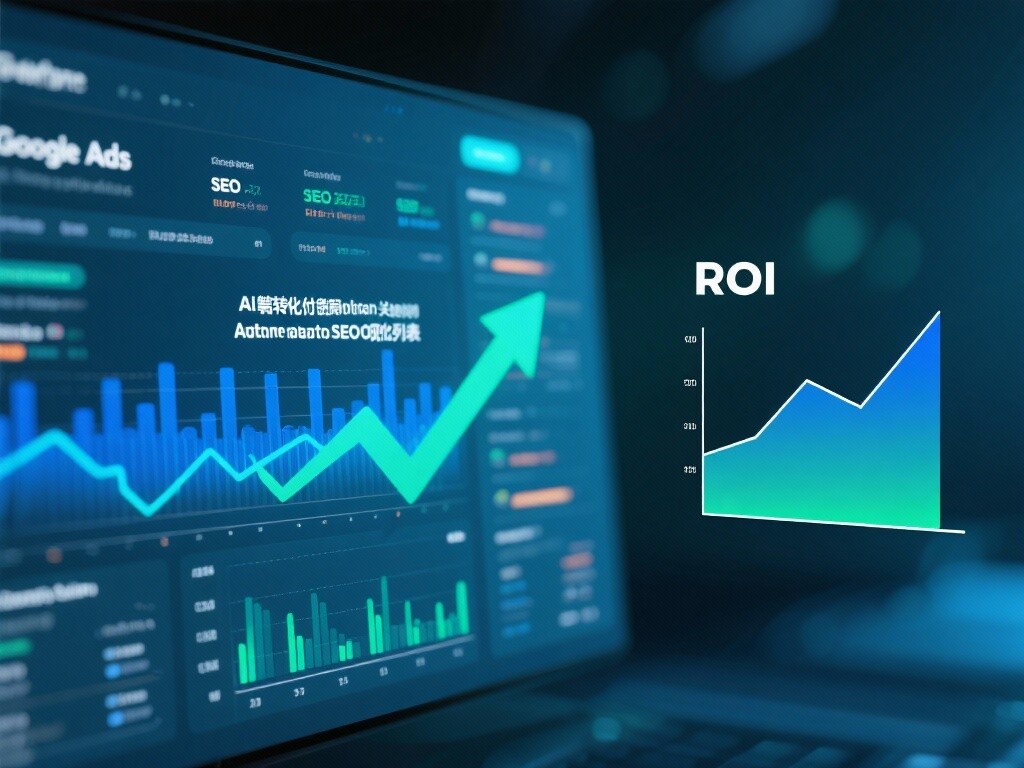
I. The authoritative definition, core strategy, and development history of AI-powered advertising intelligent SEO optimization services
1. The authoritative definition and key elements of AI-powered advertising intelligent SEO optimization services.
**AI-Powered Intelligent SEO Optimization Service** is a cross-channel digital marketing solution integrating artificial intelligence and big data technologies. It applies high-value data from paid channels such as **Google Ads, Facebook Ads**, including **Click-Through Rate (CTR), Conversion Rate (CVR), and keyword reports**, in real-time to **website content structure, keyword placement, and technical SEO improvements**. The goal is to quickly validate SEO strategies using paid data while simultaneously accumulating free traffic through SEO, thereby reducing overall customer acquisition costs. Key elements include: **data collaboration mechanisms, AI keyword resonance, content intent matching, and cross-platform budget optimization**.
2. Three Irreplaceable Strategic Values of AI Collaborative Optimization
Achieving cost reduction and efficiency improvement in digital marketing:
- **Accelerate Keyword Validation and Coverage:** Through paid advertising, businesses can **quickly validate** which keywords are driving high conversions within hours. AI instantly pushes this data to the SEO team to **optimize landing pages for high-converting keywords**, significantly shortening the SEO results cycle.
- **Reduce Long-Term Customer Acquisition Cost (CAC):** The AI optimization system continuously converts **short-term, high-cost paid keywords** into **long-term, low-cost organic SEO traffic**. As the proportion of SEO traffic increases, the company's overall CAC will decrease significantly.
- **Omnichannel Search Results Domination Effect:** When a company simultaneously occupies a paid ad slot, the top organic ranking, and a rich media summary slot on the same search results page, it creates a powerful effect of **brand trust and traffic monopoly**, significantly increasing user clicks and conversion rates.
3. The Development History and Evolution of AI-Powered Advertising Intelligent SEO Optimization Technology
Early stage (2000s): Advertising and SEO operated independently, with no data sharing. Mid-stage (2010s): **Simple keyword sharing tools** emerged, but lacked deep algorithmic collaboration. Modern stage (2020s to present): Entering the era of **AI-driven "dual-engine collaboration"**. The core technology lies in **AI real-time data analysis, cross-platform API integration, and the application of machine learning models**, enabling **dynamic budget allocation, semantic content matching, and accurate prediction of traffic value**.
II. Five Core Techniques and Principles of AI Collaborative Optimization: Data Resonance, Intent Matching, and Budget Allocation
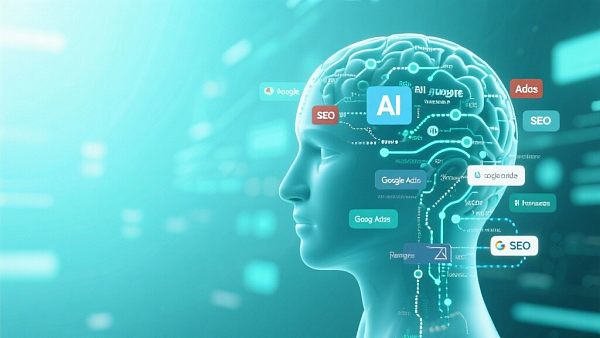
Key technological applications of AI in integrated advertising and SEO:
1. Keyword Resonance Model and the Principle of Paid Data Feedback
Principle: Utilizing CTR and CVR of paid advertising to determine the commercial value of keywords. Technology Application: An AI system captures Google Ads' **search term reports, quality scores, and conversion data** in real time, identifying **high-conversion, high-intent** keywords and automatically pushing them to the SEO content team. This guides them in creating or optimizing **SEO landing pages for these high-value keywords**, achieving **traffic migration** from paid to free advertising.
2. Principle of Intelligent Matching Based on Search Intent
Principle: Ensure content highly matches the user's search intent. Technology Application: AI algorithms analyze **user behavior patterns** in paid advertising and organic search, categorizing keywords into **"navigational," **informative," and **transactional** intents. It intelligently recommends the **content structure, EEAT elements, and CRO layout** suitable for SEO pages, ensuring users' needs are met upon entering the page, thus improving ranking and conversion rates.
3. AI-driven dynamic allocation principle for cross-platform budgets
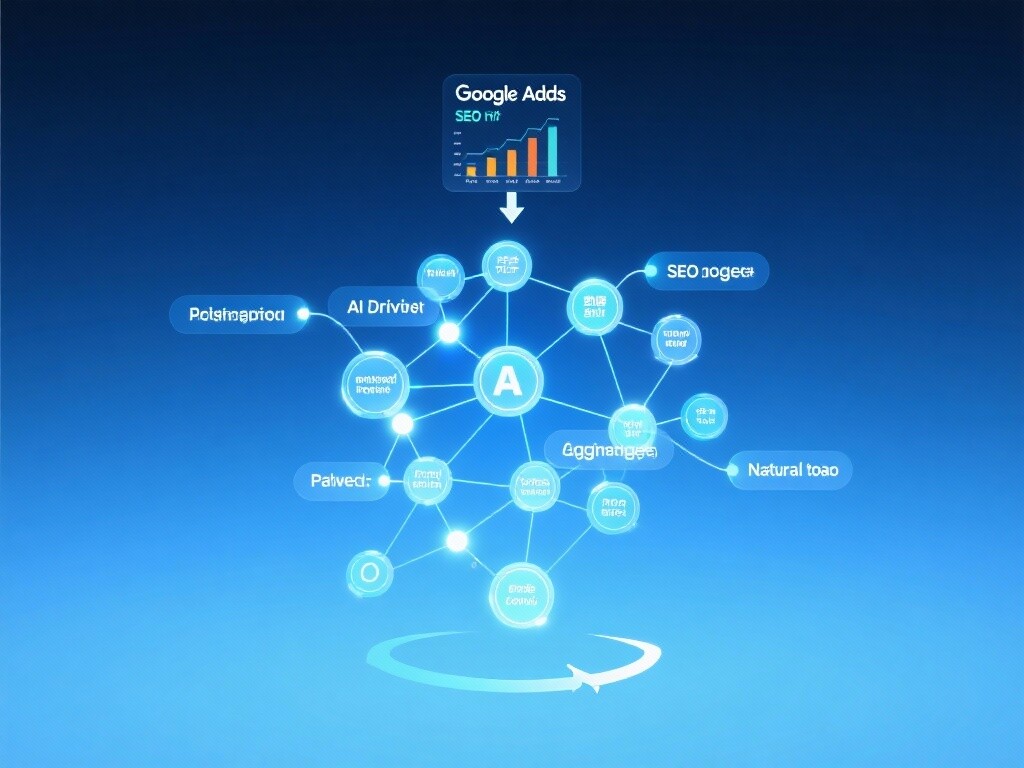
Principle: Maximize overall marketing ROI. Technology Application: AI continuously monitors the **ranking progress of SEO keywords** and the **ROI of paid advertising**. When the SEO ranking of a keyword steadily rises (e.g., reaching the first page of search results), AI automatically **reduces the paid advertising budget for that keyword** and reallocates the budget to **new keywords that haven't yet achieved organic rankings but are performing well with paid advertising**, achieving dynamic and efficient budget utilization.
4. Synchronization Principles of Content AI Schema Markup and Ad Extensions
Principle: Enhance brand visibility and authority on search results pages. Technology Application: The AI system ensures consistency in content and semantics between the website's **Schema Markup structured data** and the **additional information (such as sitelinks and callouts)** of paid advertisements. This not only improves the rich media presentation of SEO but also enhances user trust in both advertising and organic results.
5. AI-driven advertising copy and SEO Meta data A/B testing principles
Principle: Utilize the rapid testing cycle of advertising to optimize SEO elements. Technology Application: AI simultaneously performs A/B testing on both the **ad copy's title/description** and the **SEO page's title tag/meta description**. The **highest CTR titles and descriptions** from paid ads are applied to the SEO metadata, ensuring the website has the highest click-through rate in search results.
III. Four Core Technical Features and Applications of AI Collaborative Optimization Services
1. Technical Features: A unified AI decision-making platform
Features: Breaks down data silos between the advertising and SEO departments, enabling all decisions to be made on a unified AI platform. Applications: This platform can simultaneously access data from multiple sources, including **Google Ads API, Google Search Console API, GA4**, etc., providing enterprises with comprehensive ROI reports for **"Advertising + SEO"** and a **unified optimization action list**, eliminating internal communication barriers and data silos.
2. Application Practice: Global Traffic Collaboration for Independent Foreign Trade Websites
Application: For independent e-commerce websites, the AI system can analyze the advertising performance in different countries/regions, identify emerging markets with low-cost customer acquisition, and provide real-time guidance to the SEO team to optimize and deploy multilingual content and Hreflang tags for these markets, thereby leveraging the global market at a low cost.
3. Practical Application: Addressing Seasonal and Unexpected Market Changes
Applications: During **promotional seasons, new product launches, or sudden industry hot topics**, AI can quickly adjust **advertising budgets and keyword strategies**. Simultaneously, it immediately guides SEO teams to create **timely content and landing pages**, achieving a **synergistic surge** of paid and free traffic in a short period.
4. Application Practice: Low-cost Coverage of Long-Tail Keywords
Application: Long-tail keywords are typically numerous, and paid coverage is costly. AI systems utilize advertising data to filter out long-tail keywords with **high conversion potential but low competition**, and then use **AI content generation tools** to create high-quality SEO pages in batches, achieving **low-cost, wide-ranging, and precise coverage of long-tail traffic**.
IV. Comparative Analysis of AI Collaborative Optimization Services and Traditional Marketing Models, and Industry Scenarios
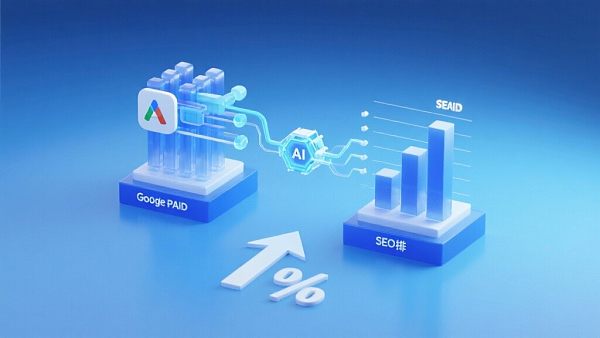
1. AI Collaborative Optimization vs. Traditional Marketing Models: A Comparative Analysis
2. Typical industry scenarios for AI collaborative optimization services
Key applications of AI collaborative optimization services across different industries:
- **B2B Technology/Industrial Products Foreign Trade:** Utilize advertising to quickly test **technical inquiry keywords**, then use SEO to establish the authority of **product white papers and technical documents**, thereby achieving a continuous acquisition of high-value inquiries.
- **DTC Cross-Border E-commerce:** Leveraging **user interest data** from social media advertising to feed back into SEO content, guide the writing of blog posts and product reviews, and optimize Google Shopping Ads feeds.
- **SaaS/Software Services:** Utilize advertising data to filter **keywords with high willingness to pay**, and optimize SEO landing page content such as **pricing and feature comparisons** to accelerate trial and paid conversions.
3. Standard Certification and Professional Specifications for AI Collaborative Optimization Services
Evaluation criteria for selecting high-quality AI collaborative optimization services:
- **API Integration Depth:** Ensure that service providers can offer **deep API-level integration** with platforms such as **Google Ads, Google Search Console, GA4**, rather than simple data import and export.
- **AI Model Transparency:** The core AI decision-making logic should have a certain degree of **interpretability (XAI)**, allowing clients to understand the basis for **budget allocation and keyword migration**.
- **Data Security Standards:** We strictly adhere to international data privacy regulations such as GDPR/CCPA to ensure the security of our clients' advertising and search data.
V. Embrace AI collaboration now to achieve exponential growth in digital marketing ROI!
Are you struggling to find the balance between **advertising and SEO investment**? Are you still struggling with **high customer acquisition costs**? Our **AI-powered Ads & SEO Optimization Service** is your only way out. We leverage AI to achieve a **perfect synergy between paid traffic and free rankings**, helping you **efficiently filter high-converting keywords, dynamically optimize your budget, and continuously reduce long-term CAC**. Sign up now for a **free "Advertising & SEO Collaborative Diagnostic Report"** to see how much untapped growth potential your marketing system can unlock!
Click to get a free collaborative diagnostic reportFAQ
1. What are the fundamental differences between AI-powered advertising intelligent SEO optimization services and traditional SEO services?
Answer: Traditional SEO focuses solely on organic rankings. Our service, however, uses AI to feed real-time conversion data from paid advertising back into SEO strategies, creating a closed loop of "paid verification, free harvesting." The core difference lies in data collaboration and dynamic budget optimization, with the goal of reducing the overall customer acquisition cost (CAC).
2. How does AI determine when to shift from paid keywords to SEO optimization?
Answer: AI uses a **keyword resonance model**. When a keyword proves to have an **extremely high conversion rate** in paid advertising, and AI predicts its **great SEO ranking potential**, AI immediately instructs the SEO team to focus on optimizing the landing page for that keyword. Once the keyword's SEO ranking stabilizes at a high level, AI automatically **reduces or even shuts down** the corresponding paid advertising budget.
3. Do our advertising and SEO teams need to make major adjustments to adapt to this service?
Answer: Our AI Collaborative Optimization Service aims to **eliminate departmental silos**. We provide a **unified AI decision-making platform** and a **clear checklist of optimization actions**. Teams simply need to execute actions based on the AI's recommendations. Our service includes **cross-departmental collaborative training** to ensure your team can effectively implement AI strategies.
4. How long after implementing AI-powered collaborative optimization services will we see a decrease in customer acquisition cost (CAC)?
Answer: Due to the rapid feedback mechanism of paid advertising, **in the short term (1-3 months)** you will see a significant improvement in the identification efficiency of high-converting keywords. **In the long term (6-12 months)**, with the steady growth of SEO traffic and the intelligent migration of paid budgets, your **overall CAC will show a significant and continuous decline**.
Customer Reviews
Mr. Zhang, VP of Marketing, European SaaS Software Company
“Previously, our advertising and content teams operated independently, resulting in significant resource waste. After introducing AI collaborative services, we discovered that we hadn’t previously covered SEO for **70% of the high-conversion keywords in our paid ads. Now, AI has automatically helped us **complete content deployment and budget migration**, **improving our overall marketing ROI by 40%**, truly achieving cost reduction and efficiency improvement.”
Manager Wang, manufacturer of foreign trade industrial equipment
"The greatest value of AI collaboration lies in **accelerating our traffic reach. When launching a new product, we quickly tested intent in five global markets using ads, and AI instantly guided us to complete the **deployment of multilingual SEO pages.** In just six months, we not only gained **paid high-intent inquiries**, but also accumulated **stable and free Google organic traffic**."
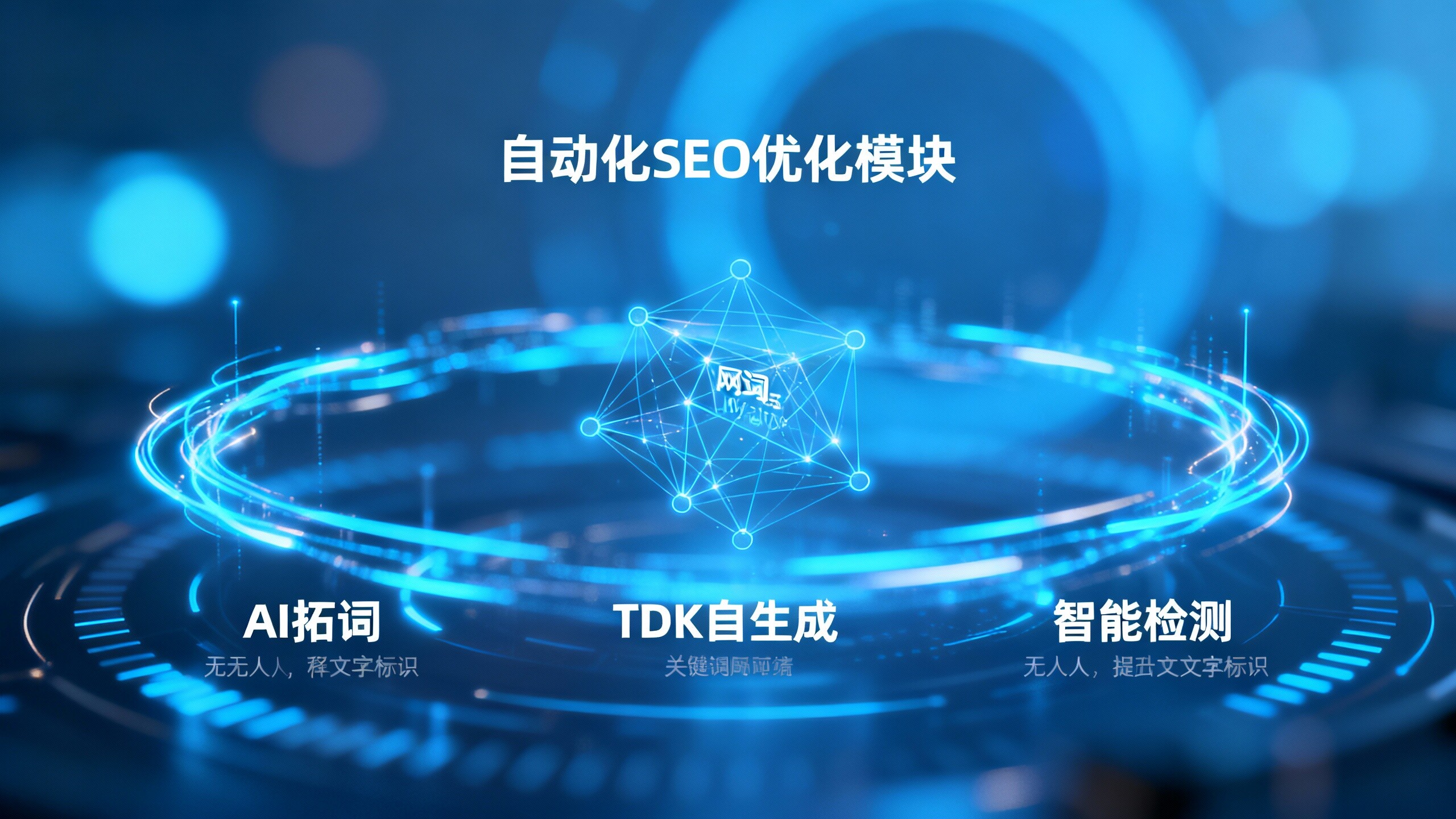
 How to Break Through the Traffic Loop with Automated Social Media SEO Optimization Services? Case Study BreakdownHow to Break Through the Traffic Loop with Automated Social Media SEO Optimization Services? Combining AI+SEO Dual-Engine Optimization Systems to Enhance Efficiency in Building Foreign Trade Independent Websites, Utilizing AI Keyword Expansion, Automated TDK Generation, Intelligent Website Detection, and Other Technologies to Comprehensively Improve Website SEO Optimization Effectiveness, Helping Businesses Achieve Global Growth.
 Which Guangdong SEO optimization software is the strongest? The secret tool behind local business growthGuangdong SEO optimization software first choice Yingbao! Integrated AI keyword expansion, automatic TDK generation, intelligent website detection and other tools to assist in the construction of foreign trade independent websites, improve website SEO optimization ranking methods more efficiently, and achieve global traffic growth.
 Is it difficult to build an independent foreign trade website? Get online in 3 quick steps and increase conversion rates by 50%!Is it difficult to build an independent foreign trade website? EasyStore AI+SEO dual-engine optimization system integrates AI keyword expansion, automatic TDK generation, intelligent website detection, and other services to improve website SEO ranking. Get online in 3 quick steps and boost conversion rates by 50%!
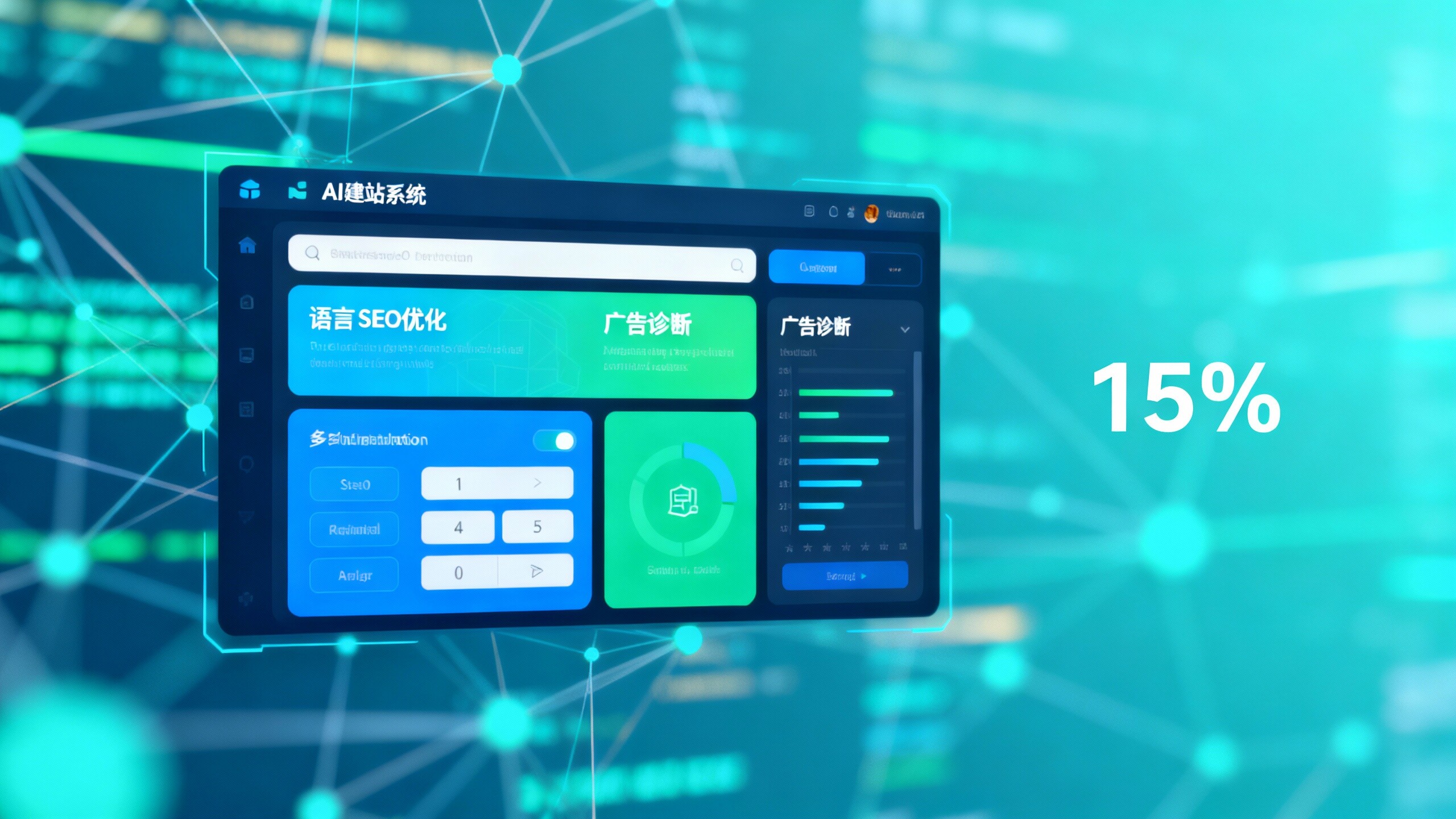
 Beginner's Guide: 7 Key Considerations for Building a Foreign Trade Independent Website with EasyStore AI Website SystemEasyStore AI Intelligent Website System Helps Build High-Conversion Foreign Trade Independent Websites in 7 Steps! Integrated with multilingual SEO optimization services and AI ad diagnostic features, it solves core challenges like Facebook ad optimization and independent website SEO. The AI+SEO dual-engine system improves SEO scores by 35%, increases ad conversion rates by 200%, and global CDN acceleration boosts website loading speed by 40%. Get a free website health check report now!
 Intelligent website SEO optimization service, detect 20 ranking-impacting issues in 1 minuteIntelligent website SEO optimization service, detect 20 ranking-impacting issues in 1 minute. Combined with AI keyword expansion, automated TDK generation, and AI+SEO dual-engine technology to enhance SEO performance for foreign trade independent websites, helping businesses efficiently expand overseas. Experience Guangdong's leading SEO optimization software technology.
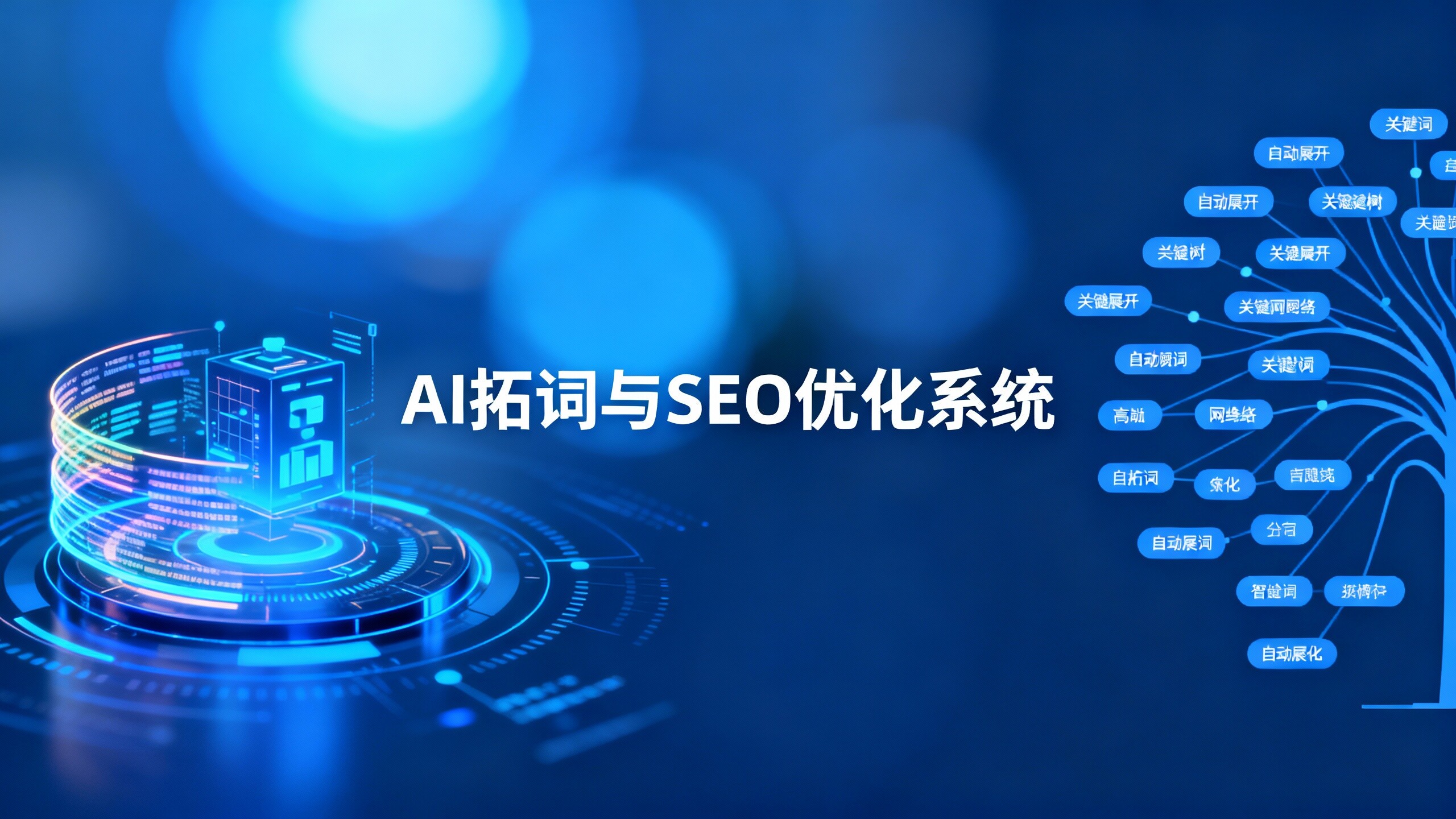
 AI Keyword SEO Optimization Services vs Traditional Keyword Expansion: How Many Times More Efficient?AI Keyword SEO Optimization Services combine AI+SEO dual-engine optimization systems to significantly improve the efficiency of building foreign trade independent websites. Compared to traditional methods, keyword coverage and generation efficiency increase by 40 times, making website SEO optimization methods smarter and more effective.
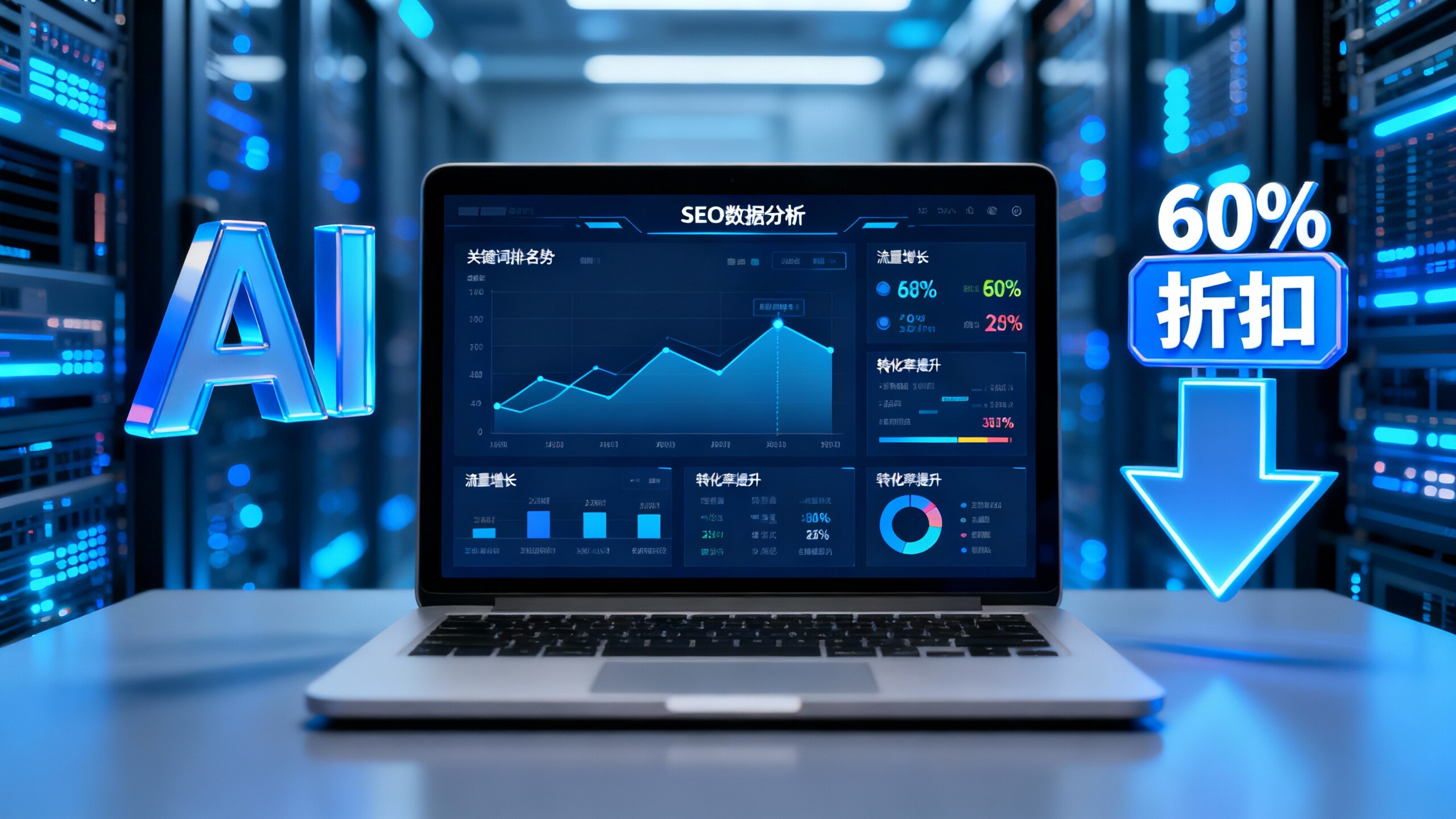
 Case Study: How to Reduce Customer Acquisition Costs by 60% with AI-Powered Advertising and Intelligent SEO Optimization ServicesEasyWin AI-Powered SEO Optimization Service Successfully Helps Foreign Trade Enterprises Reduce Customer Acquisition Costs by 60%! Through AI+Big Data Dual-Engine Technology, Combining Independent Foreign Trade Website SEO Optimization with Facebook Ad Placement, Achieving Multi-Language Precision Marketing. Case Study Shows: 300% Increase in Organic Traffic, Ad CPC as Low as $0.18. Get a Free Diagnostic Report Now and Start Your Intelligent Growth Journey!
 What are the methods to improve website SEO optimization effectiveness? 90% of people overlook this stepWhat are the methods to improve website SEO optimization effectiveness? 90% of people overlook the AI+SEO dual-engine optimization system. Combining foreign trade independent site construction, AI keyword expansion and TDK auto-generation technology, it comprehensively enhances search rankings and helps enterprises efficiently acquire customers.