I. The Authoritative Definition, Strategic Core, and Development History of SEM Optimization Techniques
1. The Authoritative Definition and Key Elements of SEM Optimization Techniques
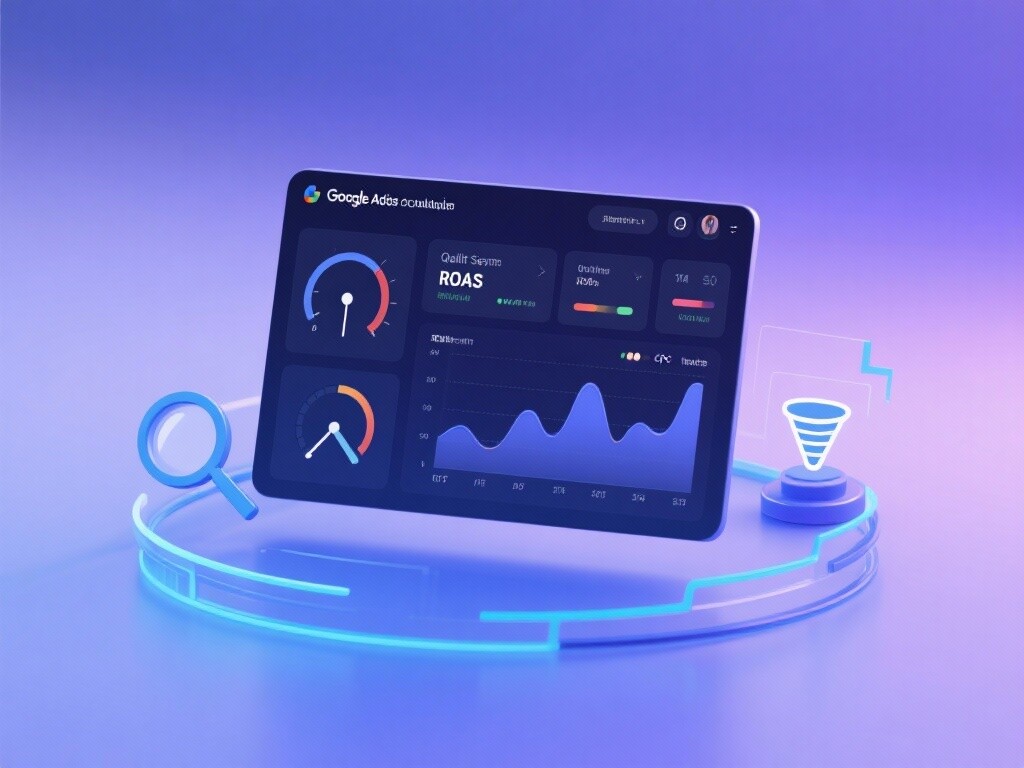
SEM Optimization Techniques (Search Engine Marketing Optimization Techniques) refer to a series of systematic and continuous methods aimed at minimizing **Cost Per Click (CPC)**, maximizing **Return on Investment (ROI/ROAS)**, and **conversion volume**. These techniques involve adjusting account structures, managing keywords, iterating ad creatives, and applying bidding strategies. Core elements include: **improving Quality Score, data-driven bidding, and high relevance**.
2. The Three Core Strategic Values of SEM Optimization
Successful SEM optimization is key for B2B enterprises to quickly acquire high-intent clients:
- **Cost Control and Efficiency Maximization:** Improve Quality Score to achieve higher ad rankings and traffic with lower CPC.
- **Precisely Capturing High-Intent Clients:** Target real-time client needs (search keywords) to ensure high conversion potential.
- **Real-Time Data Feedback and Agile Iteration:** Leverage real-time SEM data for rapid market, product, and copy testing to enable agile decision-making.
3. The Evolution and Development History of SEM Optimization Techniques
Early Stage (2000s): SEM optimization focused on **keyword stuffing and high bids** in a crude model. Mid-Stage (2010s): Strategies shifted toward **Quality Score mechanisms, exact matching, and manual bidding**. Modern Era (2020s to present): Optimization now centers on **AI-driven smart bidding, automated rules, asset-level optimization (RSA/PMax), and full-funnel attribution**.
II. The Five Core Technical Principles of SEM Optimization: Quality Score, Smart Bidding, and Attribution

Mastering SEM optimization means understanding Google’s bidding and ranking mechanisms:
1. The Principle of Improving Quality Score
Principle: Google rates ad quality on a 1-10 scale. A high Quality Score significantly reduces CPC and boosts ad rankings. It is determined by **three factors**: **expected Click-Through Rate (CTR), ad relevance, and landing page experience**. Technical Application: Ensure **high consistency** among keywords, ad copy, and landing page content, with fast-loading pages, professional content, and conversion-friendly elements (CWV/E-E-A-T).
2. The Algorithm Principle of Smart Bidding
Principle: AI-driven machine learning adjusts bids in real-time based on user signals (e.g., location, time, device, historical behavior) to achieve specific goals (e.g., maximizing conversion value). Technical Application: Provide **high-quality conversion data to AI** and select the right strategy (e.g., **Target CPA/Target ROAS**).
3. The Principle of Negative Keywords
Principle: Exclude irrelevant or low-intent search terms to avoid unnecessary clicks and budget waste. Technical Application: **Weekly or monthly** analysis of **search term reports** to add irrelevant or broad-match terms to the exclusion list—this is the most foundational and effective way to improve ad relevance and ROI.
4. The Iteration Principle of Responsive Search Ads (RSA)
Principle: **Responsive Search Ads (RSA)** allow advertisers to provide multiple headlines and descriptions, which AI tests and combines for optimal performance. Technical Application: Provide **10-15 distinct headlines** and **4 descriptions**, ensuring they include **high-intent keywords, Unique Selling Propositions (USPs), and strong Calls-to-Action (CTAs)**.
5. The Principle of Full-Funnel Attribution Models
Principle: No longer attributing all conversions to the last click but distributing conversion value across multiple touchpoints based on **user-ad interactions**. Technical Application: B2B SEM should adopt **Data-Driven Attribution (DDA)** to accurately measure the true value of display ads and brand-term ads in the upper funnel.
III. The Four Core Technical Features and Applications of SEM Optimization
1. Technical Feature: Granular Management of ACoS/ROAS
Feature: The ultimate goal of B2B SEM is profitability. **ACoS (Advertising Cost of Sale)** and **ROAS (Return on Ad Spend)** are key metrics. Application: Set **minimum target ROAS** at the ad group or product level and combine it with smart bidding to ensure every ad spend is profitable.
2. Practical Application: Structural Upgrade from SKAG/STAG to Thematic Grouping
Application: Traditional **SKAG (Single Keyword Ad Groups)** structures are being phased out. Modern SEM optimization favors **Thematic Grouping**, where highly relevant and intent-aligned keywords are grouped together. This simplifies management and better leverages RSA and smart bidding.
3. Practical Application: Differentiated Bidding for Remarketing Lists for Search Ads (RLSA)
Application: **Remarketing Lists for Search Ads (RLSA)** target users who have **visited your site** or **inquired but not converted**, applying **higher bids** when they search again. These users have extremely high conversion potential, justifying higher CPCs.
4. Practical Application: Geo-Targeting and Time-Based Optimization
Application: SEM optimization requires bid adjustments based on **competition levels, time zones, and business hours** in different target countries. For example, increase bids during peak hours in high-intent countries and lower them on weekends or nights to align with sales team availability.
IV. Comparative Analysis of SEM Optimization vs. Traditional B2B Marketing Models and Industry Scenarios
1. Modern SEM Optimization vs. Traditional B2B Platforms/Trade Show Models
2. Typical Industry Scenarios for SEM Optimization in B2B
SEM optimization priorities vary by industry:
- **B2B Industrial/Machinery:** Focus on capturing **long-tail keywords** and **Target CPA** strategies to ensure every inquiry is valuable.
- **Cross-Border B2C E-Commerce:** Prioritize **Target ROAS** and **PMax (Performance Max)** campaigns to maximize overall sales.
- **OEM/Custom Services:** Emphasize **brand-term protection** and **differentiated copy for competitor keywords** to quickly build trust via SEM traffic.
3. Certifications and Professional Standards for SEM Optimization
Professional SEM optimization must adhere to:
- **Certifications:** Team members must hold the latest **Google Ads Search, Shopping, etc. certifications**.
- **Transparency:** Provide regular reports on **Quality Score, ROAS/CPA**, and other core metrics.
- **Compliance:** Strictly follow Google’s **ad policies**, especially in B2B, avoiding false claims or IP infringement.
V. Optimize Your SEM Strategy Now—Make Every Penny Count!
Is your SEM spend burning inefficiently? It’s time to apply scientific optimization techniques! Our expert team specializes in **Quality Score improvement, smart bidding strategies, and full-funnel attribution**. We help upgrade your Google Ads account into a high-conversion, low-cost lead-generation machine. Book a **free “SEM Account Optimization Deep Dive”** today and receive a professional plan for Quality Score and ROAS growth!
Click to Get a Free Account Diagnostic ReportFAQ
1. How much does a low Quality Score impact B2B SEM costs?
Answer: Quality Score is the core factor determining CPC. **A keyword with a 3/10 score may cost 300% or more CPC than a 10/10 keyword**. Thus, optimizing Quality Score is the **most critical technique** for reducing B2B lead-generation costs.
2. In B2B, should I choose "Maximize Clicks" or "Target CPA" bidding?
Answer: Choose **Target CPA (Target Cost Per Acquisition)** or **Target ROAS**. B2B inquiries prioritize quality over quantity. "Maximize Clicks" focuses only on traffic, risking low-intent clicks, while Target CPA ensures budget is spent on clicks most likely to generate inquiries.
3. How to build an effective negative keyword list for B2B SEM?
Answer: 1) **Basic Exclusion**: Exclude irrelevant terms like "free," "tutorial," "jobs," or "personal." 2) **Ongoing Monitoring**: Analyze **search term reports** weekly to add low-quality terms. 3) **Competitive Exclusion**: For high-end markets, exclude terms related to low-price/wholesale.
4. What is Google’s PMax (Performance Max)? How does it impact B2B SEM?
Answer: PMax is a **highly automated** ad format using AI across Google channels (Search, Display, YouTube, Gmail). It requires **high-quality text/image/video assets** and **precise conversion goals**, making it an indispensable tool for future B2B SEM automation.
Customer Reviews
Mr. Zhang, European Custom Industrial Parts Exporter
"Our CPC has remained stubbornly high with poor results. After systematic optimization by the SEM expert team, especially improvements in **Quality Score and landing page experience**, our **average CPC decreased by 45%**. More importantly, through the **Target CPA strategy**, every inquiry we receive now is profitable, truly achieving scientific ad management."
Manager Chen, Southeast Asia Cross-border E-commerce Platform
"Our e-commerce business heavily relies on ROAS. By adopting the latest **PMax and Target ROAS smart bidding strategies**, combined with professional creative optimization, **our ad return on ad spend (ROAS) increased by 210% within 3 months**. SEM optimization is no longer simple placement, but highly specialized data and technical engineering."
 What are the challenges of operating an independent e-commerce website? 7 common pain points and multilingual website solutions.The pain points of operating an independent e-commerce website lie in multi-dimensional challenges such as multilingualism, localization, keyword optimization, and loading speed. We offer multilingual e-commerce website building and development services, global server acceleration, and multilingual SEO optimization. Combining AI automation and SEM optimization techniques, we help brands promote themselves, reduce customer acquisition costs, and improve global conversion rates. From technical SEO audits and intelligent TDK generation to batch content production and localized landing pages, our one-stop solution makes operating an independent e-commerce website more controllable. Want to transform your multilingual website, a powerful tool for e-commerce marketing, into a stable traffic and conversion engine? Click to get a free diagnostic and customized solution.
 Smart Website Testing SEO Optimization Services Hands-On Guide Helps You Quickly Improve Your Website RankingWe use intelligent website testing SEO optimization services to help independent websites quickly locate performance and structural problems, combined with multi-language SEO optimization services and website loading speed optimization services to improve natural traffic and user experience. We provide methods to improve website SEO optimization ranking, SEM optimization techniques, customized foreign trade marketing solutions and social media marketing strategies, giving methods and quantitative solutions to improve website SEO optimization results. To learn more about smart website building prices or get a free testing report and optimization advice, contact us today to quickly improve independent website SEO and conversion.
 How to Combine Meta Ads with SEM Optimization Techniques to Create High ROI Overseas Promotion Strategy SharingCombining Meta ads and SEM optimization skills, this article shares hands-on overseas promotion strategies: how to do creative testing with Meta ads, capture demand with Google Bidding and Yandex ads, and reduce customer acquisition costs and increase conversion with multi-language SEO optimization and website loading speed optimization services. Explain the landing scenarios of social media marketing automation tools and AI creative factory in material batch testing, budget allocation and cross-platform placement, and provide suggestions on customizing foreign trade marketing solutions and choosing overseas promotion channels. EYBao provides one-stop intelligent website building, advertisement diagnosis and trial with AI+localization service, click to get free diagnosis and customized solutions.
 A hands-on guide on how to open the Russian market with Yandex ads for customized foreign trade marketing solutionsWe provide customized foreign trade marketing solutions for Russia, combining Yandex ads and Meta ads to open up overseas promotion channels through multilingual SEO optimization and SEM optimization techniques. With social media marketing automation tools, website loading speed optimization services and Google bidding experience, we can achieve cost reduction and efficiency of placement. Read this hands-on guide to get overseas promotion strategy sharing, keyword and material landing, account building and automated attribution solutions. Ready to enter the Russian market? Contact us today for a free strategy consultation and customized implementation plan!
 Ways to improve the effectiveness of website SEO optimization 7 steps to improve weight and inclusion speedThrough smart website detection SEO optimization service and website loading speed optimization service, combined with multi-language SEO optimization service and independent website SEO strategy, this article proposes ways to improve website SEO optimization effect, provides 7 steps to land path, quickly improve weight and speed up inclusion. Covering methods to improve website SEO optimization ranking, SEM optimization techniques, customized foreign trade marketing solutions and social media marketing strategies, and gives smart website construction price reference and practical advice. Get a free technical inspection report and customized implementation list to start quantifiable traffic and conversion improvement.
 How many man-hours can you save with social media marketing automation tools Hands-on users tell you the real answer!Real test: Social media marketing automation tools can reduce repetitive working hours by 40%~70% in the process of regular posting, AI charting, TDK auto-generation and placement monitoring, and cooperate with Meta ads, Yandex ads and Google bidding to realize a leap in placement efficiency. Combined with multi-language SEO optimization, website loading speed optimization services and SEM optimization techniques, it can significantly improve the conversion rate of overseas promotion channels. Want to know how many hours your team can save and get on-the-ground overseas promotion strategy sharing and customized foreign trade marketing solutions? Click to get a free evaluation and case study.
 Website Load Speed Optimization Services Worth Buying Operator Essentials Quick Overhaul ChecklistA quick checklist for operators, teaching you to use website loading speed optimization services and multi-language SEO optimization to quickly restore the effect of Google Bidding, Yandex Ads and Meta Ads and other overseas promotion channels. The article combines SEM optimization tips, foreign trade marketing program customization and overseas promotion strategy sharing, with hands-on coverage of CDN, image lazy loading, caching and social media marketing automation tools for landing pages. Click to get the executable checklist, cost comparison and AI diagnostic trial, within 48 hours to give priority to fix the list, to help reduce CPC, improve conversion.
 SEM optimization skills: how to use bidding to reduce CPA for foreign trade independent station operation to bring more inquiries?Through SEM optimization techniques, combined with multi-language foreign trade independent website construction and multi-language SEO optimization services, we can significantly reduce CPA and bring more high-quality inquiries for foreign trade independent website. We combine multilingual website construction, global server acceleration and localized brand promotion, using AI-driven keyword expansion, TDK automatic generation and landing page optimization to form a closed-loop growth from traffic to inquiry. Want to use foreign trade marketing tool - multilingual website to improve conversion and inquiry? Click Consultation to get customized solutions.