- Grenzenloser Zollfreilagerstandort, Kostenoptimierung für marokkanische Warenexporte11-06-2026Details anzeigen
- Welches Signal zur vorübergehenden Aussetzung der japanischen Exportfreigabe?10-06-2026Details anzeigen
- China's LNG imports rebounded in May, with Russia and Canada increasing volumes to fill the Middle East supply gap10-06-2026Details anzeigen
- Wird GEO seine SEO-Strategie ändern?04-06-2026Details anzeigen
- Für welche Geschäftsbereiche eignet sich eine End-to-End-Lösung?03-06-2026Details anzeigen
- Trends globaler Wachstumskanäle 202602-06-2026Details anzeigen
- Änderungen der Suchmaschinen-Rankingfaktoren 202606-06-2026Details anzeigen
- Für welche Phasen eignet sich der Service zur Steigerung der Markensichtbarkeit29-05-2026Details anzeigen
Wie lassen sich Website-Datenanalysen sinnvoll auswerten? Traffic-Quellen, Conversion-Pfade und die Aufschlüsselung auffälliger Kennzahlen
Website data analysis can easily go off track if you only stare at traffic volume. A truly useful judgment usually lies hidden in traffic source quality, whether the conversion path is smooth, and the business reasons behind abnormal metrics. Understanding these points is what makes a website more than just “people came by,” and truly brings inquiries, orders, and sustained growth.
In an integrated website + marketing service scenario, website data analysis is not just an operational action, it is a decision-making basis. Yiyingbao Information Technology (Beijing) Co., Ltd. has long focused on intelligent website building, SEO optimization, ad placement, social media marketing, and AI search visibility enhancement, helping enterprises connect their dashboards and customer acquisition results, which is also where data analysis is most valuable.
First look at the three core data types, and website data analysis will not lose focus
First put the focus on the three layers of “source, path, result,” then look at the details, and the judgment will be more stable.
【图像占位符01】
- First distinguish the proportions of organic search, ads, social, direct access, and referrals, then look at bounce rate, time on page, and conversion rate by channel. Do not be misled by total traffic growth alone.
Classify search, ads, social, direct, and referral first, then compare bounce rate, time on page, and conversions instead of only total traffic growth. - Focus on which page a visitor entered from, at which step they exited, and whether they finally submitted a form or started an inquiry. This reflects the value of website data analysis better than homepage pageviews alone.
Track entry pages, exit steps, and final actions like form submissions or inquiries, which shows far more value than homepage visits alone. - Set inquiries, registrations, purchases, and downloads as separate goals, and count their sources and page contributions separately. Mixing different goals together often leads to wrong conclusions about channel performance.
Separate goals such as inquiries, signups, carts, and downloads, then map them to channels and pages to avoid wrong performance conclusions.
The reason many people feel website data analysis is “the same as not looking at it” is that all indicators are thrown together. For example, organic traffic may rise, but it may only be the blog page that increased, while high-value product pages have no views; ad clicks may be high, yet landing page conversions are poor. Only after breaking it apart do the problems appear.
How to look at traffic sources to judge which channels are worth continued investment
Traffic sources are not better the more there are, but the clearer they are, the better. In website data analysis, the most feared thing is channel confusion, no UTM tags, ads and organic traffic mixed together, and in the end no one can accurately tell which one is effective.
Check these items first
- When reviewing channels, compare conversion cost and conversion depth first, not just clicks. Channels that bring form submissions, WhatsApp inquiries, or inquiry emails are the ones truly worth scaling.
Compare cost and conversion depth before clicks. Channels generating forms, chat starts, or inquiry emails deserve budget and scale. - For organic search, separate branded terms from non-branded terms. High branded traffic does not necessarily mean strong new customer acquisition; growth in non-branded terms usually better shows improved SEO coverage and content reach.
Separate branded and non-branded organic traffic. Brand terms may not mean new demand, while non-branded growth often reflects stronger SEO reach. - For social traffic, do not look only at entry volume, but also at pages per session and time on site after the visit. If there are many clicks but people leave after a few seconds, it usually means the content attracted attention but did not capture the need.
For social traffic, check pages per session and time on site. High clicks with quick exits usually mean weak landing-page alignment.
If it is a multilingual official website or overseas independent site, website data analysis also needs an added layer of regional judgment. High traffic from North America does not mean the European market is effective; a good conversion rate on the English page does not mean the page in a smaller language has no room for optimization. In Yiyingbao’s multilingual website building and overseas advertising practice, country, language, and channel are usually reviewed together, which is closer to real business.
How to break down the conversion path to find the step where users really get stuck
In website data analysis, the most time-consuming part is often not the traffic entry point, but the conversion path. Because the problem with many sites is not that no one comes, but that after they come, they cannot continue onward.
- Break one conversion into four steps: “landing page entry—detail view—button click—submission success,” then see which step loses the most users. Optimizing in order is more effective than blindly changing the page based on intuition.
Break conversion into page entry, detail view, button click, and submission success. Then fix the largest drop-off step first. - Do not look at heatmaps and session recordings alone; judge them together with conversion data. If many people click but do not submit, it often means the page is busy, but the decision-making information is still insufficient.
Use heatmaps and session recordings with conversion data. Heavy clicking without completion often means busy pages but weak decision support. - Mobile journeys must be reviewed separately. Many websites work fine on desktop, but on mobile buttons are hidden, forms are hard to fill out, or pages are too long, directly lowering the overall website data analysis result.
Review mobile journeys separately. Desktop may work fine while mobile suffers from hidden buttons, long forms, or poor scrolling experience.
Some corporate websites make their presentation very strong, yet ignore the logic of guiding customers. For example, if a high-quality page adds immersive visual storytelling, technical specification modules, dynamic data dashboards, and authentic review sections, the conversion path is usually shorter. Enterprise websites like automobiles are very suitable for this structure, connecting brand recognition with business conversion.
Which abnormal metrics should raise immediate concern, and do not wait until traffic drops to notice them
Abnormal metrics are not bad news themselves, but a reminder of where the deviation is. The focus of website data analysis is not to panic when anomalies appear, but to first determine whether the anomaly comes from technology, content, placement, or changes in user demand.
- If traffic on a certain channel suddenly surges, but the conversion rate drops significantly, first check whether the targeting has been broadened, the landing page has been replaced, or duplicate tracking code has caused data distortion.
When traffic spikes but conversion drops, check broad targeting, landing-page changes, or duplicated tracking events before changing strategy. - A sudden rise in bounce rate does not necessarily mean poor content. It may also be due to slow page loading, form errors, intrusive pop-ups, or even abnormal loading failures of resources in certain regions.
A rising bounce rate may reflect poor speed, form errors, intrusive popups, or failed regional resource loading rather than weak content. - When clicks from organic search drop, do not immediately assume rankings have fallen. First check search impressions, title changes, indexing status, and page update frequency before deciding whether SEO adjustments are needed.
Before blaming rankings for lower organic clicks, inspect impressions, title changes, indexing status, and publishing frequency first.
There is a very common blind spot here: incorrect conversion event settings. For example, if a button click is counted as “submission success,” the entire website data analysis will be distorted. If the data is inaccurate, it determines whether all the optimization work afterward is worth doing.
Put website data analysis into execution, and advance according to this pace
If you want the analysis results to truly guide action, you can advance by week and by month in layers, without needing to finish all reports at once.
- Every week, review channel quality, focusing on traffic, conversion rate, form volume, and core page exit rate to quickly identify short-term issues such as ad fluctuations, page failures, and content mismatch.
Review channel quality weekly through traffic, conversion rate, form volume, and exit rate to catch short-term issues fast. - Every month, review path changes, comparing the performance of different entry pages, countries and regions, and devices to confirm which pages continue to generate inquiries and which pages only bring ineffective visits.
Review path changes monthly across entry pages, regions, and devices to identify pages driving real inquiries versus empty visits. - Before each redesign, set control goals first; after the redesign, observe for at least two weeks. Do not change buttons today and titles tomorrow, only to end up unable to tell which step actually worked.
Set control goals before redesigns and observe for at least two weeks, otherwise you cannot isolate what actually improved results.
For websites that integrate building, SEO, ads, and social media, website data analysis is best unified within the same pathway. The advantage of AI-driven platforms like Yiyingbao is that they can connect the data of website building, content, advertising, and search visibility, reducing the situation where “every department is busy, but the results do not match.”
In the end, website data analysis is not for making a漂亮 report, but for answering three practical questions: where does traffic come from, why is there no conversion, and what should be changed first next. As long as you keep circling around these three questions, many growth actions will become more stable and more budget-efficient.
The next step can start with the most recent 30 days of data, following the order of “traffic source—conversion path—abnormal metrics” to sort through once, then identify the one problem that most affects results and handle it first. When website data analysis is truly useful, it is usually not because you saw more numbers, but because you finally know what to do next.
Verwandte Artikel



Verwandte Produkte
 EasyCamp SaaS Intelligenter Website-Builder und Marketing-SystemE-Yingbao SaaS Intelligent Website Marketing System: KI-gesteuerte Website-Erstellung ohne Programmieraufwand. Erstellen Sie in nur 10 Minuten mehrsprachige, unabhängige Export-Websites. Globale Serverbeschleunigung und KI-gestützte SEO-Optimierung ermöglichen Unternehmen eine effiziente Anbindung an globale Märkte. Die nahtlose Verschmelzung von Technologie und benutzerfreundlicher Bedienung macht die Erstellung von Export-Websites bemerkenswert einfach.
 AI+SEO-Doppelantrieb-OptimierungsserviceEasypack AI+SEO-Doppelantrieb-Optimierungssystem nutzt KI zur intelligenten Keyword-Extraktion, Content-Generierung und umfassenden technischen Optimierung, um Exportunternehmen hochwertigen organischen Traffic zu verschaffen und die Suchmaschinenrankings sowie Conversion-Raten deutlich zu steigern.
 AI+SEM intelligente Werbemarketing-SystemAI+SEM-gesteuerte intelligente Kampagnenerstellung, ganzheitliche Unterstützung für präzises Werbemarketing. Das System generiert automatisch Wochen-/Monatsberichte, KI empfiehlt Keywords und Zielmärkte, überwacht Echtzeit-Kennzahlen und warnt intelligent, startet mit einem Klick hochkonvertierende Kampagnen, beschleunigt Lead-Generierung und steigert ROI.
 AI+SNS Social-Media-Marketing-SystemYingyingbao AI+SNS Social Media Intelligent Marketing System – Präzise Erfassung sozialer Daten für das Zeitalter der sozialen Medien. Unterstützt die Synchronisierung von Inhalten mit einem Klick auf allen wichtigen Plattformen, einschließlich Facebook und LinkedIn. KI-gestütztes Umschreiben von Beiträgen verbessert die Lokalisierung. Intelligenter Kundenservice rund um die Uhr und Analyse von Nutzerprofilen ermöglichen Unternehmen eine effiziente Expansion in globale Märkte.
 AI+SEM-Lösungen für WerbemarketingKI-gestützte SEM-Werbelösungen nutzen künstliche Intelligenz, um das SEM-Kampagnenmanagement erheblich zu verbessern. Mithilfe von KI werden wöchentliche und monatliche Berichte erstellt, die Kontodaten in mehreren Dimensionen darstellen und so einen umfassenden Überblick über die Werbeleistung und Trends ermöglichen. KI liefert präzise Empfehlungen zu Keywords und Zielländern, erstellt auf intelligente Weise Werbetexte mit hoher Konversionsrate und initiiert mit einem einzigen Klick eine effiziente Kampagnenumsetzung, wodurch die Kundenakquise für Unternehmen beschleunigt wird. Gleichzeitig überwacht das System die wichtigsten Kennzahlen in Echtzeit, identifiziert auf intelligente Weise ungewöhnliche Schwankungen und gibt rechtzeitig Warnmeldungen aus, um eine stabile Werbeleistung und hohe Renditen zu gewährleisten.
 AI+SEO营销解决方案易营宝AI+SEO营销解决方案,通过AI批量写作、智能生成TDK、精准关键词扩词等功能,全面优化网站SEO效果,提升流量与转化率。助力企业构建高效智能网站新生态。
 Domain-DienstleistungenEasyWin bietet professionelle Domain-Dienstleistungen an, einschließlich intelligenter Abfrage, One-Stop-Registrierung, Markenschutz und Rund-um-die-Uhr-Management, um Unternehmen bei der Gestaltung eines digitalen Markenimages zu unterstützen.
 EasySell B2C Cross-Border E-Commerce-Plattform und eigenständige WebsiteDer EasyStore B2C Cross-Border E-Commerce Independent Store ist eine intelligente Website-Erstellungs- und Cross-Border-E-Commerce-All-in-One-Lösung, die von der EasyStore Information Technology (Beijing) Co., Ltd. eigenständig entwickelt wurde. Das System wurde speziell für kleine, mittlere und große Exportunternehmen entwickelt und vereint „Website-Erstellung, Betrieb, Marketing, Werbung und Konversion“ in einem, um Unternehmen dabei zu unterstützen, schnell einen Cross-Border-E-Commerce-Independent-Store aufzubauen und so Markenexport und globalen Verkaufszuwachs zu realisieren.
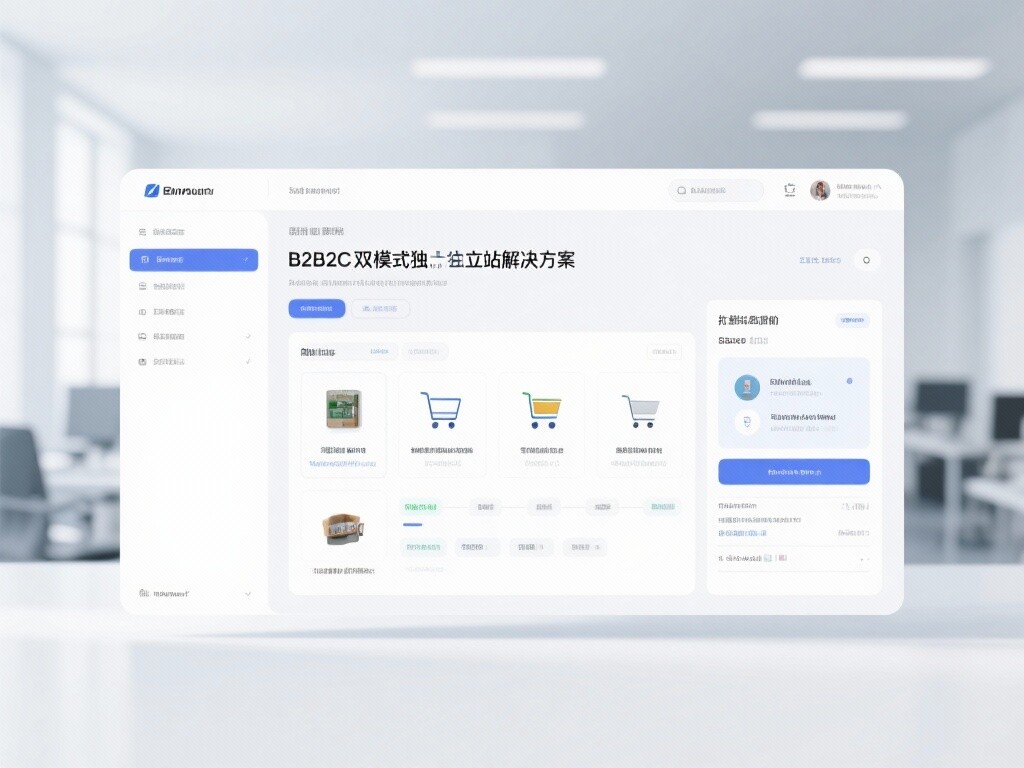
Die Plattform unterstützt Mehrsprachigkeit, Multi-Währungen und Multi-Kanal-Marketing, verfügt über integrierte KI-Übersetzungs- und SEO-Optimierungssysteme und ist für Hauptmärkte wie Südostasien, Europa/Amerika, Lateinamerika und den Nahen Osten geeignet, um chinesischen Herstellern bei der effizienten Erschließung internationaler E-Commerce-Märkte zu helfen. B2B2C双模式独立站解决方案易营宝推出的B2B2C双模式独立站解决方案,专为同时开展批发与零售业务的企业打造。平台支持商品价格展示、商品多规格管理、购物车与购物车弹窗、购物车总价计算,以及统一批量询价等功能,帮助企业以更高效、更直观的方式触达B端与C端客户。通过云建站、大数据分析与广告智能投放体系,助力企业打破渠道壁垒,实现国内外市场拓展与品牌价值提升。