- Grenzenloser Zollfreilagerstandort, Kostenoptimierung für marokkanische Warenexporte11-06-2026Details anzeigen
- Welches Signal zur vorübergehenden Aussetzung der japanischen Exportfreigabe?10-06-2026Details anzeigen
- China's LNG imports rebounded in May, with Russia and Canada increasing volumes to fill the Middle East supply gap10-06-2026Details anzeigen
- Wird GEO seine SEO-Strategie ändern?04-06-2026Details anzeigen
- Für welche Geschäftsbereiche eignet sich eine End-to-End-Lösung?03-06-2026Details anzeigen
- Trends globaler Wachstumskanäle 202602-06-2026Details anzeigen
- Änderungen der Suchmaschinen-Rankingfaktoren 202606-06-2026Details anzeigen
- Für welche Phasen eignet sich der Service zur Steigerung der Markensichtbarkeit29-05-2026Details anzeigen
Welche Kennzahlen sind bei der Erstellung einer responsiven Website wichtig? Geschwindigkeit, Anpassungsfähigkeit und SEO-Kompatibilität in einem Zug erklärt
Responsive Website Design is often understood as “the page can adapt to screen changes”, but what truly affects business results is often loading speed, end-device adaptation details, and SEO compatibility. For website projects that need to control build costs and subsequent promotion efficiency, identifying these indicators early is even more important than frequent rework later, especially in scenarios such as independent site customer acquisition, brand going global, and multilingual marketing.
Why Responsive Website Design Is Not Just a Front-end Styling Issue
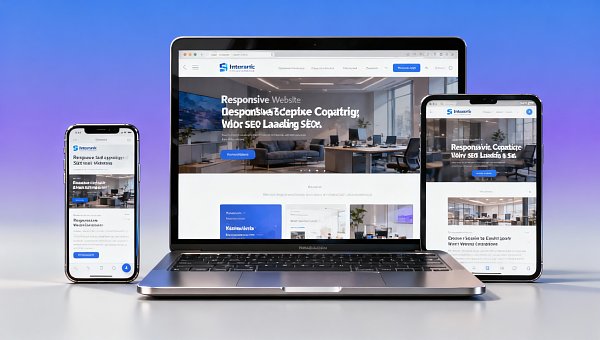
Many projects see no major difference in traffic after launch, yet consultation conversion remains low. The reason is not necessarily content or advertising, but rather that the website itself does not take the user experience into account. If Responsive Website Design only stays at layout scaling, it is easy to run into issues such as hard-to-click mobile buttons, oversized images, difficult-to-complete forms, and high bounce rates.
From the perspective of website + marketing service integration, a website is no longer just a display tool, but a core entry point that carries search, advertising, social media, and AI search traffic. Whether the page structure is stable, whether the content is easy to crawl, and whether access is smooth across different regions will directly affect the return on advertising investment.
From Yiyingbao's practical direction, intelligent website building, multilingual website development, SEO optimization, and ad placement are interrelated. If a website lacks a responsive foundation, even the best content and budget may be offset by technical shortcomings, which is also the fundamental reason why Responsive Website Design continues to receive attention.
First Look at Speed: It Affects User Experience and Advertising Costs
Speed is the most easily underestimated indicator in Responsive Website Design. A page opening normally on desktop does not mean it remains stable on mobile, in overseas network environments, or under low-bandwidth conditions. What is truly valuable is whether the first screen loads quickly, whether core content appears first, and whether interactions are smooth.
Speed Evaluation Cannot Only Look at “Can It Open”
In actual judgment, it is recommended to break speed down into several perceptible layers. The time it takes for users to see content, the time when the page becomes operable, and the response speed after submitting a form are all more closely related to business results than abstract technical scores.
- Whether the first-screen resources are too many, especially large images, videos, and carousels.
- Whether the mobile version loads modules that are unnecessary for desktop.
- Whether code, scripts, and third-party plugins are excessively stacked.
- Whether overseas access enables appropriate nodes, caching, and compression strategies.
If the website undertakes Google SEO, ad landing pages, or social media traffic acquisition tasks, slow speed not only affects user retention but also increases customer acquisition costs. Ads have already been paid for, yet conversions are lost because the page loads slowly, which is one of the most hidden forms of waste in many projects.
Looking at Adaptation Again: Not Shrinking the Page, But Rebuilding the Experience
The “adaptation” in Responsive Website Design is not about whether the page looks distorted after being compressed, but whether core information remains easy to read and the operating path remains clear across different devices. The usage logic of mobile phones, tablets, laptops, and large screens is not the same.
Common Adaptation Problems Often Appear in the Details
In actual use, the stronger the adaptation capability, the better it supports content delivery in different scenarios. For example, B2B official websites focus more on product catalogs, case studies, and inquiry forms, while B2C stores place more emphasis on product details, payment process, and smooth mobile ordering. Both belong to Responsive Website Design, but their focus is not the same.
SEO Compatibility Determines Whether the Website Can Be Seen Long Term
Many websites look good when launched, but later fail to generate natural traffic for a long time. The problem usually lies in SEO compatibility. If Responsive Website Design does not take search crawling, page semantics, and structural standards into account, it will be difficult to form a foundation for sustained indexing and ranking.
SEO Compatibility Items Worth Checking
- Whether a clear URL structure is adopted, avoiding a large number of meaningless parameters.
- Whether titles, descriptions, and H tags support independent settings.
- Whether images support alternative text to help search engines understand the content.
- Whether multilingual pages are configured with correct index relationships and regional attributes.
- Whether the page supports static generation or has good crawl friendliness.
If the website also undertakes overseas promotion tasks, SEO compatibility is not only related to Google organic rankings, but also affects AI search visibility. More and more companies now view their official websites as long-term assets. Professional content topics such as enterprise patent-related foreign-related risk warning system construction under the digital economy background increasingly need to rely on stable page structures and search-friendly information organization methods to gain continued exposure.
Indicator Priorities Differ by Business Scenario
There is no single standard answer for Responsive Website Design, the key lies in the scenario. When judging whether a solution is worth choosing, one should not only look at the quotation or the number of templates, but also whether it matches the future promotion and operation path.
Focus Points of Several Common Types of Websites
- Brand official website: focuses on visual consistency, content management, and search foundation.
- Foreign trade marketing website: focuses on multilingual support, inquiry conversion, and overseas speed.
- Cross-border store: focuses on product page loading, mobile transactions, and structured data.
- Ad landing page: focuses on first-screen speed, form efficiency, and conversion tracking.
In other words, Responsive Website Design is not an isolated technical action, but works together with the website-building system, content strategy, SEO optimization, ad placement, and social media operations. Yiyingbao's integrated solutions covering intelligent website building, AI+SEO/GEO optimization, and overseas marketing are valuable because they connect the website with subsequent promotion from the very beginning, rather than requiring secondary integration after fragmented procurement.
A Checklist for Direct Review During Selection
To avoid only looking at the demo page and ignoring the underlying capabilities, the judgment criteria for Responsive Website Design can be placed into an actionable checklist. This makes it easier to compare different service providers and also facilitates internal communication.
- Whether real previews for different devices are supported, rather than just scaled display.
- Whether SEO titles, descriptions, categories, and page links can be configured independently.
- Whether multilingual expansion, overseas access optimization, and continuous content updates are supported.
- Whether ad tracking, analytics, and conversion monitoring can be connected conveniently.
- Whether there is room for subsequent iteration, rather than having to rebuild the page every time something changes.
- Whether topic page development can be accommodated, for example the indexing and dissemination needs of content pages such as enterprise patent-related foreign-related risk warning system construction under the digital economy background.
If these issues are fully validated at the early stage, then later whether doing Google SEO, ad placement, or social media traffic acquisition, the website will be more likely to become a growth asset rather than a technical burden.
Evaluate the Website as a Long-Term Operating Asset
In the end, Responsive Website Design is not concerned with something as simple as “whether the page can adapt itself”, but whether the website can steadily play a role across different devices, different channels, and different markets. Speed determines the first impression, adaptation determines the usage process, SEO compatibility determines long-term visibility, and all three are indispensable.
The next more stable approach is to first sort out what traffic the website will carry, which regions it will serve, and what conversion goals it needs to bear, and then verify the performance, adaptation, and search compatibility of the website-building solution accordingly. The clearer the judgment criteria, the more Responsive Website Design can truly serve business growth, rather than just staying at the page level with a “looks fine” impression.
- Yiyingbao
- Website-Erstellung
- SEO
- Internationales Marketing
- Eigene Website
- Mehrsprachige Website
- SEO-Optimierung
- Social-Media-Management
- Intelligente Website-Erstellung
- Google-Suchmaschinenoptimierung
- Mehrsprachige Website-Erstellung
- Responsive Website
- GEO
- Anzeigenschaltung
- Anfrage-Conversion
- GEO-Optimierung
- Strukturierte Daten
- Grenzüberschreitender Online-Shop
- Responsives Webdesign
- Anzeigen-Landingpage
Verwandte Artikel



Verwandte Produkte
 EasyCamp SaaS Intelligenter Website-Builder und Marketing-SystemE-Yingbao SaaS Intelligent Website Marketing System: KI-gesteuerte Website-Erstellung ohne Programmieraufwand. Erstellen Sie in nur 10 Minuten mehrsprachige, unabhängige Export-Websites. Globale Serverbeschleunigung und KI-gestützte SEO-Optimierung ermöglichen Unternehmen eine effiziente Anbindung an globale Märkte. Die nahtlose Verschmelzung von Technologie und benutzerfreundlicher Bedienung macht die Erstellung von Export-Websites bemerkenswert einfach.
 AI+SEO-Doppelantrieb-OptimierungsserviceEasypack AI+SEO-Doppelantrieb-Optimierungssystem nutzt KI zur intelligenten Keyword-Extraktion, Content-Generierung und umfassenden technischen Optimierung, um Exportunternehmen hochwertigen organischen Traffic zu verschaffen und die Suchmaschinenrankings sowie Conversion-Raten deutlich zu steigern.
 AI+SEM intelligente Werbemarketing-SystemAI+SEM-gesteuerte intelligente Kampagnenerstellung, ganzheitliche Unterstützung für präzises Werbemarketing. Das System generiert automatisch Wochen-/Monatsberichte, KI empfiehlt Keywords und Zielmärkte, überwacht Echtzeit-Kennzahlen und warnt intelligent, startet mit einem Klick hochkonvertierende Kampagnen, beschleunigt Lead-Generierung und steigert ROI.
 AI+SNS Social-Media-Marketing-SystemYingyingbao AI+SNS Social Media Intelligent Marketing System – Präzise Erfassung sozialer Daten für das Zeitalter der sozialen Medien. Unterstützt die Synchronisierung von Inhalten mit einem Klick auf allen wichtigen Plattformen, einschließlich Facebook und LinkedIn. KI-gestütztes Umschreiben von Beiträgen verbessert die Lokalisierung. Intelligenter Kundenservice rund um die Uhr und Analyse von Nutzerprofilen ermöglichen Unternehmen eine effiziente Expansion in globale Märkte.
 AI+SEM-Lösungen für WerbemarketingKI-gestützte SEM-Werbelösungen nutzen künstliche Intelligenz, um das SEM-Kampagnenmanagement erheblich zu verbessern. Mithilfe von KI werden wöchentliche und monatliche Berichte erstellt, die Kontodaten in mehreren Dimensionen darstellen und so einen umfassenden Überblick über die Werbeleistung und Trends ermöglichen. KI liefert präzise Empfehlungen zu Keywords und Zielländern, erstellt auf intelligente Weise Werbetexte mit hoher Konversionsrate und initiiert mit einem einzigen Klick eine effiziente Kampagnenumsetzung, wodurch die Kundenakquise für Unternehmen beschleunigt wird. Gleichzeitig überwacht das System die wichtigsten Kennzahlen in Echtzeit, identifiziert auf intelligente Weise ungewöhnliche Schwankungen und gibt rechtzeitig Warnmeldungen aus, um eine stabile Werbeleistung und hohe Renditen zu gewährleisten.
 AI+SEO营销解决方案易营宝AI+SEO营销解决方案,通过AI批量写作、智能生成TDK、精准关键词扩词等功能,全面优化网站SEO效果,提升流量与转化率。助力企业构建高效智能网站新生态。
 Domain-DienstleistungenEasyWin bietet professionelle Domain-Dienstleistungen an, einschließlich intelligenter Abfrage, One-Stop-Registrierung, Markenschutz und Rund-um-die-Uhr-Management, um Unternehmen bei der Gestaltung eines digitalen Markenimages zu unterstützen.
 EasySell B2C Cross-Border E-Commerce-Plattform und eigenständige WebsiteDer EasyStore B2C Cross-Border E-Commerce Independent Store ist eine intelligente Website-Erstellungs- und Cross-Border-E-Commerce-All-in-One-Lösung, die von der EasyStore Information Technology (Beijing) Co., Ltd. eigenständig entwickelt wurde. Das System wurde speziell für kleine, mittlere und große Exportunternehmen entwickelt und vereint „Website-Erstellung, Betrieb, Marketing, Werbung und Konversion“ in einem, um Unternehmen dabei zu unterstützen, schnell einen Cross-Border-E-Commerce-Independent-Store aufzubauen und so Markenexport und globalen Verkaufszuwachs zu realisieren.
Die Plattform unterstützt Mehrsprachigkeit, Multi-Währungen und Multi-Kanal-Marketing, verfügt über integrierte KI-Übersetzungs- und SEO-Optimierungssysteme und ist für Hauptmärkte wie Südostasien, Europa/Amerika, Lateinamerika und den Nahen Osten geeignet, um chinesischen Herstellern bei der effizienten Erschließung internationaler E-Commerce-Märkte zu helfen. B2B2C双模式独立站解决方案易营宝推出的B2B2C双模式独立站解决方案,专为同时开展批发与零售业务的企业打造。平台支持商品价格展示、商品多规格管理、购物车与购物车弹窗、购物车总价计算,以及统一批量询价等功能,帮助企业以更高效、更直观的方式触达B端与C端客户。通过云建站、大数据分析与广告智能投放体系,助力企业打破渠道壁垒,实现国内外市场拓展与品牌价值提升。