- توصلت ترتيبات الرسوم الجمركية بين الصين والولايات المتحدة إلى توافق إيجابي، وسيتم إنشاء مجلس التجارة15-06-2026عرض التفاصيل
- العبور غير الجمركي الصيني المغربي، وتراجع تكلفة تصدير المنتجات المغربية إلى الصين11-06-2026عرض التفاصيل
- ما هي الإشارة التنفيذية التي يتم إطلاقها مؤقتًا بشأن تصدير الأسماك إلى اليابان10-06-2026عرض التفاصيل
- واردات الصين من LNG في مايو ترتفع مجددًا، وروسيا وكندا تزيدان الإمدادات لتعويض النقص في الشرق الأوسط10-06-2026عرض التفاصيل
- هل ستغير شركة GEO استراتيجيتها في تحسين محركات البحث؟04-06-2026عرض التفاصيل
- ما هي الأنشطة التجارية التي تناسبها حلول السلسلة الكاملة؟03-06-2026عرض التفاصيل
ما هي الأنظمة التجارية SaaS عبر الحدود المناسبة؟ تحليل سرعة النشر، وقابلية التوسع والتكلفة
After cross-border business enters a refined stage, an e-commerce system is no longer just about being able to sell products. For many businesses in the selection phase, whether a SaaS cross-border e-commerce system is suitable often depends on three practical questions: how fast it can go live, whether it can sustain growth later on, and whether the total investment is controllable. Especially as website building, customer acquisition promotion, and order conversion become increasingly integrated, the system choice already directly affects the rhythm of overseas business.
Why have SaaS cross-border e-commerce systems attracted more attention in recent years
In the past, building a cross-border independent site usually meant custom development. The early stage was flexible, but the cycle was long, the budget was high, and follow-up maintenance also relied on the technical team. By comparison, a SaaS cross-border e-commerce system standardizes website building, product management, payment, orders, marketing plugins and other capabilities into services, making it more suitable for businesses that want to quickly validate the market and launch overseas sales as soon as possible.
This change is not just a technical upgrade, but a change in the operating model. Overseas traffic is becoming more and more fragmented, and search engines, ad placements, social media content and AI search entry points are all affecting conversions. If an e-commerce system only serves to “display products”, its value will become increasingly limited; if it can work with SEO, advertising, content distribution and data tracking, it will be closer to real business needs.
From this perspective, the appeal of a SaaS cross-border e-commerce system is not only that it saves development time, but also that it can more easily integrate a complete overseas marketing workflow.
Which business scenarios are more suitable for this type of solution
Not every project has to choose the same website-building model, but the following scenarios are usually more suitable for a SaaS cross-border e-commerce system.
- New product going overseas stage, where small-scale testing is needed first before deciding whether to increase investment.
- Existing platform sellers preparing to build a brand independent site and hoping to accumulate customer data at the same time.
- Multi-language, multi-region expansion, requiring unified management of sites and marketing materials.
- Limited internal technical resources, with more emphasis on the supplier's continuous service and stable delivery.
- Site building not only serves transactions, but also carries search customer acquisition, advertising takeovers and conversion tasks.
If the business itself is very complex, involving deep ERP transformation, special pricing logic or highly customized processes, pure SaaS may not be enough in one step. But for most cross-border retail and brand going overseas projects, standardized capabilities plus moderate expansion are often more cost-effective than fully customized development in terms of investment-output ratio.
Fast deployment speed is not just about saving time
When many people compare SaaS cross-border e-commerce systems, the first reaction is “fast go-live”. That judgment is not wrong, but what is more worth noting is that faster go-live means entering the real market sooner.
In cross-border business, speed is directly related to product testing, ad validation, search indexing and channel feedback. If a website goes live two months later, it may miss a sales season, or it may delay the entire set of placement and optimization rhythm. A SaaS cross-border e-commerce system usually already preconfigures payment interfaces, logistics infrastructure, template pages, marketing tools and data statistics, which can shorten the early preparation period.
A more practical point is that deployment speed can also reduce organizational coordination costs. The longer the requirements are discussed and the more people are involved, the easier the solution is to keep expanding. A standardized system handles many common issues in advance, allowing the team to focus more energy on products, content, pricing and traffic strategies.
When looking at speed, don’t just look at the “website building days”
What is truly valuable as a reference is the total time from project initiation to having operational capability. In addition to page construction, one should also look at whether domain deployment, multilingual settings, payment activation, SEO basic configuration, ad tracking, mobile adaptation and order processes are completed in sync.
Platforms like 易营宝 that simultaneously cover intelligent website building, SEO optimization, ad placement and social media marketing have an advantage in that system construction and promotion capabilities are not separated. Once the website is built, there is no need to spend much time on secondary integration, which is especially important for businesses pursuing project progress.
Scalability determines how far the system can accompany the business
Many projects are not large in the early stage, so it is easy to underestimate future changes. When SKUs increase, regions expand and marketing channels multiply, if the system cannot handle it, the problem of “rebuilding once” will appear. Rather than only seeing whether it is enough for the current stage, it is better to judge the expansion boundaries of the SaaS cross-border e-commerce system in advance.
Simply put, a good SaaS cross-border e-commerce system should not only be “usable”, but also “growable”. It should not drag in the early stage, and should not limit growth in the later stage; that is a more stable selection logic.
Cost analysis should look at total cost, not just a single quote
The most common mistake during selection is comparing only the first-year quote. In reality, the cost of a SaaS cross-border e-commerce system should be viewed across several layers together: basic subscription fees, template or plugin costs, payment and transaction fees, marketing tool costs, implementation service costs, and later operational maintenance costs.
A seemingly inexpensive solution may require additional purchases for multilingual support, multi-site support, SEO configuration or ad tracking, and the final total cost is not necessarily low. On the contrary, a solution with a slightly higher upfront price, if it already includes website building, optimization, ad takeovers and data analysis, may actually be more efficient overall.
This is also why more and more companies are now inclined to evaluate the capability of “website + marketing service integration”. The system itself is only the basic infrastructure; what truly affects ROI is whether it can support subsequent customer acquisition and conversion. Breaking the e-commerce system, SEO, advertising and content operations into multiple supply chain links often underestimates management costs and coordination costs.
If the business also needs to synchronize capital, settlement or process efficiency optimization internally, you can also refer toResearch on Enterprise Finance Digital Transformation in the Context of Financial Shared Services to understand the relationship between digital investment and management efficiency from an operational collaboration perspective.
A more localized cost judgment method
- Look at the total cost over three years, not just the first-year contract amount.
- Look at hidden costs, including additional plugins, secondary development and cross-team communication.
- Look at the post-launch customer acquisition efficiency and whether the system helps traffic conversion.
- Look at the supplier's continuous service capability to avoid insufficient support later on.
From a business perspective, what kind of solution is more stable
A truly suitable SaaS cross-border e-commerce system usually has several common points: mature standard capabilities, complete marketing support, comprehensive internationalization settings, and service providers who understand overseas business rhythms.
For platform-based service providers represented by 易营宝, the value lies not only in providing a cross-border e-commerce system, but also in combining AI intelligent website building, multilingual website construction, Google SEO optimization, ad placement, social media marketing and AI search visibility improvement. In this way, the independent site is not just an online store, but a unified carrier covering display, indexing, traffic generation and conversion.
For projects that need to expand business across North America, Europe, Southeast Asia, Japan and South Korea, the Middle East and other regions, this integrated capability is especially important. Different markets have different requirements for language, payment, content expression and traffic entry points, and if the system lacks unified management capabilities, follow-up operations will become significantly more complex.
Before selecting, first clarify these questions
Before finally deciding whether to adopt a SaaS cross-border e-commerce system, you can first do a simple sort-out.
- Is the current goal rapid launch validation, or long-term brand operation?
- Is there a plan to expand into multiple languages, multiple regions or multiple channel placements in the next year?
- Is it necessary to coordinate the e-commerce site with SEO, advertising and social media operations?
- Does the internal team have enough technical resources to support custom development and follow-up maintenance?
- Is the budget more focused on short-term savings, or on long-term total cost and growth efficiency?
After sorting out these questions and then looking at specific solutions, the judgment will be clearer. Because a SaaS cross-border e-commerce system is not simply a software purchase, but a foundational infrastructure choice for business growth.
If you have already entered the comparison or evaluation stage, a more stable approach is to put the deployment cycle, expansion capability, marketing coordination and three-year total cost into the same comparison table, and then filter item by item based on real business scenarios. The conclusions drawn this way are often more valuable than those based only on demo effects or initial quotes.
- يي ينغ باو
- بناء المواقع الإلكترونية
- تحسين محركات البحث
- موقع مستقل
- تكيف الجوّال
- مواقع ويب متعددة اللغات
- التسويق عبر وسائل التواصل الاجتماعي
- تحسين SEO
- موقع مستقل للعلامة التجارية
- إدارة وسائل التواصل الاجتماعي
- بناء المواقع الذكي
- تحسين محركات البحث على جوجل
- إنشاء مواقع ذكية بالذكاء الاصطناعي
- إنشاء مواقع ويب متعددة اللغات
- الإعلانات المدفوعة
- التسويق عبر البريد الإلكتروني
- متجر إلكتروني عابر للحدود
- نظام المتجر الإلكتروني عبر الحدود
- تحسين محركات البحث Google
- نظام متجر SaaS للتجارة الإلكترونية عبر الحدود
مقالات ذات صلة

منتجات ذات صلة
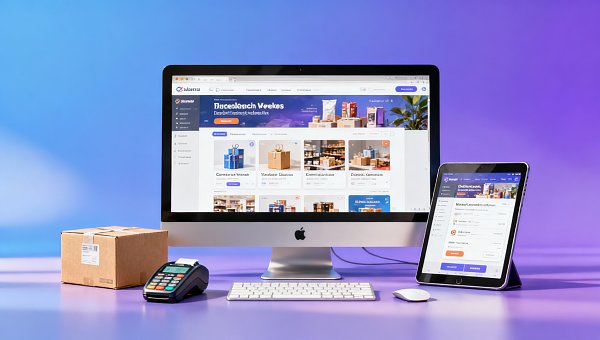
 EasyCamp SaaS نظام ذكي لبناء المواقع الإلكترونية والتسويقنظام التسويق الذكي للمواقع الإلكترونية E-Yingbao SaaS: إنشاء مواقع إلكترونية بدون كتابة أكواد برمجية وبواسطة الذكاء الاصطناعي. أنشئ مواقع تجارة إلكترونية مستقلة متعددة اللغات في غضون 10 دقائق فقط. تسريع الخادم العالمي وتحسين محركات البحث بواسطة الذكاء الاصطناعي يمكّن الشركات من التواصل بفعالية مع الأسواق العالمية. الاندماج السلس بين التكنولوجيا والتشغيل السهل يجعل تطوير مواقع التجارة الإلكترونية أمرًا في غاية البساطة.
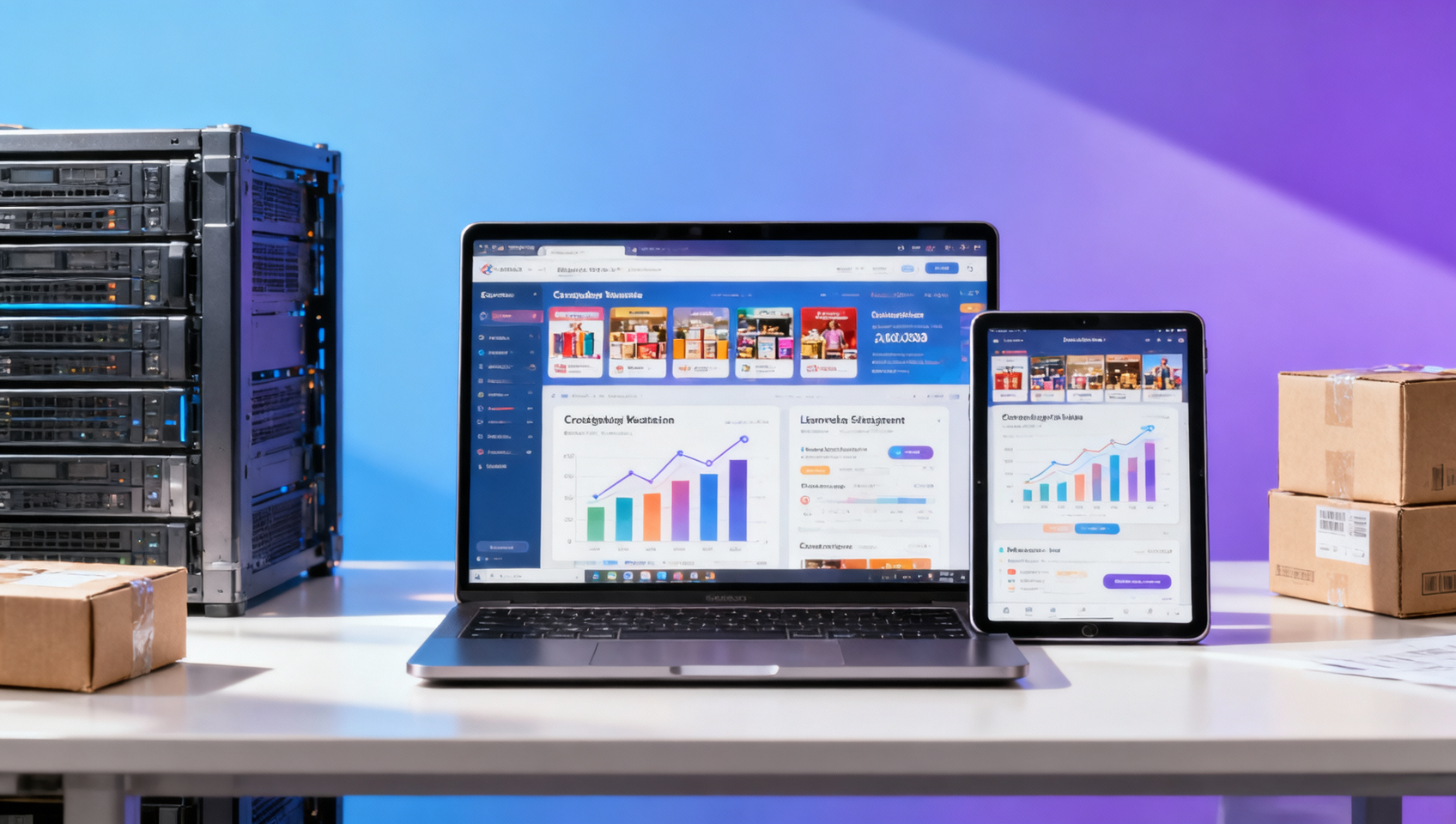
 خدمة تحسين نظام AI + SEO المزدوجنظام تحسين Yi Ying Bao AI + SEO المزدوج، من خلال استخراج الكلمات الرئيسية الذكية بواسطة الذكاء الاصطناعي، وإنشاء المحتوى والتحسين التقني الشامل، لمساعدة شركات التجارة الخارجية في الحصول على حركة مرور طبيعية عالية الجودة، وتحسين ترتيب البحث ومعدل التحويل بشكل ملحوظ.
 نظام ذكاء الإعلانات AI+SEM للتسويقيقود AI+SEM الإعلانات الذكية، ويمكّن التسويق الدقيق للإعلانات عبر سلسلة كاملة. يولد النظام تلقائيًا تقارير أسبوعية/شهرية، ويوصي AI بالكلمات الرئيسية والبلدان المستهدفة، ويراقب المؤشرات الأساسية في الوقت الفعلي مع تنبيهات ذكية، ويطلق خطة إعلانية عالية التحويل بنقرة واحدة، مما يساعد على اكتساب عملاء سريعًا وتحسين عائد الاستثمار.
 نظام التسويق عبر وسائل التواصل الاجتماعي AI+SNSنظام التسويق الذكي Yingyingbao AI+SNS Social Media - التقاط دقيق للوسائط الاجتماعية في عصر وسائل التواصل الاجتماعي. يدعم مزامنة المحتوى بنقرة واحدة عبر المنصات الرئيسية بما في ذلك Facebook و LinkedIn. تعزز إعادة كتابة المنشورات المدعومة بالذكاء الاصطناعي التوطين. تتيح خدمة العملاء الذكية على مدار الساعة وطوال أيام الأسبوع وتحليل ملفات تعريف المستخدمين للشركات التوسع بكفاءة في الأسواق العالمية.
 حلول التسويق الإعلاني AI+SEMتستفيد حلول الإعلانات SEM المدعومة بالذكاء الاصطناعي من الذكاء الاصطناعي لتحسين إدارة حملات SEM بشكل كبير. باستخدام الذكاء الاصطناعي لإنشاء تقارير أسبوعية وشهرية، تقدم هذه الحلول بيانات الحساب عبر أبعاد متعددة، مما يتيح الإشراف الشامل على أداء الإعلانات واتجاهاتها. يقدم الذكاء الاصطناعي توصيات دقيقة بشأن الكلمات الرئيسية والبلدان المستهدفة، ويصمم نصوص إعلانية عالية التحويل بذكاء، ويبدأ نشر الحملات بكفاءة بنقرة واحدة، مما يسرع من اكتساب العملاء للشركات. في الوقت نفسه، يراقب النظام المقاييس الأساسية في الوقت الفعلي، ويحدد التقلبات غير الطبيعية بذكاء، ويصدر تنبيهات في الوقت المناسب، مما يضمن أداء إعلانيًا مستقرًا وعوائد عالية.
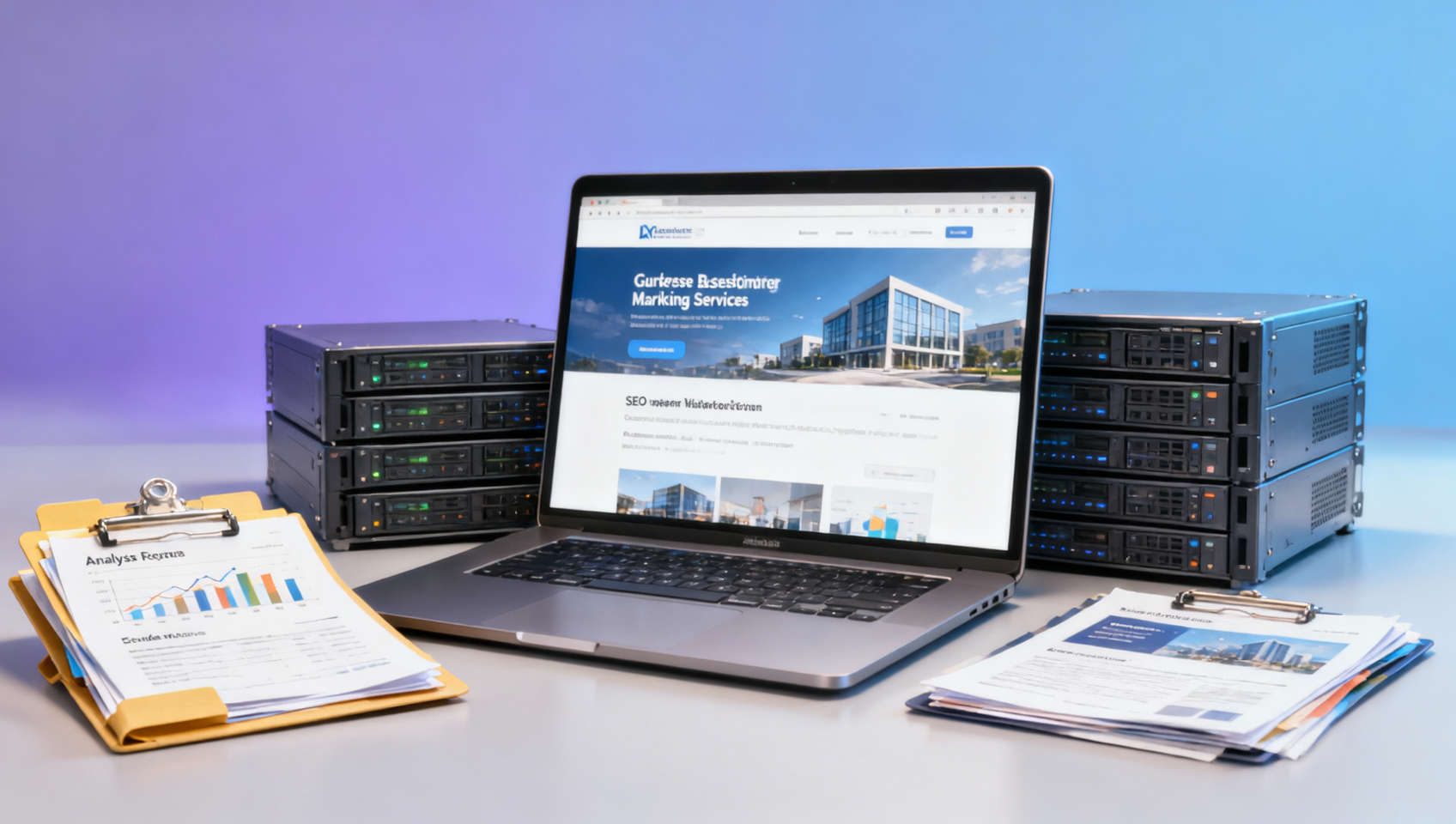
 AI+SEO营销解决方案易营宝AI+SEO营销解决方案,通过AI批量写作、智能生成TDK、精准关键词扩词等功能,全面优化网站SEO效果,提升流量与转化率。助力企业构建高效智能网站新生态。
 خدمات أسماء النطاقاتيقدم يي يينغ باو خدمات احترافية لأسماء النطاقات، تشمل الاستعلام الذكي، التسجيل الشامل، حماية العلامة التجارية، والإدارة الشاملة، لمساعدة الشركات في بناء صورة العلامة التجارية الرقمية.
 متجر EasyOperate B2C عبر الحدود وموقع مستقلمنصة متجر B2C عبر الحدود المستقلة من EasyStore هي حل متكامل للبناء الذكي للمواقع والتجارة الإلكترونية عبر الحدود، تم تطويره بشكل مستقل من قبل شركة EasyStore لتكنولوجيا المعلومات (بكين) المحدودة. تم تصميم النظام خصيصًا للشركات الصغيرة والمتوسطة وكذلك الكبيرة المصدرة، حيث يجمع بين "البناء، التشغيل، التسويق، الإعلان، التحويل" في نظام واحد، لمساعدة الشركات على إنشاء موقع تجارة إلكترونية مستقل عبر الحدود بسرعة، وتحقيق النمو في المبيعات العالمية وانتشار العلامة التجارية في الخارج. تدعم المنصة تعدد اللغات والعملات وقنوات التسويق، وتضم نظام ترجمة ذكي يعمل بالذكاء الاصطناعي ونظام تحسين محركات البحث (SEO)، وهي مناسبة للأسواق الرئيسية مثل جنوب شرق آسيا، أوروبا وأمريكا، أمريكا اللاتينية، الشرق الأوسط، مما يساعد الشركات المصنعة الصينية على التخطيط الفعال للتجارة الإلكترونية الدولية.
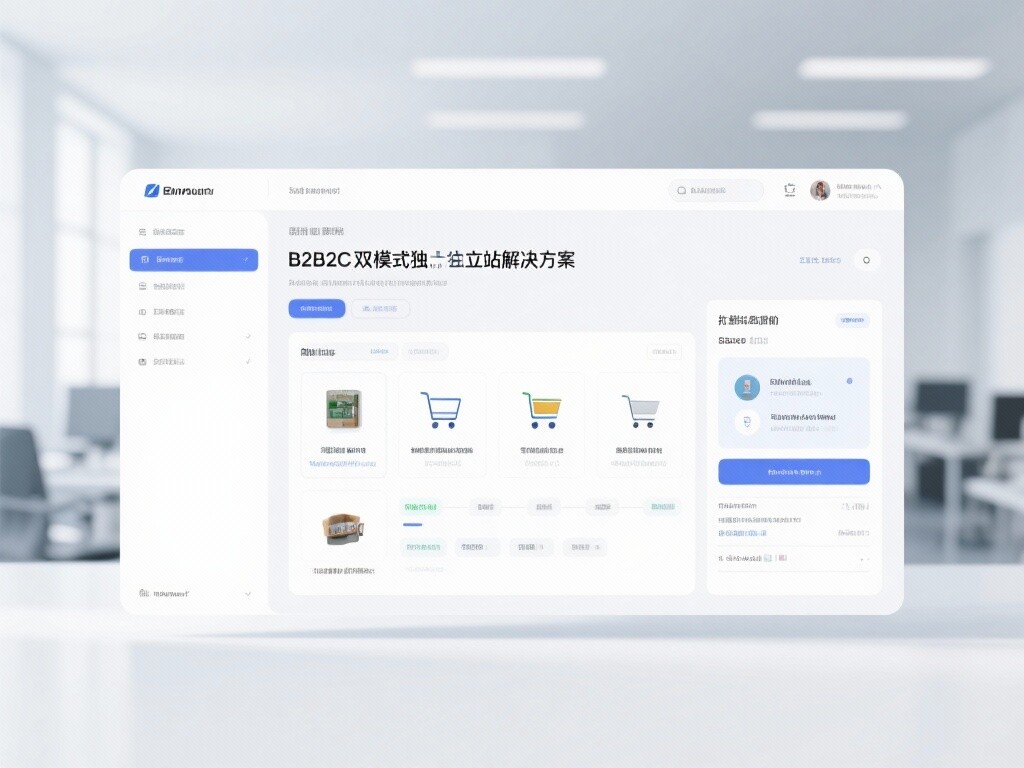
 B2B2C双模式独立站解决方案易营宝推出的B2B2C双模式独立站解决方案,专为同时开展批发与零售业务的企业打造。平台支持商品价格展示、商品多规格管理、购物车与购物车弹窗、购物车总价计算,以及统一批量询价等功能,帮助企业以更高效、更直观的方式触达B端与C端客户。通过云建站、大数据分析与广告智能投放体系,助力企业打破渠道壁垒,实现国内外市场拓展与品牌价值提升。