- Quelles canaux d’acquisition de clients les tendances du marketing transfrontalier en 2026 influenceront-elles ?Sep 06, 2026Voir les détails
- Quels risques d’homogénéisation faut-il identifier dans l’analyse du secteur de la création intelligente de sites web ?Aug 30, 2026Voir les détails
- Comment les tendances du marketing par IA en 2026 vont-elles modifier la répartition des budgets publicitaires ?Aug 28, 2026Voir les détails
- Le marché de l’authentification EV SSL est-il en contraction ou en phase de montée en gamme ? Comment les entreprises doivent-elles évaluer l’achat de certificats ?Aug 11, 2026Voir les détails
- Pourquoi les anciennes méthodes d’AMP SEO 2020 ne sont-elles plus efficaces et quelles sont les évolutions actuelles des priorités d’optimisation ?Aug 02, 2026Voir les détails
- Comment choisir les sujets de la rubrique Actualités du secteur pour générer plus facilement du trafic de recherche organiqueJul 29, 2026Voir les détails
AI-powered site generator platform comment choisir ? Comparaison de l’architecture fonctionnelle et du mode de déploiement

Discussion on AI-powered site generator platform, in the past two years the focus has clearly shifted from “can it go live faster” to “can it support sustained growth.” For a business that integrates website building and marketing services, website creation is only the starting point; what follows is multilingual expansion, search indexing, ad landing page iteration, content collaboration, and cross-regional operations. What really matters is not the page generation speed itself, but the platform’s underlying functional architecture, data organization, and whether the deployment model is suitable for long-term use.
First, understand the essence of the platform, not just the generation results
Many platforms put AI writing, template reuse, and automatic page layout front and center. This is indeed intuitive, but it only covers a small part of the website lifecycle. In essence, AI-powered site generator platform is a production system oriented toward content, pages, traffic, and conversion.
If a platform can only generate pages quickly, but cannot manage site structure, URL rules, language versions, form data, and marketing deployment collaboration, then the faster it goes live, the higher the correction cost often becomes later.
Especially in foreign trade, brand globalization, and cross-border business, a site often has to handle brand presentation, lead collection, product hosting, SEO growth, and ad conversion at the same time. At this point, AI-powered site generator platform is more like a business foundation than a mere website-building tool.
Why the industry is beginning to re-evaluate selection criteria
In the past, website projects often focused on visual delivery and development cycles. Now it is different: sites must be understood by search engines, and also adapt to ad systems, social media traffic, and AI search scenarios, so platform capabilities must be more complete.
This is also why more and more teams, when evaluating AI-powered site generator platform, look at SEO fundamentals, content production mechanisms, data interfaces, and deployment flexibility at the same time.
From industry practice, platforms like 易营宝, which are AI-driven enterprise SaaS platforms, are notable not only because they can improve website-building efficiency, but more importantly because they integrate intelligent website building, multilingual capabilities, SEO optimization, ad marketing, and GEO generative engine optimization into the same business chain.
For overseas business, this integrated capability means the site is not an isolated asset, but part of the customer acquisition system. Once the platform is chosen incorrectly, subsequent search growth, ad takeover, and content expansion will all be constrained.
Functional architecture determines long-term cost
When evaluating AI-powered site generator platform, it is recommended to first break it down into its functional architecture, rather than first looking at how many templates it has. What really affects the long-term user experience is usually whether the underlying capabilities are complete.
Whether content and pages are decoupled
If page templates, components, and content fields are highly coupled, subsequent multilingual replication, section adjustments, or bulk updates will be very troublesome. A platform that separates content from presentation is more suitable for large-scale expansion.
Whether modular reuse for marketing scenarios is supported
Overseas sites often need to frequently create campaign pages, landing pages, regional pages, and industry pages. Whether components, forms, inquiry modules, and trust copy can be reused directly affects deployment efficiency and maintenance cost.
Whether SEO and technical rules are controllable
A qualified AI-powered site generator platform should at least support titles, descriptions, structured data, redirects, sitemaps, canonical links, and page loading optimization. Otherwise, even with more content output, it may still be difficult to achieve stable indexing.
Whether the data layer has scalability
If form data, customer leads, product information, language versions, and ad attribution data cannot be managed in a unified way, they will become separate islands. When connecting to CRM, analytics platforms, and marketing automation systems later, problems will surface all at once.
Deployment model affects security, performance, and collaboration efficiency
One point often overlooked in technical evaluation is that the deployment model is not just an operations issue; it directly affects publishing workflows, permission management, cross-regional access speed, and data compliance.
Common AI-powered site generator platform solutions can generally be divided into pure SaaS hosting, customizable cloud deployment, and a more enterprise-oriented hybrid deployment.
Pure SaaS hosting
Its advantages are fast launch, light maintenance, and unified version upgrades, making it suitable for market validation and rapid bulk site creation. The drawback is limited underlying controllability, and special integrations and complex permission strategies may not be easy to implement.
Customizable cloud deployment
This type of model usually balances efficiency and flexibility, retaining platform capabilities while allowing adaptation for regional nodes, data interfaces, and site cluster architecture. It is more friendly for multinational operations and marketing collaboration.
Hybrid deployment
It is suitable for situations with relatively high compliance requirements, many internal systems, or where core data needs to remain under one’s own environment. The trade-off is a longer implementation cycle and higher governance requirements.
If the business covers North America, Europe, Southeast Asia, the Middle East, and other regions, the deployment model should also be considered together with CDN nodes, multilingual distribution, form data storage location, and ad landing page response speed, rather than judged in isolation.
In website and marketing integrated scenarios, which capabilities are more critical
For foreign trade enterprises, manufacturing factories, cross-border malls, and brand overseas expansion projects, the value of AI-powered site generator platform does not lie in replacing all work, but in centralizing repetitive, fragmented, and low-efficiency tasks.
From the perspective of 易营宝’s business model, the self-developed cloud intelligent website system, cross-border mall system, AI ad marketing system, and AI+SEO/GEO optimization system form a complete chain; this combination is closer to real business needs.
- A multilingual official website is not just about translating pages; it also involves URL structure, localized content, and regional search performance.
- A B2B inquiry site pays more attention to form paths, page trust elements, lead deduplication, and source tracking.
- A B2C cross-border mall requires product data organization, promotional page reuse, and payment and logistics integration.
- Ad landing pages emphasize rapid setup, A/B iteration, and conversion data feedback.
- SEO and GEO scenarios require the content system to continuously produce output and be better understood by search engines and AI search.
In other words, a qualified AI-powered site generator platform should enable content, pages, delivery, and data to form a closed loop, rather than each operating separately.
During actual evaluation, you can focus on asking these questions
Solution demos usually highlight the most visually appealing parts. The truly effective comparison comes from continuous questioning of key details. The following issues are often more valuable than “can it automatically generate a homepage.”
- Can the content model support bulk generation and unified maintenance for industry pages, product pages, case pages, and regional pages?
- Is multilingual support page-by-page copying, or management based on structured fields?
- Can AI-generated content be controlled, and does it support manual correction, version management, and permission review?
- Does it support SEO technical configuration items, as well as indexing protection after site migration?
- Can forms, inquiries, orders, and ad leads be connected to the same data view?
- After deployment, if expanding to country sites, brand sites, or campaign sites, is redevelopment required?
- When the platform is upgraded, will existing templates, interfaces, and page rules be affected?
The answers to these questions can basically determine whether an AI-powered site generator platform is more suitable for short-term setup or long-term operation.
Put selection conclusions into executable criteria
If you are currently comparing different platforms, it is recommended not to just make a feature checklist, but to establish a three-layer evaluation standard: first, whether it meets current launch needs; second, whether it can support expansion plans within one year; third, whether it has the ability to collaborate with the marketing system.
For a website and marketing integrated business, the value of AI-powered site generator platform is ultimately reflected in whether it is easier to obtain traffic, accumulate leads, iterate content, and reduce operations burden. The earlier the platform is chosen and integrated into the business chain, the lower the later trial-and-error cost.
The more stable next step is to first sort out site type, target market, language count, SEO goals, ad collaboration methods, and data interface requirements, and then verify the platform’s functional architecture and deployment model accordingly. Conclusions drawn this way are usually closer to real results than a single demo.
Articles connexes
 Quand un système de site web de marque international doit-il gérer plusieurs sites de manière centralisée ?
 Quels sont les facteurs fonctionnels qui influencent généralement le prix d’un générateur de site alimenté par l’IA ?
 Comment une alternative à WordPress peut-elle concilier efficacité d’édition et maîtrise du SEO ?


Produits connexes
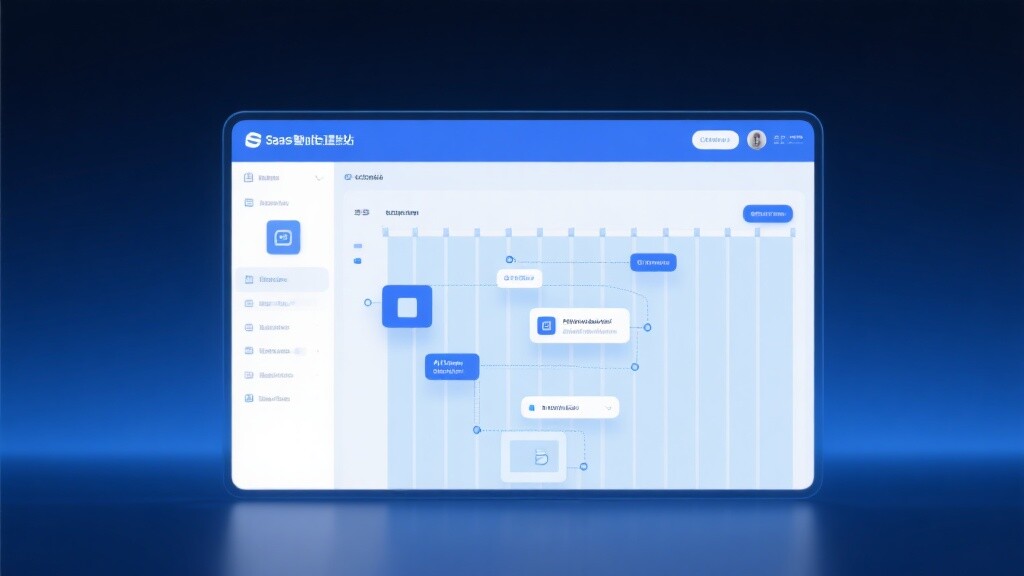
 Système SaaS de création de sites web et de marketing intelligent YiyingbaoSystème SaaS de création de sites web et de marketing intelligent Yiyingbao, création de sites sans code pilotée par l’IA, mise en place rapide d’un site web multilingue indépendant pour le commerce international en 10 minutes, accélération par des serveurs répartis dans le monde entier, optimisation SEO intelligente par l’IA, pour aider les entreprises à se connecter efficacement aux marchés mondiaux. L’intégration parfaite de la technologie et de la simplicité d’utilisation rend la création de sites web pour le commerce international extrêmement simple.
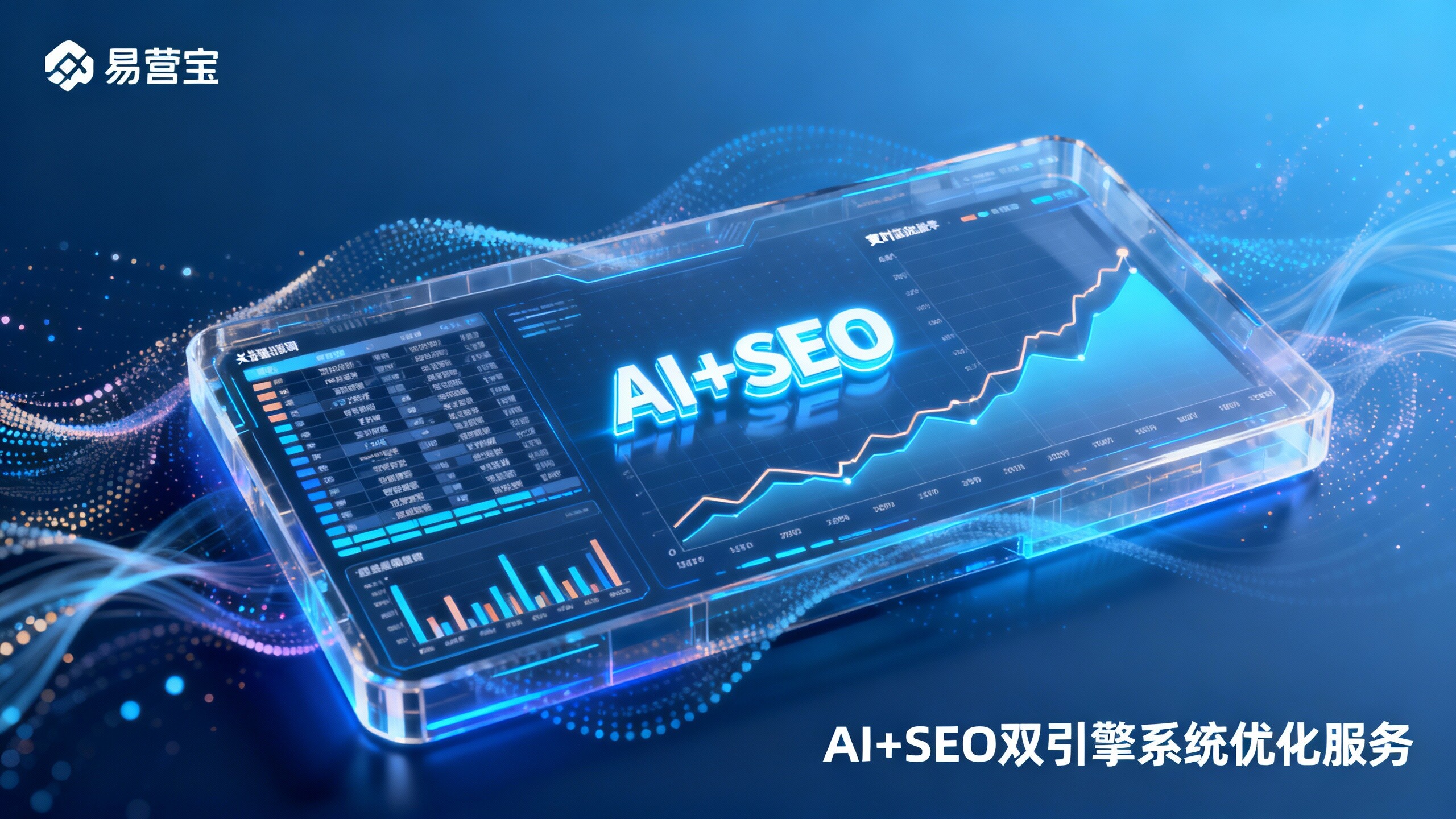
 Services d’optimisation du système à double moteur AI+SEOLe système d’optimisation à double moteur AI+SEO de 易营宝 s’appuie sur l’exploration intelligente de mots-clés par l’IA, la génération de contenu et une optimisation technique complète afin d’aider les entreprises de commerce extérieur à obtenir un trafic organique de haute qualité et à améliorer considérablement leur classement dans les moteurs de recherche ainsi que leur taux de conversion.
 Système de marketing publicitaire intelligent AI+SEMAI+SEM propulse une création publicitaire intelligente, permettant un marketing publicitaire précis sur toute la chaîne. Le système génère automatiquement des rapports hebdomadaires/mensuels, l'IA recommande des mots-clés et des pays de diffusion, surveille en temps réel les indicateurs clés et fournit des alertes intelligentes, lance en un clic des solutions de diffusion à haut taux de conversion, aidant à acquérir rapidement des clients et à améliorer le ROI.
 Système de marketing sur les réseaux sociaux AI+SNSSystème de marketing intelligent Yingyingbao AI+SNS pour les réseaux sociaux - Capture sociale précise pour l'ère des réseaux sociaux. Prend en charge la synchronisation du contenu en un clic sur les principales plateformes, notamment Facebook et LinkedIn. La réécriture des publications alimentée par l'IA améliore la localisation. Un service client intelligent disponible 24 h/24, 7 j/7 et l'analyse du profil des utilisateurs permettent aux entreprises de se développer efficacement sur les marchés mondiaux.
 Solutions marketing publicitaire IA+SEMLes solutions publicitaires SEM basées sur l'IA exploitent l'intelligence artificielle pour améliorer considérablement la gestion des campagnes SEM. Grâce à l'IA, elles génèrent des rapports hebdomadaires et mensuels qui présentent les données des comptes sous plusieurs angles, permettant ainsi une supervision complète des performances et des tendances publicitaires. L'IA fournit des recommandations précises sur les mots-clés et les pays cibles, rédige de manière intelligente des textes publicitaires à fort taux de conversion et lance des campagnes efficaces en un seul clic, accélérant ainsi l'acquisition de clients pour les entreprises. Parallèlement, le système surveille les indicateurs clés en temps réel, identifie intelligemment les fluctuations anormales et émet des alertes en temps opportun, garantissant ainsi des performances publicitaires stables et des rendements élevés.
 AI+SEO营销解决方案易营宝AI+SEO营销解决方案,通过AI批量写作、智能生成TDK、精准关键词扩词等功能,全面优化网站SEO效果,提升流量与转化率。助力企业构建高效智能网站新生态。
 Services de noms de domaineEasy Marketing propose des services professionnels de noms de domaine, comprenant la recherche intelligente, l'enregistrement en un clic, la protection de marque et la gestion complète du cycle de vie, aidant les entreprises à construire une image de marque numérique.
 EasySell B2C Place de Marché Transfrontalière, Site Indépendant易营宝B2C跨境商城独立站是由易营宝信息科技(北京)有限公司自主研发的智能建站与跨境电商一体化解决方案。系统专为中小型及大型出口企业打造,集“建站、运营、营销、投放、转化”于一体,帮助企业快速打造跨境电商独立站,实现品牌出海与全球销售增长。
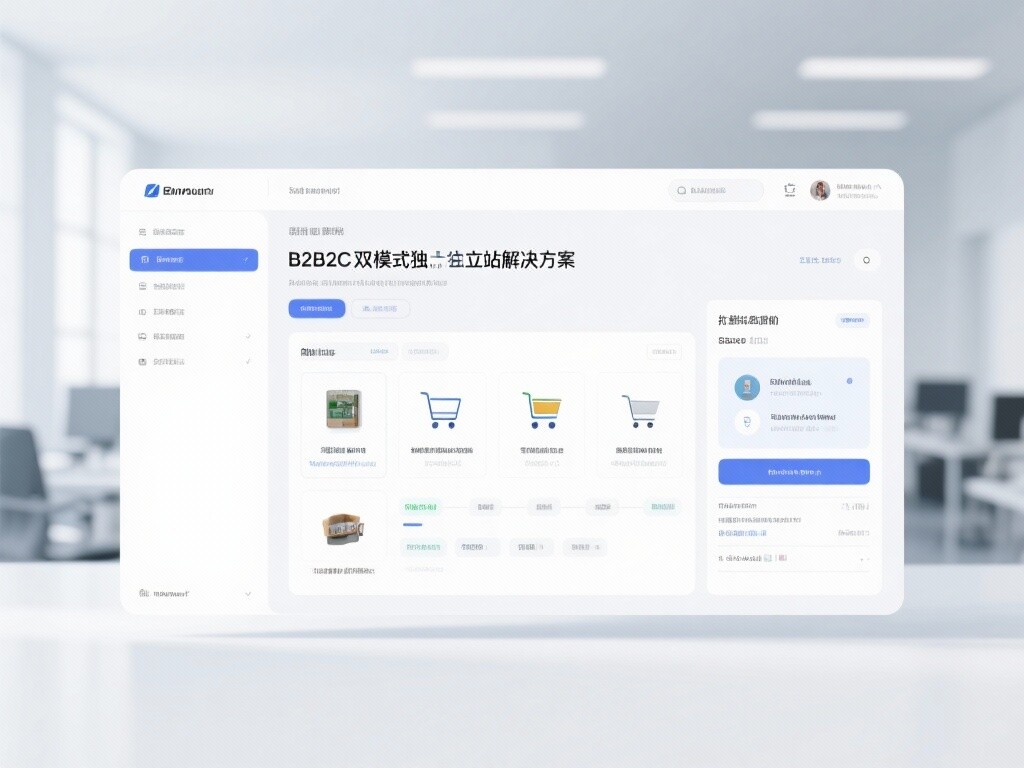
平台支持多语言、多币种、多渠道营销,内置AI智能翻译与SEO优化系统,适配东南亚、欧美、拉美、中东等主流市场,助力中国制造企业高效布局国际电商版图。 B2B2C双模式独立站解决方案易营宝推出的B2B2C双模式独立站解决方案,专为同时开展批发与零售业务的企业打造。平台支持商品价格展示、商品多规格管理、购物车与购物车弹窗、购物车总价计算,以及统一批量询价等功能,帮助企业以更高效、更直观的方式触达B端与C端客户。通过云建站、大数据分析与广告智能投放体系,助力企业打破渠道壁垒,实现国内外市场拓展与品牌价值提升。