









- CBP Finalizes Electronic Rail Export Manifest Rule, Effective October 26, 2026Oct 26, 2026View details
- Amazon’s 2026 peak season surcharge takes effect on October 25Oct 26, 2026View details
- AI Is Eating SaaS: Three Real-World Cases in One AfternoonOct 25, 2026View details
- Exiger CEO: The SaaS Apocalypse Is Real, but It Means Something DifferentOct 25, 2026View details
- Hengqin Cooperation Zone Shares Cross-Border E-Commerce Developments, Focusing on Macao-Hengqin Collaboration and International MarketsOct 24, 2026View details
- A Shenyang study highlights the development of the “cross-border e-commerce + industrial cluster” modelOct 24, 2026View details
How can you tell whether a German link-building agency has access to local media outlets?
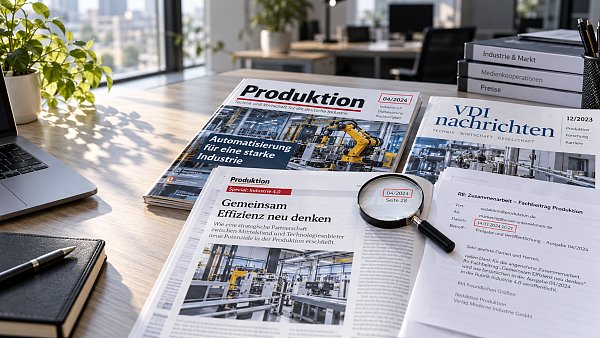
When purchasing services from a German link-building agency, receiving a list of German media outlets from the agency does not mean it truly has local resources it can access. The key questions are whether the media outlets genuinely target German readers, the agency has valid partnership channels, and it can currently secure publication as agreed. These three points should be corroborated by website information, past articles, and evidence of cooperation.
Relying only on website ratings, a “.de” domain, or media logos can lead you to mistake German-language site networks, republishing websites, and inactive channels for local media. The quote may look like a good deal, only for the agency to switch sites at the last minute after payment. Before purchasing, sample-check the resources, confirm the delivery terms, and then validate them with a small-scale trial order.
First, clarify what “local German resources” means
A German domain does not necessarily make a site German media, and using German does not mean its readers are mainly in Germany. When screening resources, distinguish between local German news outlets, trade media, association publications, company blogs, and commercial guest-posting sites. Their audiences, editorial requirements, and purchasing value differ, so they should not all be priced uniformly as “high-authority German backlinks.”
Ask the agency for verifiable sample resources. Each sample should include at least the domain, media type, industry, article language, proposed section, cooperation model, and a page showing a past publication. It is understandable if the agency cannot disclose the full list for now, but it should be willing to provide samples under a confidentiality agreement. Screenshots without accessible URLs are not sufficient grounds for a purchase.
- Check the operator: Review the Impressum (website operator information), contact page, and editorial team, and check whether the entity, address, and website positioning are consistent. This information alone cannot prove media quality.
- Check content continuity: Review recent updates, author bylines, section structure, and topics to make sure the site is not publishing unrelated commercial articles in bulk.
- Check audience fit: Use Germany-related topics, regional service information, and third-party traffic estimates to assess the audience. Treat estimates as supplementary evidence only.
Use publication examples to verify the ability to deliver—not merely to prove that “an article exists”
Public articles provided by an agency may be examples handled by another provider, or may have come from a partnership channel that has since ended. When sampling examples, ask the agency to explain its specific role: does it work directly with the media outlet, purchase placements through an intermediary, or only handle content writing? Reselling resources is not necessarily a problem, but it can affect pricing, response times, and responsibility for handling issues.
After opening a past article, do not stop at checking whether “the link is still there.” Verify the publication date, section, article language, topic relevance, advertising disclosure, and link attributes, then try to find the article from the media outlet’s homepage or section page. If a page is accessible only through its direct URL and has no normal entry point on the site, ask how it is promoted and how long it will remain available.
A past page only shows that a publication took place in the past. To confirm the current status of the partnership, ask the agency for redacted email correspondence, recent order records, or a media response regarding the topic proposed for this project. Keep the domain, date, and details of the cooperation visible while hiding personal information and sensitive pricing. The purpose is not to obtain a complete contact list, but to confirm that the agency has a genuine channel for fulfilling the order.
When necessary, ask the agency to coordinate verification of the cooperation model through the business contact details published on the media outlet’s official website. Do not rely solely on contacts shown in screenshots. Media outlets may still reject a submission based on its quality, topic, and schedule, so “having a channel” does not mean “any content can be published.”
Break down the quote to identify resource costs and delivery risks
Before comparing total package prices, ask for a breakdown of costs for each proposed media outlet. Specify separately whether media placement, German-language writing, editorial revisions, images, project management, and ongoing maintenance are included. If an item is not listed separately, the scope of the package price should still be clarified to avoid additional translation or editing fees before publication.
Paid placements should label commercial links in accordance with search engine guidelines, for example by using rel="sponsored". Do not make “must pass ranking authority” an acceptance requirement. Link purchasing cannot guarantee improved rankings. Be wary of quotes that promise fixed rankings or permanent retention while refusing to specify clear remedies.
Use an acceptance-ready trial order instead of paying upfront for a full package
For an initial engagement, choose a small number of media outlets that are highly relevant to your business. First confirm the candidate domains and topics, then review the German-language copy, and finally complete publication and acceptance in accordance with the contract. Do not accept “random assignment of equivalent media after payment,” because websites with similar ratings may differ greatly in audience and content quality.
- Keep records before publication: Save the media confirmation, copy version, target links, and agreed link attributes. Specify which revisions require reapproval.
- Verify after publication: Check page accessibility, links in the article, commercial disclosures, internal entry points, and whether settings such as noindex restrict indexing.
- Review as agreed: Confirm that links have not been replaced and pages have not been removed, and document any issues, responses, and remedial actions.
Whether and when a search engine indexes a page is not controlled by the agency. Distinguish between “the page technically allows indexing” and “the page has already been indexed.” Trial-order acceptance should focus first on verifiable delivery facts, not short-term ranking changes.
Verifying media outlets does not replace checking the target website
Even if the resources are genuine, they may not be worth purchasing at this point. If the target page has insufficient German content, loads slowly, or has indexing issues, address the landing-page issues first. You can use the technical SEO audit, multilingual content optimization, and performance monitoring capabilities of the AI + SEO dual-engine system optimization service to check the page, but these tools cannot replace proof of cooperation with the media outlet.
For final approval, document “media authenticity, channel validity, and delivery controllability” separately. An agency that provides verifiable samples, explains its partnership tier, and accepts clear trial-order terms has a basis for being considered for procurement. If key evidence remains unavailable, do not pay a premium under the label of “local German media resources.”
Related Articles
 With a limited budget, which channels should be prioritized for overseas promotion?
 How to Choose a Digital Marketing Solution for Expanding Your Brand Overseas
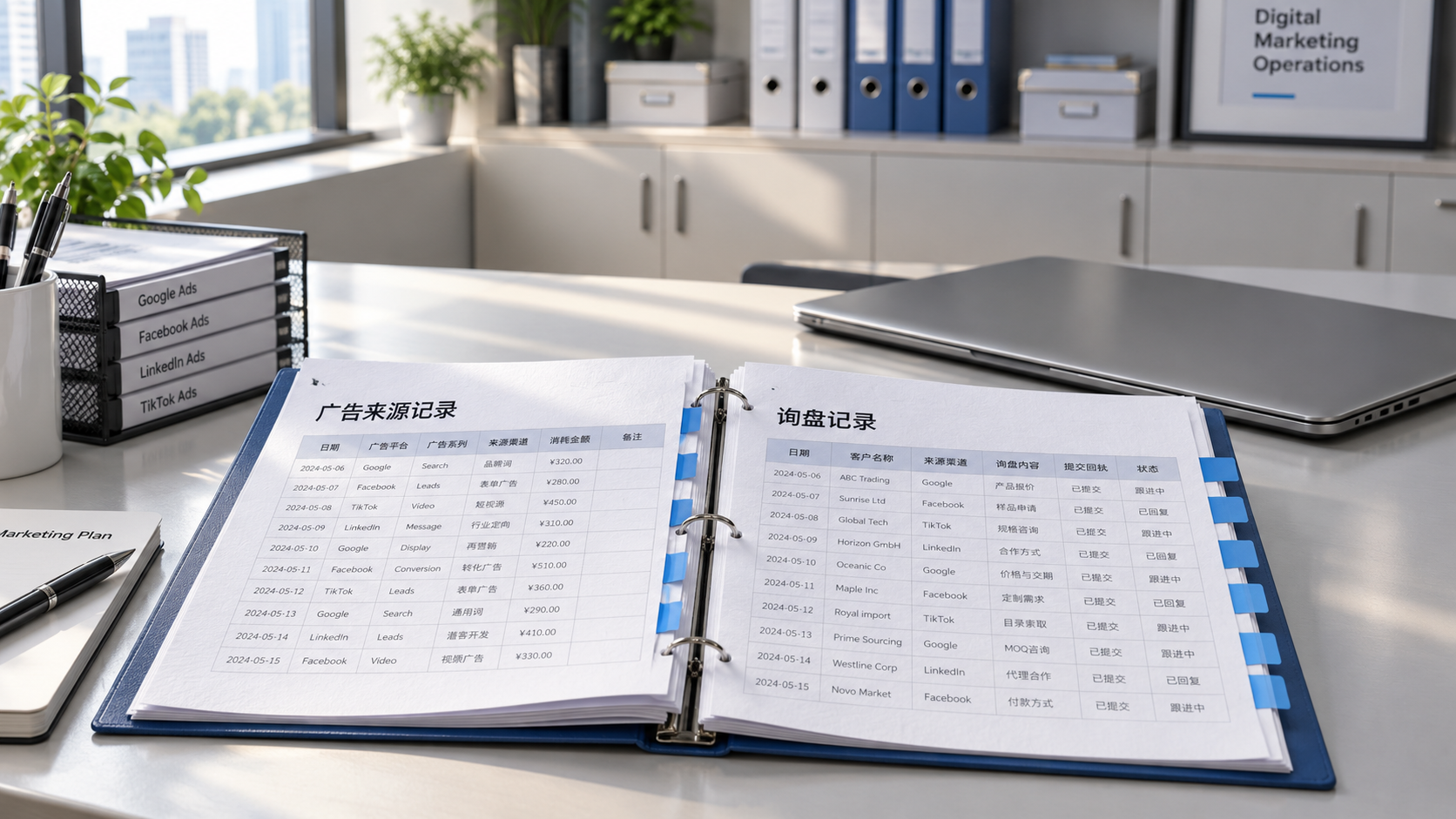
 How Can a Website Analytics Platform Track the Ad Sources of Inquiries?
Related Products
 Yiyingbao SaaS Intelligent Website Building and Marketing SystemYiyingbao SaaS Intelligent Website Building and Marketing System, AI-powered no-code website building, rapid creation of multilingual B2B international websites in 10 minutes, global server acceleration, AI-powered SEO optimization, helping businesses connect efficiently with global markets. The perfect integration of technology and operation makes building an international trade website remarkably simple
 AI+SEM Intelligent Advertising Marketing SystemAI+SEM drives intelligent ad creation, empowering full-funnel precision advertising marketing. The system automatically generates weekly/monthly reports, AI recommends keywords and target countries, monitors core metrics in real-time with intelligent alerts, and enables one-click high-conversion ad solutions to help quickly acquire customers and improve ROI.
 AI+SEO Dual-Engine System Optimization ServicesYiyingbao’s AI+SEO dual-engine optimization system helps foreign trade enterprises acquire high-quality organic traffic through AI-powered keyword research, content generation, and comprehensive technical optimization, significantly improving search rankings and conversion rates.
 AI+SNS Social Media Marketing SystemYingbao AI+SNS Social Media Marketing System - Precision social capture for the social media era. Supports one-click content synchronization across major platforms like Facebook and LinkedIn. AI intelligently rewrites posts for enhanced relevance. 24/7 AI customer service and user profiling analysis empower businesses to efficiently expand into global markets.
 AI+SEO营销解决方案易营宝AI+SEO营销解决方案,通过AI批量写作、智能生成TDK、精准关键词扩词等功能,全面优化网站SEO效果,提升流量与转化率。助力企业构建高效智能网站新生态。
 AI+SEM Advertising Marketing SolutionsAI+SEM Advertising Marketing Solution leverages AI technology to deeply empower SEM ad campaigns. It automatically generates weekly/monthly reports using AI, presenting account data across multiple dimensions for comprehensive insights into campaign performance and trends. The system precisely recommends keywords and target countries, intelligently generates high-conversion ad copy, and enables one-click activation of efficient campaign plans to help businesses rapidly acquire customers. Simultaneously, it monitors core metrics in real time, intelligently identifies abnormal fluctuations, and issues timely alerts to ensure stable, high-return advertising results.
 Domain Name ServicesEasyWin provides professional domain name services, including intelligent queries, one-stop registration, brand protection, and full lifecycle management, helping businesses build a digital brand image.
 EasyOperate B2C Cross-Border E-Commerce Platform & Independent WebsiteEasyStore B2C Cross-border E-commerce Independent Store is an intelligent website building and cross-border e-commerce integrated solution independently developed by EasyStore Information Technology (Beijing) Co., Ltd. The system is specially designed for small and medium-sized as well as large export enterprises, integrating 'website building, operation, marketing, advertising, and conversion' into one, helping enterprises quickly establish cross-border e-commerce independent stores to achieve brand globalization and global sales growth.
The platform supports multiple languages, multiple currencies, and multi-channel marketing, with built-in AI intelligent translation and SEO optimization systems, suitable for mainstream markets such as Southeast Asia, Europe and America, Latin America, and the Middle East, assisting Chinese manufacturing enterprises in efficiently deploying international e-commerce strategies. SSL证书易营宝提供专业SSL安全证书服务,包括单域名和泛域名证书,确保网站数据传输加密、身份验证和完整性保护,助力企业建立安全可信的在线业务环境。









