









- AI Products Drive Hong Kong Exports Up 64.9% in September, Fastest Growth in Over 40 YearsNov 17, 2026View details
- National Bureau of Statistics: Foreign trade grew rapidly in October, providing stable support for global tradeNov 17, 2026View details
- The U.S. has ended the $800 de minimis exemption for non-postal shipments; express courier packages must be formally declared.Nov 16, 2026View details
- ASEAN Signs Digital Economy Framework Agreement, Moving Toward Harmonized Cross-Border E-Commerce RulesNov 15, 2026View details
- Shenzhen Becomes the First City in Mainland China to Exceed RMB 5 Trillion in Foreign TradeNov 15, 2026View details
- Fujian Announces the First Batch of Provincial-Level Cross-Border E-Commerce Industrial Parks and Key Brands for CultivationNov 14, 2026View details
How should a B2B website targeting the French market plan its product pages and inquiry path?
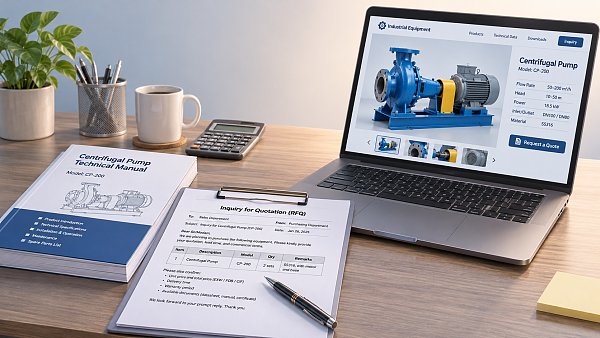
After visiting a product page, French buyers typically need to determine whether the equipment meets their project specifications, whether the supplier can provide the required documentation, and how to request a quote. If the page offers only a general overview and a “Contact us” button, engineering teams may leave with unanswered questions, while the internal sales team may struggle to determine whether an inquiry is worth following up.
When planning a B2B website for the French market, first organize French product information around purchasing decisions, then provide clear options for requesting a quote, getting technical advice, and requesting documentation. The form should also give the sales team the context of the product. For B2B website creation, the priority is not to translate the Chinese page line by line, but to enable French visitors to carry out an initial assessment independently and submit a clear request with minimal effort.
First, determine which questions the product page needs to answer
Project managers can start with inquiry records already held by the sales and technical teams, grouping recurring questions into three categories: whether the product is suitable, whether the project can be implemented, and how the purchasing process can move forward. Information in the first two categories is best presented on the page to help visitors assess suitability, while questions about quantity, lead time, and customization scope can be collected through a form.
The first screen of the product page should help visitors quickly identify the product name, its main purpose, and its scope of application, and provide a clear inquiry option. Place specific models, key specifications, available configurations, and limitations in sections further down the page so engineering staff can check them. Avoid relying on hard-to-verify adjectives such as “efficient” or “reliable”; any performance claims with specific conditions should also state the testing or usage conditions.
If information has not yet been confirmed, there is no need to speculate just to fill the page. For example, if lead times cannot yet be disclosed, explain that they must be confirmed based on the model and order quantity. For certification or conformity requirements, show only information that applies to the actual product and can be verified, and specify the applicable models or documentation.
Align French content with purchasing tasks
Product names, specification tables, buttons, form prompts, and submission confirmations should all use consistent French terminology. A Chinese-French glossary of technical terms can be prepared and checked by people familiar with the product, particularly to verify model numbers, units, and technical meanings. Check especially that machine translation has not altered power ratings, dimensions, operating conditions, or negation. Use units and date formats familiar to French visitors consistently to avoid misunderstandings between buyers and suppliers.
Do not put every model on a single, hard-to-search page. If models differ in only a few specifications, a comparison table can help visitors assess them; if their applications, configurations, or technical documentation differ substantially, it is better to create separate product pages and link them through a product series page. Each page should have a clear product name and its own description, so visitors arriving from search results do not find content that differs from what they expected.
For downloadable product manuals, drawings, or test documentation, specify the language, file type, and applicable models. Public documentation can be downloaded directly; for documents that require confirmation of intended use, explain how to obtain them rather than requiring all materials to go through the same lengthy form. For environmental protection equipment or related projects, visitors who also need investment research materials can be offered investment research on environmental protection funds in the energy conservation and environmental protection industry as supplementary reading, without presenting it as evidence of equipment performance or certification.
Give visitors at different stages a suitable way to proceed
Visitors with clearly defined purchasing requirements need a “Request a quote” option; those still evaluating solutions may prefer to request technical advice or documentation. Button copy should explain what happens when clicked, rather than using a broad phrase such as “Learn more.” Place the main button on the first screen and near key specifications. For longer pages, provide another option at the bottom so visitors do not have to scroll back to the top.
The quote request should retain information about the current product, model, or configuration wherever possible. When visitors go to a form, you can prefill the product name or pass the page identifier with the submission so the sales team knows where the inquiry originated; users should still be able to edit prefilled content. If a product series includes multiple models, offer a model selector or an “Undecided” option instead of forcing visitors to enter a guess.
Technical consultation and quote request forms do not necessarily need to be separate. For a small product range, one form with an “Inquiry type” field may be sufficient; when the product line is complex or the two types of inquiry are handled by different teams, separate options can make routing easier. In either case, tell visitors what will happen after submission—for example, that the relevant team will review their request—and specify how they will receive a response. Do not promise response times that cannot be guaranteed.
Collect only enough information to follow up
An initial inquiry requires a contact name, work email address, description of the request, and any essential product information. Company name, order quantity, project location, or expected purchase date can be included as needed, but should not all be mandatory. Visitors comparing solutions may not know the exact quantity yet; allowing them to enter a range or select “To be determined” is more useful than making them enter a meaningless number.
Field prompts should help the sales team obtain actionable information. For an equipment inquiry, for example, prompt visitors to provide the material or process involved, target capacity, and site conditions rather than leaving an unexplained blank field. If attachments are accepted, state the permitted file types and size limits on the page; a failed upload should not erase information already entered.
When collecting personal information, clearly explain its purpose near the form and provide a way to view the privacy information. Whether a consent option is required, and how data retention and cross-border transfers are handled, should be verified against actual data flows and applicable requirements. Do not blur marketing subscriptions into the inquiry submission process.
Walk through the inquiry process before launch
- Check entry points to the product page: Open the page from both the product list and search, and confirm that the French content, model, specifications, and inquiry button all correspond to the same product. Make sure the page is also readable and usable on mobile devices.
- Test submissions for different needs: Test both a clearly specified model and a case where the visitor has not yet selected one. Check that required-field prompts, error messages, attachment handling, and post-submission feedback are clear.
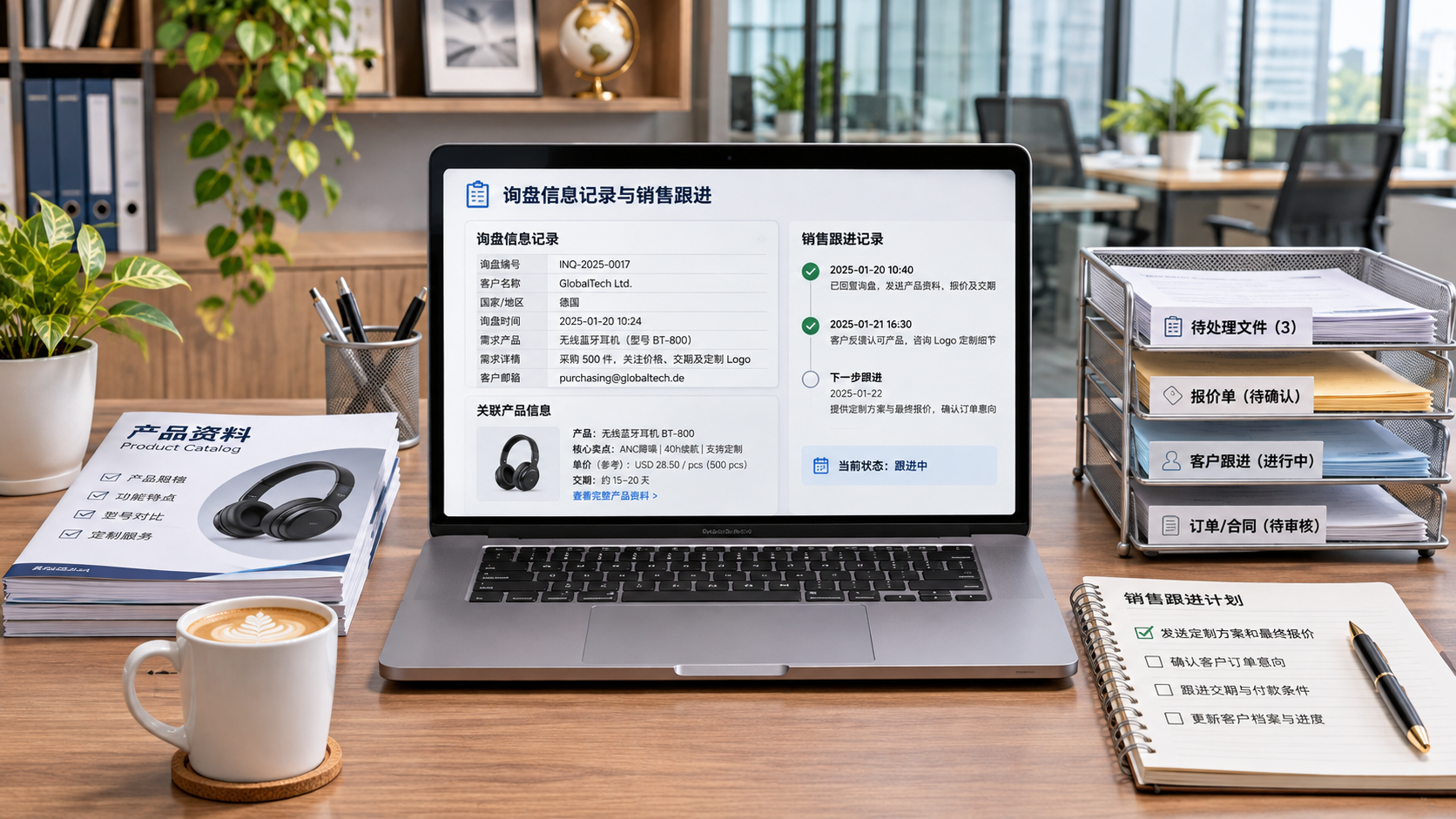
- Verify the information received by sales: Confirm that inquiries include the product source, inquiry type, and contact details, and can enter the follow-up workflow for the team responsible for that product. Even a successfully submitted form can result in a missed opportunity if no one is responsible for it.
- Check how results are measured: Track button clicks, form starts, and successful submissions separately to avoid treating clicks as qualified inquiries. Regularly review invalid contact details, mismatched requirements, missing fields, and other issues in light of sales team feedback.
If the product page receives visits but few people start filling in the form, first check whether the technical information is sufficient to support a decision and whether the inquiry option is easy to find. If many visitors start filling in the form but few submit it, investigate the number of fields, error messages, and mobile experience. If the inquiry background proves insufficient only after submission, prioritize improving field prompts or internal routing rather than simply adding more required fields.
Related Articles
 Fujian Releases White Paper on Talent Shortages in Cross-Border E-Commerce, Focusing on Industry Talent Challenges
 What Features Should an Inquiry Form on a B2B Export Website Support?
 How Should Customer Conversion Performance Be Measured on a B2B Standalone Website?

Related Products
 Yiyingbao SaaS Intelligent Website Building and Marketing SystemYiyingbao SaaS Intelligent Website Building and Marketing System, AI-powered no-code website building, rapid creation of multilingual B2B international websites in 10 minutes, global server acceleration, AI-powered SEO optimization, helping businesses connect efficiently with global markets. The perfect integration of technology and operation makes building an international trade website remarkably simple
 AI+SEM Intelligent Advertising Marketing SystemAI+SEM drives intelligent ad creation, empowering full-funnel precision advertising marketing. The system automatically generates weekly/monthly reports, AI recommends keywords and target countries, monitors core metrics in real-time with intelligent alerts, and enables one-click high-conversion ad solutions to help quickly acquire customers and improve ROI.
 AI+SEO Dual-Engine System Optimization ServicesYiyingbao’s AI+SEO dual-engine optimization system helps foreign trade enterprises acquire high-quality organic traffic through AI-powered keyword research, content generation, and comprehensive technical optimization, significantly improving search rankings and conversion rates.
 AI+SNS Social Media Marketing SystemYingbao AI+SNS Social Media Marketing System - Precision social capture for the social media era. Supports one-click content synchronization across major platforms like Facebook and LinkedIn. AI intelligently rewrites posts for enhanced relevance. 24/7 AI customer service and user profiling analysis empower businesses to efficiently expand into global markets.
 AI+SEO营销解决方案易营宝AI+SEO营销解决方案,通过AI批量写作、智能生成TDK、精准关键词扩词等功能,全面优化网站SEO效果,提升流量与转化率。助力企业构建高效智能网站新生态。
 AI+SEM Advertising Marketing SolutionsAI+SEM Advertising Marketing Solution leverages AI technology to deeply empower SEM ad campaigns. It automatically generates weekly/monthly reports using AI, presenting account data across multiple dimensions for comprehensive insights into campaign performance and trends. The system precisely recommends keywords and target countries, intelligently generates high-conversion ad copy, and enables one-click activation of efficient campaign plans to help businesses rapidly acquire customers. Simultaneously, it monitors core metrics in real time, intelligently identifies abnormal fluctuations, and issues timely alerts to ensure stable, high-return advertising results.
 Domain Name ServicesEasyWin provides professional domain name services, including intelligent queries, one-stop registration, brand protection, and full lifecycle management, helping businesses build a digital brand image.
 EasyOperate B2C Cross-Border E-Commerce Platform & Independent WebsiteEasyStore B2C Cross-border E-commerce Independent Store is an intelligent website building and cross-border e-commerce integrated solution independently developed by EasyStore Information Technology (Beijing) Co., Ltd. The system is specially designed for small and medium-sized as well as large export enterprises, integrating 'website building, operation, marketing, advertising, and conversion' into one, helping enterprises quickly establish cross-border e-commerce independent stores to achieve brand globalization and global sales growth.
The platform supports multiple languages, multiple currencies, and multi-channel marketing, with built-in AI intelligent translation and SEO optimization systems, suitable for mainstream markets such as Southeast Asia, Europe and America, Latin America, and the Middle East, assisting Chinese manufacturing enterprises in efficiently deploying international e-commerce strategies. SSL证书易营宝提供专业SSL安全证书服务,包括单域名和泛域名证书,确保网站数据传输加密、身份验证和完整性保护,助力企业建立安全可信的在线业务环境。









