









- Why the old AMP SEO 2020 practices no longer work and what has changed in current optimization prioritiesAug 02, 2026View details
- How to Choose Topics for an Industry News Section to Attract More Organic Search TrafficJul 29, 2026View details
- Digital Marketing Shenzhen Market Insights: Why Are Companies Expanding Overseas Looking for Growth Teams in Shenzhen?Jul 31, 2026View details
- Can Zhejiang foreign trade independent websites still be developed today? Look at changes in traffic and lead generationJul 28, 2026View details
- What New Signals Are Emerging in Enterprise Services SaaS Marketing ReportsJul 27, 2026View details
- What Does a Global Traffic Ecosystem Service Provider Do? What Are the Differences from a Single Advertising AgencyJul 16, 2026View details
EYB vs Template / Generation: Which one is better for long-term foreign trade customer acquisition?
I. Why Do Template Websites and Outsourced Websites Seem "Very Appealing" in the Foreign Trade Industry?
In the early stages of building a foreign trade website, template websites and outsourced websites often seem highly attractive:
Fast launch speed
Lower apparent upfront costs
No need for the company to invest time and effort
"Hand it over to others, more worry-free"
Especially for newly established foreign trade companies, such solutions seem to quickly resolve the issue of "having a website or not."
But the problem lies in:
The value of a foreign trade website is not reflected at the moment of going live, but in its ability to continuously attract customers over three to five years.
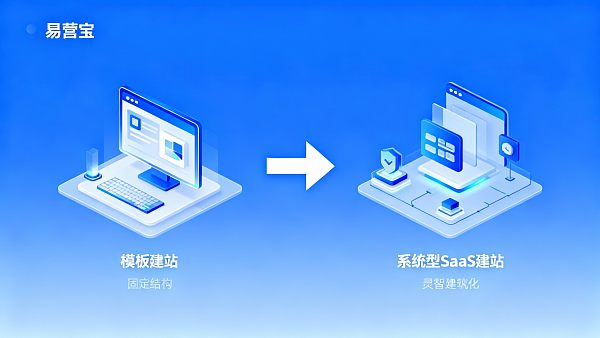
II. First, Distinguish Three Concepts: Template Websites, Outsourced Websites, and System-Based Websites
Before discussing comparisons, it is essential to clarify the fundamental differences between these three models:
Template Websites
Quickly built based on fixed templates
Highly similar page structures
Limited functionality and scalability
Outsourced Websites
Service providers "help you set up a site"
After delivery, the company uses it independently or pays for ongoing maintenance
Quality heavily depends on the service provider's expertise
System-Based SaaS Websites
Provides a complete, sustainable system
Companies manage long-term operations themselves
Continuous evolution of features, content, and SEO
These three addressentirely different levels of problems.
Before discussing template or outsourced websites, understandingwhat Eyingbao is and its product form helps in evaluating the long-term value of different solutions.
III. Core Issues of Template Websites in Long-Term Foreign Trade Customer Acquisition
1. Structural Homogeneity, Weak Search Competitiveness
The biggest hidden issue with template websites is:
Many websites are highly similar in structure, page layout, and content presentation.
In the eyes of search engines and AI search systems, such websites struggle to establish independent, clear thematic authority, limiting long-term ranking potential.
Template websites may seem convenient initially, but as business grows, their functional scalability becomes noticeably limited, a gap particularly evident inEyingbao's comprehensive features.
2. Insufficient Content Expansion Capabilities
Foreign trade customer acquisition heavily relies on content accumulation, but template websites often:
Have fixed column structures
Struggle to expand content hierarchies
Hinder building content matrices and themes
As business develops, template sites easily "get stuck in their initial structure."
3. Limited Post-Launch Maintenance and Upgrades
When companies need to add new languages, adjust structures, or enhance SEO, template websites often require:
Template replacements
Complete rebuilds
Or additional custom fees
Initial cost savings often multiply later.
IV. The "Hidden Costs" of Outsourced Websites Are Often Severely Underestimated
Outsourced websites appear to solve the "I don't understand website building" issue, but in long-term foreign trade customer acquisition, common hidden problems include:
1. Long-Term Dependence on Service Providers
Content updates require their involvement
Structural adjustments incur fees
SEO optimization is constrained by individuals
Once services are interrupted, website operations face massive uncertainty.
Many companies choosing outsourced websites find the real issue isn't launch speed but the lack of autonomy in laterforeign trade independent site operations.
2. Misalignment Between Website Goals and Customer Acquisition Goals
Many outsourced websites measure delivery by:
"Whether pages are completed, not whether the site can continuously acquire customers."
Completion means launch; subsequent growth isn't part of the service scope.
3. Difficulty in Sustaining SEO and Multilingual Optimization
Foreign trade SEO and multilingual operations require long-term iteration, but outsourced websites often lack systematic support, causing sites to gradually "die" post-launch.
V. What Kind of Website Do Long-Term Foreign Trade Customer Acquisition Efforts Truly Need?
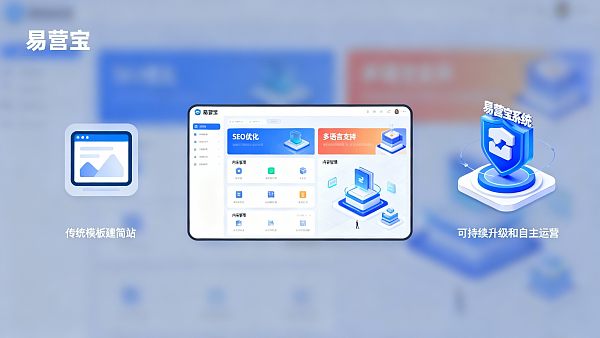
Based on the long-term performance of numerous foreign trade websites, truly effective customer acquisition sites typically have these features:
Sustainable content production capabilities
Clear SEO architecture
Expandable multilingual system
Company-managed operations
No reliance on single providers or individuals
These capabilities are rarely strengths of template or outsourced models.
VI. Advantages of System-Based SaaS Websites in Long-Term Customer Acquisition
Represented byEyingbao, system-based SaaS websites demonstrate core advantages in "long-term controllability":
Compared to other options, system platforms structurally supportAI + SEO dual-engine websites, better suited for long-term organic traffic acquisition.
Website structures are continuously maintained and optimized by the system
Native support for content, SEO, and multilingual capabilities
Companies can independently operate and adjust
Platform continuous upgrades prevent technological obsolescence
This model's core value isn't "helping you build a site" butenabling you to own a sustainable, scalable customer acquisition system.
VII. Rational Selection Recommendations for Foreign Trade Companies at Different Stages
Startup Phase
Limited budget
Market validation goals
→ Choose lightweight solutions but ensure future migratability and scalability.
Growth Phase
Begin emphasizing SEO and content
Plan to expand into multiple markets
→ More suitable for system-based websites to avoid redundant work.
Stable Expansion Phase
Multilingual, multi-country deployment
Pursue long-term traffic and branding
→ System-based SaaS websites show the most obvious advantages.
VIII. The Difference Between Short-Term "Cost Savings" and Long-Term "Profitability"
The biggest issue with template and outsourced websites is:
They often solve "short-term launch costs" rather than "long-term customer acquisition capabilities."
The true value of foreign trade independent sites lies inthree, five, or even more years of accumulated organic traffic and inquiries.
IX. Conclusion: Which Approach Is More Suitable for Long-Term Foreign Trade Customer Acquisition?
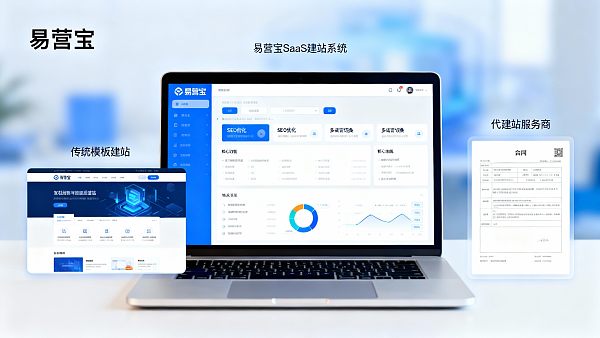
If the goal is:
Quickly launching a showcase site
No long-term operation plans
Template or outsourced websites may suffice.
But if the goal is:
Continuously acquiring overseas inquiries
Building long-term digital assets
Reducing reliance on outsourcing and individuals
Then,system-based SaaS intelligent website solutions offer more long-term certainty.
If you're evaluating the risks and returns of different website models, you can further explore the concentrated analysis inEyingbao's FAQs.
Long-Term Customer Acquisition Related Content
What Is Eyingbao?: Understanding the Long-Term Value of System-Based Websites
Template vs. Outsourced Website FAQs: Maintenance, SEO, and Cost-Related Answers
FAQ | Template Websites / Outsourced Websites Comparison Common Questions
Q1: Are template websites suitable for foreign trade companies?
Suitable for short-term showcases but have obvious limitations in long-term SEO and customer acquisition.
Q2: Are outsourced websites easy to maintain later?
Usually not ideal; content and structural adjustments often depend on service providers, making long-term costs uncontrollable.
Q3: Do SaaS websites have many limitations?
SaaS websites emphasize completeness for mainstream foreign trade scenarios, not unlimited customization, suiting most companies.
Q4: Which website approach is more cost-effective long-term?
From a three-to-five-year cycle, system-based SaaS websites offer more controllable comprehensive costs.
Q5: Can you migrate from template or outsourced websites to SaaS?
Possible, but migration costs exist; thus, choosing solutions suitable for long-term development early is advised.
Related Articles
 GSA Introduces a Green Logistics Label, Requiring Carbon Footprint Display on Independent Website Order Pages
 SASO Pilot: AI Ratings for Standalone Websites Set the Direction for Procurement Access
 Should Foreign Trade Companies Prioritize Content or Inquiries When Building a Product Showcase Website?


Related Products
 Yiyingbao SaaS Intelligent Website Building and Marketing SystemYiyingbao SaaS Intelligent Website Building and Marketing System, AI-powered no-code website building, rapid creation of multilingual B2B international websites in 10 minutes, global server acceleration, AI-powered SEO optimization, helping businesses connect efficiently with global markets. The perfect integration of technology and operation makes building an international trade website remarkably simple
 AI+SEM Intelligent Advertising Marketing SystemAI+SEM drives intelligent ad creation, empowering full-funnel precision advertising marketing. The system automatically generates weekly/monthly reports, AI recommends keywords and target countries, monitors core metrics in real-time with intelligent alerts, and enables one-click high-conversion ad solutions to help quickly acquire customers and improve ROI.
 AI+SEO Dual-Engine System Optimization ServicesYiyingbao’s AI+SEO dual-engine optimization system helps foreign trade enterprises acquire high-quality organic traffic through AI-powered keyword research, content generation, and comprehensive technical optimization, significantly improving search rankings and conversion rates.
 AI+SNS Social Media Marketing SystemYingbao AI+SNS Social Media Marketing System - Precision social capture for the social media era. Supports one-click content synchronization across major platforms like Facebook and LinkedIn. AI intelligently rewrites posts for enhanced relevance. 24/7 AI customer service and user profiling analysis empower businesses to efficiently expand into global markets.
 AI+SEO营销解决方案易营宝AI+SEO营销解决方案,通过AI批量写作、智能生成TDK、精准关键词扩词等功能,全面优化网站SEO效果,提升流量与转化率。助力企业构建高效智能网站新生态。
 AI+SEM Advertising Marketing SolutionsAI+SEM Advertising Marketing Solution leverages AI technology to deeply empower SEM ad campaigns. It automatically generates weekly/monthly reports using AI, presenting account data across multiple dimensions for comprehensive insights into campaign performance and trends. The system precisely recommends keywords and target countries, intelligently generates high-conversion ad copy, and enables one-click activation of efficient campaign plans to help businesses rapidly acquire customers. Simultaneously, it monitors core metrics in real time, intelligently identifies abnormal fluctuations, and issues timely alerts to ensure stable, high-return advertising results.
 Domain Name ServicesEasyWin provides professional domain name services, including intelligent queries, one-stop registration, brand protection, and full lifecycle management, helping businesses build a digital brand image.
 EasyOperate B2C Cross-Border E-Commerce Platform & Independent WebsiteEasyStore B2C Cross-border E-commerce Independent Store is an intelligent website building and cross-border e-commerce integrated solution independently developed by EasyStore Information Technology (Beijing) Co., Ltd. The system is specially designed for small and medium-sized as well as large export enterprises, integrating 'website building, operation, marketing, advertising, and conversion' into one, helping enterprises quickly establish cross-border e-commerce independent stores to achieve brand globalization and global sales growth.
The platform supports multiple languages, multiple currencies, and multi-channel marketing, with built-in AI intelligent translation and SEO optimization systems, suitable for mainstream markets such as Southeast Asia, Europe and America, Latin America, and the Middle East, assisting Chinese manufacturing enterprises in efficiently deploying international e-commerce strategies. SSL证书易营宝提供专业SSL安全证书服务,包括单域名和泛域名证书,确保网站数据传输加密、身份验证和完整性保护,助力企业建立安全可信的在线业务环境。









