









- Levanta’s Inaugural China Summit Held in Shenzhen, Focusing on AI and Cross-Border Brand GrowthOct 20, 2026View details
- The October Edition of the 2026 GGE Shenzhen Cross-Border E-Commerce Expo OpensOct 20, 2026View details
- Dongguan’s foreign trade imports and exports reached RMB 1.29 trillion in the first three quarters, a record high for the same periodOct 20, 2026View details
- Liaoning Holds Province-Wide Meeting to Advance Cross-Border E-Commerce, Emphasizing the Need to Explore Differentiated Development PathsOct 20, 2026View details
- Advanced Manufacturing Seizes Global Opportunities as Guangdong’s Q3 Foreign Trade Surpasses RMB 3 Trillion for the First TimeOct 20, 2026View details
- Can the average annual growth rate reflect real opportunities in overseas markets?Oct 07, 2026View details
How to Validate Initial Customer Demand in the U.S. B2B Export Market?
How Can B2B Foreign Trade Companies Validate Initial Customer Demand in the U.S. Market? Before Building a Website or Running Ads, First Confirm Who Will Pay for Your Solution
When entering the U.S. market, many foreign trade companies first think of creating an English website, launching Google Ads, or finding local agents. However, before initial customer demand has been clearly validated, these actions can easily become "spending the budget on things that look professional." The website goes live and ads generate clicks, yet the inbox contains only scattered inquiries, and it may even be difficult to determine whether the people making inquiries are target customers.
For B2B foreign trade in the U.S. market, validating demand does not mean proving that "someone in the United States needs this type of product." Rather, it means confirming a more specific question: which type of U.S. buyer, in which purchasing scenario, would be willing to start a conversation because of your products, lead times, compliance capabilities, or service approach, and accept you as a new overseas supplier? The more specific this question is, the more controllable the cost of acquiring initial customers will be.
The U.S. Market Does Not Lack Suppliers; It Lacks Reasons Worth Switching For
U.S. buyers are generally not opposed to Chinese supply chains, but they rarely change their existing channels solely because of "direct factory supply and price advantages." Especially for industrial products, components, commercial equipment, packaging materials, and similar categories, what buyers truly worry about is often not unit price, but delivery reliability, specification consistency, after-sales responsiveness, document completeness, and who will be responsible when issues arise.
Therefore, when validating demand, avoid a common misconception: treating search volume or the number of competitors directly as market opportunity. High search volume for a keyword may indicate strong demand, but it may also mean that the category is already occupied by established brands, distribution networks, and marketplace sellers. For new entrants, it is more meaningful to identify friction points in the purchasing chain that have not yet been adequately resolved.
For example, do customers often need small-batch customization but struggle to find suppliers willing to cooperate? Are current suppliers' lead times unstable? Do they need factories that can support private labeling, packaging adjustments, expedited samples, or localized product materials? These questions may not be answered in industry reports, yet they directly determine the likelihood of securing initial orders.
Break Down "U.S. Customers" Before Testing the Entire Market
There are significant differences within the U.S. market. Importers, regional distributors, brand owners, engineering contractors, chain retail purchasing departments, and maintenance service providers do not evaluate suppliers by the same standards. If one homepage, one product catalog, and the phrase "high quality at competitive price" are used to address everyone, the feedback received usually has little decision-making value.
A more practical approach is to first select a test unit that can be clearly described. For example, rather than broadly targeting the "U.S. construction materials market," focus on "regional distributors requiring customized dimensions and facing relatively tight purchasing cycles"; rather than simply looking for "U.S. machinery customers," examine "maintenance channels that need replacement parts and have clear procedures for drawing confirmation and small-batch trial orders." The clearer the target, the less likely subsequent interviews, pages, ad copy, and sales follow-up will go off track.
At this stage, it is advisable to clarify four things internally: the customer's current purchasing method, the triggering events that would make them willing to change suppliers, the risks they are most concerned about in a first collaboration, and the materials you can provide to validate your commitments. These materials are not limited to product photos; they may also include specification sheets, test or inspection documents, packaging plans, production process descriptions, lead-time logic, after-sales contacts, and sample arrangements. Where specific market access, certification, or labeling requirements are involved, verification must be conducted by product category and state of sale; experience from other markets cannot be applied directly.
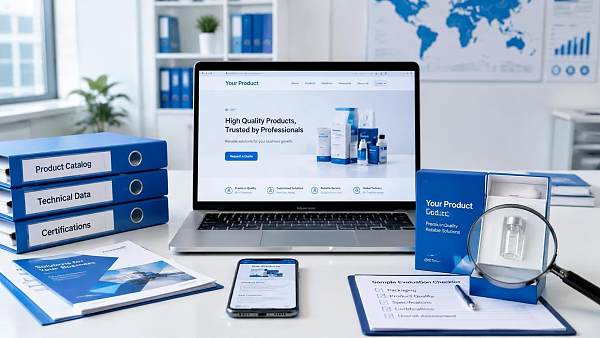
The Focus of Interviews Is Not Asking "Do You Have Demand?"
U.S. buyers rarely disclose their complete needs directly to unfamiliar suppliers, let alone provide real purchasing plans because of a single prospecting email. Instead of asking, "Are you interested in our products?", it is better to ask about past purchasing behavior: What caused the last supplier change? Where do they usually look for alternative factories? Who else needs to confirm after a sample is approved? What are the most common obstacles with a first order?
The value of such questions is that they can distinguish between polite replies and genuine opportunities. If the other party only asks for the lowest quotation but is unwilling to provide application scenarios, purchasing schedules, or key specifications, they are usually still at the price-comparison stage. If they are willing to discuss shortcomings of existing products, lead-time windows, internal approvals, or replacement conditions, then it is worthwhile to move into deeper solution discussions.
Interview subjects should not be limited to potential buyers. Local logistics service providers, industry consultants, upstream and downstream partners with existing North American customers, and technical personnel met at trade shows can all help companies refine their judgment. The key is not how much "market feedback" is collected, but finding specific terms and obstacles that repeatedly appear: for example, customers repeatedly asking about a particular document, worrying about a certain delivery method, or consistently requiring certain dimensions and packaging. This recurring information may form testable market hypotheses.
Validate Through Lightweight Testing Instead of One-Time Heavy Investment
The purpose of initial customer validation is to obtain clear signals at a relatively low cost, not to immediately establish a complete overseas marketing system. An English landing page focused on a single application scenario is often better suited for testing than a corporate website with extensive and complex content. The page should answer the questions buyers care about most: what problem the product solves, what projects or channels it suits, what specifications and support can be provided, and how to obtain samples or quotations as the next step.
Advertising tests should also align keywords with the commitments made on the page. People searching for terms such as "manufacturer," "custom," "replacement," and "bulk supplier" have different purchasing intentions and concerns. Do not focus only on the number of forms submitted; at a minimum, a valid lead should allow sales staff to assess the other party's identity, product application, estimated purchase volume, timing, and key requirements. Clicks without this information may be suitable for brand exposure, but they cannot prove that initial customer demand has been established.
In addition to Google search ads, targeted emails, LinkedIn outreach, industry community content, and remarketing pages can also serve a testing role. The difference is that search channels are more likely to capture people who are actively looking for solutions, while social channels are more suitable for validating whether people in certain roles will respond to a particular pain point. No channel is absolutely better or worse; the key is to validate only one core hypothesis in each test round, otherwise the data cannot be interpreted.
Review "Progress Signals," Not Just Traffic
Many projects remain at the stage of "visits but no orders." The issue is often not insufficient traffic, but the absence of a tiered review process. It is advisable to divide feedback into at least four categories: irrelevant visits, information-gathering inquiries, leads that can undergo further qualification, and opportunities that have entered the sample or quotation process. Each level reflects completely different issues.
Progress signals truly worth paying attention to include customers proactively providing additional specifications, asking about samples, requesting documents, explaining their purchasing process, or being willing to arrange another technical and commercial discussion. These do not equal orders, but they indicate that the company's positioning has at least touched a real working scenario. Conversely, if repeated testing still produces only general inquiries, the priority should be to adjust the customer segment and value proposition rather than simply increase the budget.
Websites and Marketing Systems Should Serve the Validation Loop
Initial customer validation is not a task that can be completed by the sales team alone. The website is responsible for clearly communicating capabilities and receiving traffic; advertising and social media are responsible for bringing in testable audiences; CRM or lead management records sources and follow-up results; and the sales team feeds frontline feedback back to the website and advertising channels. Without any one of these links, companies can easily misinterpret "no customers" as "no market demand."
Yiyingbao Information Technology (Beijing) Co., Ltd. has long provided integrated services including intelligent website building, search optimization, advertising placement, and overseas social media marketing. Its platform places multilingual websites, advertising landing pages, SEO, and AI search visibility optimization within the same customer acquisition chain. For companies testing the U.S. market, the practical value of such capabilities does not lie in deploying all channels at once, but in enabling every test to be recorded, compared, and reviewed: where customers come from, what content makes them stay, and why they ultimately move forward or drop off.
Validating initial customer demand in the United States ultimately comes down to a simple judgment: whether there is a sufficiently defined group of buyers willing to take the step toward samples, quotations, or technical discussions because of your differentiated capabilities. Once this answer is confirmed, expanding website content, advertising budgets, and channel deployment will have a foundation for growth. If the answer remains unclear, the most worthwhile investment is not more exposure, but a deeper understanding closer to the purchasing environment.
Related Articles



Related Products
 Yiyingbao SaaS Intelligent Website Building and Marketing SystemYiyingbao SaaS Intelligent Website Building and Marketing System, AI-powered no-code website building, rapid creation of multilingual B2B international websites in 10 minutes, global server acceleration, AI-powered SEO optimization, helping businesses connect efficiently with global markets. The perfect integration of technology and operation makes building an international trade website remarkably simple
 AI+SEM Intelligent Advertising Marketing SystemAI+SEM drives intelligent ad creation, empowering full-funnel precision advertising marketing. The system automatically generates weekly/monthly reports, AI recommends keywords and target countries, monitors core metrics in real-time with intelligent alerts, and enables one-click high-conversion ad solutions to help quickly acquire customers and improve ROI.
 AI+SEO Dual-Engine System Optimization ServicesYiyingbao’s AI+SEO dual-engine optimization system helps foreign trade enterprises acquire high-quality organic traffic through AI-powered keyword research, content generation, and comprehensive technical optimization, significantly improving search rankings and conversion rates.
 AI+SNS Social Media Marketing SystemYingbao AI+SNS Social Media Marketing System - Precision social capture for the social media era. Supports one-click content synchronization across major platforms like Facebook and LinkedIn. AI intelligently rewrites posts for enhanced relevance. 24/7 AI customer service and user profiling analysis empower businesses to efficiently expand into global markets.
 AI+SEO营销解决方案易营宝AI+SEO营销解决方案,通过AI批量写作、智能生成TDK、精准关键词扩词等功能,全面优化网站SEO效果,提升流量与转化率。助力企业构建高效智能网站新生态。
 AI+SEM Advertising Marketing SolutionsAI+SEM Advertising Marketing Solution leverages AI technology to deeply empower SEM ad campaigns. It automatically generates weekly/monthly reports using AI, presenting account data across multiple dimensions for comprehensive insights into campaign performance and trends. The system precisely recommends keywords and target countries, intelligently generates high-conversion ad copy, and enables one-click activation of efficient campaign plans to help businesses rapidly acquire customers. Simultaneously, it monitors core metrics in real time, intelligently identifies abnormal fluctuations, and issues timely alerts to ensure stable, high-return advertising results.
 Domain Name ServicesEasyWin provides professional domain name services, including intelligent queries, one-stop registration, brand protection, and full lifecycle management, helping businesses build a digital brand image.
 EasyOperate B2C Cross-Border E-Commerce Platform & Independent WebsiteEasyStore B2C Cross-border E-commerce Independent Store is an intelligent website building and cross-border e-commerce integrated solution independently developed by EasyStore Information Technology (Beijing) Co., Ltd. The system is specially designed for small and medium-sized as well as large export enterprises, integrating 'website building, operation, marketing, advertising, and conversion' into one, helping enterprises quickly establish cross-border e-commerce independent stores to achieve brand globalization and global sales growth.
The platform supports multiple languages, multiple currencies, and multi-channel marketing, with built-in AI intelligent translation and SEO optimization systems, suitable for mainstream markets such as Southeast Asia, Europe and America, Latin America, and the Middle East, assisting Chinese manufacturing enterprises in efficiently deploying international e-commerce strategies. SSL证书易营宝提供专业SSL安全证书服务,包括单域名和泛域名证书,确保网站数据传输加密、身份验证和完整性保护,助力企业建立安全可信的在线业务环境。









