









- What Are the Ranking Criteria for China's Top 100 SaaS Companies?Nov 28, 2026View details
- Eight Departments, Including the Ministry of Commerce, Issue the 15th Five-Year Plan for the Development of Trade in ServicesNov 27, 2026View details
- General Administration of Customs Issues New Rules on Import and Export Cosmetic Labeling, Effective December 1Nov 26, 2026View details
- U.S. to Announce Section 301 Investigation Findings on 16 Economies, Potentially Proposing New TariffsNov 26, 2026View details
- Hapag-Lloyd’s $4.2 billion acquisition of ZIM faces a closing delay; ZIM reports third-quarter net profit of $830 millionNov 24, 2026View details
- SCFI falls for a third straight week to 3,503.78 points, with blank sailings on trans-Pacific routes rising to 10Nov 24, 2026View details
Can an EV SSL certificate be used for wildcard domains?

When a business plans to deploy HTTPS for its website, online store, and sites in multiple regions, a question often comes up during technical evaluation: Can it obtain a single EV SSL server certificate that covers all subdomains with a wildcard? If you are searching for “ev ssl サーバ 証明 書,” the answer is no. Publicly trusted EV TLS certificates cannot contain wildcard domains. However, this does not mean that EV certificates cannot be used for scenarios involving multiple subdomains.
Why can’t an EV SSL certificate contain a wildcard?
EV stands for Extended Validation. Before issuing a certificate, the certificate authority (CA) must verify not only that the applicant controls the domain but also the organization’s identity and other information in accordance with applicable requirements. EV indicates the level of identity verification performed at the time of issuance; it is not a TLS protocol that provides “stronger encryption” than other certificates.
Under the CA/Browser Forum requirements for publicly trusted certificates, EV certificates must not use wildcard names. Therefore, a publicly trusted EV certificate cannot include *.example.com as a domain name. Even if a business has completed organization identity verification, it cannot bypass this restriction by paying an additional fee or changing its server configuration.
Here, “cannot” means that a wildcard name cannot be included in the certificate’s list of names; it does not mean that an EV certificate can protect only one domain. If a CA offers a multi-domain EV product, it can include multiple explicitly specified hostnames in the same certificate’s SAN (Subject Alternative Name) extension, subject to verification and issuance requirements.
How does coverage differ between multi-domain EV and wildcard certificates?
Suppose a business uses www.example.com for its website, shop.example.com for its online store, and jp.example.com to publish Japanese-language content. A multi-domain EV certificate can cover these explicitly listed names. When adding de.example.com, the certificate must be updated or reissued according to the CA’s process.
Another option is a DV or OV certificate that supports wildcards. *.example.com can typically match www.example.com and shop.example.com, but it does not match the bare domain example.com or a deeper-level name such as a.b.example.com. If the bare domain needs to be covered, confirm whether it is listed as a separate name in the certificate.

Both options require proper TLS configuration, private key protection, and timely renewal. The main benefit of a wildcard is greater flexibility in managing names, not the ability to overlook certificate deployment or access controls.
Technical selection: Inventory your domains before deciding on the validation level
When reviewing a solution, it is advisable to treat “Do we need EV?” and “Do we need a wildcard?” as two separate questions. The former depends on the business’s identity verification, compliance, or internal procurement requirements; the latter depends on the domain structure, launch frequency, and operational practices. If EV is explicitly required, list all hostnames that need coverage and confirm the CA’s SAN limits, the process for adding names, and the renewal arrangements.
If a business frequently creates subdomains for marketing campaigns, different countries, or product lines, a wildcard certificate may be easier to manage. However, the scope of private key sharing should also be assessed: deploying the same certificate across multiple nodes means more environments need to securely store and use the corresponding private key. If the private key is compromised, the affected sites may need to have their certificates replaced together. Access should therefore be restricted, and plans for revocation and redeployment should be in place.
For multilingual websites targeting overseas markets, it is also important to distinguish between subdomains, subdirectories, and separate domains. For example, example.com/jp/ is a path and does not require a separate certificate; jp.example.com is a separate hostname and must be covered by a certificate; and example.jp is a different domain, which is not covered by *.example.com.
It is also worth confirming the website platform’s deployment approach in advance. For example, Yingyingbao’s overseas marketing website (Super Website) offers features such as multilingual management and global server acceleration for overseas websites. When evaluating solutions of this kind, confirm with the service provider how custom domains are connected, who applies for and renews the certificates, and what certificates need to be deployed on the CDN or origin server. Do not assume that a site provides EV or wildcard certificates by default simply because it supports multiple languages.
Common misconceptions that can affect your decision
Does an EV certificate always display the company name in the address bar?
Do not make this a prerequisite for purchasing. Modern mainstream browsers generally no longer highlight the company name for EV certificates in the address bar as they did in the past; the exact display depends on the browser and its version. Users may need to open the certificate details to view identity information. The value of EV should be assessed in light of identity verification requirements, not based on a particular, fixed address bar appearance.
Does a wildcard certificate automatically make all domains secure?
Matching the certificate name is only one part of the browser’s trust checks. DNS resolution, the certificate chain, validity period, TLS configuration, and whether website resources are loaded over HTTPS all affect the actual user experience. The certificate must also be deployed on the server or edge node that handles the corresponding connections; issuance by a CA alone does not mean deployment is complete.
If we already have an EV certificate, can we add a new site by changing only the server configuration?
If the new hostname is not included in the existing certificate’s SAN, changing the server or CDN configuration alone will not resolve the name mismatch. First, ask the CA to add the name and complete any required verification, then deploy the updated certificate. Before launch, check the bare domain, www, and each regional site separately to avoid certificate errors at some entry points.
In short: if you need EV, use a single-domain or multi-domain EV solution that lists the domains; if you need one wildcard to cover subdomains at the same level, consider a DV or OV wildcard solution that meets your requirements. Evaluating certificate requirements together with your domain list, deployment architecture, and ongoing operations is more reliable than comparing product names alone.
Related Articles
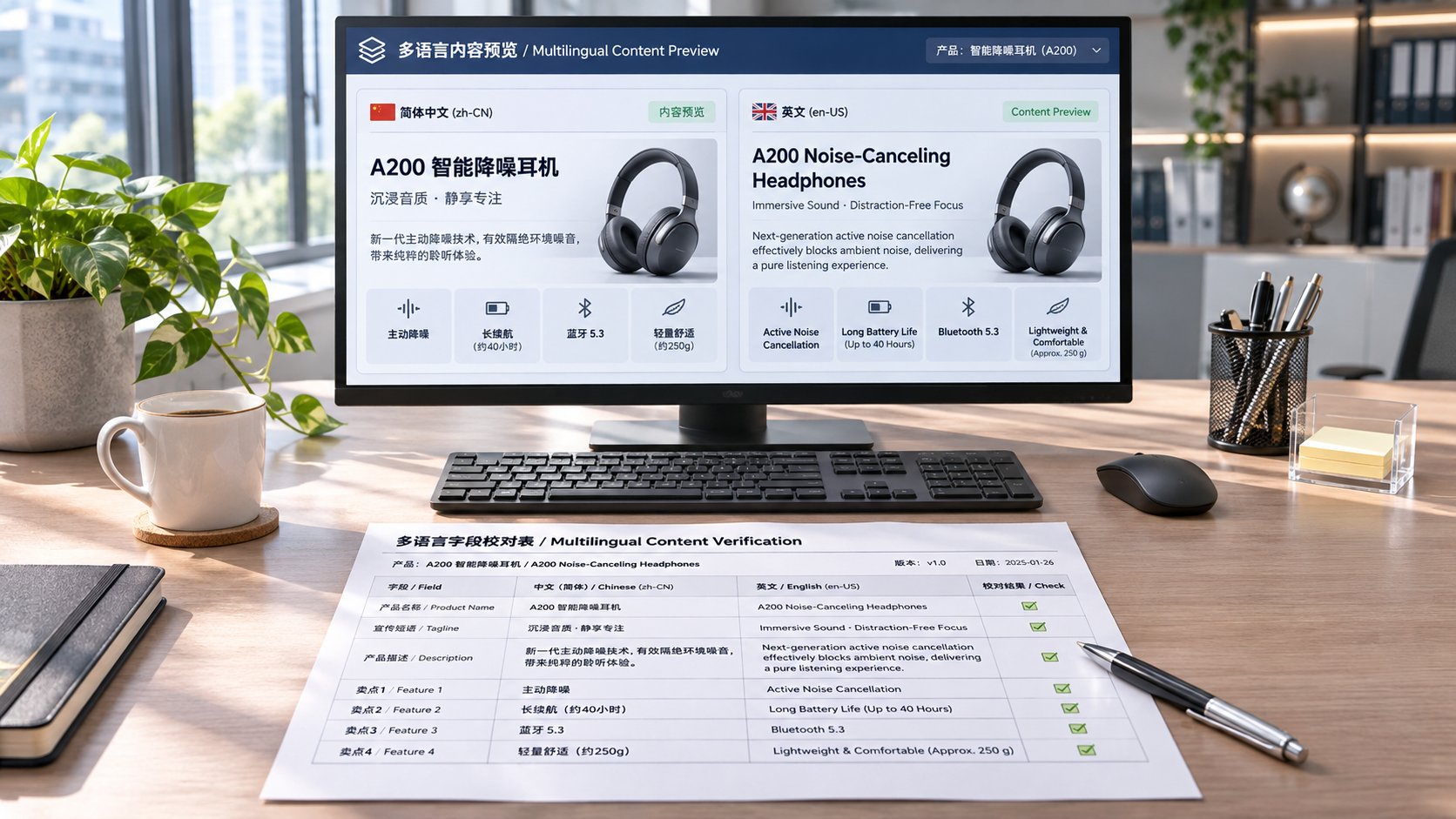
 How Can Multilingual Field Mapping Prevent Content Synchronization Errors?
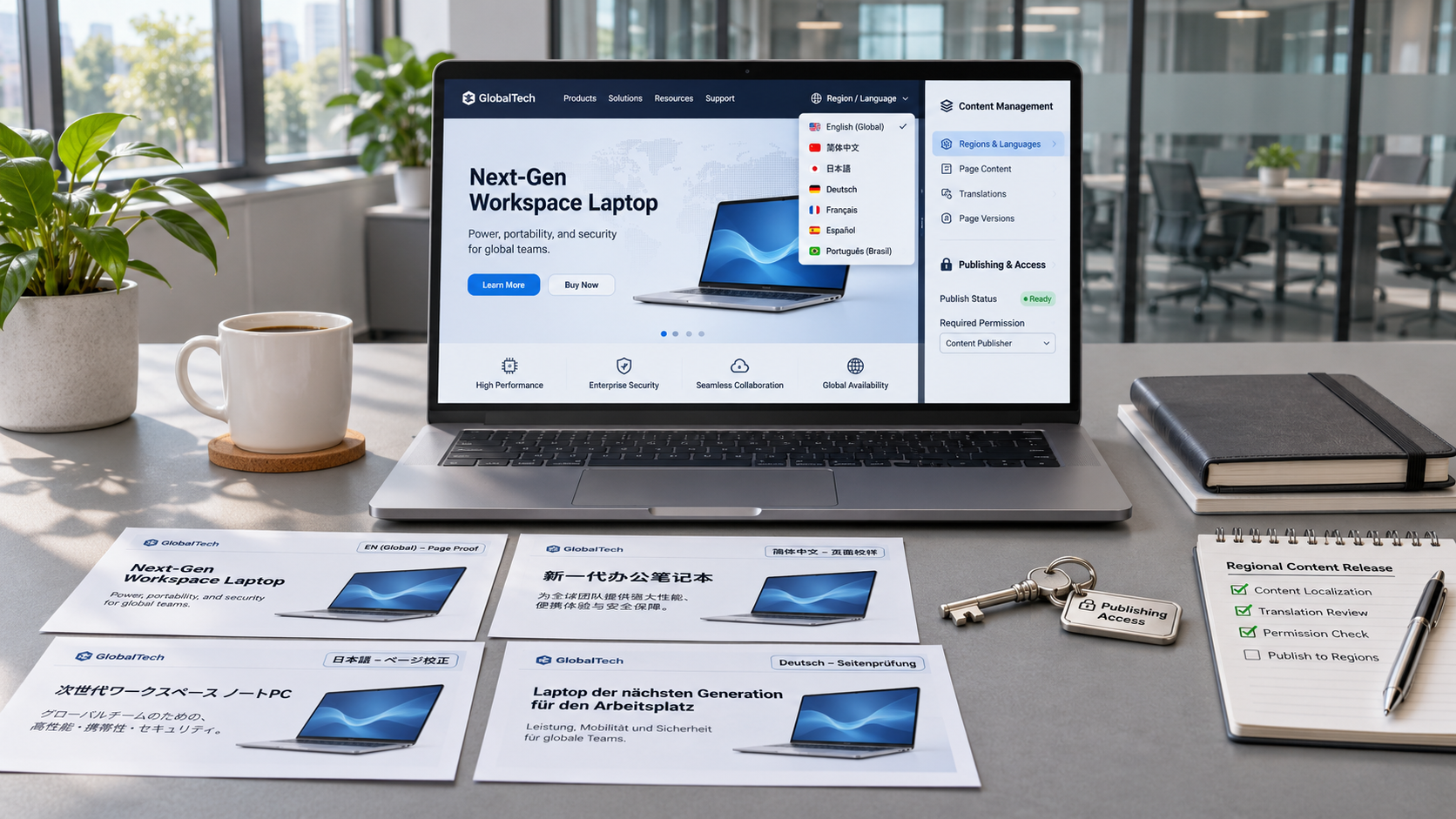
 How can multinational enterprises manage publishing permissions across websites in different regions?
 Can an EV SSL certificate be used for wildcard domains?

Related Products
 Yiyingbao SaaS Intelligent Website Building and Marketing SystemYiyingbao SaaS Intelligent Website Building and Marketing System, AI-powered no-code website building, rapid creation of multilingual B2B international websites in 10 minutes, global server acceleration, AI-powered SEO optimization, helping businesses connect efficiently with global markets. The perfect integration of technology and operation makes building an international trade website remarkably simple
 AI+SEM Intelligent Advertising Marketing SystemAI+SEM drives intelligent ad creation, empowering full-funnel precision advertising marketing. The system automatically generates weekly/monthly reports, AI recommends keywords and target countries, monitors core metrics in real-time with intelligent alerts, and enables one-click high-conversion ad solutions to help quickly acquire customers and improve ROI.
 AI+SEO Dual-Engine System Optimization ServicesYiyingbao’s AI+SEO dual-engine optimization system helps foreign trade enterprises acquire high-quality organic traffic through AI-powered keyword research, content generation, and comprehensive technical optimization, significantly improving search rankings and conversion rates.
 AI+SNS Social Media Marketing SystemYingbao AI+SNS Social Media Marketing System - Precision social capture for the social media era. Supports one-click content synchronization across major platforms like Facebook and LinkedIn. AI intelligently rewrites posts for enhanced relevance. 24/7 AI customer service and user profiling analysis empower businesses to efficiently expand into global markets.
 AI+SEO营销解决方案易营宝AI+SEO营销解决方案,通过AI批量写作、智能生成TDK、精准关键词扩词等功能,全面优化网站SEO效果,提升流量与转化率。助力企业构建高效智能网站新生态。
 AI+SEM Advertising Marketing SolutionsAI+SEM Advertising Marketing Solution leverages AI technology to deeply empower SEM ad campaigns. It automatically generates weekly/monthly reports using AI, presenting account data across multiple dimensions for comprehensive insights into campaign performance and trends. The system precisely recommends keywords and target countries, intelligently generates high-conversion ad copy, and enables one-click activation of efficient campaign plans to help businesses rapidly acquire customers. Simultaneously, it monitors core metrics in real time, intelligently identifies abnormal fluctuations, and issues timely alerts to ensure stable, high-return advertising results.
 Domain Name ServicesEasyWin provides professional domain name services, including intelligent queries, one-stop registration, brand protection, and full lifecycle management, helping businesses build a digital brand image.
 EasyOperate B2C Cross-Border E-Commerce Platform & Independent WebsiteEasyStore B2C Cross-border E-commerce Independent Store is an intelligent website building and cross-border e-commerce integrated solution independently developed by EasyStore Information Technology (Beijing) Co., Ltd. The system is specially designed for small and medium-sized as well as large export enterprises, integrating 'website building, operation, marketing, advertising, and conversion' into one, helping enterprises quickly establish cross-border e-commerce independent stores to achieve brand globalization and global sales growth.
The platform supports multiple languages, multiple currencies, and multi-channel marketing, with built-in AI intelligent translation and SEO optimization systems, suitable for mainstream markets such as Southeast Asia, Europe and America, Latin America, and the Middle East, assisting Chinese manufacturing enterprises in efficiently deploying international e-commerce strategies. SSL证书易营宝提供专业SSL安全证书服务,包括单域名和泛域名证书,确保网站数据传输加密、身份验证和完整性保护,助力企业建立安全可信的在线业务环境。









