









- APEC Shenzhen Spotlight: Cross-Border E-Commerce Orders Promote Asia-Pacific Trade and Economic CooperationNov 08, 2026View details
- China-Europe Railway Express and CIIE Hold Business Matchmaking Event, Focusing on Cross-Border E-commerce B2B ExportsNov 07, 2026View details
- China’s Ministry of Commerce Responds to Additional Charges on Low-Value Imports Imposed by the EUNov 06, 2026View details
- Two Internet Development Reports Released at the 2026 World Internet ConferenceNov 05, 2026View details
- Internet Business Revenue of Enterprises Above the Designated Size Reached RMB 1.716 Trillion in the First Three Quarters, with Profits Up 17.6%Nov 05, 2026View details
- Shopify's Third-Quarter Revenue and GMV Fall Short of Expectations, Sending Shares Tumbling Before the Market OpensNov 04, 2026View details
For a Machinery Export Website, Is SaaS or a Self-Built Site More Cost-Effective in the Long Run?
When choosing between SaaS and a self-hosted website for a machinery export business, the question of which option saves money over the long term does not hinge on the first-year quote, but on the total cost throughout the website’s service life: updating product information, expanding into multiple languages, maintaining the system, marketing support, and the cost of migrating in the future. For businesses whose primary needs are product showcases and inquiries, and that lack dedicated in-house technical staff, SaaS makes it easier to control upfront investment and maintenance costs. If the website needs deep integration with internal systems, requires frequent functional changes, and the business has the capacity to maintain it continuously, self-hosting may have a better chance of lowering costs over time.
Self-hosting here does not necessarily mean developing a website from scratch. It also includes using an open-source website platform that the business deploys and maintains itself or through a service provider. The cost boundaries of the two options are not fixed by default: SaaS may also involve customization and managed service fees, while self-hosted solutions may require paid hosting, security, and technical support services. Before comparing quotes, first align them to the same scope of functions and services.
Calculate the cost over the service period, not just the website development fee
The costs of a machinery website span the entire process of launching new products, expanding into new markets, and maintaining the system. A comparison suitable for approval should use the same service period, such as three or five years, and calculate each cost item:
Total cost of ownership = one-time development costs + subscription or infrastructure costs over the period + maintenance and content update costs + feature expansion costs + migration or exit costs.
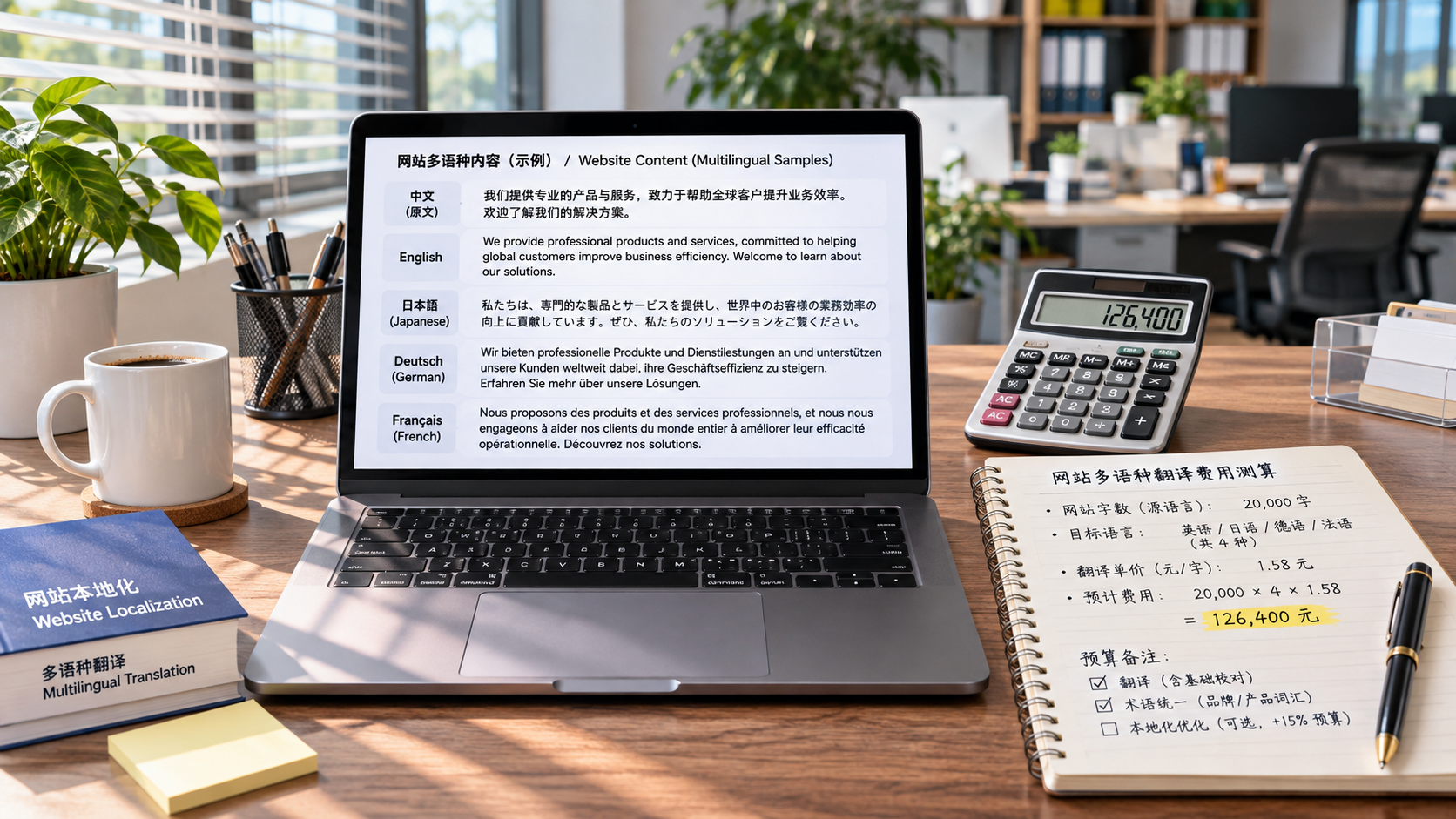
The main SaaS expenses include setup fees, annual fees, plan upgrade fees, and charges for pages, languages, storage, or integrations beyond the plan limits. The business still needs to cover the preparation of product information, translation, image processing, and content review. Even when the supplier maintains the website, the related in-house labor is not cost-free.
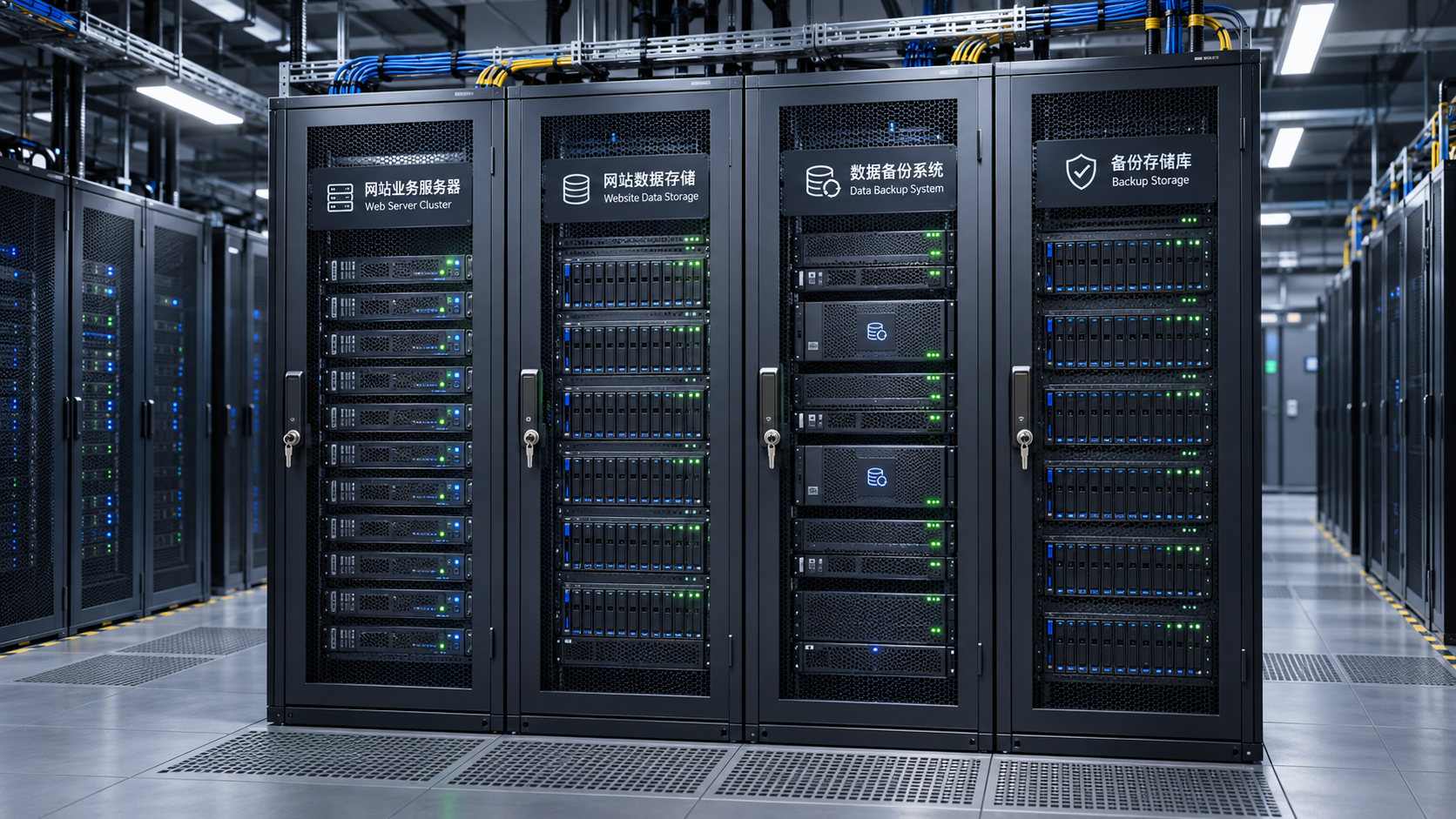
Self-hosting expenses include design and development, servers, domain names, software licenses, security backups, troubleshooting, and future upgrades. If the business relies on an external provider, it should also calculate how many hours are included in the maintenance contract, how extra work is billed, and the cost of transitioning to a new provider. Server bills are only one part of the cost; “no annual fee for self-hosting” does not mean “no ongoing costs.”
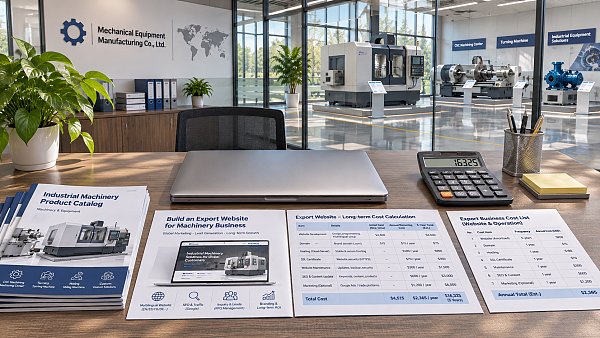
How machinery product information is maintained affects long-term costs
Product pages for machinery often include more than images and descriptions. They may also contain model numbers, processing capabilities, compatible materials, dimensions, optional accessories, certification documents, and technical specifications. If a series of machines has multiple models and different configurations are offered in different countries, copying, editing, and proofreading product pages will be ongoing tasks.
Test the platform with real product information during selection: Does adding a model require a developer? Can sales staff edit specification tables? How are multilingual pages synchronized when basic information is updated? Can a discontinued product’s page be retained with visitors directed appropriately? If the fields or page structures provided by a SaaS plan are insufficient and each additional presentation format requires paid customization, the initially low annual fee may not cover actual needs.
The flexibility of a self-hosted solution depends on the system design, not simply on “owning the source code.” If product data is scattered across many manually maintained pages, bulk updates to specifications, replacement of downloadable files, or category changes will also require effort. For approval, include the expected number of products, annual update frequency, and number of languages in the requirements, and ask suppliers to quote based on the same workload rather than comparing only homepage designs.
List marketing costs separately to avoid mistaking customer acquisition budgets for platform price differences
After a website is built, search optimization, advertising, and content production may require ongoing investment, but these costs do not depend entirely on the website platform. List advertising media spend, English-language technical articles, product photography, and professional translation separately. If both options use the same marketing plan, show these shared costs separately to avoid concluding that the website itself is more expensive simply because one quote includes managed marketing services.
What really needs to be compared is the extent to which each platform supports marketing activities. For example, can staff independently edit page titles and descriptions, set up page redirects, manage multilingual pages, connect website analytics and ad conversion tracking, and identify the source of inquiries by product or region? Also confirm whether these features are included in the current quote or require a plan upgrade or additional development fees.
Inquiry volume is not the same as the number of qualified sales opportunities. Machinery purchasing cycles are long, and whether an inquiry includes the equipment model, capacity requirements, target market, and contact details affects the efficiency of subsequent sales qualification. If form design and data transfer require additional development, include the cost in the budget in advance. However, requesting too much information may discourage submissions, so determine the fields in line with the sales process.
Use the same assumptions to calculate the costs and identify the break-even point
Suppose a business plans to use its website for five years. To compare the two options, calculate the cumulative costs of each: for SaaS, include the development fee, five years of subscription fees, and estimated plan upgrades and add-on purchases; for self-hosting, include development costs, five years of server and license fees, maintenance contracts, and planned upgrades. Then add the content production, in-house effort, and exit costs for each option.
This is only a calculation method; it does not mean self-hosting will inevitably become cheaper after a fixed number of years. If SaaS has higher ongoing costs than self-hosting each year, and self-hosting has higher upfront costs, the static payback period can be estimated as “the additional upfront cost of self-hosting ÷ the ongoing costs saved per year.” This result does not account for the time value of money and does not guarantee that future costs will remain unchanged. If self-hosting does not have lower annual costs, there is no payback period to calculate using this formula.
A more reliable approach is to model two business scenarios: first, the current number of products and languages remains largely unchanged; second, the business adds target markets, product models, or internal system integrations. Pay particular attention to tiered pricing, custom development, and maintenance response fees. If self-hosting is cheaper only in a high-growth scenario, assess whether the business can reasonably expect to reach that scale. If SaaS is advantageous at the entry level, confirm that the expanded plan will still fit the budget.
Exit costs in the contract determine future negotiating leverage
After a website has been in use for years, even if its current costs are reasonable, changes to functionality, service, or business needs may make a platform switch necessary. For SaaS, confirm who registers and controls the domain, whether product information, images, articles, and inquiry records can be exported, whether the export format is usable, and whether multilingual content and page URLs can be migrated together. Exporting text does not necessarily mean the new website can directly restore the original structure.
For self-hosted solutions, confirm the scope of delivery and usage rights for source code, databases, design files, and third-party components, whether the business controls the server and domain accounts, and whether deployment documentation will be provided when maintenance services end. Even if the business owns the source code, the absence of developer documentation or reliance on restricted third-party components can increase transition costs.
Whichever option is used, when changing websites, budget for mapping page URLs, setting up redirects, validating data, and reconnecting analytics tools. Traffic or inquiry data may be interrupted during migration. Although related losses are difficult to predict precisely, backups, testing, and clearly defined handover responsibilities can help reduce the risks.
Final approval should be based on the lowest total cost that meets business needs. When requirements and update volumes are manageable and technical maintenance resources are limited, prioritize checking SaaS plan limits and exit terms. When needs involve complex product data, ongoing customization, or deep integration with internal systems, assess the team’s capabilities and multi-year maintenance budget for self-hosting. A low-cost option with unclear maintenance responsibilities and expansion pricing should not be approved solely on the basis of first-year savings.
Related Articles
 Do SaaS website security features cost extra?
 How do the long-term maintenance costs of SaaS website building compare with outsourced website development?
 How Does an AI Website Translation SaaS Platform Calculate Translation Costs?

Related Products
 Yiyingbao SaaS Intelligent Website Building and Marketing SystemYiyingbao SaaS Intelligent Website Building and Marketing System, AI-powered no-code website building, rapid creation of multilingual B2B international websites in 10 minutes, global server acceleration, AI-powered SEO optimization, helping businesses connect efficiently with global markets. The perfect integration of technology and operation makes building an international trade website remarkably simple
 AI+SEM Intelligent Advertising Marketing SystemAI+SEM drives intelligent ad creation, empowering full-funnel precision advertising marketing. The system automatically generates weekly/monthly reports, AI recommends keywords and target countries, monitors core metrics in real-time with intelligent alerts, and enables one-click high-conversion ad solutions to help quickly acquire customers and improve ROI.
 AI+SEO Dual-Engine System Optimization ServicesYiyingbao’s AI+SEO dual-engine optimization system helps foreign trade enterprises acquire high-quality organic traffic through AI-powered keyword research, content generation, and comprehensive technical optimization, significantly improving search rankings and conversion rates.
 AI+SNS Social Media Marketing SystemYingbao AI+SNS Social Media Marketing System - Precision social capture for the social media era. Supports one-click content synchronization across major platforms like Facebook and LinkedIn. AI intelligently rewrites posts for enhanced relevance. 24/7 AI customer service and user profiling analysis empower businesses to efficiently expand into global markets.
 AI+SEO营销解决方案易营宝AI+SEO营销解决方案,通过AI批量写作、智能生成TDK、精准关键词扩词等功能,全面优化网站SEO效果,提升流量与转化率。助力企业构建高效智能网站新生态。
 AI+SEM Advertising Marketing SolutionsAI+SEM Advertising Marketing Solution leverages AI technology to deeply empower SEM ad campaigns. It automatically generates weekly/monthly reports using AI, presenting account data across multiple dimensions for comprehensive insights into campaign performance and trends. The system precisely recommends keywords and target countries, intelligently generates high-conversion ad copy, and enables one-click activation of efficient campaign plans to help businesses rapidly acquire customers. Simultaneously, it monitors core metrics in real time, intelligently identifies abnormal fluctuations, and issues timely alerts to ensure stable, high-return advertising results.
 Domain Name ServicesEasyWin provides professional domain name services, including intelligent queries, one-stop registration, brand protection, and full lifecycle management, helping businesses build a digital brand image.
 EasyOperate B2C Cross-Border E-Commerce Platform & Independent WebsiteEasyStore B2C Cross-border E-commerce Independent Store is an intelligent website building and cross-border e-commerce integrated solution independently developed by EasyStore Information Technology (Beijing) Co., Ltd. The system is specially designed for small and medium-sized as well as large export enterprises, integrating 'website building, operation, marketing, advertising, and conversion' into one, helping enterprises quickly establish cross-border e-commerce independent stores to achieve brand globalization and global sales growth.
The platform supports multiple languages, multiple currencies, and multi-channel marketing, with built-in AI intelligent translation and SEO optimization systems, suitable for mainstream markets such as Southeast Asia, Europe and America, Latin America, and the Middle East, assisting Chinese manufacturing enterprises in efficiently deploying international e-commerce strategies. SSL证书易营宝提供专业SSL安全证书服务,包括单域名和泛域名证书,确保网站数据传输加密、身份验证和完整性保护,助力企业建立安全可信的在线业务环境。









