









- EU Plans to Raise Tax on Incoming Small Parcels to €5Oct 31, 2026View details
- Maersk Adjusts Middle East Emergency Operating Cost Recovery Surcharge to USD 2,000 per ContainerOct 30, 2026View details
- Ministry of Commerce: Online retail sales grew 4.4% in the first three quarters, while cross-border e-commerce maintained relatively rapid growthOct 29, 2026View details
- CCTV reports: AI-powered smart hardware is expanding overseas at a faster pace, with orders for some best-selling products booked through next yearOct 29, 2026View details
- Alphabet Q3 Earnings: Google Search Advertising Revenue Rises 10.5% to $82 BillionOct 29, 2026View details
- AliExpress Announces New Service Rules for Russia, Linked to Wildberries Product IntegrationOct 28, 2026View details
What Should Guangdong Businesses Look for in an Export-Focused Independent Website Provider?
When choosing a provider for an independent website for your export business in Guangdong, don’t compare website development quotes alone. More importantly, consider whether the provider can turn your product presentation, access for overseas visitors, multilingual content, and future customer acquisition needs into a solution with clear acceptance criteria, while specifying who owns the website assets and what ongoing costs apply. A polished-looking website that is difficult to update with new products, track inquiries on, or use to receive advertising traffic may incur additional costs if these capabilities have to be added later.
Businesses in Guangdong have widely varying needs. Manufacturing factories may place greater emphasis on product specifications and inquiry qualification, while cross-border retailers need product management, payment, and order processing. Before purchasing, determine whether the website is intended to generate wholesale inquiries or sell directly to consumers. Then compare providers against the same requirements so that their quotes are comparable.
Define requirements in a form that can be quoted and accepted
Before requesting quotes, align internally on target markets, primary languages, product volume, existing materials, and launch date. Distinguish between essential features for the initial launch and requirements for future expansion. For example, check whether product information is already available in other languages, which department should receive inquiries, and whether inquiries need to be routed separately by product category. These details affect page structure, content production workload, and delivery timelines.
For a B2B website, check product categories, specification displays, file downloads, inquiry forms, and contact details. Companies offering custom manufacturing can also ask for forms that collect requested order quantities, specifications, or drawing requirements. A B2C store also needs to confirm whether its shopping cart, shipping rules, payment methods, order management, and refund process can accommodate the target market. Don’t rely solely on claims such as “supports e-commerce” or “supports multiple languages” to determine whether the solution meets your business needs.

What capabilities should you check during a demo?
Multilingual support and content management
Ask the provider to demonstrate the actual admin panel. After adding a product, can you edit the title, description, image text, and search snippet separately for each language? Does switching languages take visitors to the corresponding page? When product information changes, which content needs to be updated individually? Machine translation can speed up the creation of first drafts, but your company should still review technical terms, units of measure, and purchasing requirements to avoid errors that could affect the quality of inquiries.
Also confirm who supplies the content, who is responsible for translation and proofreading, and how many rounds of revisions are included. If the quote covers page development only and excludes product information preparation, arrange internal resources in advance to avoid delays after the website framework is complete due to missing content.
Overseas access and search fundamentals
Ask the provider to explain its deployment method, how access will be tested in target regions, and how pages are adapted for mobile devices. During the demo, don’t look only at the homepage. Check product listings, detail pages, and forms: Are images clear and reasonably fast to load? Are buttons easy to tap? Is there a clear confirmation after submission? Network conditions may vary between regions, and a single demo cannot represent every visitor’s experience. You can ask the provider to test the site on agreed target-region networks and devices before delivery.
For search optimization, check whether page titles, descriptions, URL structures, redirects, and sitemaps can be managed. Ask the provider to explain how multilingual pages are distinguished. A website being discoverable by search engines does not mean it will automatically rank or generate inquiries after launch. Product content, competition, and ongoing maintenance all affect results. For promises such as “guaranteed indexing” or “guaranteed rankings,” ask for the conditions and supporting documentation in writing.
Inquiry tracking and marketing integration
During the purchasing process, ask the provider to demonstrate an entire user journey: a visitor opens a product page, fills out a form, and submits it successfully; the relevant staff receive a notification and can view the record in the admin panel. Also test required fields, spam handling, attachment limits, and what happens if an email address is no longer valid. A chat button without inquiry records may result in lost customer information during handoffs.
If you plan to run search ads or drive traffic from social media, confirm whether the website supports dedicated landing pages, tracking code installation, and the tracking of key actions such as form submissions. When a provider promises to “provide marketing services,” ask separately whether this includes account setup, creative production, campaign management, or data analysis. Don’t confuse website features with ongoing operations.
When comparing quotes, separate one-time and ongoing costs
Quotes from different providers can vary significantly in scope. Some include content production and basic maintenance, while others deliver only a template and an admin panel. Ask procurement staff to request itemized pricing by page, language, feature, and service period. Have providers specify excluded work and how it will be billed, then compare the actual costs that your business will need to pay.
- Website development and delivery: Confirm whether the quote includes the number of pages, product entries, design revision rounds, forms, and mobile adaptation.
- Ongoing use: Check the costs for the domain, server or system use, maintenance, backups, and renewals, and clarify what happens when the term expires.
- Marketing services: Distinguish service fees from advertising budgets, and specify the execution period, scope of work, reporting frequency, and each party’s responsibilities.
- Additional requirements: Clarify how new languages, pages, features, or integrations with external systems will be assessed and priced.
A low-cost option is not necessarily unsuitable. If your company only needs to showcase a small number of products initially and has staff to maintain the content, a standardized solution may be sufficient. If you need complex quoting processes, order management, or collaboration between multiple departments, first verify the limits of the solution’s functionality to avoid discovering after launch that key requirements need to be developed separately.
Confirm asset ownership, services, and acceptance responsibilities before signing
Your company should control the registration and management rights for the domain. The ownership of the website admin panel, analytics tools, and marketing accounts—and who is authorized to access them—should also be clearly specified. If you use the provider’s system, ask whether data can be exported, what the export includes, and how pages and materials will be handled if you end the relationship. Being able to export product information does not necessarily mean the website can be migrated exactly as it is. Any migration restrictions should be stated in the contract.
Don’t use “the website can be opened” as the sole acceptance criterion. List agreed-language pages, product entries, form notifications, mobile display, admin permissions, and basic analytics individually on an acceptance checklist. Specify the process for reporting issues and the time allowed for fixes. Also include in the contract whether post-launch fault response, routine updates, backup recovery, and training are part of the service scope, rather than relying on verbal discussions.
Finally, ask candidate providers to define their delivery scope against the same requirements document, and verify key operations through an admin-panel demo. The convenience of working with a local Guangdong provider can be a consideration, but it should not replace verification of the actual delivery team, response process, and delivery capabilities. A solution whose provider clearly explains what is included and what will be quoted separately is generally easier to manage over time.
Related Articles
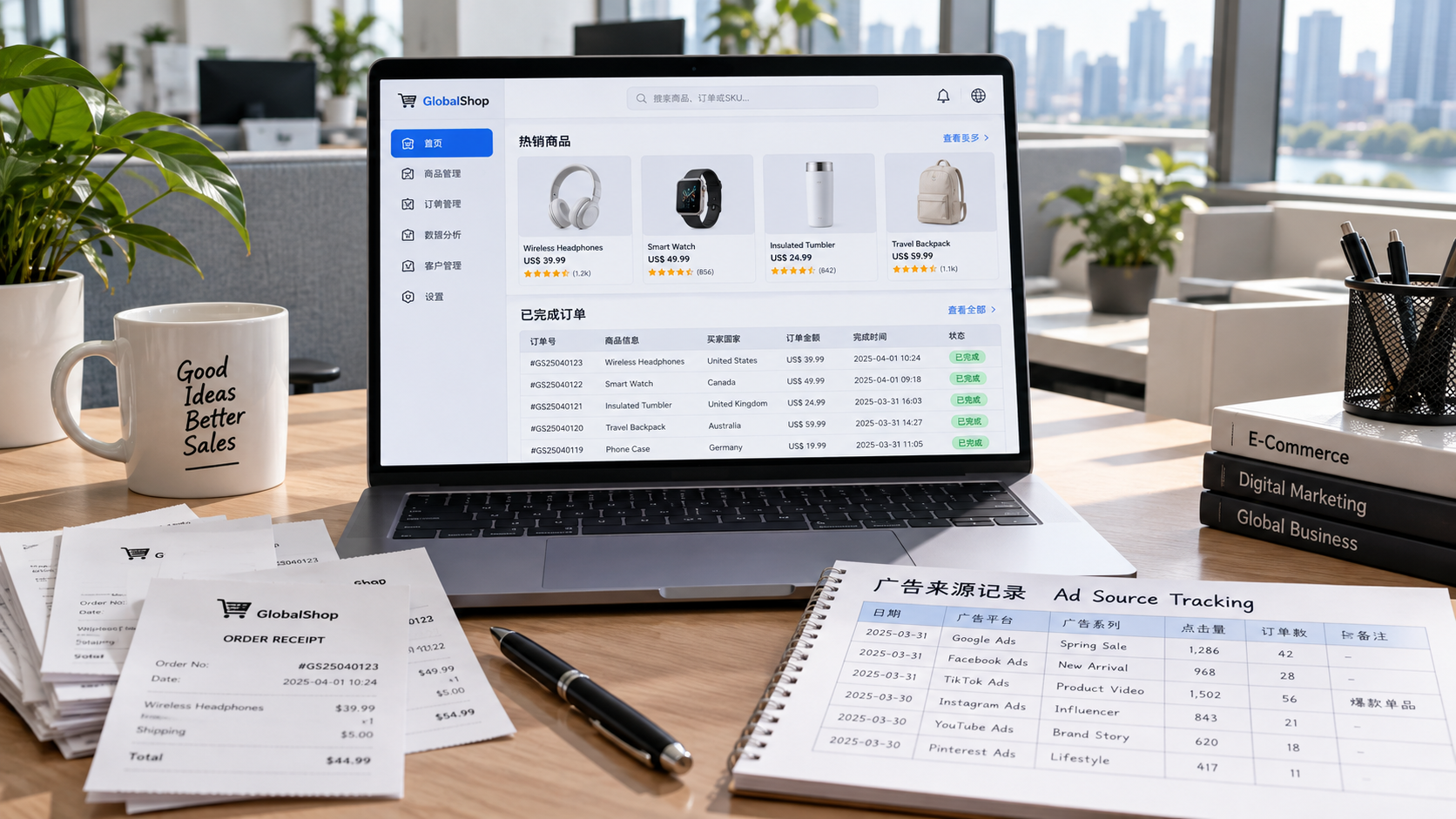
 How Can Cross-Border E-Commerce Analytics Tools Track Orders Generated by Ads?
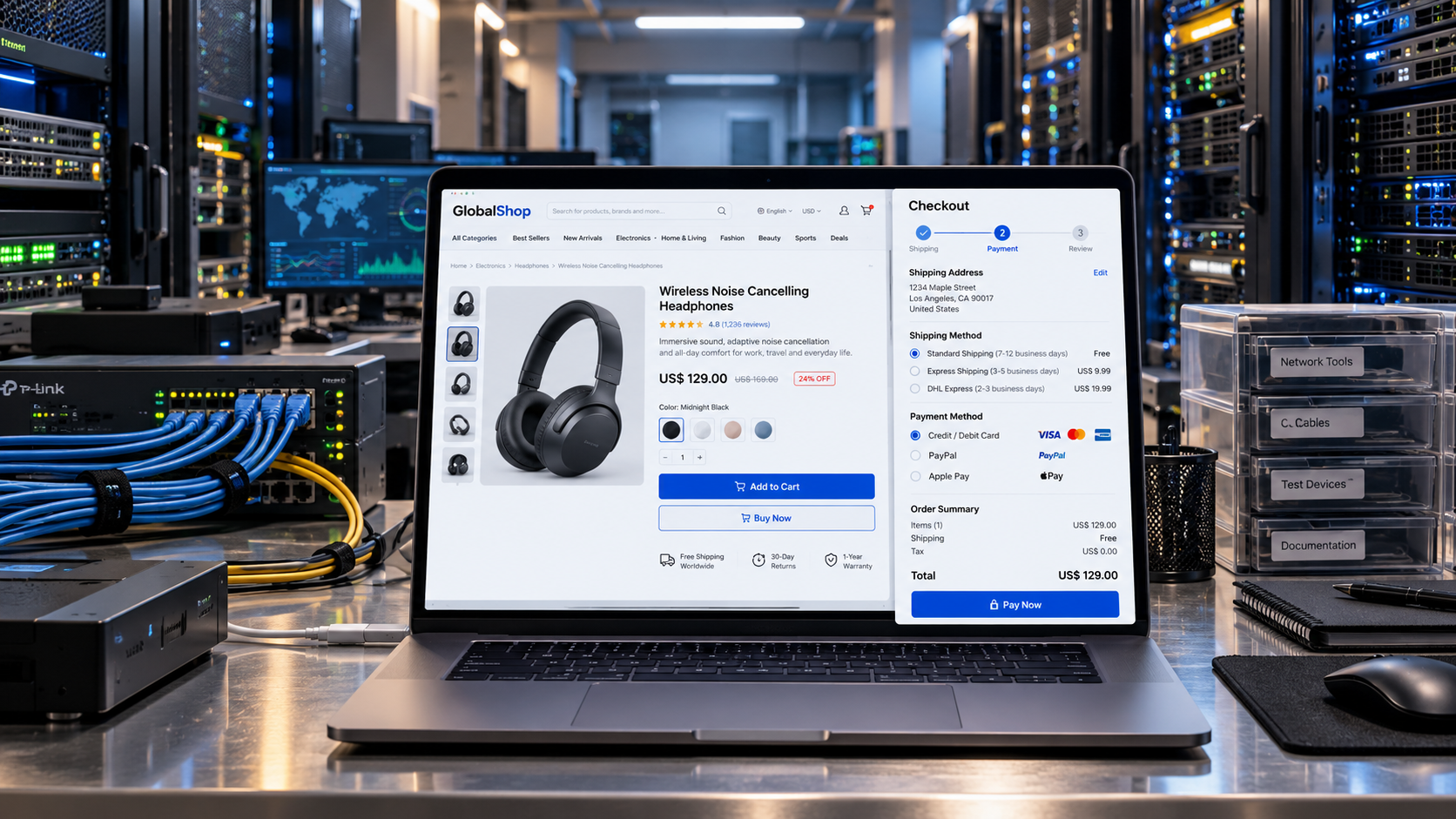
 How Can You Compare the Stability of Global Acceleration Networks for Cross-Border E-Commerce Platforms?
 What Should Guangdong Businesses Look for in an Export-Focused Independent Website Provider?

Related Products
 Yiyingbao SaaS Intelligent Website Building and Marketing SystemYiyingbao SaaS Intelligent Website Building and Marketing System, AI-powered no-code website building, rapid creation of multilingual B2B international websites in 10 minutes, global server acceleration, AI-powered SEO optimization, helping businesses connect efficiently with global markets. The perfect integration of technology and operation makes building an international trade website remarkably simple
 AI+SEM Intelligent Advertising Marketing SystemAI+SEM drives intelligent ad creation, empowering full-funnel precision advertising marketing. The system automatically generates weekly/monthly reports, AI recommends keywords and target countries, monitors core metrics in real-time with intelligent alerts, and enables one-click high-conversion ad solutions to help quickly acquire customers and improve ROI.
 AI+SEO Dual-Engine System Optimization ServicesYiyingbao’s AI+SEO dual-engine optimization system helps foreign trade enterprises acquire high-quality organic traffic through AI-powered keyword research, content generation, and comprehensive technical optimization, significantly improving search rankings and conversion rates.
 AI+SNS Social Media Marketing SystemYingbao AI+SNS Social Media Marketing System - Precision social capture for the social media era. Supports one-click content synchronization across major platforms like Facebook and LinkedIn. AI intelligently rewrites posts for enhanced relevance. 24/7 AI customer service and user profiling analysis empower businesses to efficiently expand into global markets.
 AI+SEO营销解决方案易营宝AI+SEO营销解决方案,通过AI批量写作、智能生成TDK、精准关键词扩词等功能,全面优化网站SEO效果,提升流量与转化率。助力企业构建高效智能网站新生态。
 AI+SEM Advertising Marketing SolutionsAI+SEM Advertising Marketing Solution leverages AI technology to deeply empower SEM ad campaigns. It automatically generates weekly/monthly reports using AI, presenting account data across multiple dimensions for comprehensive insights into campaign performance and trends. The system precisely recommends keywords and target countries, intelligently generates high-conversion ad copy, and enables one-click activation of efficient campaign plans to help businesses rapidly acquire customers. Simultaneously, it monitors core metrics in real time, intelligently identifies abnormal fluctuations, and issues timely alerts to ensure stable, high-return advertising results.
 Domain Name ServicesEasyWin provides professional domain name services, including intelligent queries, one-stop registration, brand protection, and full lifecycle management, helping businesses build a digital brand image.
 EasyOperate B2C Cross-Border E-Commerce Platform & Independent WebsiteEasyStore B2C Cross-border E-commerce Independent Store is an intelligent website building and cross-border e-commerce integrated solution independently developed by EasyStore Information Technology (Beijing) Co., Ltd. The system is specially designed for small and medium-sized as well as large export enterprises, integrating 'website building, operation, marketing, advertising, and conversion' into one, helping enterprises quickly establish cross-border e-commerce independent stores to achieve brand globalization and global sales growth.
The platform supports multiple languages, multiple currencies, and multi-channel marketing, with built-in AI intelligent translation and SEO optimization systems, suitable for mainstream markets such as Southeast Asia, Europe and America, Latin America, and the Middle East, assisting Chinese manufacturing enterprises in efficiently deploying international e-commerce strategies. SSL证书易营宝提供专业SSL安全证书服务,包括单域名和泛域名证书,确保网站数据传输加密、身份验证和完整性保护,助力企业建立安全可信的在线业务环境。









