









- AI Products Drive Hong Kong Exports Up 64.9% in September, Fastest Growth in Over 40 YearsNov 17, 2026View details
- National Bureau of Statistics: Foreign trade grew rapidly in October, providing stable support for global tradeNov 17, 2026View details
- The U.S. has ended the $800 de minimis exemption for non-postal shipments; express courier packages must be formally declared.Nov 16, 2026View details
- ASEAN Signs Digital Economy Framework Agreement, Moving Toward Harmonized Cross-Border E-Commerce RulesNov 15, 2026View details
- Shenzhen Becomes the First City in Mainland China to Exceed RMB 5 Trillion in Foreign TradeNov 15, 2026View details
- Fujian Announces the First Batch of Provincial-Level Cross-Border E-Commerce Industrial Parks and Key Brands for CultivationNov 14, 2026View details
How to Choose a B2B Website Development Solution: Template Website vs. Custom Development
When choosing a B2B website development solution, don’t look at the price alone. This article focuses on b2b создание сайтов and compares template-based website building with custom development in terms of cost, efficiency, and lead-generation potential to help businesses make an informed decision.
For a business evaluation, the challenge is not deciding which technology is more advanced, but distinguishing which needs must be addressed now and which can wait until the business has been validated. A website that displays products may not be able to handle inquiries; a website with complex features may not have enough content or staff to maintain it.
Review business processes first, then choose how to build the website
If a company mainly needs to showcase products, publish credentials, provide multilingual pages, and let overseas buyers submit inquiries, a proven template is usually worth evaluating first. Common features such as navigation, product listings, and forms are already built in, so the project can focus on preparing content, adjusting pages, and configuring promotion. A fast launch depends on having complete product information and a clearly defined scope for page changes—not on assuming the template will build the website automatically after signing.
Custom development is better suited to projects with clearly defined business rules that existing systems cannot meet. For example, products may need to be filtered by multiple sets of technical specifications, different customers may need to see different prices after logging in, or inquiries may need to exchange data with the company’s internal systems. In these cases, first confirm whether the features directly affect the sales process, then assess development, testing, and ongoing maintenance costs.
The two approaches are not mutually exclusive. A company can also use a proven website-building system for the main site, with limited customization for key product pages, forms, or essential integrations. This combination can control initial investment, but be sure to ask whether the platform supports the required capabilities and who will maintain the customized components after upgrades.
Beyond the quote, ongoing costs are what really set solutions apart
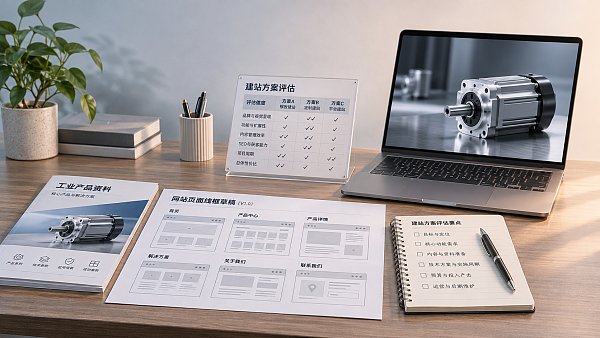
The initial cost of a template-based solution is usually easier to control, but business teams should not compare first-year prices alone. Multilingual versions, product limits, form features, domains, servers, renewals, content migration, and technical support may be billed separately or limited by the plan. If a seemingly inexpensive solution requires pages to be rebuilt every time a language is added, the total cost needs to be recalculated.
For custom projects, pay particular attention to the scope of requirements. Does the quote include prototype design, mobile optimization, data import, deployment, and fixes after acceptance? When third-party systems are involved, confirm whether the other party provides an interface and who is responsible for any interface usage fees. The less specific the requirements are, the harder it is to assess additional costs later.
We recommend putting expenses for at least one full renewal cycle into a single budget, while also setting aside resources for translation, organizing product information, and ongoing operations. Templates reduce some development work, but they do not fill in missing product specifications; custom development delivers a system, but that does not mean promotional content is ready.
A website’s ability to generate leads depends on whether the details work in practice
Purchasing decisions at manufacturing companies often require repeated checks of specifications, application conditions, and delivery capabilities. If a product page has only a few images and a vague description, even an attractive design may not answer buyers’ questions. When evaluating a solution, choose a real product and ask the provider to demonstrate how to configure its specifications table, application information, downloadable materials, and inquiry form, rather than looking only at a homepage mockup.
To generate leads through search, also check whether titles, page URLs, and descriptions can be edited; whether product content is accessible to search engines; and whether pages load and display properly on mobile devices. For multilingual websites, distinguish between “interface translation” and “content localization”: changing the navigation to Russian does not mean that product terminology, units, and purchasing information meet the reading expectations of the target market. Search engine optimization requires ongoing maintenance, and the website-building approach itself cannot guarantee rankings or a certain number of inquiries.
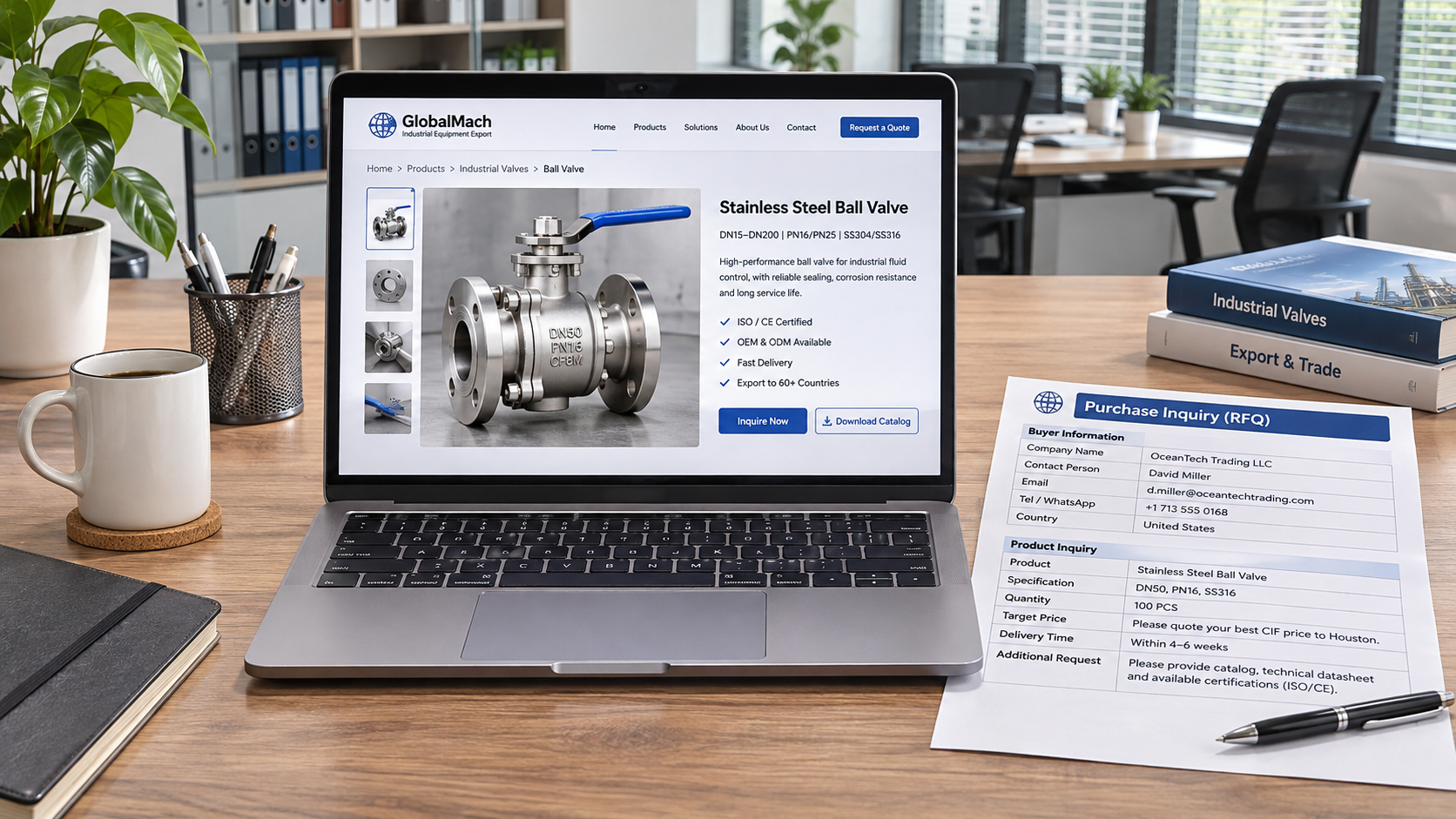
The inquiry process is also worth testing in person. Submit a form on a phone and check whether there are too many required fields, whether attachments can be uploaded, where notifications are sent, and whether sales staff can identify the page or channel each inquiry came from. If advertising requires dedicated landing pages, confirm that pages can be quickly copied, adjusted, and tracked for conversions; otherwise, website development and promotion can easily become disconnected.
If the company also plans to publish research materials or industry reports, content management capabilities are just as important. For materials such as Research on Approaches to Optimizing the Wealth Management System of Banks, first confirm whether the system can provide an abstract, a download link, and the necessary access controls, rather than assuming all materials are suitable for public download.
Before signing, clarify control and acceptance criteria
After a website goes live, companies often need to update product and marketing content continually. During evaluation, ask to operate the backend yourself: Is it easy to add products? Can images and specifications be maintained in bulk? Do multilingual pages need to be entered repeatedly? An operation that takes a few minutes for the person giving the demo may not be as straightforward for your own staff.
Also clarify who owns the domain, how backend accounts are assigned, whether inquiries and content can be exported, and what parts of the website can be retained after the service ends. Deliverables may differ between template platforms and custom systems: the former may not provide source code, while the latter should not be assumed to include usage rights for all third-party components. The scope, format, and cost of data migration should be specified in the contract.
Acceptance criteria should not simply say “pages display correctly.” A more practical approach is to list checks for product pages, language switching, form notifications, mobile display, analytics installation, and permission settings, and to agree on how issues will be handled. When collecting customer information, verify applicable requirements based on the target market and actual business operations; do not assume that notices included with a template are sufficient.
Evaluate website development and marketing together
For companies without dedicated technical and overseas marketing teams, the value of an integrated service lies in reducing handoffs: search content, advertising landing pages, social media traffic, and inquiry handling are considered during website development. 易营宝 provides intelligent website building, multilingual websites, and overseas marketing services. When choosing this type of solution, still verify exactly which tasks are included in the plan, which incur additional charges, and who controls the promotional data.
When budgets are limited and business processes are relatively standard, start with a proven solution that supports content maintenance and data export, and reserve resources for product information and channel testing. If critical requirements involve complex permissions, proprietary processes, or deep system integration, create a separate project for custom development. Whichever approach you choose, demonstrating the solution with real products, a real inquiry process, and a complete cost breakdown before signing will reveal whether it is suitable more effectively than comparing a few homepage designs.
Related Articles
 Do Domain Restrictions on Free Website Builders Affect Foreign Trade Businesses?
 What Customization Requirements Can a Global Website-Building SaaS Platform Meet?
 How Can You Tell Whether a Service Provider Can Improve Your Foreign Trade Website’s Conversion Rate?
Related Products
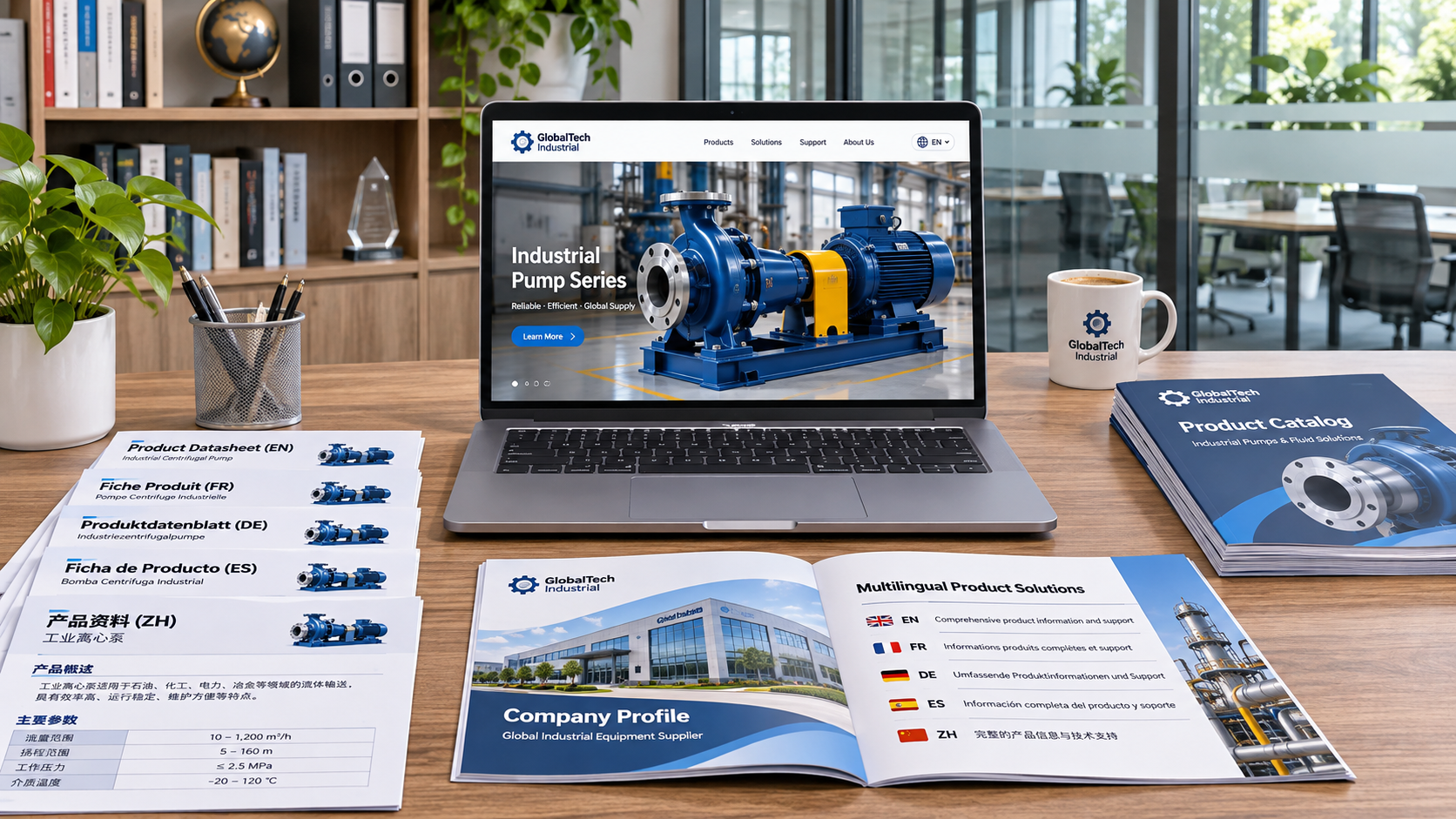
 Yiyingbao SaaS Intelligent Website Building and Marketing SystemYiyingbao SaaS Intelligent Website Building and Marketing System, AI-powered no-code website building, rapid creation of multilingual B2B international websites in 10 minutes, global server acceleration, AI-powered SEO optimization, helping businesses connect efficiently with global markets. The perfect integration of technology and operation makes building an international trade website remarkably simple
 AI+SEM Intelligent Advertising Marketing SystemAI+SEM drives intelligent ad creation, empowering full-funnel precision advertising marketing. The system automatically generates weekly/monthly reports, AI recommends keywords and target countries, monitors core metrics in real-time with intelligent alerts, and enables one-click high-conversion ad solutions to help quickly acquire customers and improve ROI.
 AI+SEO Dual-Engine System Optimization ServicesYiyingbao’s AI+SEO dual-engine optimization system helps foreign trade enterprises acquire high-quality organic traffic through AI-powered keyword research, content generation, and comprehensive technical optimization, significantly improving search rankings and conversion rates.
 AI+SNS Social Media Marketing SystemYingbao AI+SNS Social Media Marketing System - Precision social capture for the social media era. Supports one-click content synchronization across major platforms like Facebook and LinkedIn. AI intelligently rewrites posts for enhanced relevance. 24/7 AI customer service and user profiling analysis empower businesses to efficiently expand into global markets.
 AI+SEO营销解决方案易营宝AI+SEO营销解决方案,通过AI批量写作、智能生成TDK、精准关键词扩词等功能,全面优化网站SEO效果,提升流量与转化率。助力企业构建高效智能网站新生态。
 AI+SEM Advertising Marketing SolutionsAI+SEM Advertising Marketing Solution leverages AI technology to deeply empower SEM ad campaigns. It automatically generates weekly/monthly reports using AI, presenting account data across multiple dimensions for comprehensive insights into campaign performance and trends. The system precisely recommends keywords and target countries, intelligently generates high-conversion ad copy, and enables one-click activation of efficient campaign plans to help businesses rapidly acquire customers. Simultaneously, it monitors core metrics in real time, intelligently identifies abnormal fluctuations, and issues timely alerts to ensure stable, high-return advertising results.
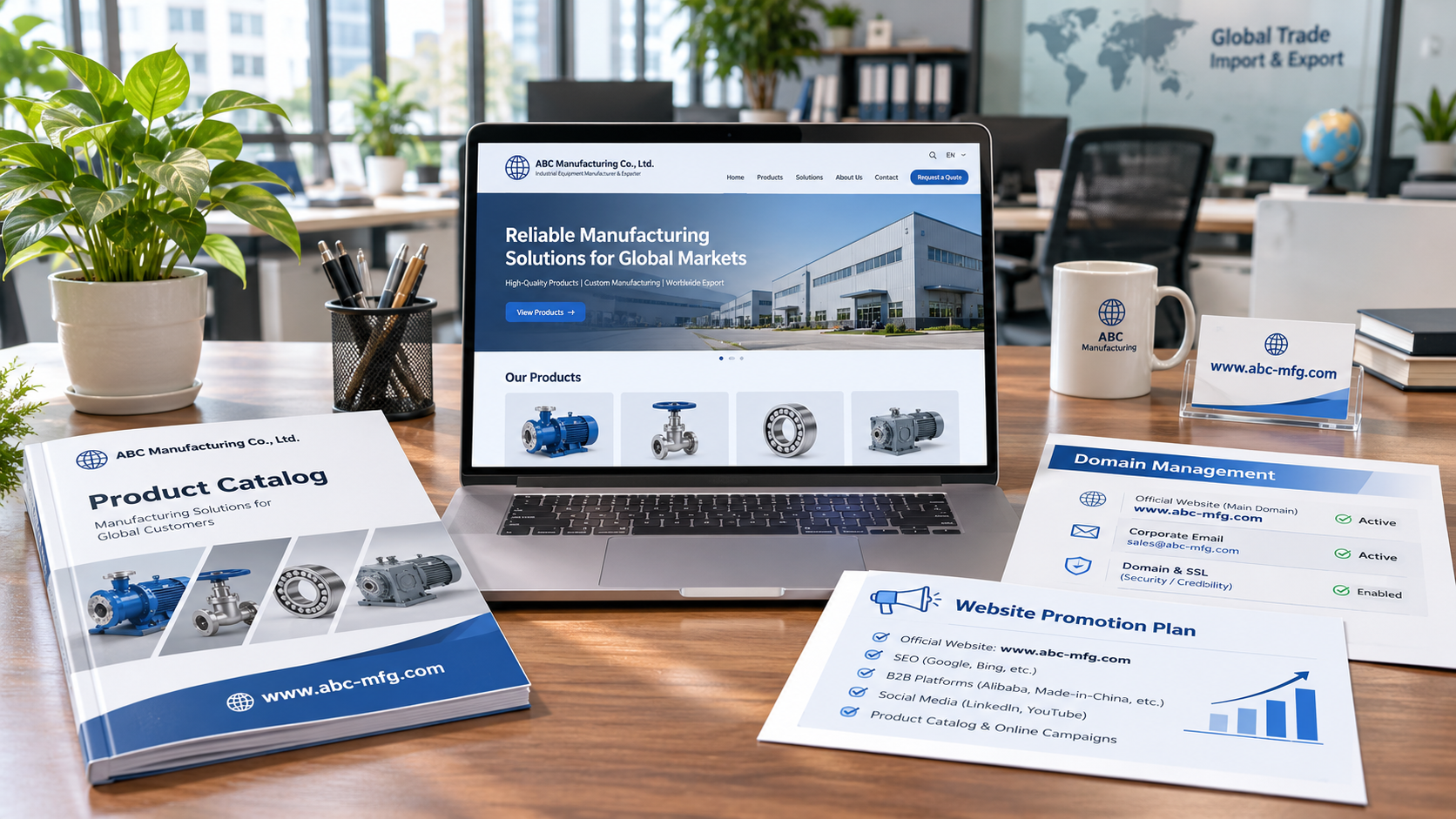
 Domain Name ServicesEasyWin provides professional domain name services, including intelligent queries, one-stop registration, brand protection, and full lifecycle management, helping businesses build a digital brand image.
 EasyOperate B2C Cross-Border E-Commerce Platform & Independent WebsiteEasyStore B2C Cross-border E-commerce Independent Store is an intelligent website building and cross-border e-commerce integrated solution independently developed by EasyStore Information Technology (Beijing) Co., Ltd. The system is specially designed for small and medium-sized as well as large export enterprises, integrating 'website building, operation, marketing, advertising, and conversion' into one, helping enterprises quickly establish cross-border e-commerce independent stores to achieve brand globalization and global sales growth.
The platform supports multiple languages, multiple currencies, and multi-channel marketing, with built-in AI intelligent translation and SEO optimization systems, suitable for mainstream markets such as Southeast Asia, Europe and America, Latin America, and the Middle East, assisting Chinese manufacturing enterprises in efficiently deploying international e-commerce strategies. SSL证书易营宝提供专业SSL安全证书服务,包括单域名和泛域名证书,确保网站数据传输加密、身份验证和完整性保护,助力企业建立安全可信的在线业务环境。









