









- General Administration of Customs Issues New Rules on Import and Export Cosmetic Labeling, Effective December 1Nov 26, 2026View details
- U.S. to Announce Section 301 Investigation Findings on 16 Economies, Potentially Proposing New TariffsNov 26, 2026View details
- Hapag-Lloyd’s $4.2 billion acquisition of ZIM faces a closing delay; ZIM reports third-quarter net profit of $830 millionNov 24, 2026View details
- SCFI falls for a third straight week to 3,503.78 points, with blank sailings on trans-Pacific routes rising to 10Nov 24, 2026View details
- Lazada 11.11 Mega Sale: LazMall Contributes Nearly Two-Thirds of GMVNov 23, 2026View details
- Shein’s European Revenue Falls 16% as Tighter Rules on Low-Value Direct Shipments Take EffectNov 23, 2026View details
How to Choose an AI Content Optimization System: Comparing Content Analysis, Editing, and Integration Capabilities

When choosing an AI content optimization system, first check whether it can identify content issues using explainable data, then see whether its editing suggestions can be reviewed, rolled back, and integrated into your existing publishing workflow. Comparing only generation speed or writing fluency can lead you to a tool that performs well in demos but requires extensive manual work to implement in practice.
For example, when maintaining product pages, articles, and ad landing pages across multiple languages, teams need to do more than rewrite text: they must preserve terminology, distinguish between page purposes, and route changes through the existing review process. When searching for “ai 콘텐츠 최적화 시스템 추천,” rather than looking for a single definitive product ranking, test the system’s analysis, editing, and integration capabilities using real content and your actual interface environment.
Define the task first, then compare system types
Before selecting a system, determine what you want to optimize: improving the structure and readability of existing pages, adding content based on search intent, or maintaining multilingual versions at scale. Each goal requires different data. Page diagnostics require crawling and parsing capabilities; editorial collaboration depends on version control and permissions; and bulk publishing places greater emphasis on interfaces, field mapping, and failure recovery.
If your existing website already has a stable content management and review system, you may not need to replace the entire platform; an analytics or editing component with reliable interfaces may be a better fit. Conversely, if content is scattered across spreadsheets, documents, and multiple sites, adding a standalone generation tool may simply add another round of copying and pasting.

Content analysis: Check where the conclusions come from
Ask the vendor to demonstrate a complete diagnostic, not just a score. Check whether the system can distinguish main page content from navigation, footers, and repeated modules, and whether it can identify heading hierarchy, internal links, and page language. Dynamically loaded content, pages protected by login, and versions for different regions may result in incomplete crawls. First confirm what text the system actually retrieved, then assess whether its analysis is reliable.
Ask about the basis for search-related recommendations, too: do they rely on the page’s own content, data supplied by the user, or connected external data? Data freshness and coverage by region and language directly affect the conclusions. Without search volume or performance data, the system can still check content structure, but it should not present estimated search demand as a verified fact.
Scores are useful for screening, but should not become publishing targets. For a technical evaluation, compare the system’s assessment with a human review of the same set of pages. Record whether the issues it identifies are specific, whether their locations in the source text are shown, and whether the suggestions fit each page’s purpose. Missing specifications on a product page may affect a user’s decision more than a missing word in a heading; the two should not be compared using a single overall score.
Editing capabilities: Look beyond the output to how the process is controlled
Give each candidate system real pages that need optimization, and test both targeted rewrites and recommendations for the entire page. Check whether it preserves product models, units of measurement, links, and established terminology, and whether it adds unverified performance claims. For multilingual content, also spot-check terminology consistency and context in the target language rather than comparing only how fluent the translations sound.
Editing features should be able to answer at least three questions: What was changed? What was the basis for the change? Who approved it? Prioritize checking change comparisons, version history, undo and restore functions, and role-based permissions. For teams working together, also check whether comments, pending review status, and publishing permissions are kept separate. For bulk rewriting, confirm that you can preview a sample first, limit the scope of changes, and stop the task if an issue is found.
For specialized materials, AI can help organize the structure, but cannot replace fact-checking. For example, to assess how a system handles subject-specific materials, you can use Research on Measures to Improve Budget Execution Rates in Public Institutions as a reference for the type of content to be processed. Focus on whether the rewrite preserves the original arguments and qualifications, not just whether the summary reads smoothly.
Integration capabilities: Verify a complete round trip instead of just reviewing the interface list
The presence of “content retrieval” and “publishing” in interface documentation does not mean the system can integrate seamlessly with your existing website. Select a test page and run it through the full process: retrieval, suggestion generation, human review, writing back to a draft, preview, and rollback. Check that fields such as the title, body, summary, category, language identifier, and image references are mapped correctly, and that rich text and links retain their formatting.
- Identity and permissions: Confirm supported authentication methods, permission granularity, key management, and operation logs. Automated tasks should not have publishing permissions beyond what they need by default.
- Error handling: Simulate interface timeouts, missing fields, and duplicate submissions. Check whether retries, deduplication, and failure logs are supported to prevent duplicate publishing or content overwrites.
- Data boundaries: Confirm how submitted text, attachments, and prompts are stored, deleted, and used for model processing. Whether sensitive materials can be excluded depends on the vendor’s actual terms and configuration.
- Migration and costs: Verify export formats, usage limits, billing methods, and overage handling. Include the labor required for interface development, review, and ongoing maintenance in your comparison.
Use a small-scale trial to make the decision
Draw a sample set from different languages, page types, and content quality levels, and define acceptance criteria in advance. For example, require zero factual errors, complete required fields, the ability for reviewers to locate changes, and the ability to recover from publishing failures. Test candidate systems using the same sample set and record the effectiveness of their analysis, the amount of manual editing required, and the integration effort. Do not compare them only by your subjective impression of the generated text.
Finally, set priorities according to your current bottleneck: if page issues are difficult to locate, give more weight to the basis and coverage of the analysis; if reviews are slowing content production, prioritize editorial controls; if maintaining multiple sites is costly, focus on field mapping, permissions, and bulk rollback. Any solution that has not passed fact-checking or cannot restrict automated publishing should have its workflow corrected before being used more widely, even if its writing quality is good.
Related Articles
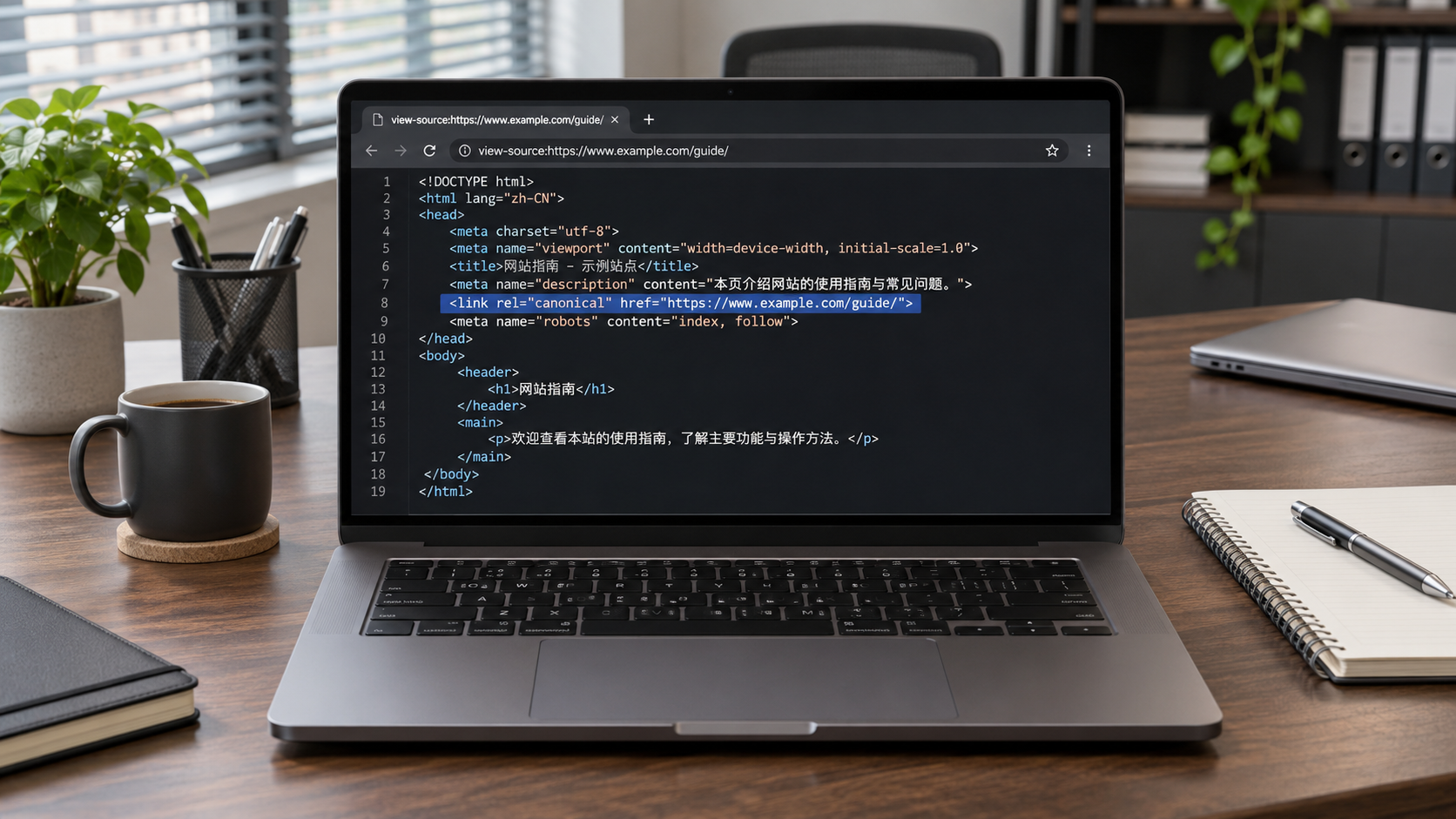
 Does the website building platform’s SEO functionality support custom canonical URLs?
 How to Choose a Website Building Platform for Multilingual Advertising Landing Pages
 How should global enterprises evaluate multi-site management capabilities when choosing a CMS?


Related Products
 Yiyingbao SaaS Intelligent Website Building and Marketing SystemYiyingbao SaaS Intelligent Website Building and Marketing System, AI-powered no-code website building, rapid creation of multilingual B2B international websites in 10 minutes, global server acceleration, AI-powered SEO optimization, helping businesses connect efficiently with global markets. The perfect integration of technology and operation makes building an international trade website remarkably simple
 AI+SEM Intelligent Advertising Marketing SystemAI+SEM drives intelligent ad creation, empowering full-funnel precision advertising marketing. The system automatically generates weekly/monthly reports, AI recommends keywords and target countries, monitors core metrics in real-time with intelligent alerts, and enables one-click high-conversion ad solutions to help quickly acquire customers and improve ROI.
 AI+SEO Dual-Engine System Optimization ServicesYiyingbao’s AI+SEO dual-engine optimization system helps foreign trade enterprises acquire high-quality organic traffic through AI-powered keyword research, content generation, and comprehensive technical optimization, significantly improving search rankings and conversion rates.
 AI+SNS Social Media Marketing SystemYingbao AI+SNS Social Media Marketing System - Precision social capture for the social media era. Supports one-click content synchronization across major platforms like Facebook and LinkedIn. AI intelligently rewrites posts for enhanced relevance. 24/7 AI customer service and user profiling analysis empower businesses to efficiently expand into global markets.
 AI+SEO营销解决方案易营宝AI+SEO营销解决方案,通过AI批量写作、智能生成TDK、精准关键词扩词等功能,全面优化网站SEO效果,提升流量与转化率。助力企业构建高效智能网站新生态。
 AI+SEM Advertising Marketing SolutionsAI+SEM Advertising Marketing Solution leverages AI technology to deeply empower SEM ad campaigns. It automatically generates weekly/monthly reports using AI, presenting account data across multiple dimensions for comprehensive insights into campaign performance and trends. The system precisely recommends keywords and target countries, intelligently generates high-conversion ad copy, and enables one-click activation of efficient campaign plans to help businesses rapidly acquire customers. Simultaneously, it monitors core metrics in real time, intelligently identifies abnormal fluctuations, and issues timely alerts to ensure stable, high-return advertising results.
 Domain Name ServicesEasyWin provides professional domain name services, including intelligent queries, one-stop registration, brand protection, and full lifecycle management, helping businesses build a digital brand image.
 EasyOperate B2C Cross-Border E-Commerce Platform & Independent WebsiteEasyStore B2C Cross-border E-commerce Independent Store is an intelligent website building and cross-border e-commerce integrated solution independently developed by EasyStore Information Technology (Beijing) Co., Ltd. The system is specially designed for small and medium-sized as well as large export enterprises, integrating 'website building, operation, marketing, advertising, and conversion' into one, helping enterprises quickly establish cross-border e-commerce independent stores to achieve brand globalization and global sales growth.
The platform supports multiple languages, multiple currencies, and multi-channel marketing, with built-in AI intelligent translation and SEO optimization systems, suitable for mainstream markets such as Southeast Asia, Europe and America, Latin America, and the Middle East, assisting Chinese manufacturing enterprises in efficiently deploying international e-commerce strategies. SSL证书易营宝提供专业SSL安全证书服务,包括单域名和泛域名证书,确保网站数据传输加密、身份验证和完整性保护,助力企业建立安全可信的在线业务环境。









