









- General Administration of Customs Issues New Rules on Import and Export Cosmetic Labeling, Effective December 1Nov 26, 2026View details
- U.S. to Announce Section 301 Investigation Findings on 16 Economies, Potentially Proposing New TariffsNov 26, 2026View details
- Hapag-Lloyd’s $4.2 billion acquisition of ZIM faces a closing delay; ZIM reports third-quarter net profit of $830 millionNov 24, 2026View details
- SCFI falls for a third straight week to 3,503.78 points, with blank sailings on trans-Pacific routes rising to 10Nov 24, 2026View details
- Lazada 11.11 Mega Sale: LazMall Contributes Nearly Two-Thirds of GMVNov 23, 2026View details
- Shein’s European Revenue Falls 16% as Tighter Rules on Low-Value Direct Shipments Take EffectNov 23, 2026View details
How to Find B2B Customers on LinkedIn: From Qualifying Leads to Making Connections

How can you use LinkedIn to find and develop B2B customers? When it comes to “akquise über linkedin,” what really matters is not how many connections you add, but whether you can identify the right companies, reach influential people, and encourage them to continue the conversation. For export manufacturers and overseas-market service providers, the following process can start with a small list—you don’t need to send out bulk prospecting messages right away.
Define your target customers before searching for contacts
“Procurement managers in Europe and the US” sounds like a target audience, but it is still too broad to be useful. A more actionable definition covers what a company sells, where it sits in the supply chain, which regions it operates in, and why it might need your product. For example, a manufacturer of industrial components could first distinguish between equipment manufacturers, distributors, and end-user factories. Each group has different priorities when it comes to supply capacity, pricing, and technical documentation.
On LinkedIn, start by searching by region, industry, and company, then visit company pages to review their business descriptions, employee distribution, and recent activity. Search results are only a list of potential prospects, not proof of genuine demand: a company with “industrial” in its name is not necessarily buying your components, and a seemingly suitable employee count does not mean the company has purchasing authority. Where necessary, check the company’s website to confirm that its product lines, service areas, and contact details are consistent.
Don’t focus exclusively on people with procurement titles. Engineers may need to evaluate technical products, business leaders may drive channel partnerships, and at small companies the owner may be directly involved. Consider recording procurement, technical, and business contacts at each target company, but don’t send identical messages to several people at once, as this can make your outreach seem poorly considered.
Standard search is useful for validating your approach. If you need to manage a larger number of leads by company size, region, and job title on an ongoing basis, assess whether paid sales tools are worthwhile. Filters and permissions may change, so check the trial version or current product information before buying. Don’t assume that a tool guarantees a high-quality lead list.
Use a lead-tracking sheet to turn “viewed” into “followed up”
Your tracking sheet doesn’t need to be complicated, but it should at least record the company name, website, target market, contact’s job title, reason for the match, most recent interaction, and next action. Make the reason specific enough to support an opening message, such as “the website features a relevant equipment line,” rather than the vague “has purchasing needs.” The latter is only a guess and can lead your team to start discussing prices too early.
Prioritize leads with a clear business fit, contacts whose responsibilities are well defined, and recent activity you can refer to. For companies with outdated information or unclear business scope, verify the details first. If you can’t find the person responsible for purchasing, politely ask which department to contact instead of assuming an unfamiliar contact is the decision-maker.

Before sending an invitation, make sure your profile stands up to scrutiny
People who receive your invitation will usually check who sent it first. Your personal profile should clearly state your company, the products or markets you’re responsible for, and the topics you’re available to discuss. Your company page should be consistent with your website’s company name, business description, and contact details. Your photo, job title, and work history don’t need to be overstated, but they should be genuine and complete so people can tell whether you’re a manufacturer, trading company, or agent.
For customers in German-speaking markets, choose German or English based on the customer’s business environment and your team’s actual communication capabilities. Opening in a language the customer is familiar with can make communication easier, but someone should review any machine-translated technical specifications, lead times, and trade terms. Polished language followed by inaccurate responses can damage trust.
Make contact by explaining the connection—not by rushing to sell
An invitation message can explain “why I found you and how our businesses are connected.” For example: “Hello, I saw that your company works with automation equipment. We supply related components to equipment manufacturers and would be glad to discuss supply chain needs with you.” This is an example of a communication structure. Before sending it, replace the details with verified business information, and don’t pretend to know that the recipient is currently purchasing.
After the person accepts your invitation, there’s no need to immediately send a lengthy introduction, catalog, or price list. Based on their role, ask an easy-to-answer question: ask a technical contact whether compatibility or delivery time is more important when selecting products, or ask a channel manager whether they handle supplier partnerships for a particular product category. Keep questions relevant to your actual products, don’t ask a string of questions, and don’t request personal information unrelated to the conversation.
If you don’t get a reply, follow up once after some time with a useful piece of information, such as a relevant application page or brief product-selection guide, and give the person room to decline. If there’s still no response, pause and record the status. The platform has rules and limits governing invitations and messages; refer to its official guidance at the time. Automated bulk messaging, repeated contact at short intervals, and collecting personal information without verification can all create account and compliance risks. When processing personal data, you should also consider the applicable requirements in your target market.
Connect interest on social platforms to your website
When customers want to learn more, your website is often easier to verify than a large, all-purpose attachment. Link to a product or application page that’s relevant to the conversation, and make sure it explains the intended applications, key specifications, scope of delivery, and how to make an inquiry. Any certifications or test results that need to be confirmed should be supported by valid documentation. Don’t send everyone to your homepage, and don’t make people click through several pages to find your contact details.
For multilingual websites, consistency is especially important: model numbers, units, and inquiry links on German pages should correspond with those in other language versions and sales materials. Yiyingbao offers intelligent website development, multilingual websites, search optimization, and overseas social media services. These services are suitable for companies looking to coordinate their website and marketing content, based on their actual needs. After a website goes live, business staff still need to keep its information up to date and respond to inquiries.
If your company is also building a website for the domestic market, separately check the server deployment, website classification, and filing requirements. China ICP Filing Service can provide preliminary document review, filing information submission, and filing updates. A filing for a non-commercial website and a commercial internet content license are not the same thing. Whether you need to apply, and which materials are required, depend on your actual business and the requirements of the relevant authorities. This service addresses compliance preparation for domestic websites; it does not directly improve your LinkedIn prospecting results.
When reviewing results, focus on conversation quality—not just acceptance rates
Review your lead-tracking sheet weekly and record invitations sent, invitations accepted, meaningful replies, and leads that progressed to discussions about specific needs. Compare results by industry, job title, or opening message. If many people accept your invitation but there’s no follow-up, your contacts may not be a good fit, or your second message may be too sales-focused too soon. If people visit your website but don’t make inquiries, check whether the page lacks specifications, delivery information, or a clear call to action. When your sample size is small, record the feedback first rather than rushing to treat differences as consistent patterns.
In the next round, change only one or two variables, such as narrowing your target-company criteria or replacing a generic introduction with a question tailored to the recipient’s role. This makes it easier to identify what caused any changes and gradually establish a prospecting cadence that suits your products.
Related Articles
 How to Set Up a Facebook Page for Your Business
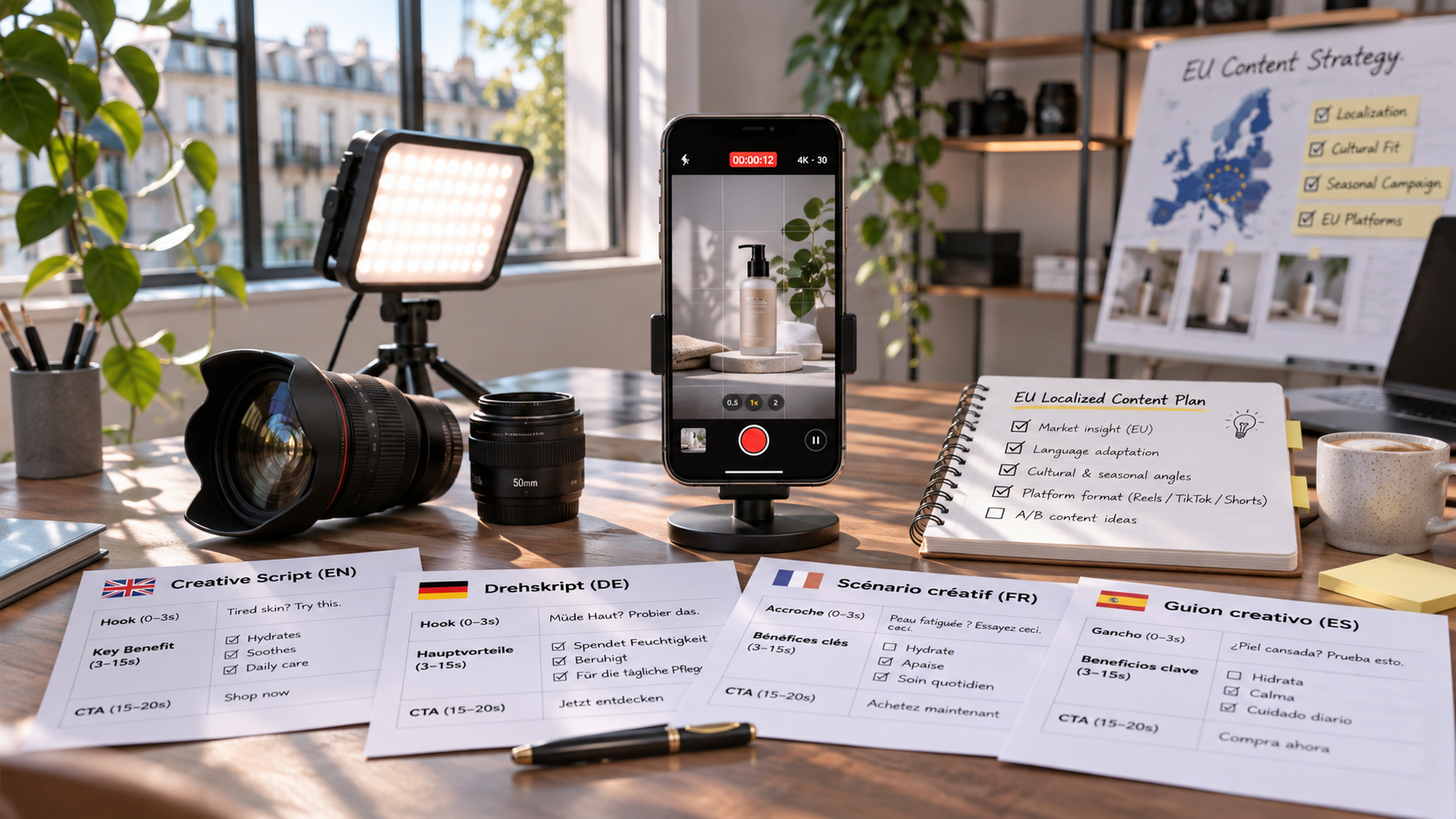
 How to Choose Local Creators for Short-Form Video Marketing in the European Market
 How Can Facebook Content Management Improve Post Engagement?

Related Products
 Yiyingbao SaaS Intelligent Website Building and Marketing SystemYiyingbao SaaS Intelligent Website Building and Marketing System, AI-powered no-code website building, rapid creation of multilingual B2B international websites in 10 minutes, global server acceleration, AI-powered SEO optimization, helping businesses connect efficiently with global markets. The perfect integration of technology and operation makes building an international trade website remarkably simple
 AI+SEM Intelligent Advertising Marketing SystemAI+SEM drives intelligent ad creation, empowering full-funnel precision advertising marketing. The system automatically generates weekly/monthly reports, AI recommends keywords and target countries, monitors core metrics in real-time with intelligent alerts, and enables one-click high-conversion ad solutions to help quickly acquire customers and improve ROI.
 AI+SEO Dual-Engine System Optimization ServicesYiyingbao’s AI+SEO dual-engine optimization system helps foreign trade enterprises acquire high-quality organic traffic through AI-powered keyword research, content generation, and comprehensive technical optimization, significantly improving search rankings and conversion rates.
 AI+SNS Social Media Marketing SystemYingbao AI+SNS Social Media Marketing System - Precision social capture for the social media era. Supports one-click content synchronization across major platforms like Facebook and LinkedIn. AI intelligently rewrites posts for enhanced relevance. 24/7 AI customer service and user profiling analysis empower businesses to efficiently expand into global markets.
 AI+SEO营销解决方案易营宝AI+SEO营销解决方案,通过AI批量写作、智能生成TDK、精准关键词扩词等功能,全面优化网站SEO效果,提升流量与转化率。助力企业构建高效智能网站新生态。
 AI+SEM Advertising Marketing SolutionsAI+SEM Advertising Marketing Solution leverages AI technology to deeply empower SEM ad campaigns. It automatically generates weekly/monthly reports using AI, presenting account data across multiple dimensions for comprehensive insights into campaign performance and trends. The system precisely recommends keywords and target countries, intelligently generates high-conversion ad copy, and enables one-click activation of efficient campaign plans to help businesses rapidly acquire customers. Simultaneously, it monitors core metrics in real time, intelligently identifies abnormal fluctuations, and issues timely alerts to ensure stable, high-return advertising results.
 Domain Name ServicesEasyWin provides professional domain name services, including intelligent queries, one-stop registration, brand protection, and full lifecycle management, helping businesses build a digital brand image.
 EasyOperate B2C Cross-Border E-Commerce Platform & Independent WebsiteEasyStore B2C Cross-border E-commerce Independent Store is an intelligent website building and cross-border e-commerce integrated solution independently developed by EasyStore Information Technology (Beijing) Co., Ltd. The system is specially designed for small and medium-sized as well as large export enterprises, integrating 'website building, operation, marketing, advertising, and conversion' into one, helping enterprises quickly establish cross-border e-commerce independent stores to achieve brand globalization and global sales growth.
The platform supports multiple languages, multiple currencies, and multi-channel marketing, with built-in AI intelligent translation and SEO optimization systems, suitable for mainstream markets such as Southeast Asia, Europe and America, Latin America, and the Middle East, assisting Chinese manufacturing enterprises in efficiently deploying international e-commerce strategies. SSL证书易营宝提供专业SSL安全证书服务,包括单域名和泛域名证书,确保网站数据传输加密、身份验证和完整性保护,助力企业建立安全可信的在线业务环境。









