









- Which customer acquisition channels will be affected by cross-border marketing trends in 2026?Sep 06, 2026View details
- Which homogenization risks should be considered in an analysis of the AI-powered website building industry?Aug 30, 2026View details
- How Will AI Marketing Trends 2026 Change Advertising Budget AllocationAug 28, 2026View details
- Is the EV SSL certificate market shrinking or upgrading? How should companies assess certificate procurement?Aug 11, 2026View details
- Why the old AMP SEO 2020 practices no longer work and what has changed in current optimization prioritiesAug 02, 2026View details
- How to Choose Topics for an Industry News Section to Attract More Organic Search TrafficJul 29, 2026View details
Overseas social media content operations for the Middle East market,should platform selection or content localization come first?
For overseas social media content operations in the Middle East market,why you cannot choose only one to start with
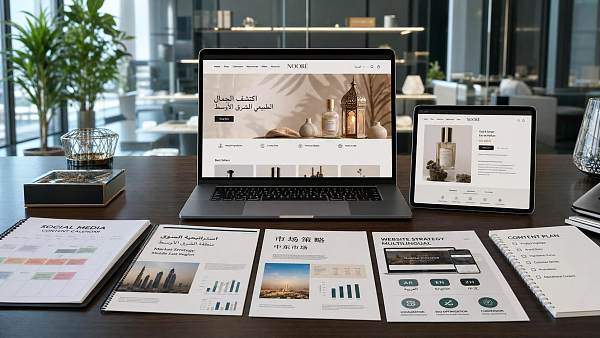
For overseas social media content operations in the Middle East market,a common debate is whether to choose the platform first,or to localize the content first。It looks like an either-or choice,but it is not。The user structure in the Middle East market is complex,and language habits,religious rhythms,consumption scenarios,and platform preferences are interconnected。Advancing any one item alone will reduce customer acquisition efficiency。
If the platform is chosen correctly,but the content lacks local context,exposure may increase,yet conversions will not improve。Conversely,if the content is very refined,but the platform selection is off target,the reached audience will not be accurate,and the budget can also be easily diluted。This is why overseas social media content operations in the Middle East market should not only look at traffic,but should pay more attention to whether the platform and content work together。
From actual business practice,the right sequence is not simply answering which one to do first,but first clarifying the market goals,and then completing platform screening and the content localization framework in parallel。Only in this way can subsequent advertising,inquiry handling,and official website conversion be connected,rather than each operating separately。
Determine the goals first,then decide the priorities of platforms and content
For overseas social media content operations in the Middle East market,the biggest mistake is discussing what content to post from the very beginning。What should truly be defined first is the business goal。Because brand exposure,channel recruitment,B2B inquiries,independent website traffic generation,and cross-border transactions have completely different platform requirements。
If the goal is brand building,platform selection usually comes first。Because you need to confirm where the core audience mainly spends time before deciding the content format and update frequency。For example,visual industries are more suitable for short videos and image content,while businesses with longer professional decision-making chains require platforms with continuous explanatory capabilities。
If the goal is conversion and customer acquisition,localization should instead be introduced earlier。Because the Middle East market is highly sensitive to expression methods,trust signals,and service response。What users see is not how much you post,but whether you are like a brand that truly understands local needs。
- Brand exposure type:lock in the platform first,then design the content matrix。
- Inquiry and customer acquisition type:launch platform selection and content localization simultaneously。
- Advertising amplification type:verify platform costs first,then optimize local expression。
- Long-term operation type:build content standards first,then expand platforms。
Therefore,the first step in overseas social media content operations in the Middle East market is not to choose channels on impulse,but to first clarify growth goals,customer profiles,and conversion paths。Once the direction is vague,both platforms and content will turn into repeated trial and error。
For platform selection in the Middle East,focus on user scenarios rather than platform popularity
When discussing overseas social media content operations in the Middle East market,many companies first think of well-known platforms,but what truly affects results is what scenarios the platform carries locally。Some people use it as an information gateway,some use it to build brand awareness,and some directly use it as a trust verification tool before transactions。
In the Middle East market,platform selection can be judged from three dimensions:audience coverage,content format,and conversion connection。Only when these three points match at the same time will operational actions not become disconnected。
This also means that platform selection cannot be discussed separately from the website and marketing chain。No matter how much interaction a platform brings,if there is no multilingual website,landing page,and subsequent follow-up,overseas social media content operations in the Middle East market will ultimately remain at the level of superficial popularity。
Content localization is not just translating into Arabic
When many teams carry out overseas social media content operations in the Middle East market,they understand localization as language replacement。This understanding is too shallow。What the Middle East market truly values is whether the content respects local culture,whether it conforms to usage habits,and whether it can build business trust。
Effective content localization includes at least four layers of meaning:language expression,local visuals,communication rhythm,and conversion messaging。If any one layer is missing,the content can easily appear “like a foreign brand speaking”,creating a strong sense of distance。
- Language expression should be natural,avoiding stiff literal translation and complex long sentences。
- Visual materials should conform to local aesthetics and usage contexts。
- Publishing time should consider holidays,workweeks,and active time periods。
- Calls to action should be close to decision-making methods and highlight credibility。
A more obvious signal is that Middle Eastern users judge very quickly whether a brand is “operating seriously”。A chaotic account style,slow replies,and inconsistent landing pages will all weaken trust。Therefore,localization for overseas social media content operations in the Middle East market must be advanced together with official website language versions,page structure,and form experience。
A more reliable approach:build the operation framework first,then verify in stages
If a practical sequence must be given for overseas social media content operations in the Middle East market,a more reliable method is “four steps in parallel,advanced by priority”。This can both control trial-and-error costs and allow the team to see feedback as soon as possible。
The first step is to complete market segmentation first。Separate target countries,languages,and customer types,and do not treat the Middle East market as one whole。The consumption power,content preferences,and business rhythms of different regions are not the same。
The second step is to select one to two core platforms for validation。Do not roll out across all channels at the beginning。Too many channels will dilute content,and the team will also find it difficult to establish judgment standards。
The third step is to establish basic localization templates first。This includes language style,visual guidelines,frequently asked questions,landing page structure,and customer service response wording。This can ensure consistency between account content and website experience。
The fourth step is to use data to decide the direction of expansion。Focus on interaction quality,click-through rate,inquiry rate,and pre-transaction communication efficiency,rather than only watching views and follower counts。
- The trial operation cycle is recommended to use 4 to 8 weeks as one evaluation unit。
- Review content performance and lead quality once every week。
- Adjust platform investment and content direction once every month。
In actual business,this method is especially suitable for companies that need official website construction,SEO optimization,advertising placement,and social media coordination。Because for overseas social media content operations in the Middle East market,what ultimately matters is not whether a single piece of content goes viral,but whether the entire customer acquisition chain can operate continuously。
Put platforms,content,and websites into the same growth system
For overseas social media content operations in the Middle East market,what truly creates a gap is often not how well the content team can write,but whether the company has placed platform selection,content localization,website follow-up,and subsequent conversion into the same system。
For companies hoping to steadily expand into the Middle East market,a more realistic path is:first screen platforms according to business goals,then simultaneously establish localized content standards,while also preparing multilingual websites,inquiry pages,and data tracking。In this way,after traffic comes in,there is a chance to turn it into real customers。
From this perspective,overseas social media content operations in the Middle East market are not about doing platform selection first,or doing content localization first,but about building the growth foundation first,and then arranging priorities。The platform is the entrance,content is the connection,the website is the follow-up,and data is the correction。Only when the four links run together can growth results become closer to being replicable。
If you are currently preparing to enter the Middle East market,you can first use a small group of countries and one core platform for a trial run,then simultaneously complete content localization and official website follow-up。Running through one chain first and then increasing investment usually produces results faster than a full rollout。
Related Articles


Related Products
 Yiyingbao SaaS Intelligent Website Building and Marketing SystemYiyingbao SaaS Intelligent Website Building and Marketing System, AI-powered no-code website building, rapid creation of multilingual B2B international websites in 10 minutes, global server acceleration, AI-powered SEO optimization, helping businesses connect efficiently with global markets. The perfect integration of technology and operation makes building an international trade website remarkably simple
 AI+SEM Intelligent Advertising Marketing SystemAI+SEM drives intelligent ad creation, empowering full-funnel precision advertising marketing. The system automatically generates weekly/monthly reports, AI recommends keywords and target countries, monitors core metrics in real-time with intelligent alerts, and enables one-click high-conversion ad solutions to help quickly acquire customers and improve ROI.
 AI+SEO Dual-Engine System Optimization ServicesYiyingbao’s AI+SEO dual-engine optimization system helps foreign trade enterprises acquire high-quality organic traffic through AI-powered keyword research, content generation, and comprehensive technical optimization, significantly improving search rankings and conversion rates.
 AI+SNS Social Media Marketing SystemYingbao AI+SNS Social Media Marketing System - Precision social capture for the social media era. Supports one-click content synchronization across major platforms like Facebook and LinkedIn. AI intelligently rewrites posts for enhanced relevance. 24/7 AI customer service and user profiling analysis empower businesses to efficiently expand into global markets.
 AI+SEO营销解决方案易营宝AI+SEO营销解决方案,通过AI批量写作、智能生成TDK、精准关键词扩词等功能,全面优化网站SEO效果,提升流量与转化率。助力企业构建高效智能网站新生态。
 AI+SEM Advertising Marketing SolutionsAI+SEM Advertising Marketing Solution leverages AI technology to deeply empower SEM ad campaigns. It automatically generates weekly/monthly reports using AI, presenting account data across multiple dimensions for comprehensive insights into campaign performance and trends. The system precisely recommends keywords and target countries, intelligently generates high-conversion ad copy, and enables one-click activation of efficient campaign plans to help businesses rapidly acquire customers. Simultaneously, it monitors core metrics in real time, intelligently identifies abnormal fluctuations, and issues timely alerts to ensure stable, high-return advertising results.
 Domain Name ServicesEasyWin provides professional domain name services, including intelligent queries, one-stop registration, brand protection, and full lifecycle management, helping businesses build a digital brand image.
 EasyOperate B2C Cross-Border E-Commerce Platform & Independent WebsiteEasyStore B2C Cross-border E-commerce Independent Store is an intelligent website building and cross-border e-commerce integrated solution independently developed by EasyStore Information Technology (Beijing) Co., Ltd. The system is specially designed for small and medium-sized as well as large export enterprises, integrating 'website building, operation, marketing, advertising, and conversion' into one, helping enterprises quickly establish cross-border e-commerce independent stores to achieve brand globalization and global sales growth.
The platform supports multiple languages, multiple currencies, and multi-channel marketing, with built-in AI intelligent translation and SEO optimization systems, suitable for mainstream markets such as Southeast Asia, Europe and America, Latin America, and the Middle East, assisting Chinese manufacturing enterprises in efficiently deploying international e-commerce strategies. SSL证书易营宝提供专业SSL安全证书服务,包括单域名和泛域名证书,确保网站数据传输加密、身份验证和完整性保护,助力企业建立安全可信的在线业务环境。









