









- Which customer acquisition channels will be affected by cross-border marketing trends in 2026?Sep 06, 2026View details
- Which homogenization risks should be considered in an analysis of the AI-powered website building industry?Aug 30, 2026View details
- How Will AI Marketing Trends 2026 Change Advertising Budget AllocationAug 28, 2026View details
- Is the EV SSL certificate market shrinking or upgrading? How should companies assess certificate procurement?Aug 11, 2026View details
- Why the old AMP SEO 2020 practices no longer work and what has changed in current optimization prioritiesAug 02, 2026View details
- How to Choose Topics for an Industry News Section to Attract More Organic Search TrafficJul 29, 2026View details
What Issues Should Be Considered When Building a Spanish-Language Website?
When creating a Spanish-language website for the first time, many people tend to oversimplify the process: first translate the Chinese or English website into Spanish, then launch the domain and wait for search engines to index it and customers to arrive naturally. But after the actual launch, a common situation is that the pages load properly and the content looks “more or less right,” yet inquiries remain scarce, the bounce rate is high, and local users may even feel at a glance that the site lacks professionalism.
What makes these issues challenging is that they are not caused by a single error. You may find problems with the copy, navigation, contact details, forms, SEO, and mobile experience. That is why when many people ask, “What should be considered when building a Spanish-language website?”, what they really want to know is not whether to create a Spanish version, but how to avoid building a website that has been “translated but nobody wants to use.”
Let’s start with one of the most common misconceptions: treating Spanish-language website development as simple language replacement. In reality, the Spanish-speaking market covers many countries, and the way the same sentence is expressed, as well as its tone and word choices, may vary between Spain and Latin America. If your business targets multiple countries, overly localized wording on the page may feel awkward to some users. On the other hand, if the entire website is written in neutral, machine-translated sentences, it can easily sound stiff and undermine trust.
Before rushing to create pages, first determine exactly who you are addressing
Before building a Spanish-language website, the first thing to confirm is not the color scheme or the homepage banner, but the target region. “Spanish-speaking users” are not a unified group. Are you targeting Spain, or Latin American countries such as Mexico, Chile, Argentina, and Peru? Different regions have different payment habits, reading preferences, business expressions, and search terms.
If the target market has not yet been determined, several problems can easily arise during website development: the title keywords may be too broad, it may be unclear whether the copy should be formal or conversational, the types of cooperation scenarios to showcase on the case study page may be uncertain, and it may not be clear whether international phone numbers, WhatsApp, or email should be prioritized in the contact options. The result is often a website that “covers everything” but does not genuinely address any particular visitor.
A more reliable approach is to divide the business into two layers. One layer uses globally consistent messaging, such as the brand introduction, core products, and delivery process. The other uses regionalized messaging, such as frequently asked questions, service commitment wording, call-to-action buttons, search terms, and landing page content. This prevents frequent rework when developing content and SEO later.
Accurate translation does not equal conversion; page copy should be rewritten for its usage scenario
The biggest problem with many translated websites is not that they are “wrong,” but that they “do not look like they were written for people.” This is especially true for short phrases such as navigation labels, button text, form prompts, and product selling points, where literal translation often damages the user experience most. For example, Chinese websites commonly use phrases such as “Contact us now” and “Get a solution,” but in a Spanish-language environment, these do not always need to be translated word for word. Some expressions are more suitable for inquiry-oriented websites, while others are better suited to e-commerce pages.
A simple way to determine whether copy is usable is to see whether it is written around the user’s intended action. After entering a page, visitors first need to know what you do, then decide whether it suits their needs, and finally determine whether to contact you. Therefore, the homepage hero section, product page titles, service introductions, button copy, and form fields should all support this process instead of simply copying the original website content in full.
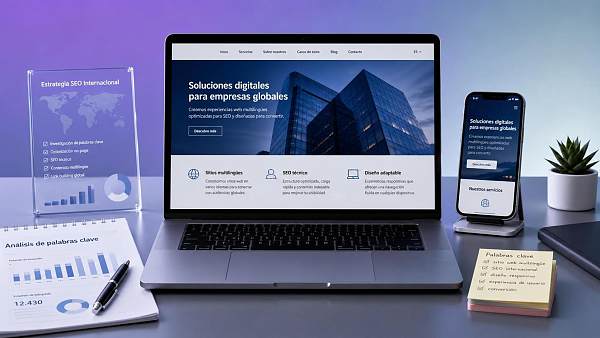
If you are dealing with similar issues, you can prioritize rewriting the following areas:
- One-sentence explanation in the homepage hero section: avoid being too abstract and make the business type immediately clear.
- Navigation labels: keep them short and clear to prevent the translated text from becoming too long and affecting the layout.
- Form fields and prompts: field names should follow common local completion habits.
- Button text: do not focus only on appearance; make it clear to users what will happen when they click.
- FAQ page: this is the ideal place to reinforce trust and explain details.
Do not copy search terms directly from Chinese; Spanish SEO starts with the website structure
When creating a Spanish-language website, many companies first think, “We only need to translate the Chinese keywords.” This is usually not enough. Users in different markets search differently, and word order, singular and plural forms, preposition changes, and regional vocabulary differences can all affect whether a page matches search intent. In other words, what should be considered when building a Spanish-language website is a question in which SEO is a core element, and it is not something to consider only after the website goes live.
If SEO is not considered during the website development stage, common problems later include confusing URL structures, inconsistent section names, duplicated title hierarchies, multiple pages competing for the same keyword, and interference between different language versions. Adding SEO after the website is completed is usually more costly.
A more suitable sequence is as follows: first identify the primary countries and main business terms, then plan which search intents should be addressed by category pages, service pages, product pages, and information pages. For example, some terms are more suitable for service pages, some work better as guide content, and some can only be naturally incorporated into an FAQ. If the content structure is clarified from the beginning, both organic indexing and the connection between advertising campaigns and landing pages will proceed much more smoothly.
Mobile experience and loading speed often affect inquiries more than you expect
Many overseas visits originate from mobile devices, and this is also common in Spanish-speaking markets. The problem is that domestic teams often evaluate a website based on its desktop design. As a result, on mobile devices the hero section may be too long, buttons too small, forms difficult to complete, and images too large, causing users to leave before they even see the key information.
The page experience can be assessed through several details:
First, can the hero section clearly explain who you are, what you do, and how to contact you within a short time? Second, are phone, email, WhatsApp, or other contact options sufficiently visible? Third, will images and scripts slow down loading? Fourth, are long pages clearly divided into sections so that users can grasp the key points without scrolling for a long time?
If your website will also support advertising campaigns, this point should not be overlooked. A landing page is not a corporate brochure; its information density and action path need to be more direct. Many pages do not suffer from insufficient traffic, but rather from visitors not knowing what to do next after arriving on the site.
Do not overlook local trust elements, especially contact details and the expression of details
Whether a Spanish-language website makes people willing to get in touch depends not only on the content itself, but also on the “trustworthy details” presented on the page. Common problems include contact information being buried too deeply, time zones not being specified, inappropriate form fields, or providing only an email address without other instant communication options. Users may not necessarily question your business because of this, but they may simply not bother looking further.
Other details are also easy to overlook, such as date formats, number separators, currency display, address formatting, and the placement of privacy notices. These may seem minor, but they directly affect whether a website appears to genuinely serve the target market rather than simply being a foreign-language version.
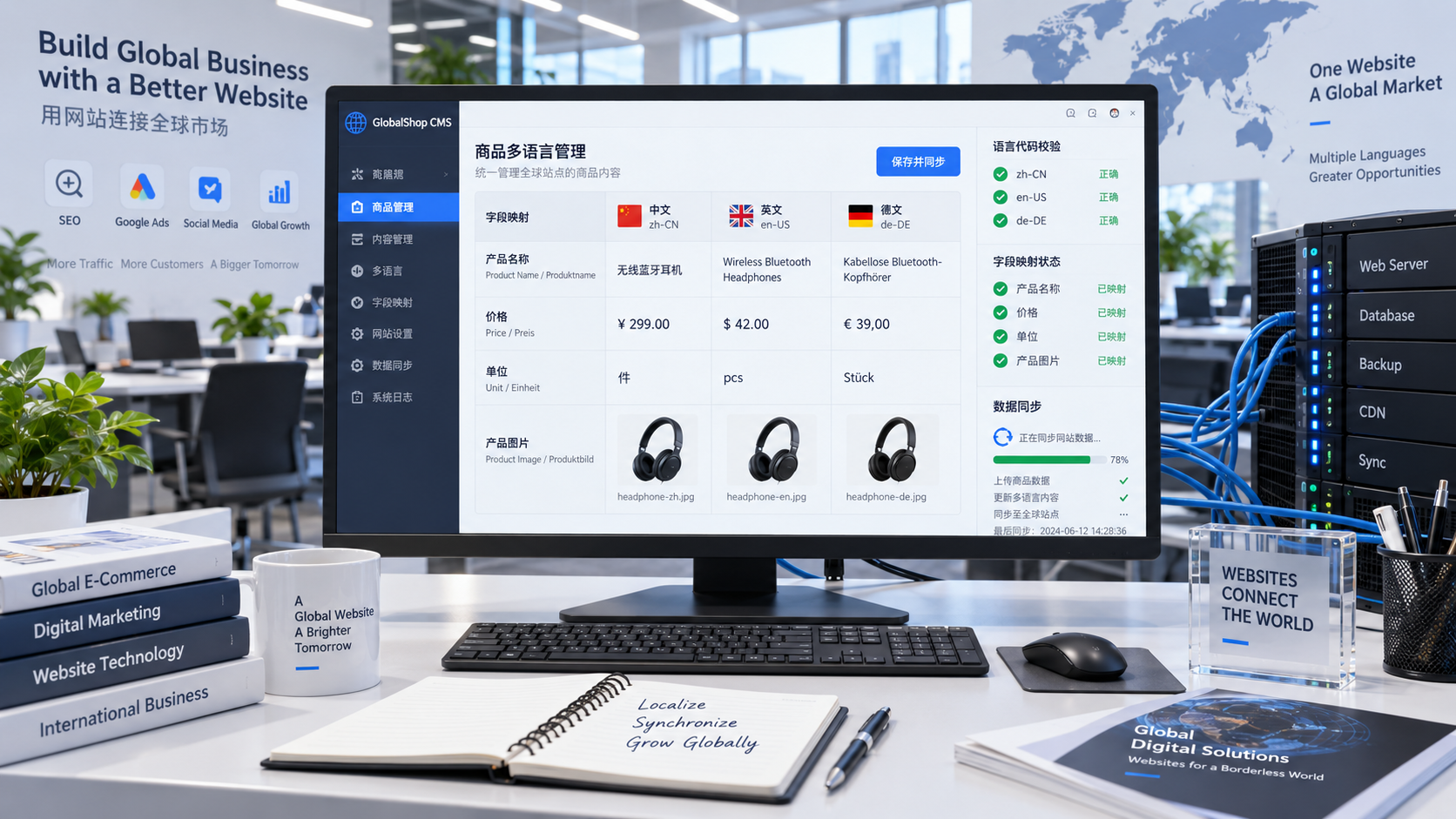
If multiple languages need to be managed in parallel, it is best to manage the content for each language separately. This helps avoid situations where the Chinese content is updated but the Spanish content is not, or where product specifications are changed in one language while the other remains outdated. Over time, these issues can damage trust more than translation errors.
Do not choose technology based only on whether the site can go live; consider subsequent maintenance and marketing integration
One of the biggest challenges for many people in the early stage is deciding whether to assemble a system themselves or use a mature website-building tool directly. The former is flexible, but requires consideration of multilingual management, SEO settings, form tracking, page iteration, and subsequent maintenance. The latter can be deployed more quickly, but it is important to check whether it supports the functions commonly used for overseas promotion.
For teams that need to advance website development and marketing together, technology selection can focus on the following: whether multilingual content can be managed independently; whether page titles, descriptions, URLs, and structured content can be configured conveniently; whether mobile editing is efficient; whether SEO, advertising, and social media traffic acquisition can be integrated later; and whether content updates will frequently depend on developers. A Spanish-language website does not end when it is completed. It will continue to undergo revisions, have pages added, publish content, and support promotional activities.
Some teams directly use intelligent website-building systems with multilingual and marketing extension capabilities. The reason is not simply to “save effort,” but to keep website development, content updates, basic SEO configuration, and subsequent promotion on the same schedule. This is especially useful when the website also needs to support Google SEO, advertising landing pages, or multi-region content management, as it reduces the risk of disconnection midway through the process.
Before launch, it is best to conduct a review from the perspective of a real visitor
When the website is ready to be published, do not assess it only from an internal perspective by asking whether “all the pages are complete.” A more effective approach is to assume that you are a Spanish-speaking user visiting for the first time. Follow the entire path from entering through a search, browsing the pages, and attempting to make contact. You will quickly discover that the problems often lie not in the overall direction, but in details that create obstacles.
For example, the title in the search results may not clearly distinguish the page; after entering the homepage, visitors may not know the main business focus; the product page may contain a great deal of text but lack a clear action option; the form may require too much information; mobile buttons may be obscured; or there may be no clear feedback after contact. This type of review is closer to a real usage scenario than looking at design drafts alone.
If your internal team does not have people who handle overseas websites on an ongoing basis, you can also consider working with a service provider experienced in multilingual website development and overseas marketing to organize the website structure, content management, basic SEO, and promotional requirements together. The focus is not on making the website as complex as possible, but on ensuring that it can be maintained, indexed, and used to receive inquiries, without having to start over whenever a change is made.
Returning to the original question, what should be considered when building a Spanish-language website? The key consideration is often not whether there is a Spanish-language page, but whether that page truly matches the reading habits, search behavior, and conversion path of the target region. As long as the region, content expression, SEO structure, mobile experience, and subsequent operating approach are clarified before development begins, many later problems can actually be avoided in advance.
Related Articles
Related Products
 Yiyingbao SaaS Intelligent Website Building and Marketing SystemYiyingbao SaaS Intelligent Website Building and Marketing System, AI-powered no-code website building, rapid creation of multilingual B2B international websites in 10 minutes, global server acceleration, AI-powered SEO optimization, helping businesses connect efficiently with global markets. The perfect integration of technology and operation makes building an international trade website remarkably simple
 AI+SEM Intelligent Advertising Marketing SystemAI+SEM drives intelligent ad creation, empowering full-funnel precision advertising marketing. The system automatically generates weekly/monthly reports, AI recommends keywords and target countries, monitors core metrics in real-time with intelligent alerts, and enables one-click high-conversion ad solutions to help quickly acquire customers and improve ROI.
 AI+SEO Dual-Engine System Optimization ServicesYiyingbao’s AI+SEO dual-engine optimization system helps foreign trade enterprises acquire high-quality organic traffic through AI-powered keyword research, content generation, and comprehensive technical optimization, significantly improving search rankings and conversion rates.
 AI+SNS Social Media Marketing SystemYingbao AI+SNS Social Media Marketing System - Precision social capture for the social media era. Supports one-click content synchronization across major platforms like Facebook and LinkedIn. AI intelligently rewrites posts for enhanced relevance. 24/7 AI customer service and user profiling analysis empower businesses to efficiently expand into global markets.
 AI+SEO营销解决方案易营宝AI+SEO营销解决方案,通过AI批量写作、智能生成TDK、精准关键词扩词等功能,全面优化网站SEO效果,提升流量与转化率。助力企业构建高效智能网站新生态。
 AI+SEM Advertising Marketing SolutionsAI+SEM Advertising Marketing Solution leverages AI technology to deeply empower SEM ad campaigns. It automatically generates weekly/monthly reports using AI, presenting account data across multiple dimensions for comprehensive insights into campaign performance and trends. The system precisely recommends keywords and target countries, intelligently generates high-conversion ad copy, and enables one-click activation of efficient campaign plans to help businesses rapidly acquire customers. Simultaneously, it monitors core metrics in real time, intelligently identifies abnormal fluctuations, and issues timely alerts to ensure stable, high-return advertising results.
 Domain Name ServicesEasyWin provides professional domain name services, including intelligent queries, one-stop registration, brand protection, and full lifecycle management, helping businesses build a digital brand image.
 EasyOperate B2C Cross-Border E-Commerce Platform & Independent WebsiteEasyStore B2C Cross-border E-commerce Independent Store is an intelligent website building and cross-border e-commerce integrated solution independently developed by EasyStore Information Technology (Beijing) Co., Ltd. The system is specially designed for small and medium-sized as well as large export enterprises, integrating 'website building, operation, marketing, advertising, and conversion' into one, helping enterprises quickly establish cross-border e-commerce independent stores to achieve brand globalization and global sales growth.
The platform supports multiple languages, multiple currencies, and multi-channel marketing, with built-in AI intelligent translation and SEO optimization systems, suitable for mainstream markets such as Southeast Asia, Europe and America, Latin America, and the Middle East, assisting Chinese manufacturing enterprises in efficiently deploying international e-commerce strategies. SSL证书易营宝提供专业SSL安全证书服务,包括单域名和泛域名证书,确保网站数据传输加密、身份验证和完整性保护,助力企业建立安全可信的在线业务环境。









