









- Levanta’s Inaugural China Summit Held in Shenzhen, Focusing on AI and Cross-Border Brand GrowthOct 20, 2026View details
- The October Edition of the 2026 GGE Shenzhen Cross-Border E-Commerce Expo OpensOct 20, 2026View details
- Dongguan’s foreign trade imports and exports reached RMB 1.29 trillion in the first three quarters, a record high for the same periodOct 20, 2026View details
- Liaoning Holds Province-Wide Meeting to Advance Cross-Border E-Commerce, Emphasizing the Need to Explore Differentiated Development PathsOct 20, 2026View details
- Advanced Manufacturing Seizes Global Opportunities as Guangdong’s Q3 Foreign Trade Surpasses RMB 3 Trillion for the First TimeOct 20, 2026View details
- Can the average annual growth rate reflect real opportunities in overseas markets?Oct 07, 2026View details
How Can Website Content Translation Services Avoid the Mistranslation of Technical Terms?
Introduction: In website content translation services, mistranslating technical terms can directly affect brand credibility and overseas customers' understanding. Terminology databases, industry reviews, and localization proofreading can help multilingual websites achieve both accuracy and conversion performance.
When companies build multilingual websites, the most easily overlooked issue is not grammar, but whether technical terms are conveyed accurately. A mistranslated equipment name, certification standard, or trade term may cause overseas customers to misunderstand product capabilities or even abandon their inquiry altogether.
Therefore, when assessing whether a website content translation service is reliable, companies should not focus only on whether the translation reads smoothly or whether the quotation is low. For website operators, it is more important to establish executable terminology management, review, and pre-launch validation processes, ensuring that every content update follows consistent standards.
Why Are Technical Terms Most Prone to Errors in Website Translation?

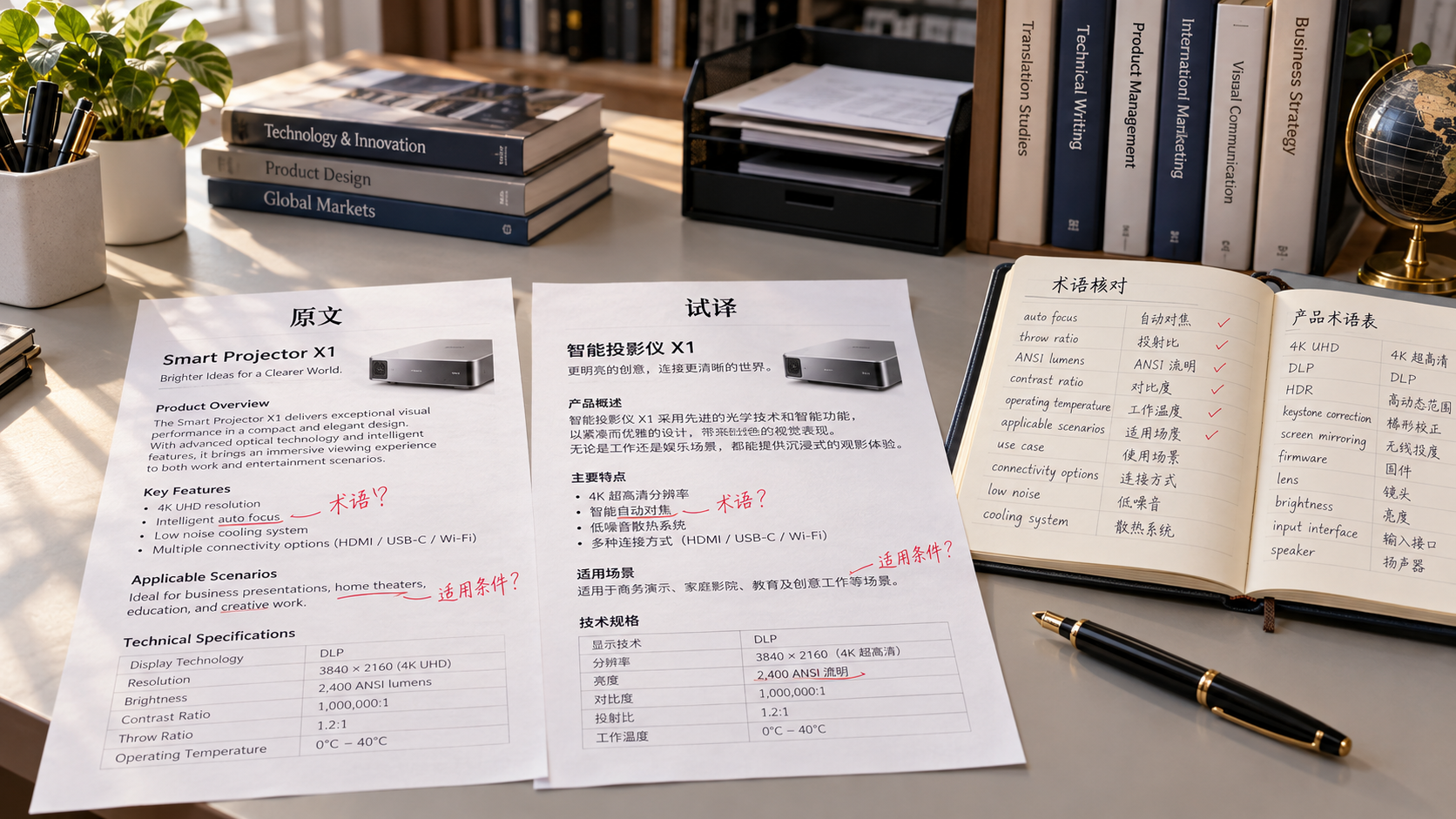
Technical terms are often more than simple word substitutions; they combine industry context, product structure, and usage scenarios. For example, “模具” may correspond to mold, die, or tooling in different manufacturing contexts, and choosing the wrong term can change a customer's understanding of the product scope.
Many mistranslations result from machine literal translation or general translators lacking industry knowledge. A system may identify common meanings of a word, but it may not understand its specific meaning on pages for machinery, chemicals, medical devices, or cross-border e-commerce, ultimately producing expressions that appear correct but are actually wrong.
Website pages also tend to have short titles and fragmented copy. When product specifications, navigation labels, and button copy are translated without context, it is difficult for translators to determine the object, action, and audience, making technical terms more likely to be rendered as everyday language.
Different target markets also have their own industry conventions. The common name for the same product may differ in the United States, the United Kingdom, Germany, or Southeast Asian markets. Pursuing only literal equivalence can make customers understand the content while still finding it “unprofessional.”
Build a Corporate Terminology Database First, Rather Than Confirming Terms Page by Page
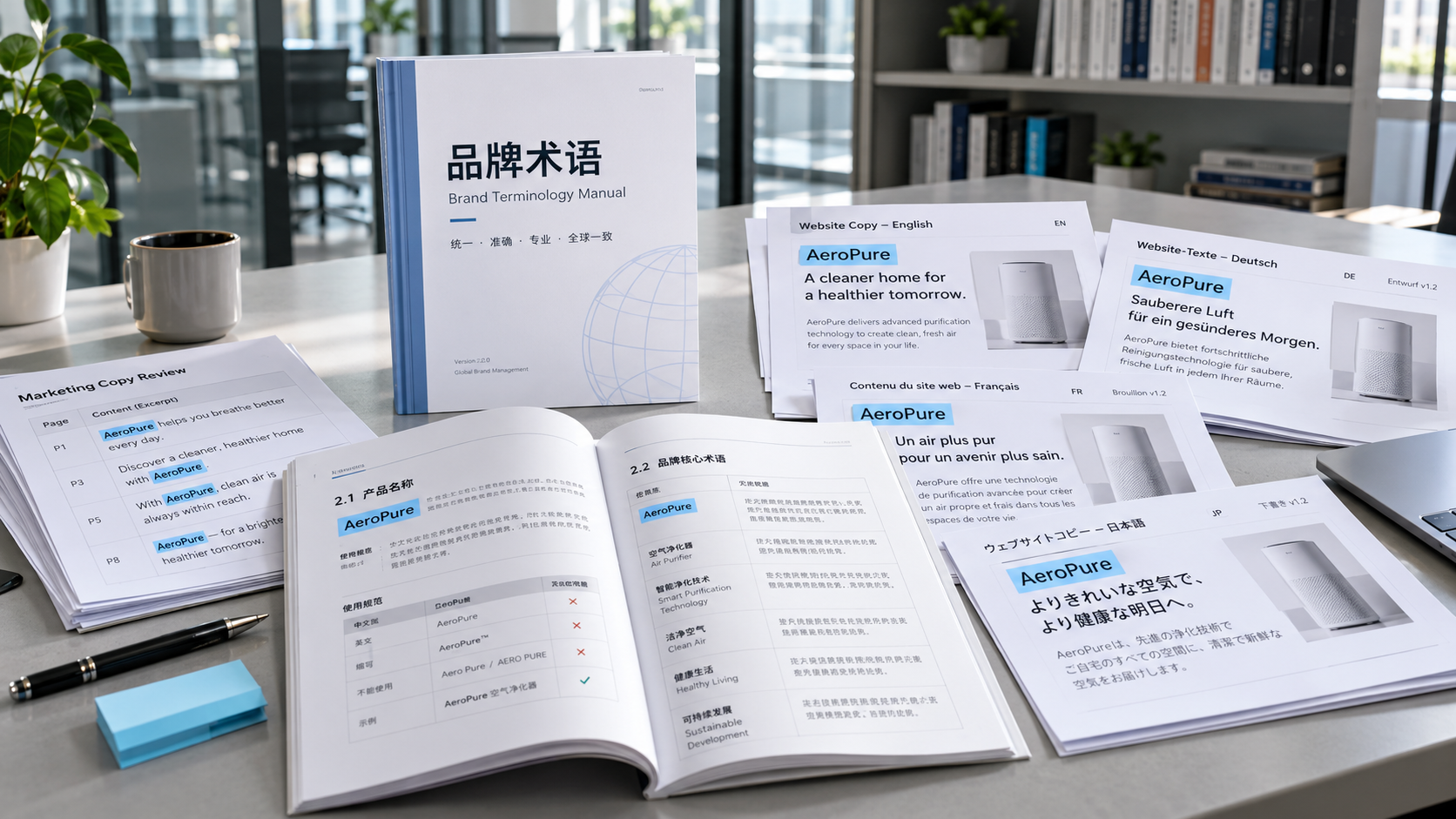
The first step in avoiding mistranslations of technical terms is to establish a terminology database before website content translation services begin. The database should cover product names, components, materials, processes, specification units, certifications, brand names, job titles, and common trade expressions.
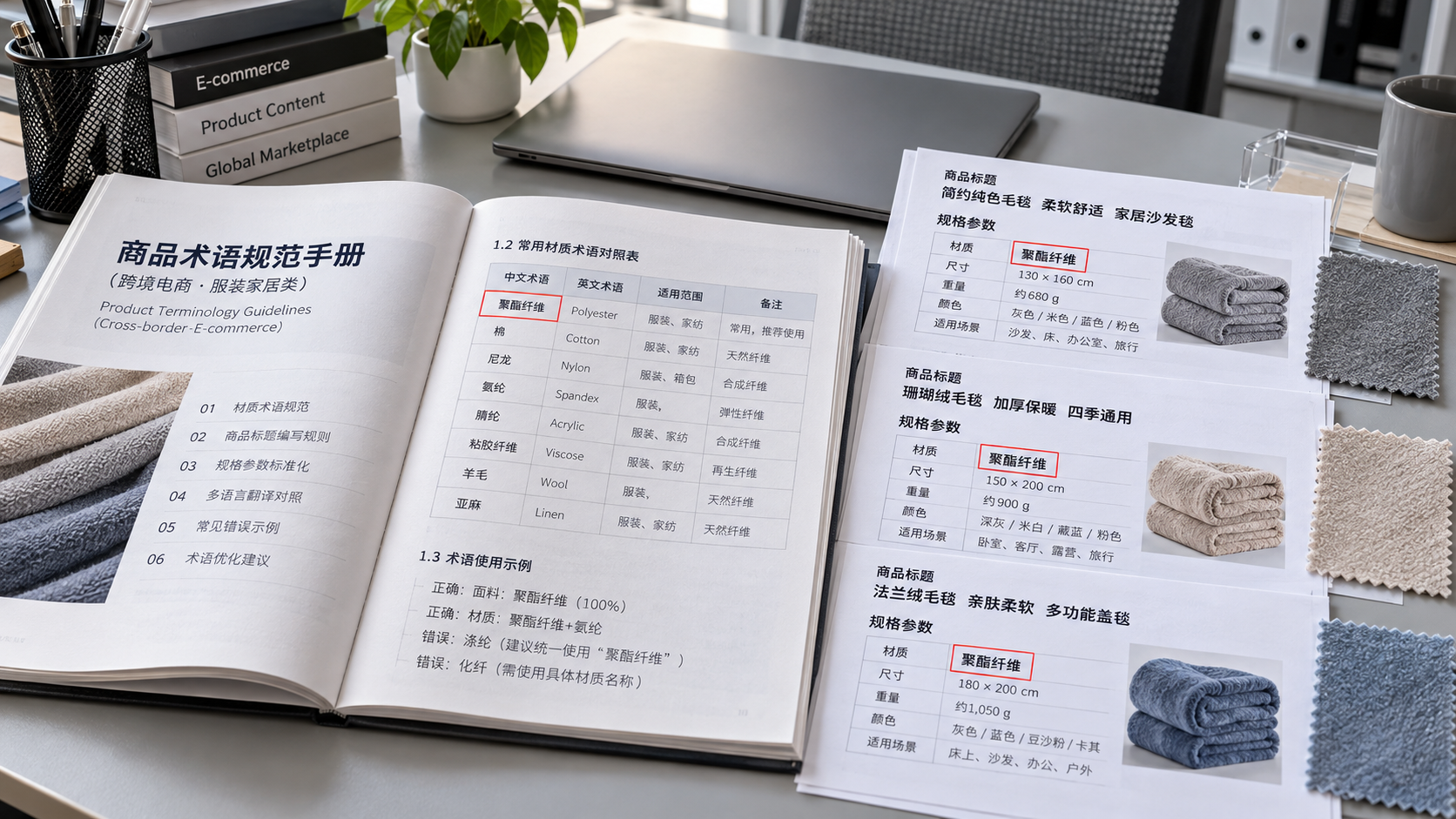
Each term should ideally include at least the Chinese source text, the standard foreign-language translation, part of speech, applicable pages, prohibited translations, and notes. For terms with multiple translations, the conditions for use should also be specified to avoid contradictory wording across different product pages.
Website operators do not need to compile all vocabulary at once; they can start with high-frequency, high-risk content. Key homepage selling points, product categories, specification tables, downloadable materials, FAQs, inquiry forms, and advertising landing pages should all be brought under unified management first.
The terminology database needs a clearly assigned maintenance owner. Marketing staff can provide brand wording and commonly used customer expressions; product or technical staff can confirm professional definitions; the translation team is responsible for language standards; and website operations staff ensure that the final pages use the latest version.
How Can You Provide Translators with Sufficient Industry Context?
Simply handing a Chinese document to translators is usually not enough to ensure terminology accuracy. Website content translation services should also provide product catalogs, technical materials, existing English samples, target markets, customer types, and page purposes so translators understand whom the content serves.
For complex products, it is recommended to supplement key pages with screenshots and links and mark the positions of terms on the page. For example, whether “seal” means a sealing component or a stamp, or whether “controller” means a control device or an administration dashboard, can only be judged correctly when combined with product images and context.
Content objectives should also be stated in advance. Product pages for Google SEO need to balance target keywords with industry terminology; landing pages for advertising should emphasize customer-friendly benefits; pages for technical documentation should prioritize terminological rigor.
If a company already has overseas sales records, it can compile commonly used expressions from customer emails and inquiries for the translation team. Real customer language offers more reference value than internal literal translations and also helps multilingual websites align with local user habits in search and conversion.
What Easily Overlooked Content Should Be Checked in an Industry Review?
After the initial translation is completed, spelling and grammar checks alone are not enough. Professional reviews should focus on product models, material grades, dimensional units, performance parameters, certification numbers, regulatory names, and applicable industries to ensure that the translation remains consistent with the original technical materials.
Units and specifications are high-risk areas. Information such as millimeters, inches, degrees Celsius, degrees Fahrenheit, kilograms, and pounds requires more than translating the names; it is also necessary to confirm whether conversion is required for the target market and ensure consistent data across specification tables, image text, and downloadable files.
Certification- and compliance-related terms also require particular caution. Names such as CE, FDA, RoHS, REACH, and ISO must not be expanded arbitrarily, nor should “meets requirements” be translated as “has obtained certification.” Such mistranslations may lead to customer complaints and compliance risks.
A “two-person review” approach is recommended: language specialists check whether the wording is natural, while technical specialists check whether the facts are accurate. Terms that cannot be confirmed should be marked as pending items and ultimately verified by the company's internal product owner rather than guessed based on experience.
How Can Localization Proofreading Make Accurate Translations Feel More Like Local Websites?
Correct terminology does not necessarily mean that a page is usable. Localization proofreading needs to examine section names, button copy, date formats, currency units, phone number formats, and inquiry prompts from the perspective of overseas visitors, avoiding clearly Chinese-style expressions on the website.
For example, Chinese websites commonly use “联系我们获取报价,” while English B2B pages may use Request a Quote, Talk to Our Team, or Send an Inquiry depending on the scenario. The core meaning is similar, but different wording has a noticeable impact on page tone and willingness to take action.
On SEO pages, localization should also check whether keywords conflict with the terminology database. Forcing broad terms into content merely to pursue search volume may cause technical products to lose accuracy. A more appropriate approach is to naturally combine industry head terms with product modifiers in titles, descriptions, and body copy.
Visual proofreading should be conducted before the page goes live. Changes in text length may result in broken table lines, overflowing buttons, or image text that has not been translated accordingly. When users see a disorganized page, they may question the company's professionalism even if the body copy itself is translated correctly.
How Should Website Operators Accept and Review Website Content Translation Services?
When accepting the work, do not judge it solely by whether it “reads smoothly.” You can sample the homepage, core product pages, specification pages, case study pages, and inquiry pages, and inspect them based on five aspects: terminology consistency, technical accuracy, localized expression, page presentation, and SEO elements.
First, search for every occurrence of the same technical term across the website to confirm that category pages, detail pages, blogs, and downloadable materials do not use different translations. Then verify whether product names in page titles, Meta Descriptions, image Alt text, and URLs are consistent with the main page content.
For key markets, it is best to arrange limited review sessions with overseas sales personnel familiar with the industry, local partners, or target customers. They can quickly identify terms that are grammatically correct but inconsistent with purchasing habits, and such feedback is particularly worth recording in the terminology database.
Companies should also require service providers to retain editable source files, translation memories, and terminology database deliverables. Website content will continue to be added, and lacking these assets means that terms must be re-explained with every future redesign, increasing both costs and mistranslation risks.
Conclusion: Treat Translation as Part of the Website Growth Process
Mistranslating technical terms is not simply a language issue; it results from insufficient coordination among content, products, technology, and markets. Reliable website content translation services should establish repeatable processes through terminology databases, contextual materials, industry reviews, and localization proofreading.
For website operators, the most effective approach is to first identify high-risk pages and core terminology, then have product, marketing, and translation teams jointly confirm the standards. This can both reduce the barrier to understanding for overseas customers and make multilingual websites more visible in search and more credible for conversion.
Related Articles
Related Products
 Yiyingbao SaaS Intelligent Website Building and Marketing SystemYiyingbao SaaS Intelligent Website Building and Marketing System, AI-powered no-code website building, rapid creation of multilingual B2B international websites in 10 minutes, global server acceleration, AI-powered SEO optimization, helping businesses connect efficiently with global markets. The perfect integration of technology and operation makes building an international trade website remarkably simple
 AI+SEM Intelligent Advertising Marketing SystemAI+SEM drives intelligent ad creation, empowering full-funnel precision advertising marketing. The system automatically generates weekly/monthly reports, AI recommends keywords and target countries, monitors core metrics in real-time with intelligent alerts, and enables one-click high-conversion ad solutions to help quickly acquire customers and improve ROI.
 AI+SEO Dual-Engine System Optimization ServicesYiyingbao’s AI+SEO dual-engine optimization system helps foreign trade enterprises acquire high-quality organic traffic through AI-powered keyword research, content generation, and comprehensive technical optimization, significantly improving search rankings and conversion rates.
 AI+SNS Social Media Marketing SystemYingbao AI+SNS Social Media Marketing System - Precision social capture for the social media era. Supports one-click content synchronization across major platforms like Facebook and LinkedIn. AI intelligently rewrites posts for enhanced relevance. 24/7 AI customer service and user profiling analysis empower businesses to efficiently expand into global markets.
 AI+SEO营销解决方案易营宝AI+SEO营销解决方案,通过AI批量写作、智能生成TDK、精准关键词扩词等功能,全面优化网站SEO效果,提升流量与转化率。助力企业构建高效智能网站新生态。
 AI+SEM Advertising Marketing SolutionsAI+SEM Advertising Marketing Solution leverages AI technology to deeply empower SEM ad campaigns. It automatically generates weekly/monthly reports using AI, presenting account data across multiple dimensions for comprehensive insights into campaign performance and trends. The system precisely recommends keywords and target countries, intelligently generates high-conversion ad copy, and enables one-click activation of efficient campaign plans to help businesses rapidly acquire customers. Simultaneously, it monitors core metrics in real time, intelligently identifies abnormal fluctuations, and issues timely alerts to ensure stable, high-return advertising results.
 Domain Name ServicesEasyWin provides professional domain name services, including intelligent queries, one-stop registration, brand protection, and full lifecycle management, helping businesses build a digital brand image.
 EasyOperate B2C Cross-Border E-Commerce Platform & Independent WebsiteEasyStore B2C Cross-border E-commerce Independent Store is an intelligent website building and cross-border e-commerce integrated solution independently developed by EasyStore Information Technology (Beijing) Co., Ltd. The system is specially designed for small and medium-sized as well as large export enterprises, integrating 'website building, operation, marketing, advertising, and conversion' into one, helping enterprises quickly establish cross-border e-commerce independent stores to achieve brand globalization and global sales growth.
The platform supports multiple languages, multiple currencies, and multi-channel marketing, with built-in AI intelligent translation and SEO optimization systems, suitable for mainstream markets such as Southeast Asia, Europe and America, Latin America, and the Middle East, assisting Chinese manufacturing enterprises in efficiently deploying international e-commerce strategies. SSL证书易营宝提供专业SSL安全证书服务,包括单域名和泛域名证书,确保网站数据传输加密、身份验证和完整性保护,助力企业建立安全可信的在线业务环境。









