









- Why the old AMP SEO 2020 practices no longer work and what has changed in current optimization prioritiesAug 02, 2026View details
- How to Choose Topics for an Industry News Section to Attract More Organic Search TrafficJul 29, 2026View details
- Digital Marketing Shenzhen Market Insights: Why Are Companies Expanding Overseas Looking for Growth Teams in Shenzhen?Jul 31, 2026View details
- Can Zhejiang foreign trade independent websites still be developed today? Look at changes in traffic and lead generationJul 28, 2026View details
- What New Signals Are Emerging in Enterprise Services SaaS Marketing ReportsJul 27, 2026View details
- What Does a Global Traffic Ecosystem Service Provider Do? What Are the Differences from a Single Advertising AgencyJul 16, 2026View details
How can a multilingual shop system balance multi-site management and conversion rates?
When Managing Multiple Sites in Parallel, the Real Challenge Is Not Translation but Keeping Operations Consistent
Those managing overseas websites often discover that, once they expand to multiple languages and regions, the problem is not whether translated versions are available. Rather, as the number of sites increases, pricing structures, product information, advertising landing pages, inventory displays, and conversion paths begin to conflict with one another. If a multilinguales shopsystem simply translates the same set of pages into several languages, it will soon face practical problems such as declining management efficiency, fragmented advertising data, and weakening user trust. For companies that handle both brand presentation and inquiries, orders, and customer acquisition across different channels, backend management and frontend conversion have never been two separate lines; they are the same decision-making issue within one system.
This conflict is most evident among foreign trade manufacturers and cross-border brands. Manufacturing companies often need to address different market interpretations of product names, parameter descriptions, MOQ, and delivery information. Brand retail sites, on the other hand, place greater emphasis on the checkout process, delivery commitments, local payment methods, and page-loading experience. On the surface, both are “multilingual shops,” but behind them are two completely different business models. If the system cannot unify content management, product management, and traffic conversion, the more sites there are, the easier it becomes for the conversion rate to be diluted.
This is precisely why platform service providers such as Yiyingbao, which have long served companies expanding overseas, emphasize the integration of smart website building, SEO, advertising, and data analysis. An overseas independent website is not simply a website to be built. Its structure must be understandable to search engines, advertising traffic must be smoothly converted after landing, and page operations across different markets must remain consistent without becoming overly rigid. For managers responsible for multi-site projects, this is the actual barrier to using a multilinguales shopsystem.
When Should You Build a “Multilingual Site,” and When Should It Actually Be Split into “Multiple Sites”?
Many companies initially assume that adding multiple language switches to one main site is the most convenient approach. However, once a project reaches a certain scale, whether to split the sites usually depends on three factors: the extent of market differences, whether traffic sources are consistent, and whether the team can continuously maintain the content.
If different regions sell the same range of products, have similar pricing structures, and use similar logistics and fulfillment rules, one main site supporting multiple languages has the lowest management cost and is suitable for testing traffic and conversion models first. However, once a company enters regions such as Europe, North America, the Middle East, or Latin America, where consumer habits differ significantly, simply switching languages is often insufficient. Users may see pages in their native language, but still encounter unfamiliar payment instructions, size formats, promotional messages, and after-sales commitments. This directly reduces their willingness to place orders.
By contrast, although the multi-site model requires more maintenance, it is better suited to regional customization. Independent domains, independent navigation strategies, localized page content, and different advertising landing pages can make search indexing and conversion paths more stable. The problem is that if the backend lacks unified product data, content distribution, and analytics capabilities, operations teams will quickly become trapped in inefficient tasks such as repeatedly editing pages, configuring advertisements, and checking prices.
Therefore, the decision criteria are not complicated: when language differences are small, start with one site in multiple languages; when regional differences are substantial, build multiple sites; when both wholesale and retail businesses are involved, site structure alone is not enough—the customer types must also be incorporated into the design.

When Wholesale and Retail Coexist, They Cannot Share the Same Conversion Path Template
When building overseas websites, many companies most easily underestimate the fact that B2B and B2C customers make decisions on pages in completely different ways. B2B customers focus on specifications, certification information, delivery capabilities, and the efficiency of bulk inquiries. B2C customers care more about transparent pricing, the shopping cart experience, delivery times, and return and exchange commitments. If a multilinguales shopsystem directs both user groups to the same page structure, the common result is that neither side is satisfied.
This is why many cross-border projects introduce an B2B2C dual-mode independent website solution. Its value does not lie in simply displaying the words “wholesale” and “retail,” but in clearly separating product price displays, multi-variant management, shopping carts, and unified bulk inquiries within the same system. For manufacturers or brand owners, wholesale customers can quickly enter an inquiry or bulk quotation path, while retail customers can retain a smooth add-to-cart process, popup shopping cart, and total-price calculation experience. The two business models do not hinder each other.
A common misjudgment in projects is that a company first builds the website according to retail logic and adds wholesale functions later. As a result, the product detail page, originally designed for single-item transactions, is forced to accommodate MOQ, tiered pricing, and bulk inquiry access. The page logic becomes awkward and difficult to use. The opposite misjudgment also occurs: the entire site is built like a B2B catalog, with comprehensive information but no clear purchasing action for retail users, making it difficult to reduce advertising costs.
What Often Affects Conversion Rates Is Not the Language Itself, but the Continuity of Localization Details
Many teams consider localization complete once the translation is accurate. In actual operations, however, users will not place an order simply because the grammar is smooth. The unit system, delivery time expressions, tax information, contact details, and organization of frequently asked questions all affect how quickly trust is established. In particular, after advertising traffic reaches a landing page, users stay for only a short time. Any expression that does not match local habits will amplify the bounce rate.
For example, manufacturing websites often use comprehensive product pages that place specifications, brochures, application industries, and factory introductions together. This may not be harmful to organic search, but it is not necessarily suitable for advertising landing pages. Pages designed to generate inquiries need to compress core specifications, application suitability, delivery information, and form access into a shorter decision path. Social media landing pages follow yet another approach, with different priorities for visuals, calls to action, and trust elements. If multi-site management cannot support different templates for traffic from different sources, the room for subsequent optimization will be very limited.
This is also where an integrated platform has greater practical value than a simple website-building tool. Cloud-based website building is only the foundation; what truly determines efficiency is the ability to feed data back into the system. Which language pages have long dwell times but few inquiries? Which regions have high add-to-cart rates but serious checkout abandonment? Which advertising keywords attract users interested in only certain types of specifications? These questions require onsite data and advertising data to be analyzed together. Looking only at surface-level site traffic can easily lead to incorrect conclusions.
For Unified Multi-Site Management, the Biggest Risk Is a “Unified” Backend That Eliminates Market Differences on the Frontend
When choosing a system, many companies prioritize “unified backend management.” There is nothing wrong with this, but unification should not mean that all markets use exactly the same content. The management side needs unification to reduce repetitive work; the market side needs differentiation so that pages are closer to local users’ search and decision-making habits. If the two are not properly balanced, a typical result is that the backend looks neat and organized while the frontend increasingly resembles a “translated master catalog.”
A more reliable approach is to separate reusable information layers from expression layers that require localization. Basic product data, image assets, specification fields, and inventory status can be called centrally. Navigation structures, featured products, case studies, FAQs, and promotional information should be adjusted according to each market. This controls maintenance costs while preserving the independence of each country site. For teams running both SEO and advertising campaigns, this layered approach is especially important because the content strategies for search pages and advertising pages should not be exactly the same.
If social media traffic acquisition and AI search visibility optimization are also added, content governance can no longer rely on scattered manual maintenance. Platforms such as Yiyingbao, which connect AI+SEO/GEO, advertising systems, and e-commerce systems, are suitable not for projects with very few sites and minimal content changes, but for companies with broad regional coverage, multiple traffic sources, and a need to continuously expand their page assets. The more sites there are, the more apparent the value of unified distribution and unified analysis becomes.
Several Questions Frequently Asked During Projects
One question is: Is it always better to divide sites into more specific segments? Not necessarily. The more finely markets are divided, the longer content maintenance, advertising account coordination, and SEO development cycles will become. If the team is small, focusing on developing key markets in depth is generally more reliable than launching many sites that remain outdated for long periods.
Another question is: Will a multilingual e-commerce site naturally affect search indexing? The key is not “multilingual” itself, but whether the page structure is clear, whether the content is duplicated, and whether the sites have distinct regional and semantic positioning. A problem that can be solved technically should not be ignored operationally.
Some companies also ask whether wholesale and retail must be built on two separate systems. If the business volume is very large and the organizations are completely independent, separating them is certainly possible. However, for most companies still expanding into overseas markets, starting with an architecture such as a B2B2C dual-mode independent website solution that supports both wholesale and retail logic is often more conducive to controlling trial-and-error costs. It also makes it easier to carry out detailed adjustments later through big data analysis and intelligent advertising.
When making a final selection, it is worth reducing the decision to several actionable questions: Do your main transactions come from inquiries or direct orders? How significant are the differences in prices, shipping costs, and content expressions across regions? Can the operations team continuously maintain multiple sets of pages? Will you need to conduct SEO, advertising, social media, and AI search exposure at the same time? Once these issues are clarified, a multilinguales shopsystem will no longer remain at the level of “opening several additional language versions,” but will become a site operations system capable of supporting growth.
Related Articles
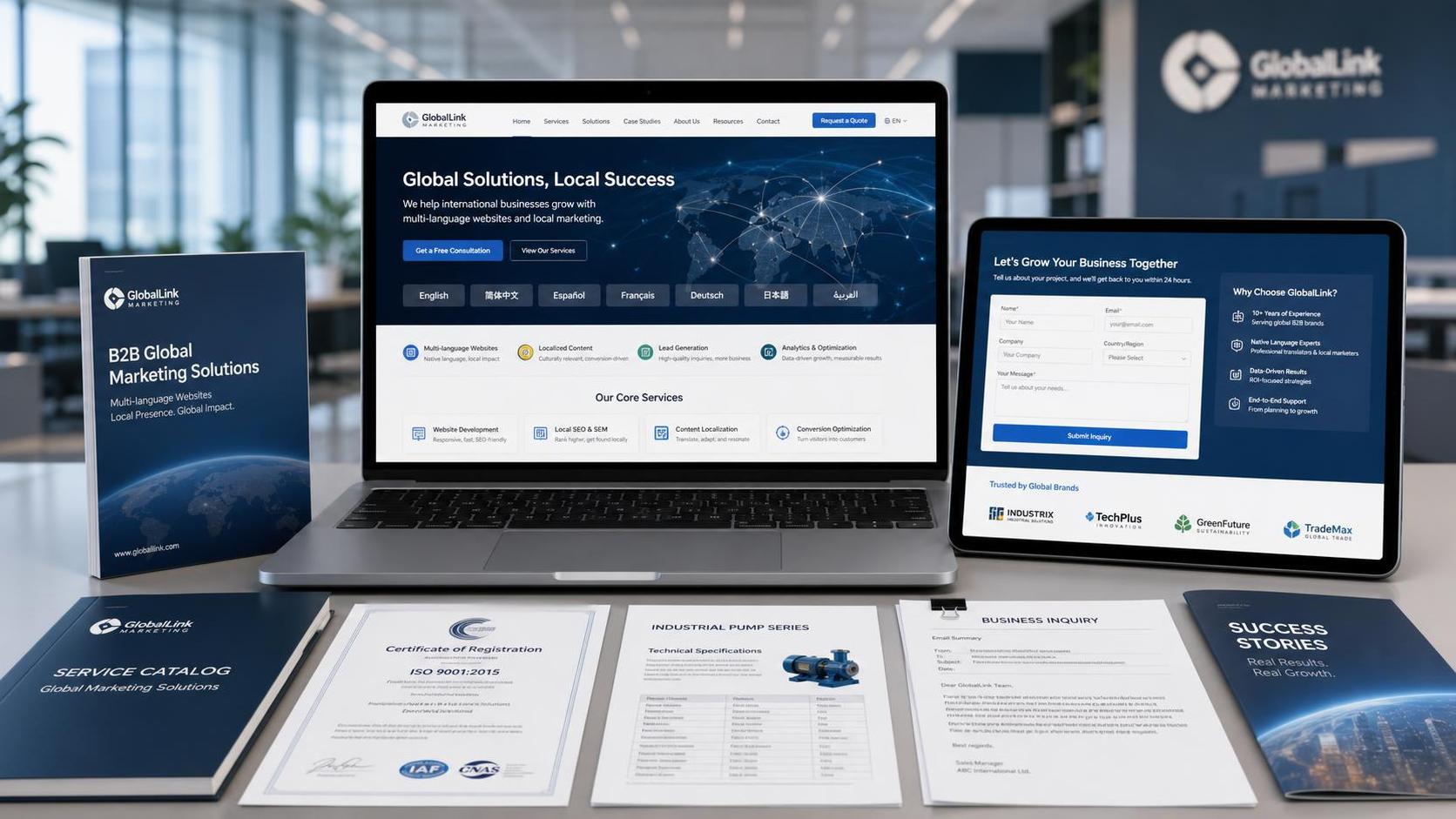
 What makes Yingbao multilingual website development different? Should you look at the translation process or the SEO structure first?
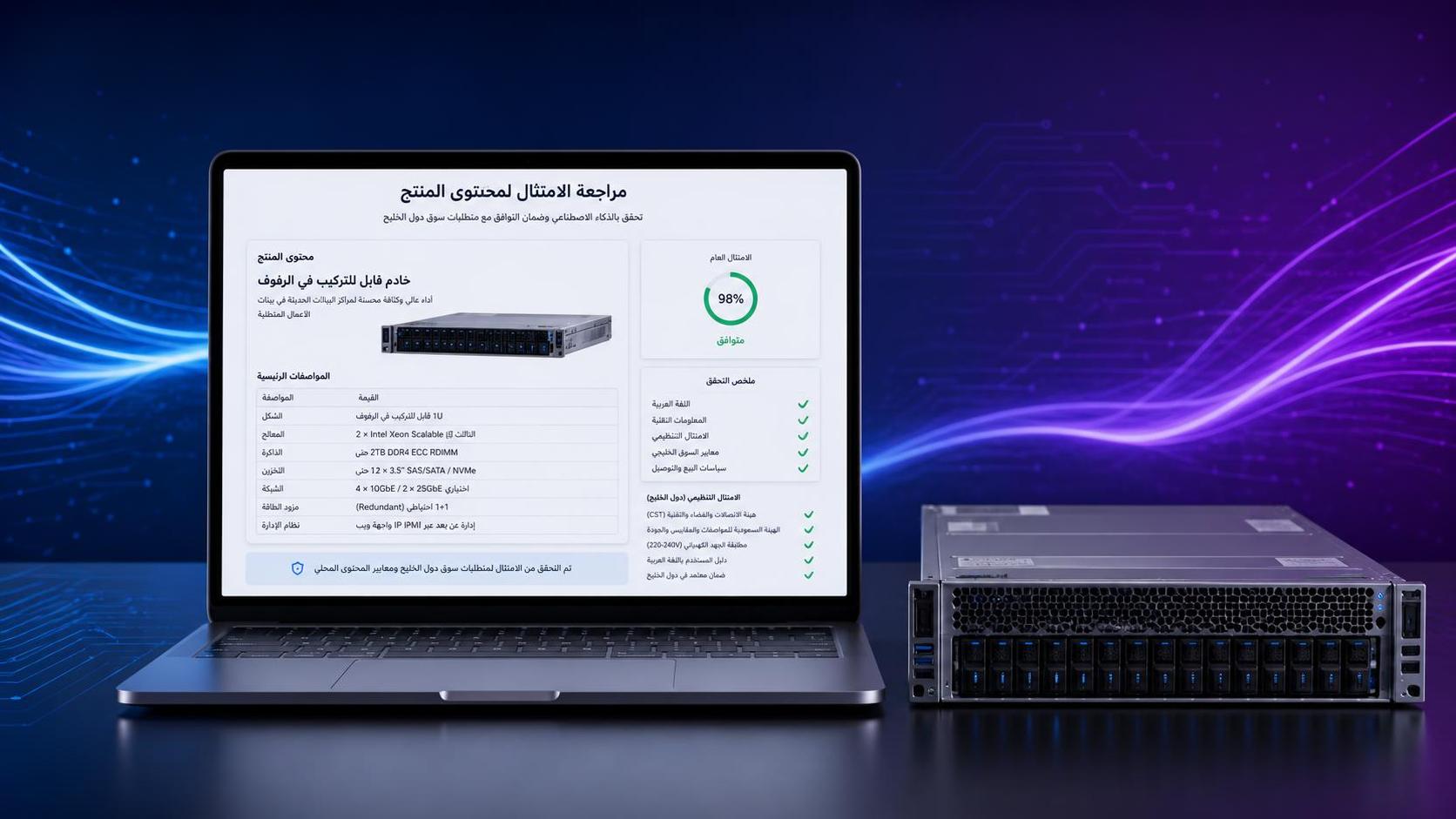
 GSO 2923:2026 Takes Effect: Arabic Product Pages on GCC Websites Included in AI Validation
 What Types of Localization Issues Should B2B Websites Address First in International Website Development?

Related Products
 Yiyingbao SaaS Intelligent Website Building and Marketing SystemYiyingbao SaaS Intelligent Website Building and Marketing System, AI-powered no-code website building, rapid creation of multilingual B2B international websites in 10 minutes, global server acceleration, AI-powered SEO optimization, helping businesses connect efficiently with global markets. The perfect integration of technology and operation makes building an international trade website remarkably simple
 AI+SEM Intelligent Advertising Marketing SystemAI+SEM drives intelligent ad creation, empowering full-funnel precision advertising marketing. The system automatically generates weekly/monthly reports, AI recommends keywords and target countries, monitors core metrics in real-time with intelligent alerts, and enables one-click high-conversion ad solutions to help quickly acquire customers and improve ROI.
 AI+SEO Dual-Engine System Optimization ServicesYiyingbao’s AI+SEO dual-engine optimization system helps foreign trade enterprises acquire high-quality organic traffic through AI-powered keyword research, content generation, and comprehensive technical optimization, significantly improving search rankings and conversion rates.
 AI+SNS Social Media Marketing SystemYingbao AI+SNS Social Media Marketing System - Precision social capture for the social media era. Supports one-click content synchronization across major platforms like Facebook and LinkedIn. AI intelligently rewrites posts for enhanced relevance. 24/7 AI customer service and user profiling analysis empower businesses to efficiently expand into global markets.
 AI+SEO营销解决方案易营宝AI+SEO营销解决方案,通过AI批量写作、智能生成TDK、精准关键词扩词等功能,全面优化网站SEO效果,提升流量与转化率。助力企业构建高效智能网站新生态。
 AI+SEM Advertising Marketing SolutionsAI+SEM Advertising Marketing Solution leverages AI technology to deeply empower SEM ad campaigns. It automatically generates weekly/monthly reports using AI, presenting account data across multiple dimensions for comprehensive insights into campaign performance and trends. The system precisely recommends keywords and target countries, intelligently generates high-conversion ad copy, and enables one-click activation of efficient campaign plans to help businesses rapidly acquire customers. Simultaneously, it monitors core metrics in real time, intelligently identifies abnormal fluctuations, and issues timely alerts to ensure stable, high-return advertising results.
 Domain Name ServicesEasyWin provides professional domain name services, including intelligent queries, one-stop registration, brand protection, and full lifecycle management, helping businesses build a digital brand image.
 EasyOperate B2C Cross-Border E-Commerce Platform & Independent WebsiteEasyStore B2C Cross-border E-commerce Independent Store is an intelligent website building and cross-border e-commerce integrated solution independently developed by EasyStore Information Technology (Beijing) Co., Ltd. The system is specially designed for small and medium-sized as well as large export enterprises, integrating 'website building, operation, marketing, advertising, and conversion' into one, helping enterprises quickly establish cross-border e-commerce independent stores to achieve brand globalization and global sales growth.
The platform supports multiple languages, multiple currencies, and multi-channel marketing, with built-in AI intelligent translation and SEO optimization systems, suitable for mainstream markets such as Southeast Asia, Europe and America, Latin America, and the Middle East, assisting Chinese manufacturing enterprises in efficiently deploying international e-commerce strategies. SSL证书易营宝提供专业SSL安全证书服务,包括单域名和泛域名证书,确保网站数据传输加密、身份验证和完整性保护,助力企业建立安全可信的在线业务环境。









