









- Which customer acquisition channels will be affected by cross-border marketing trends in 2026?Sep 06, 2026View details
- Which homogenization risks should be considered in an analysis of the AI-powered website building industry?Aug 30, 2026View details
- How Will AI Marketing Trends 2026 Change Advertising Budget AllocationAug 28, 2026View details
- Is the EV SSL certificate market shrinking or upgrading? How should companies assess certificate procurement?Aug 11, 2026View details
- Why the old AMP SEO 2020 practices no longer work and what has changed in current optimization prioritiesAug 02, 2026View details
- How to Choose Topics for an Industry News Section to Attract More Organic Search TrafficJul 29, 2026View details
How to make Russian website development more effective? A full analysis from localization to lead conversion
Don't rush to launch a Russian website; first look at real lead-generation scenarios
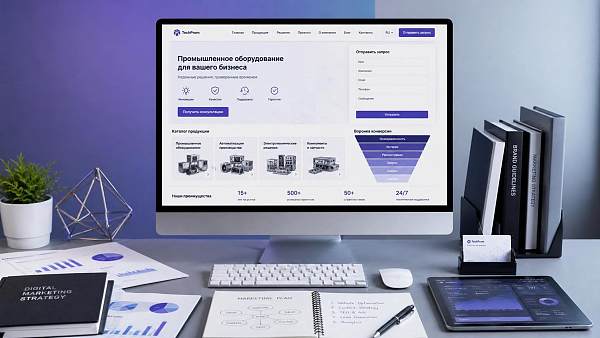
When building a Russian-language website, the real challenge is often not the number of pages, but whether it is close enough to the actual communication environment. Many websites still get indexed after launch and even receive traffic, but they generate few leads, slow responses, and weak conversions. The problem usually lies in language expression, trust building, and conversion paths not being designed in sync.
In the Russian market, users judge a website not only by whether it looks good, but also by whether the information is clear, the contact method is trustworthy, and the product description is specific enough. If a Russian website is built by directly copying Chinese corporate website logic, the pages may look complete, but in practice they are very difficult to support search traffic and even harder to support subsequent marketing conversions.
A more effective approach is to consider website building, SEO, landing pages, and lead-generation processes within the same strategy. Yiyingbao’s long-term multilingual independent-site and overseas marketing scenarios are centered on the collaboration of an intelligent website system, SEO optimization, and ad placement, so that the website is not only for display, but can also be found, understood, and trusted.
The focus of Russian website building is different at different business stages
For Russian website building, the priorities vary greatly across B2B lead-generation sites, brand showcase sites, and cross-border stores. The page structure can be similar, but the content depth, conversion actions, and operating rhythm are not the same. Before going live, it is more important to determine what task the website is meant to accomplish than to choose a template.
If the core goal is to get inquiries, then product pages and case-study pages need to take on the role of persuasion; if the focus is on brand expansion overseas, then the authority of the homepage and the About Us page becomes more important; if the goal also includes paid promotion, then stronger landing-page segmentation and data-tracking capabilities are required. Mixing these scenarios together makes a website easy to have everything in place, but difficult to make any part of it strong.
When building a B2B inquiry website, translation accuracy is not enough
In practical applications, the most common issue in B2B Russian website building is directly putting Chinese materials online after translating them into Russian. The grammar may be correct, but the expression does not match procurement communication habits, especially on pages such as product specifications, delivery processes, and after-sales explanations, where the information can easily become vague and affect inquiry quality.
This kind of scenario usually pays more attention to three judgment points: first, whether the page can quickly explain “what is being sold”; second, whether it proves “it can be done”; and third, whether there is a convenient communication entry point. If you want to improve the effective inquiry rate in Russian website building, it is recommended to separate product categories, technical parameters, application cases, and FAQs, rather than letting users search for answers on a long page by themselves.
In multilingual marketing site projects, Yiyingbao usually synchronizes AI website building with SEO keyword planning, so that each product page can both support search and support inquiries. The advantage of doing this is that the website is not just a pure display catalog, but gradually becomes a content asset covering the search needs of the Russian market.
Showcase-style brand pages need trust more than information overload
Another common scenario is first building a sense of brand presence through a Russian website. At this stage, the homepage should not only stack products, nor should it only display the company introduction. A more effective structure is usually: first define the business positioning, then present proof of capability, and finally arrange contact and conversion actions, so that visitors can make a basic judgment within a few screens.
Many websites ignore one detail: Russian users are very sensitive to whether a company is real and stable. Therefore, the office address, service regions, delivery process, certifications, and cooperation cases should not be placed too far back. Even if it is a blog section, it should still extend from the actual business, rather than only publishing company news.
Search optimization determines traffic quality, and conversion paths determine inquiry results
When many companies build Russian websites, they split SEO and website building into two separate tasks. The result is that after the website goes live, they then add keywords, change titles, and add categories, which costs more and easily makes the structure messy. A more common best practice is to define the core keywords, category terms, and long-tail terms during the initial website-building phase, and then determine the page hierarchy and content direction.
For example, the homepage is suitable for carrying brand terms and general business terms, category pages are more suitable for industry terms, and product pages and article pages cover more specific search questions. With this layout, a Russian website can truly have the ability to continuously acquire organic traffic, rather than relying only on paid traffic.
- Titles and descriptions should be close to Russian search habits, avoiding direct translation of Chinese keywords.
- Content should expand around scenario-based questions, rather than only writing company self-introductions.
- Form buttons, instant communication, and email/phone contacts should form multiple conversion entry points.
- Mobile speed, server stability, and page crawl friendliness must be optimized in sync.
If it also needs to work with ad placement or social media traffic, the website structure must support rapid duplication of themed pages, conversion-point tracking, and iterative content versions. The advantage of Yiyingbao’s integrated approach is that website building, SEO, advertising, and AI optimization are not executed separately, but are advanced in coordination around the final inquiry result.
What is often overlooked before going live is not the number of pages, but the adaptation conditions
A common misconception in Russian website building is that more pages means more professionalism. In fact, if there is no clear content division, more pages can easily dilute authority and also prolong maintenance cycles. What really needs to be confirmed is: which pages are for indexing, which pages are for conversion, and which pages are for building trust.
Another point that is easy to overlook is treating similar markets as the same kind of demand. The Russian-speaking region covers a wide area, and different countries have differences in payment, communication methods, logistics expectations, and regulatory awareness. When building a Russian website, at least the contact methods, content descriptions, and priority product strategies should be made into an adjustable structure, rather than written in one fixed version.
Some companies also refer to materials from other industries to enrich the website content, for example using resources such as financial risks and countermeasures for enterprises where state-owned and private capital co-exist to organize risk-related expressions. In essence, this is also training the website content to be more logical and evidence-based. This method is not directly used for sales, but it can help the pages become more mature in terms of argumentation.
A more stable adaptation strategy can start with these actions
- First sort out the core lead-generation paths, and clearly define the pages handled by organic search, ads, and social media respectively.
- Divide the content of Russian website building into brand level, product level, and conversion level to avoid information clutter.
- Prioritize adding high-trust content such as parameters, cases, qualifications, and delivery explanations.
- Establish a data-tracking mechanism to continuously monitor traffic keywords, bounce pages, and high-conversion pages.
- Choose a website system that supports multilingual SEO, rapid revisions, and marketing collaboration.
What truly effective Russian website building ultimately depends on is continuous operating capability
Going live is only the beginning. Whether Russian website building is effective ultimately depends on whether the content can be continuously updated, whether the pages can be adjusted according to advertising and search data, and whether the inquiry entry points can be optimized as the business changes. Without subsequent operating support, even the best homepage design is difficult to produce stable results over the long term.
A more stable way to proceed is to first clarify the target market and business priorities, and then break down language localization, technical setup, SEO layout, and conversion-path design. For websites that need long-term growth in the Russian market, an integrated solution that can handle website building, content, promotion, and data feedback at the same time will usually save more trial-and-error costs.
If you are preparing to launch Russian website building, the next step is to first check whether your existing materials are suitable for localized expression, whether the page structure supports search indexing, and whether the inquiry path is smooth enough, and then evaluate the implementation cycle, maintenance input, and long-term optimization space. Only when these conditions are clear in advance can the website have a better chance of moving from “can be seen” to “can convert.”
Related Articles
Related Products
 Yiyingbao SaaS Intelligent Website Building and Marketing SystemYiyingbao SaaS Intelligent Website Building and Marketing System, AI-powered no-code website building, rapid creation of multilingual B2B international websites in 10 minutes, global server acceleration, AI-powered SEO optimization, helping businesses connect efficiently with global markets. The perfect integration of technology and operation makes building an international trade website remarkably simple
 AI+SEM Intelligent Advertising Marketing SystemAI+SEM drives intelligent ad creation, empowering full-funnel precision advertising marketing. The system automatically generates weekly/monthly reports, AI recommends keywords and target countries, monitors core metrics in real-time with intelligent alerts, and enables one-click high-conversion ad solutions to help quickly acquire customers and improve ROI.
 AI+SEO Dual-Engine System Optimization ServicesYiyingbao’s AI+SEO dual-engine optimization system helps foreign trade enterprises acquire high-quality organic traffic through AI-powered keyword research, content generation, and comprehensive technical optimization, significantly improving search rankings and conversion rates.
 AI+SNS Social Media Marketing SystemYingbao AI+SNS Social Media Marketing System - Precision social capture for the social media era. Supports one-click content synchronization across major platforms like Facebook and LinkedIn. AI intelligently rewrites posts for enhanced relevance. 24/7 AI customer service and user profiling analysis empower businesses to efficiently expand into global markets.
 AI+SEO营销解决方案易营宝AI+SEO营销解决方案,通过AI批量写作、智能生成TDK、精准关键词扩词等功能,全面优化网站SEO效果,提升流量与转化率。助力企业构建高效智能网站新生态。
 AI+SEM Advertising Marketing SolutionsAI+SEM Advertising Marketing Solution leverages AI technology to deeply empower SEM ad campaigns. It automatically generates weekly/monthly reports using AI, presenting account data across multiple dimensions for comprehensive insights into campaign performance and trends. The system precisely recommends keywords and target countries, intelligently generates high-conversion ad copy, and enables one-click activation of efficient campaign plans to help businesses rapidly acquire customers. Simultaneously, it monitors core metrics in real time, intelligently identifies abnormal fluctuations, and issues timely alerts to ensure stable, high-return advertising results.
 Domain Name ServicesEasyWin provides professional domain name services, including intelligent queries, one-stop registration, brand protection, and full lifecycle management, helping businesses build a digital brand image.
 EasyOperate B2C Cross-Border E-Commerce Platform & Independent WebsiteEasyStore B2C Cross-border E-commerce Independent Store is an intelligent website building and cross-border e-commerce integrated solution independently developed by EasyStore Information Technology (Beijing) Co., Ltd. The system is specially designed for small and medium-sized as well as large export enterprises, integrating 'website building, operation, marketing, advertising, and conversion' into one, helping enterprises quickly establish cross-border e-commerce independent stores to achieve brand globalization and global sales growth.
The platform supports multiple languages, multiple currencies, and multi-channel marketing, with built-in AI intelligent translation and SEO optimization systems, suitable for mainstream markets such as Southeast Asia, Europe and America, Latin America, and the Middle East, assisting Chinese manufacturing enterprises in efficiently deploying international e-commerce strategies. SSL证书易营宝提供专业SSL安全证书服务,包括单域名和泛域名证书,确保网站数据传输加密、身份验证和完整性保护,助力企业建立安全可信的在线业务环境。









