









- AliExpress Global Double 11: Brand Sales Grow Nearly 50% in the First Week, U.S. GMV Rises 70%Nov 21, 2026View details
- Ministry of Commerce Reports E-commerce Development from January to October 2026, with Cross-Border Imports Performing StronglyNov 21, 2026View details
- Amazon Black Friday Orders Sluggish on Day One; NRF Forecasts 4.2 Million Fewer ParticipantsNov 21, 2026View details
- 21st Century Business Herald: AI and CTV Become Core Growth Engines for Digital Marketing in Overseas MarketsNov 18, 2026View details
- China Presents 25 Cooperation Outcomes in Areas Including Cross-Border E-Commerce During APECNov 18, 2026View details
- AI Products Drive Hong Kong Exports Up 64.9% in September, Fastest Growth in Over 40 YearsNov 17, 2026View details
Can direct translation of a multilingual website affect inquiry conversions?
Can direct translation of a multilingual website affect inquiry conversion? It can, but the issue is not translation itself. It is whether the translated pages still help customers evaluate products, build trust, and contact the company easily. Language is only the first step in entering overseas markets; cultural differences, customer trust, and the inquiry experience also influence purchasing decisions.
For foreign trade companies and manufacturers, direct translation can be a starting point when launching a site, but converting every page at once should not be mistaken for completing localization. This is especially true for pages used for advertising or as key lead-generation assets: one mistranslated term or a form that cannot be submitted can undermine the return on the promotional investment.
If the translation is correct, why are customers still not making inquiries?
Language issues on foreign trade websites are often not about whether a sentence reads smoothly, but whether buyers receive the information they need accurately. For example, a machinery page might say “customization available.” Even if the translation is grammatically correct, customers may still not know whether they can customize the voltage, dimensions, packaging, or the entire production line. If buyers cannot assess the scope of supply, it is difficult for them to continue the conversation.
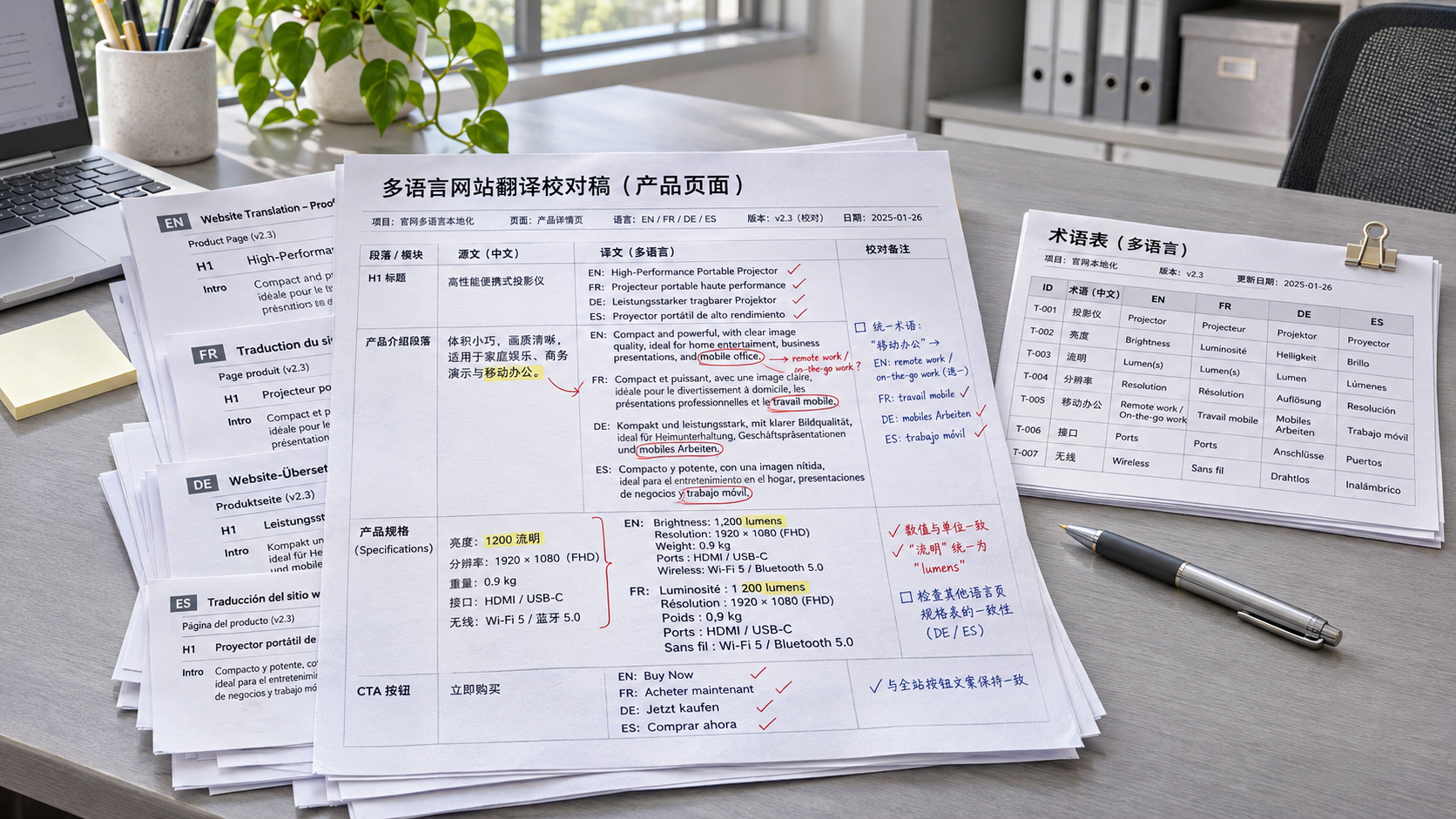
Product names are another common risk. The same product may be called different things in different markets, and a company’s internal terminology may not match the terms customers use when searching. Carrying over the source-language wording may not only confuse buyers, but also make the page misaligned with actual search intent. Product terminology should ideally be reviewed by someone who understands the product, then adjusted based on search results in the target market and the language customers commonly use.
Some content may also appear fully translated while still containing gaps: units in product tables have not been converted, text in images is still in the original language, buttons and error messages have not been translated, or downloadable materials are only available in Chinese. What customers see is not a complete multilingual website, but the original site with only some sections translated.
What influences a customer's willingness to inquire goes beyond page text
The concerns of different markets and purchasing roles are not always the same. Customers visiting a business equipment website typically need to confirm specifications, delivery arrangements, after-sales support, and intended applications. An online store aimed at end consumers, on the other hand, often needs to make pricing, shipping, and returns information easier to find. The right priorities still depend on the product and market; they cannot be determined by applying a one-size-fits-all template to each country.
Trust-building information should also be organized for each language version. Company introductions, contact details, manufacturing capabilities, product information, and the scope of after-sales service should be clear and consistent throughout. If a certification applies only to certain models or configurations, do not present it as applying generally across the entire product line. For local standards, refer to the actual product documentation and applicable requirements.
The inquiry process is another detail that is easy to overlook. A customer may understand the page but abandon the process if the form asks for a lot of information they cannot provide yet, or if the phone number field accepts only one format. For an initial inquiry, name, contact details, and a description of the customer's needs are usually worth prioritizing. Whether fields such as industry and purchase volume should be mandatory depends on whether the sales team genuinely needs that information and whether it would make the form more burdensome to complete.
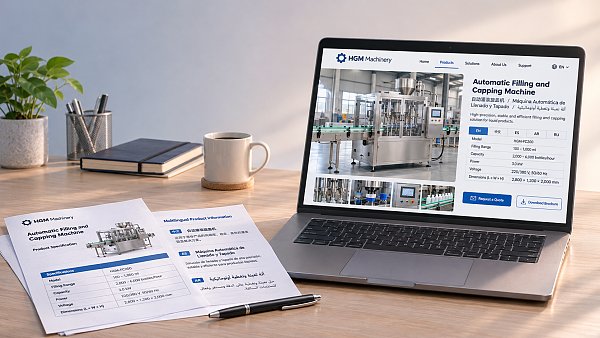
Do not check only how the form looks. Submit it once in the target language and confirm that required-field prompts are understandable, that there is clear confirmation after submission, that emails are delivered, and that sales staff can identify which language page the visitor came from. Contact details and estimated response times should also reflect your actual capacity to handle inquiries, so that page promises do not conflict with the subsequent experience.
On a limited budget, which content should be localized first?
There is no need to rebuild every page in every language to the same standard from the outset. A more practical approach is to identify priority markets and core products first, then allocate resources based on traffic sources and sales value. The homepage needs to explain what the company does, but when making a decision, customers often also look at product details, specification documents, FAQs, and the contact page.
For companies already running ads, start by checking the landing pages: can visitors immediately find the product or service promised in the ad? Do the ad and page use the same language? Are prices, minimum order requirements, or delivery scope clearly stated? If an ad attracts buyers looking for a specific model but sends them to a homepage that only introduces the company, simply polishing the copy is unlikely to solve the problem.
For long-tail products or pages that currently receive little traffic, you can start with machine translation or AI-assisted translation, then have someone check product names, technical specifications, commercial terms, and contact details. For key pages, it is more suitable to involve someone who understands the business in the rewriting process; where possible, have it reviewed by someone familiar with both the target language and the industry. The decision is not “machine or human,” but how thoroughly to review the content based on the risk of mistranslation and the value of the page.
A page must be discoverable in search to assess whether it is effective
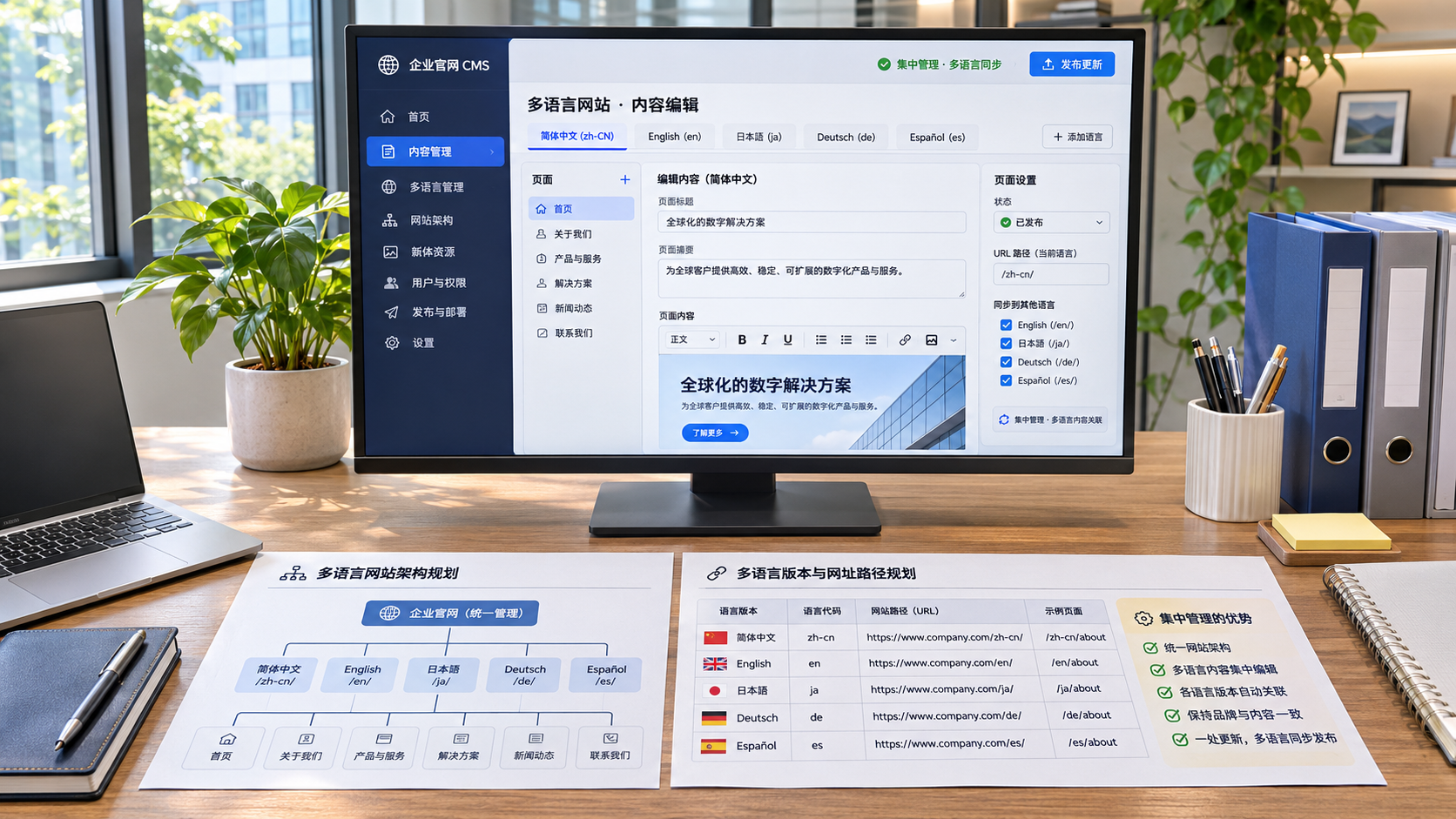
After multilingual pages go live, check that each language has its own stable URL, that search engines can access important content, and that the page title, description, and body text match the corresponding language version. Where appropriate, configure language and regional version annotations correctly to help search engines understand the relationship between different pages. However, this does not guarantee that a page will be indexed or achieve a ranking.
Automatic redirects also require caution. Recommending a version based on a visitor's location or browser language can improve the experience, but forced redirects or a missing language switcher may prevent customers from viewing the version they need and may also affect search engine access. In particular, when the same language serves multiple markets, the language being the same does not mean that prices, shipping, or service coverage are the same.
From website development through promotion, it is best to review the page as part of a complete journey. 易营宝 provides smart website building, search optimization, advertising, and other services. The value of this integrated approach is that page content, traffic sources, and inquiry handling can be checked against one another. Actual results still depend on market selection, product competitiveness, page quality, and subsequent sales follow-up; launching multiple language versions should not be equated with gaining more qualified customers.
How can you tell whether the problem is translation or traffic?
Start by breaking down the data by language version, traffic source, and landing page. Visitors from search, ad clicks, and returning customers have different intentions, so comparing overall inquiry rates can lead to incorrect conclusions. Track page visits, contact button clicks, form submissions, and qualified inquiries separately. Also check that analytics are recording correctly and that sales staff are following up on leads promptly.
If customers reach product pages but rarely click to inquire, review the product information, price expectations, and trust-building content. If they click the inquiry button but do not submit the form, first check the form, mobile display, and submission functionality. If submission volume is normal but sales finds that the inquiries are a poor fit, revisit ad targeting, search terms, and how the page describes the product scope, rather than blaming translation quality alone.
When data volume is low, do not conclude that a version is effective or ineffective based on just a few visits. You can start with a core page in one priority language, keep records of changes that can be compared, and continue reviewing performance alongside customer feedback. For most companies, accurately describing the product and making the contact process work smoothly are more worthwhile investments than rushing to add more languages.
Related Articles
 How Do You Evaluate Translation Quality for Multilingual Website Services in Dongguan?
 Should You Use Subdirectories or Subdomains for a Multilingual Website?
 How can you use webmaster tools to check whether multilingual pages are indexed?

Related Products
 Yiyingbao SaaS Intelligent Website Building and Marketing SystemYiyingbao SaaS Intelligent Website Building and Marketing System, AI-powered no-code website building, rapid creation of multilingual B2B international websites in 10 minutes, global server acceleration, AI-powered SEO optimization, helping businesses connect efficiently with global markets. The perfect integration of technology and operation makes building an international trade website remarkably simple
 AI+SEM Intelligent Advertising Marketing SystemAI+SEM drives intelligent ad creation, empowering full-funnel precision advertising marketing. The system automatically generates weekly/monthly reports, AI recommends keywords and target countries, monitors core metrics in real-time with intelligent alerts, and enables one-click high-conversion ad solutions to help quickly acquire customers and improve ROI.
 AI+SEO Dual-Engine System Optimization ServicesYiyingbao’s AI+SEO dual-engine optimization system helps foreign trade enterprises acquire high-quality organic traffic through AI-powered keyword research, content generation, and comprehensive technical optimization, significantly improving search rankings and conversion rates.
 AI+SNS Social Media Marketing SystemYingbao AI+SNS Social Media Marketing System - Precision social capture for the social media era. Supports one-click content synchronization across major platforms like Facebook and LinkedIn. AI intelligently rewrites posts for enhanced relevance. 24/7 AI customer service and user profiling analysis empower businesses to efficiently expand into global markets.
 AI+SEO营销解决方案易营宝AI+SEO营销解决方案,通过AI批量写作、智能生成TDK、精准关键词扩词等功能,全面优化网站SEO效果,提升流量与转化率。助力企业构建高效智能网站新生态。
 AI+SEM Advertising Marketing SolutionsAI+SEM Advertising Marketing Solution leverages AI technology to deeply empower SEM ad campaigns. It automatically generates weekly/monthly reports using AI, presenting account data across multiple dimensions for comprehensive insights into campaign performance and trends. The system precisely recommends keywords and target countries, intelligently generates high-conversion ad copy, and enables one-click activation of efficient campaign plans to help businesses rapidly acquire customers. Simultaneously, it monitors core metrics in real time, intelligently identifies abnormal fluctuations, and issues timely alerts to ensure stable, high-return advertising results.
 Domain Name ServicesEasyWin provides professional domain name services, including intelligent queries, one-stop registration, brand protection, and full lifecycle management, helping businesses build a digital brand image.
 EasyOperate B2C Cross-Border E-Commerce Platform & Independent WebsiteEasyStore B2C Cross-border E-commerce Independent Store is an intelligent website building and cross-border e-commerce integrated solution independently developed by EasyStore Information Technology (Beijing) Co., Ltd. The system is specially designed for small and medium-sized as well as large export enterprises, integrating 'website building, operation, marketing, advertising, and conversion' into one, helping enterprises quickly establish cross-border e-commerce independent stores to achieve brand globalization and global sales growth.
The platform supports multiple languages, multiple currencies, and multi-channel marketing, with built-in AI intelligent translation and SEO optimization systems, suitable for mainstream markets such as Southeast Asia, Europe and America, Latin America, and the Middle East, assisting Chinese manufacturing enterprises in efficiently deploying international e-commerce strategies. SSL证书易营宝提供专业SSL安全证书服务,包括单域名和泛域名证书,确保网站数据传输加密、身份验证和完整性保护,助力企业建立安全可信的在线业务环境。









