









- Which customer acquisition channels will be affected by cross-border marketing trends in 2026?Sep 06, 2026View details
- Which homogenization risks should be considered in an analysis of the AI-powered website building industry?Aug 30, 2026View details
- How Will AI Marketing Trends 2026 Change Advertising Budget AllocationAug 28, 2026View details
- Is the EV SSL certificate market shrinking or upgrading? How should companies assess certificate procurement?Aug 11, 2026View details
- Why the old AMP SEO 2020 practices no longer work and what has changed in current optimization prioritiesAug 02, 2026View details
- How to Choose Topics for an Industry News Section to Attract More Organic Search TrafficJul 29, 2026View details
5 Key Localization Details German Users Care About Most Before Building a German Website
Before building a German website, first understand the 5 localization details that German users care about most, so your site can truly resonate with the target market.
Many companies interpret “German website development” as simply translating Chinese content into German and applying a more European-style template. But what truly determines whether a website gains the trust of German users is often not the language itself, but whether the details align with local reading habits, legal expectations, and business judgment logic. For business decision-makers, this type of website is not just a showcase page; it is the first threshold for entering the German market.
German users have always been more rigorous in their expectations for websites than many other overseas markets. They observe whether you are professional, transparent, whether the information is complete, and whether the site makes them feel confident enough to continue browsing. In other words, the core of German website development is not about “whether the translation is correct,” but “whether it looks like a company that genuinely does business in the German market.”
1. German is not the focus; information structure is the first impression
Many companies focus on copy translation when building a German website but overlook that German users care more about how information is organized. German users in procurement, engineering, technology, and channel roles typically look for product parameters, application scope, certification details, and delivery capabilities before deciding to contact. If the page starts with brand slogans, company visions, and marketing expressions, conversion rates are usually low.
This is why German website development cannot simply replicate the expression logic of a domestic website. German users are more receptive to a structure that “presents facts first, then advantages.” The page should allow them to quickly determine: what you sell, who it is for, what evidence supports it, and what the next step is to contact you.
For business decision-makers, the most important aspect is whether the information hierarchy is clear. The homepage, product pages, solution pages, FAQ, and contact page should each have a clear role. Especially in B2B scenarios, German users often revisit details repeatedly. If they cannot find technical parameters, delivery times, material specifications, or service boundaries, even a beautiful website will struggle to build trust.
2. German users have a higher sensitivity to transparency
A distinct characteristic of the German market is users’ very high demand for information transparency. They do not like vague descriptions and are less accepting of generalized expressions like “industry-leading” or “globally outstanding.” If a website lacks clear company information, address, contact details, legal entity, privacy policy, and terms and conditions, users will directly question its authenticity.
This is not just an experience issue; it also relates to compliance. In German website development, basic pages like Impressum and Datenschutzerklärung are almost standard. Specific requirements need to be confirmed based on the actual business model and applicable regulations [to be verified]. If a company intends to use the website to generate leads in Germany, run ad campaigns, or build long-term SEO traffic, these pages cannot be added as an afterthought.
From a decision-making perspective, a transparent website reduces the cost of subsequent sales communication. When German clients sense missing information, they first question whether the company is legitimate, rather than being willing to communicate first and clarify later, as in some other markets. Therefore, clearly stating company identity, business scope, service process, and after-sales boundaries during the website building phase is often more valuable than adding more promotional modules.
3. Local language expression must be natural, not just grammatically correct
The most common mistake in German websites is not incorrect translation, but unnatural expression. Many companies use machine translation or direct translation to generate content. The grammar may be passable, but it reads like “translation for translation’s sake.” German users are very sensitive to this, especially in professional industries like manufacturing, industrial, software, medical, and machinery. Unnatural language directly undermines credibility.
Localized expression is not just a language issue; it also includes terminology choice, sentence length, CTA style, and heading style. German users are more accustomed to clear, specific, and low-exaggeration expressions. For example, instead of writing “the best solution,” it is better to clearly state “which industries it applies to,” “what problems it solves,” and “what technical specifications it has.”
If the company’s goal is to obtain high-quality inquiries, it is recommended to handle German content in two layers: “brand introduction” and “business content.” Keep the brand introduction concise, and focus business pages on professional terminology and use cases. For companies planning long-term overseas marketing, content localization should be planned in sync with the SEO strategy, rather than adding content separately after the website is built.
In actual projects, many companies bring in external teams to reorganize the content strategy at this stage, or even use tools like AI-driven restructuring of core competencies for corporate finance professionals to understand cross-department collaboration and process optimization. Although it is not a website building product itself, for business managers, whether they can coordinate content, budget, advertising, and conversion processes is often more critical than point optimization.
4. Visual style should be stable, not like a template site
German users’ aesthetic for website design is not about being flashy; they value order, readability, and professionalism. Overly flashy animations, large color contrasts, and cluttered homepage information often make a site seem unreliable. Especially for B2B websites, visuals should serve information delivery, not distract from it.
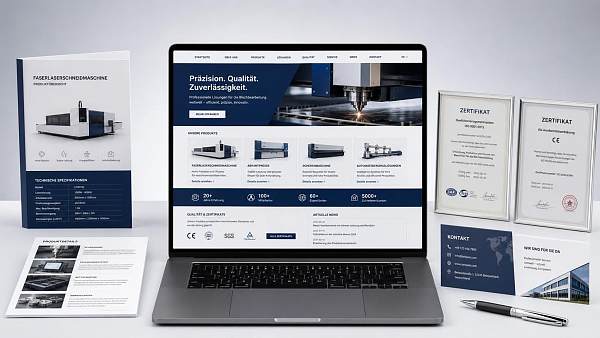
Common effective approaches in German website development include: sufficient white space, tidy layout, restrained image-to-text ratio, clear navigation, and stable mobile adaptation. For manufacturing companies, foreign trade factories, and tech companies, product images, factory photos, certificates, and application scenario images are more convincing than abstract posters.
Business decision-makers should pay special attention to one point: visual style is not just “aesthetic preference,” but “trust cost.” When German users see a website that looks like a mass-produced template, they naturally associate it with an unstable supplier, unprofessional service, and poor ongoing maintenance. Conversely, a restrained but professional website is usually better at generating inquiries and building initial trust.
5. Compliance and performance determine whether the website can run long-term
Many companies focus only on launch speed when building a website, ignoring the two most common issues in the German market: compliance and performance.
In terms of compliance, beyond basic requirements like privacy, cookies, and company legal information, companies must also consider whether data collection, form submissions, tracking codes, and third-party plugins pose risks. German users are very sensitive to data usage, especially when the website integrates ad pixels, chat tools, map services, or form tracking. Related requirements will vary with actual business and technical solutions, and specific rules should be verified separately before launch [to be verified].
In terms of performance, German users have high expectations for page load speed and stability. Slow page loading, mobile misalignment, oversized images, and excessive scripts directly increase bounce rates. For companies, this is not just an experience issue; it also affects SEO, ad landing page conversion, and brand perception.
If the website’s goal is to generate long-term traffic from the German market, the technical foundation must be stable enough. A system that supports multilingual content, structured data, SEO configuration, form management, and future expansion is often more valuable than a template that is “built quickly.” Especially for companies planning to use Google search, retargeting, and multi-channel lead generation, the website should be treated as a digital marketing infrastructure, not a one-time project.
What companies should really confirm first
For business decision-makers, the most important step before German website development is not to choose a template or decide on colors, but to answer three questions: who is the target customer, why would they trust you, and what conversion actions is the website intended to support.
If the target customers are German local procurement or technical personnel, the website should not just be a “beautiful official site.” It must thoroughly cover certifications, parameters, case studies, delivery capabilities, and contact information. If the goal is to run ads and generate inquiries, the form path, landing page logic, content credibility, and compliance design are more important. If the goal is long-term SEO, the content system, page architecture, update mechanism, and multilingual expansion capabilities must be planned in advance.
Many companies’ problem in the German market is not that “the website is not beautiful enough,” but that “the website does not look like a trustworthy supplier.” If these issues are handled well during the website building phase, subsequent promotion, sales, and brand communication will save a lot of costs. Conversely, if localization details are not done well, adding more budget later will only amplify the problem.
The value of German website development lies not in translating a Chinese official site into German, but in placing the company within the judgment framework of German users. Whether the target audience can quickly understand, feel confident, and be willing to contact is the most important criterion to measure when choosing a solution.
Related Articles
 What are the fundamental differences between B2B website translation and B2C website translation?
 Website Localization Is More Than Translation: What Else Should Be Adjusted Before Entering a New Market?
 How Can Multilingual Website Translation Avoid Machine Translation Distortion and Brand Messaging Inconsistencies

Related Products
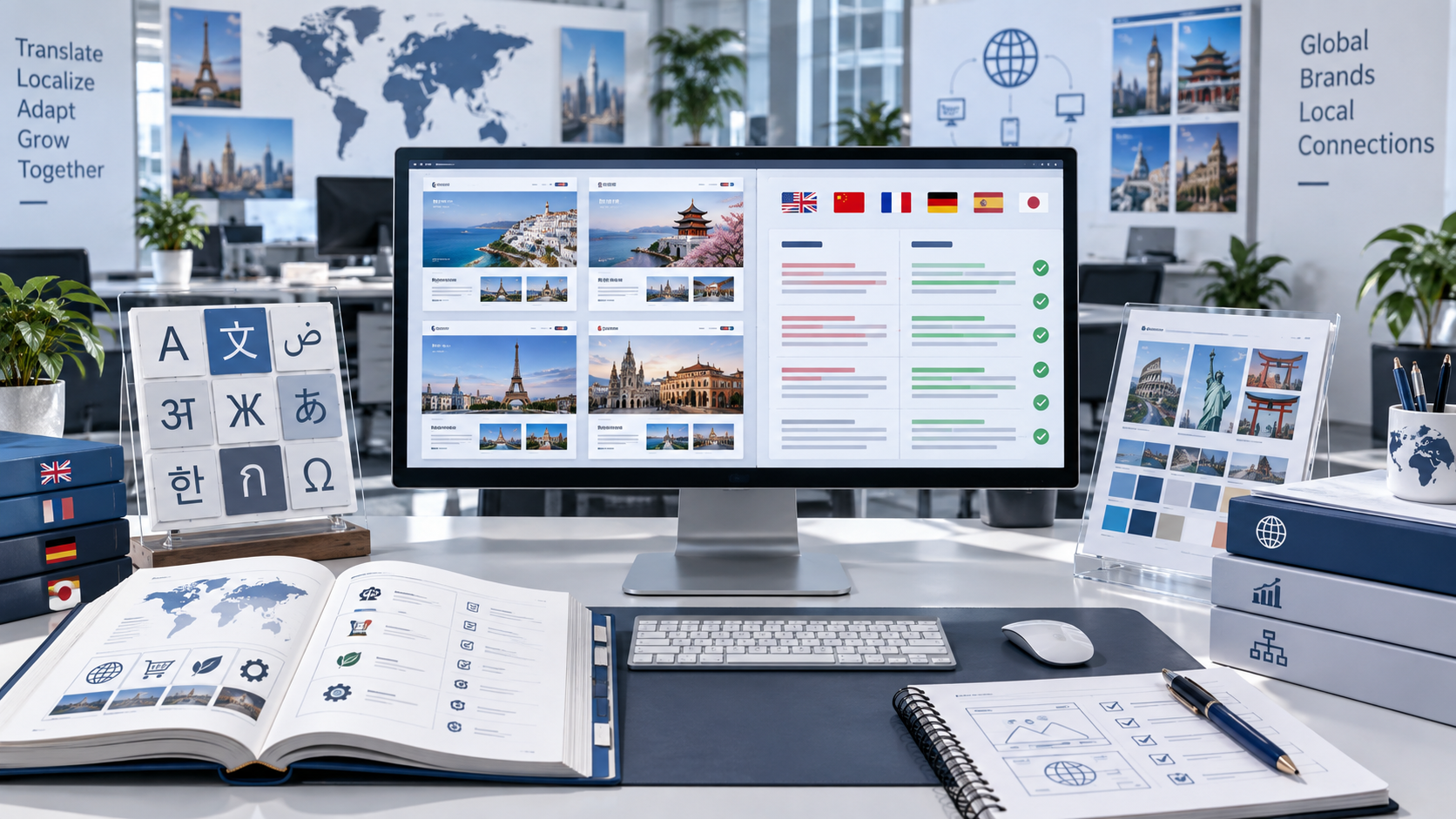
 Yiyingbao SaaS Intelligent Website Building and Marketing SystemYiyingbao SaaS Intelligent Website Building and Marketing System, AI-powered no-code website building, rapid creation of multilingual B2B international websites in 10 minutes, global server acceleration, AI-powered SEO optimization, helping businesses connect efficiently with global markets. The perfect integration of technology and operation makes building an international trade website remarkably simple
 AI+SEM Intelligent Advertising Marketing SystemAI+SEM drives intelligent ad creation, empowering full-funnel precision advertising marketing. The system automatically generates weekly/monthly reports, AI recommends keywords and target countries, monitors core metrics in real-time with intelligent alerts, and enables one-click high-conversion ad solutions to help quickly acquire customers and improve ROI.
 AI+SEO Dual-Engine System Optimization ServicesYiyingbao’s AI+SEO dual-engine optimization system helps foreign trade enterprises acquire high-quality organic traffic through AI-powered keyword research, content generation, and comprehensive technical optimization, significantly improving search rankings and conversion rates.
 AI+SNS Social Media Marketing SystemYingbao AI+SNS Social Media Marketing System - Precision social capture for the social media era. Supports one-click content synchronization across major platforms like Facebook and LinkedIn. AI intelligently rewrites posts for enhanced relevance. 24/7 AI customer service and user profiling analysis empower businesses to efficiently expand into global markets.
 AI+SEO营销解决方案易营宝AI+SEO营销解决方案,通过AI批量写作、智能生成TDK、精准关键词扩词等功能,全面优化网站SEO效果,提升流量与转化率。助力企业构建高效智能网站新生态。
 AI+SEM Advertising Marketing SolutionsAI+SEM Advertising Marketing Solution leverages AI technology to deeply empower SEM ad campaigns. It automatically generates weekly/monthly reports using AI, presenting account data across multiple dimensions for comprehensive insights into campaign performance and trends. The system precisely recommends keywords and target countries, intelligently generates high-conversion ad copy, and enables one-click activation of efficient campaign plans to help businesses rapidly acquire customers. Simultaneously, it monitors core metrics in real time, intelligently identifies abnormal fluctuations, and issues timely alerts to ensure stable, high-return advertising results.
 Domain Name ServicesEasyWin provides professional domain name services, including intelligent queries, one-stop registration, brand protection, and full lifecycle management, helping businesses build a digital brand image.
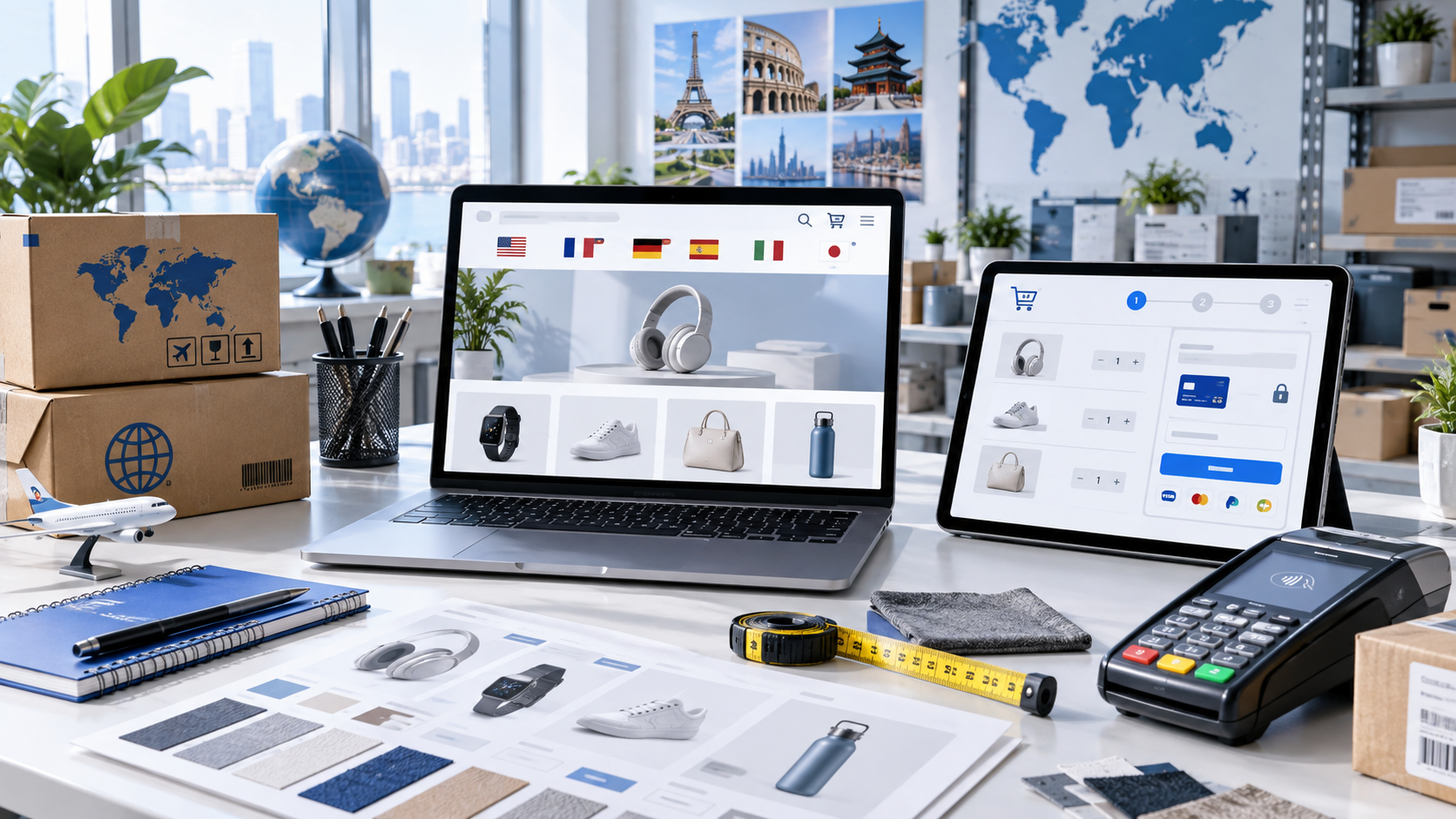
 EasyOperate B2C Cross-Border E-Commerce Platform & Independent WebsiteEasyStore B2C Cross-border E-commerce Independent Store is an intelligent website building and cross-border e-commerce integrated solution independently developed by EasyStore Information Technology (Beijing) Co., Ltd. The system is specially designed for small and medium-sized as well as large export enterprises, integrating 'website building, operation, marketing, advertising, and conversion' into one, helping enterprises quickly establish cross-border e-commerce independent stores to achieve brand globalization and global sales growth.
The platform supports multiple languages, multiple currencies, and multi-channel marketing, with built-in AI intelligent translation and SEO optimization systems, suitable for mainstream markets such as Southeast Asia, Europe and America, Latin America, and the Middle East, assisting Chinese manufacturing enterprises in efficiently deploying international e-commerce strategies. SSL证书易营宝提供专业SSL安全证书服务,包括单域名和泛域名证书,确保网站数据传输加密、身份验证和完整性保护,助力企业建立安全可信的在线业务环境。









