









- 21st Century Business Herald: AI and CTV Become Core Growth Engines for Digital Marketing in Overseas MarketsNov 18, 2026View details
- China Presents 25 Cooperation Outcomes in Areas Including Cross-Border E-Commerce During APECNov 18, 2026View details
- AI Products Drive Hong Kong Exports Up 64.9% in September, Fastest Growth in Over 40 YearsNov 17, 2026View details
- National Bureau of Statistics: Foreign trade grew rapidly in October, providing stable support for global tradeNov 17, 2026View details
- The U.S. has ended the $800 de minimis exemption for non-postal shipments; express courier packages must be formally declared.Nov 16, 2026View details
- ASEAN Signs Digital Economy Framework Agreement, Moving Toward Harmonized Cross-Border E-Commerce RulesNov 15, 2026View details
How Does AI Translation Localization Affect Overseas User Dwell Time?
Overseas users click on your website and close it in less than 10 seconds—this is not necessarily a traffic quality issue; it is very likely a language experience issue.
Many companies believe that “translating into English/Spanish/Arabic” means localization is complete. But the reality is that pages translated directly by machines, even when grammatically correct, often feel stiff, confusing, or even offensive to overseas users. Users may not understand unit conversions in product specifications, may be puzzled by Chinese-style metaphors in promotional copy, or may find customer service entry points unfamiliar... These details add up and directly trigger bounce behavior. Data does not lie: in actual operations, multilingual websites using basic machine translation have an average dwell time more than 40% lower than native-language pages; meanwhile, pages deeply optimized through AI translation localization can increase user dwell time by 2.3 times, while B2B inquiry conversion rates rise by approximately 35%.
AI Translation Localization ≠ Automatic Translation
This is the first common misconception for those researching the topic. Most “one-click multilingual” tools on the market are essentially still word-for-word replacements, lacking contextual judgment, industry terminology calibration, and cultural adaptation capabilities. For example, translating the Chinese term “爆款” literally as “explosion product” may lead English-speaking users to mistake it for a hazardous item; a German website may translate “包邮” as “free shipping” but fail to clarify whether there are weight limits, whether taxes are included, or whether all of Germany is covered—such omissions can cause users to leave while hesitating.
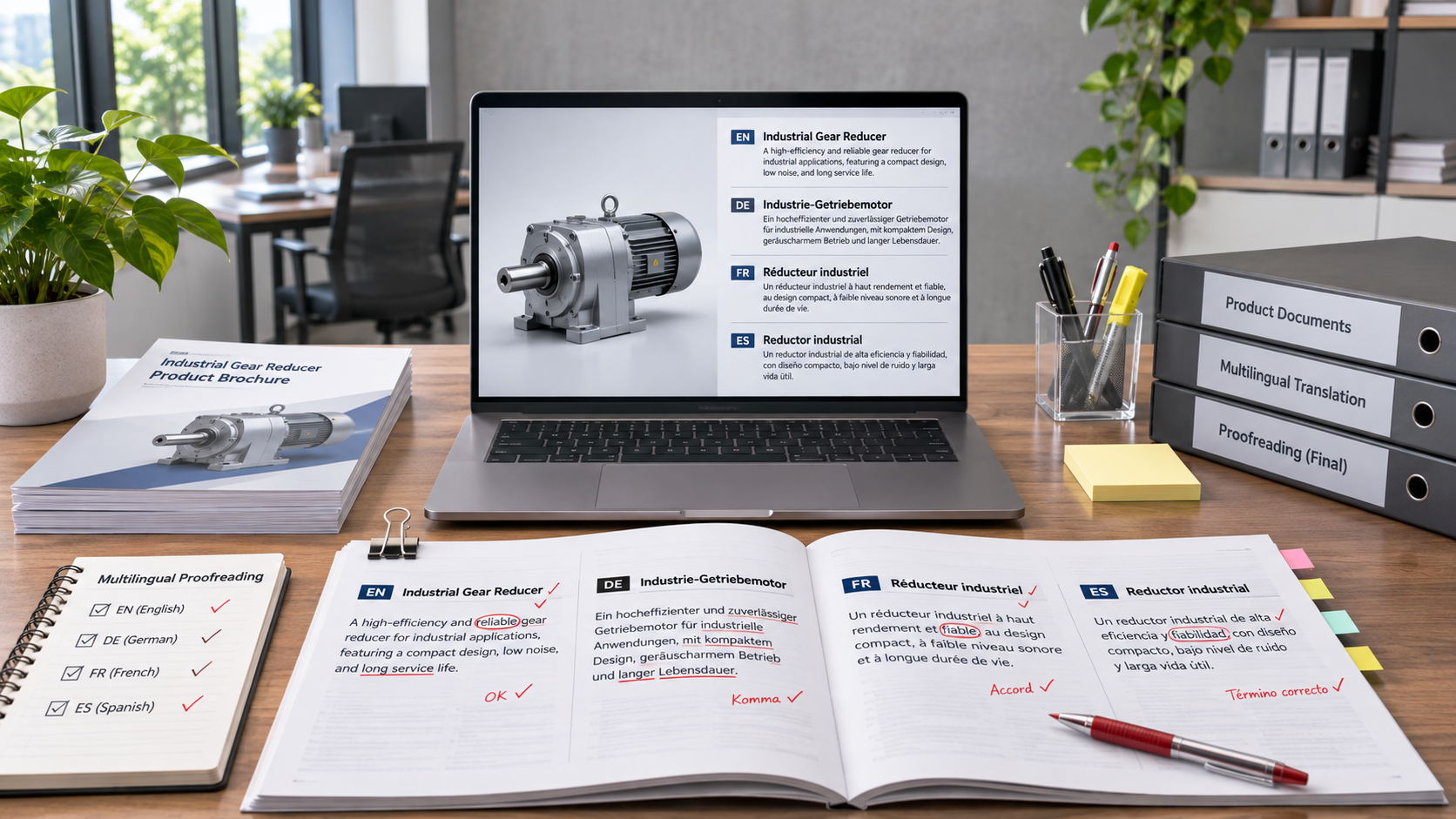
True AI translation localization involves coordination across three layers: the first is language conversion, using large language models to understand context; the second is industry adaptation, automatically identifying and applying terminology databases for vertical sectors such as machinery, electronics, and textiles; the third is cultural implementation, such as converting the Chinese phrase “老客户专享价” into the Western-friendly “Loyalty Discount,” or automatically aligning holiday marketing schedules for Middle Eastern websites with the Ramadan calendar. All three steps are indispensable; otherwise, even the fastest translation is merely superficial work.
The Key Variables Affecting Dwell Time Are Not Whether the Translation Is Accurate, but Whether It Reads Smoothly
We have examined heat maps and scroll-depth data from hundreds of independent foreign trade websites and found that what determines whether users continue browsing is not the accuracy of individual sentence translations, but three consecutive experience breakpoints:
- Whether above-the-fold information density is appropriate: Chinese content tends to stack information, while Western users prefer “one key point per line.” AI translation localization needs to adjust layout logic simultaneously, rather than simply replacing text;
- Whether the user journey aligns with local habits: for example, users in Russian-speaking markets tend to view prices before specifications, while Japanese users pay more attention to certifications and after-sales terms. Localization is not just changing text; it is also reconstructing the user journey;
- Whether trust signals are embedded naturally: displaying “ISO9001 certification” may be sufficient on a Chinese website, but on a German website, the full name of the certification body, certificate number, and verification link must be specified; otherwise, users may question its authenticity.
These variables cannot be addressed through manual page-by-page proofreading, nor are they suitable for generic translation plugins. They require system-level processing capabilities that understand “page function + target market + user behavior.”
When Can the Effectiveness of AI Translation Localization Be Compromised?
Not every website is suitable for immediately implementing AI translation localization. The following two scenarios require a basic diagnosis first:
First, the content structure relies heavily on Chinese thinking: for example, extensive use of idioms, homophonic wordplay, policy-oriented expressions (such as “specialized, refined, distinctive, and innovative” and “dual carbon goals”), or product descriptions mixed with internal factory codes (such as “A3-7#产线专用款”). Such content must first undergo “source-language purification” to remove unnecessary cultural baggage before entering the localization process. Otherwise, the harder AI works, the more distorted the output becomes.
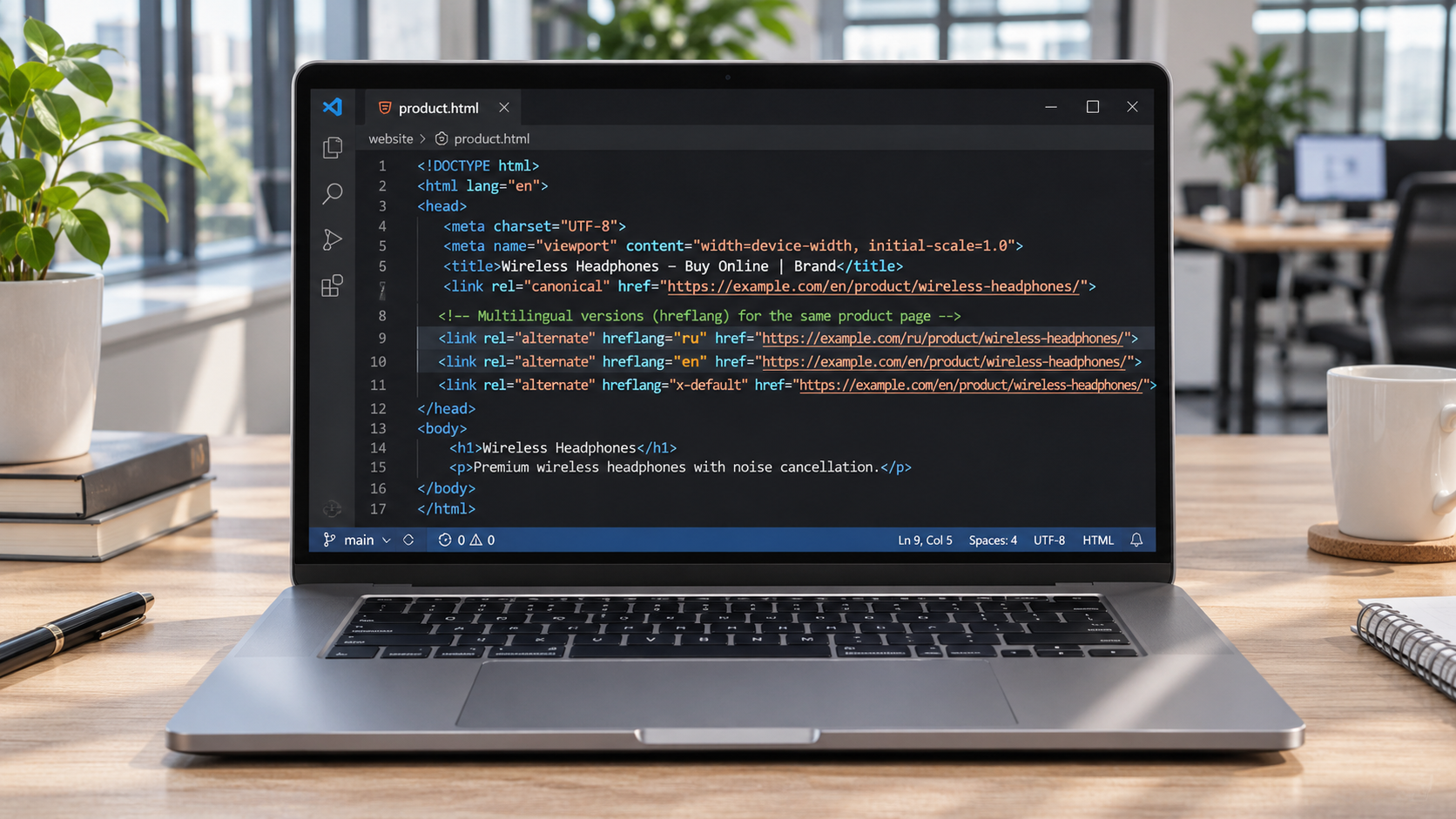
Second, the technical architecture does not support dynamic localization: some legacy website-building systems hard-code multilingual content into HTML, preventing SEO meta tags, image ALT text, and structured data from updating as languages switch. In this case, even if the translation is highly accurate, Google cannot correctly identify the respective language versions, ultimately causing indexing confusion and diluted rankings, which in turn reduces overall traffic quality.
In other words, AI translation localization is not a universal remedy, but a critical part of a complete digital infrastructure upgrade. Its value can only be realized when the website itself has scalable, indexable, and trackable foundational capabilities.
How Can You Verify Whether Your Current Localization Solution Is Actually Working?
Do not look only at the number of “translated pages” in the backend. Truly effective validation must return to user behavior itself:
- Compare average scroll depth across different language versions of similar product pages. If users view an average of 80% of an English page but only 45% of a French page, it indicates that the content presentation has not been properly adapted;
- Check differences in bounce rates across language versions. If the bounce rate of a certain minor-language page remains more than 20% above the average over time, terminology or cultural expressions are very likely creating cognitive barriers;
- Observe breakpoints in the form submission journey: for example, if users exit when reaching the “company size” field, the options may not align with local business classification habits (for example, Latin America does not use the concept of “micro and small enterprises,” instead distinguishing between “sole proprietors” and “registered companies”).
These metrics reflect the real experience better than “translation completion rate.” Before integrating the AI+localization system, many manufacturing clients served by EasyMarketing commonly faced bounce rates exceeding 75% on Spanish and Portuguese websites; after completing dual optimization at the semantic and interaction levels, their average dwell time increased from 28 seconds to 112 seconds within six months, while inquiry costs fell by approximately 22%.
Of course, localization is only the starting point. Once multilingual traffic begins to grow steadily, companies must also address deeper operational challenges: Challenges and Strategies for Expanding the Scope of Enterprise Cost Accounting is one such area—customer acquisition, logistics, and compliance costs vary significantly across markets, and continuing to use a unified domestic accounting model can easily lead to misjudging which markets are truly worth investing in.
Next Step Recommendation: Shift from “Whether You Have It” to “How Well It Works”
If your website already has basic multilingual versions, the most important next step is not to add more languages, but to sample-check the localization quality of 3–5 core product pages: ask a native speaker to browse them quickly and note the first sentence that makes them pause, frown, or reread to understand. That point is the real bottleneck affecting dwell time.
Technology can accelerate the process, but it cannot replace respect for users. The true value of AI translation localization is not how much it saves on human translation costs, but ensuring that every overseas visitor feels that the website was built for them—not “translated into existence,” but “as if it had always been there.”
Related Articles
 How Long After Launch Should You Redesign a Multilingual Website? Check Whether the Content Is Outdated First
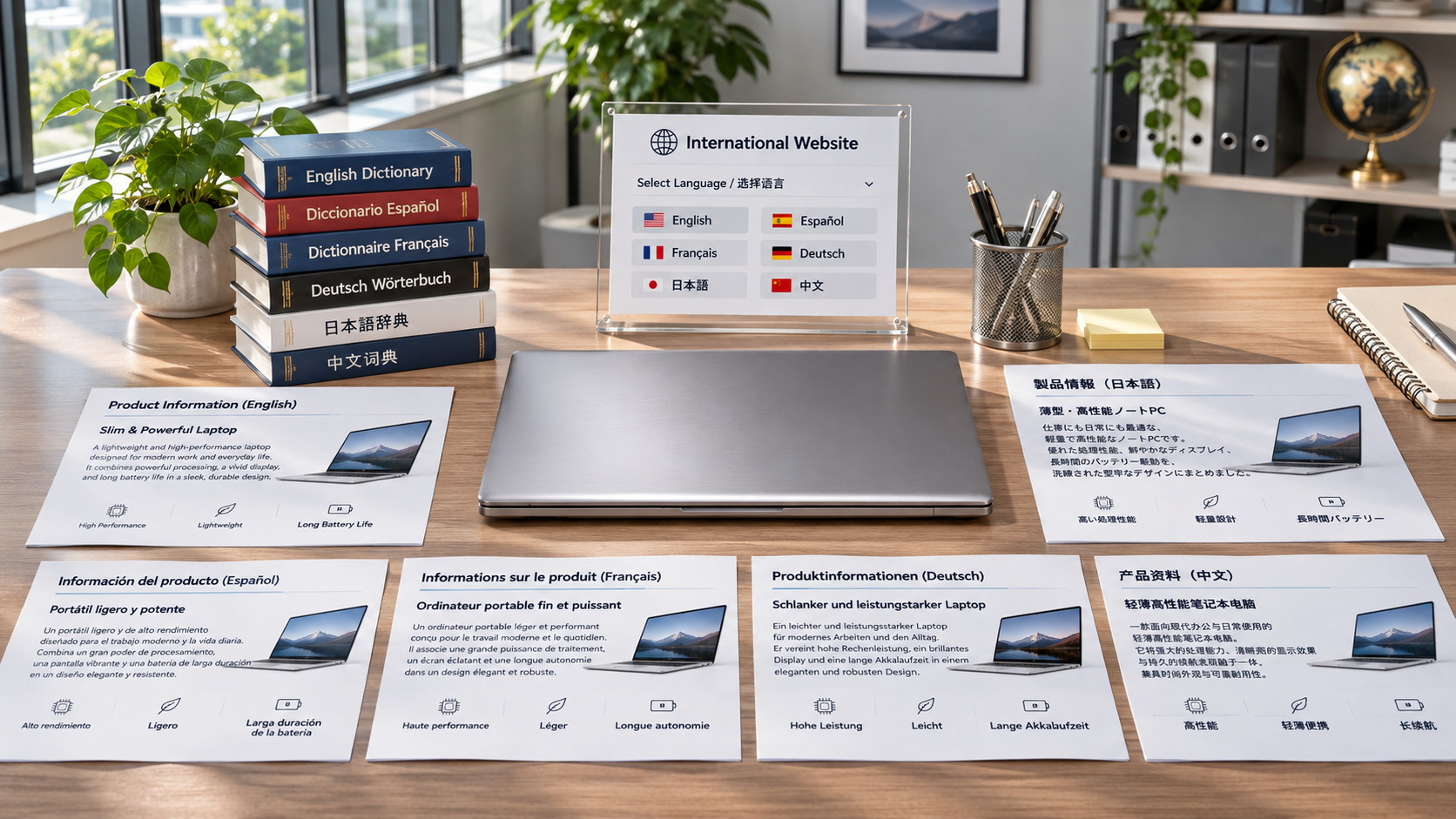
 How to Choose Target Languages When Building an International Website for Global Brand Expansion
 How Do You Set Up Multilingual SEO Tags for a Russian-Language Website?
Related Products
 Yiyingbao SaaS Intelligent Website Building and Marketing SystemYiyingbao SaaS Intelligent Website Building and Marketing System, AI-powered no-code website building, rapid creation of multilingual B2B international websites in 10 minutes, global server acceleration, AI-powered SEO optimization, helping businesses connect efficiently with global markets. The perfect integration of technology and operation makes building an international trade website remarkably simple
 AI+SEM Intelligent Advertising Marketing SystemAI+SEM drives intelligent ad creation, empowering full-funnel precision advertising marketing. The system automatically generates weekly/monthly reports, AI recommends keywords and target countries, monitors core metrics in real-time with intelligent alerts, and enables one-click high-conversion ad solutions to help quickly acquire customers and improve ROI.
 AI+SEO Dual-Engine System Optimization ServicesYiyingbao’s AI+SEO dual-engine optimization system helps foreign trade enterprises acquire high-quality organic traffic through AI-powered keyword research, content generation, and comprehensive technical optimization, significantly improving search rankings and conversion rates.
 AI+SNS Social Media Marketing SystemYingbao AI+SNS Social Media Marketing System - Precision social capture for the social media era. Supports one-click content synchronization across major platforms like Facebook and LinkedIn. AI intelligently rewrites posts for enhanced relevance. 24/7 AI customer service and user profiling analysis empower businesses to efficiently expand into global markets.
 AI+SEO营销解决方案易营宝AI+SEO营销解决方案,通过AI批量写作、智能生成TDK、精准关键词扩词等功能,全面优化网站SEO效果,提升流量与转化率。助力企业构建高效智能网站新生态。
 AI+SEM Advertising Marketing SolutionsAI+SEM Advertising Marketing Solution leverages AI technology to deeply empower SEM ad campaigns. It automatically generates weekly/monthly reports using AI, presenting account data across multiple dimensions for comprehensive insights into campaign performance and trends. The system precisely recommends keywords and target countries, intelligently generates high-conversion ad copy, and enables one-click activation of efficient campaign plans to help businesses rapidly acquire customers. Simultaneously, it monitors core metrics in real time, intelligently identifies abnormal fluctuations, and issues timely alerts to ensure stable, high-return advertising results.
 Domain Name ServicesEasyWin provides professional domain name services, including intelligent queries, one-stop registration, brand protection, and full lifecycle management, helping businesses build a digital brand image.
 EasyOperate B2C Cross-Border E-Commerce Platform & Independent WebsiteEasyStore B2C Cross-border E-commerce Independent Store is an intelligent website building and cross-border e-commerce integrated solution independently developed by EasyStore Information Technology (Beijing) Co., Ltd. The system is specially designed for small and medium-sized as well as large export enterprises, integrating 'website building, operation, marketing, advertising, and conversion' into one, helping enterprises quickly establish cross-border e-commerce independent stores to achieve brand globalization and global sales growth.
The platform supports multiple languages, multiple currencies, and multi-channel marketing, with built-in AI intelligent translation and SEO optimization systems, suitable for mainstream markets such as Southeast Asia, Europe and America, Latin America, and the Middle East, assisting Chinese manufacturing enterprises in efficiently deploying international e-commerce strategies. SSL证书易营宝提供专业SSL安全证书服务,包括单域名和泛域名证书,确保网站数据传输加密、身份验证和完整性保护,助力企业建立安全可信的在线业务环境。









