









- 21st Century Business Herald: AI and CTV Become Core Growth Engines for Digital Marketing in Overseas MarketsNov 18, 2026View details
- China Presents 25 Cooperation Outcomes in Areas Including Cross-Border E-Commerce During APECNov 18, 2026View details
- AI Products Drive Hong Kong Exports Up 64.9% in September, Fastest Growth in Over 40 YearsNov 17, 2026View details
- National Bureau of Statistics: Foreign trade grew rapidly in October, providing stable support for global tradeNov 17, 2026View details
- The U.S. has ended the $800 de minimis exemption for non-postal shipments; express courier packages must be formally declared.Nov 16, 2026View details
- ASEAN Signs Digital Economy Framework Agreement, Moving Toward Harmonized Cross-Border E-Commerce RulesNov 15, 2026View details
How can you verify a company's organic ranking case studies when choosing an SEO company?
How can you verify a company's organic ranking case studies when choosing an SEO company?
When choosing a bonne agence de référencement naturel—a reliable organic search optimization company—you should look beyond a few screenshots showing “first-page keyword rankings.” For an international trade business, what really matters is whether those rankings come from your target markets, attract relevant visitors, and turn those visitors into qualified inquiries worth following up on.
Verifying case studies does not have to become a technical audit, but you should connect the keywords, pages, organic traffic, and sales leads. If evidence is missing for any part of the process, place less trust in performance claims rather than relying on company size or awards as a substitute for due diligence.
First, confirm what the case study actually demonstrates
Ask the service provider to specify the case study domain, service dates, scope of responsibility, and baseline at the start of the project. An established site with existing brand recognition and a newly built independent website starting from scratch to attract customers are not equally challenging. Likewise, a provider responsible only for publishing content should not claim all the results of website development, advertising, and the sales team as SEO results.
Prioritize case studies related to your business. Industrial equipment companies should focus on product and application keywords with clear purchasing intent, as well as inquiry pages—not just traffic to informational articles. If you are targeting the French market, rankings in English-speaking markets do not prove the provider's ability to produce effective French content.
Client confidentiality does not make verification impossible. With the client's permission, a provider can share redacted reports, demonstrate account dashboards, or arrange a client reference call. Be wary if the provider discloses neither the timeframe nor the measurement criteria, and refuses any alternative form of verification.
Ranking screenshots are a starting point, not proof
Ask the provider to select several groups of keywords from the case study, including branded terms, non-branded product terms, and long-tail keywords with commercial intent. They should specify the corresponding pages, country, language, device, and query date. Ranking highly for a company's full name has a different commercial value from being found by a new buyer searching for a product.
When verifying rankings, distinguish between ads and organic results. Manual searches are affected by location, language, and personalization. Even incognito mode cannot fully reproduce the search environment of overseas buyers. So, live searches are useful as a supplementary check, but should not be the sole basis for acceptance.
More useful evidence comes from Google Search Console data: review clicks, impressions, and average position by query, page, country, and device, and check how they change over a continuous period. Average position does not mean a fixed ranking for every search, and third-party traffic estimates are not the same as actual visits.
Follow the data further: do visitors become qualified inquiries?
Ask the provider to trace an example live: which pages received clicks from a group of non-branded keywords, how much organic search traffic those pages attracted, and which form submissions or contact actions they generated. Search Console, website analytics tools, and customer management systems measure different things, so their figures do not have to match exactly—but any discrepancies should be explainable.
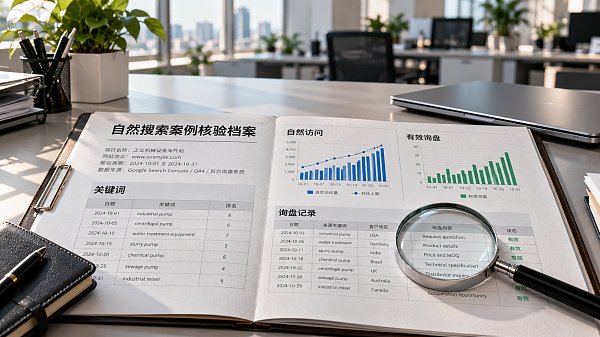
Inquiries should also be qualified. A button click is not an inquiry, and spam forms, job applications, and sales pitches are not business opportunities. Check deduplicated, valid leads, target regions, purchasing needs, and sales follow-up results. B2B sales cycles are often long, so start by reviewing qualified inquiries; do not force a one-to-one link between visits and orders in the same month.
Also check for other sources of growth. Did the company increase its advertising budget, attend a trade show, redesign the website, or enter a peak season during the same period? Compare performance before and after optimization, as well as year over year, and review content launch dates and technical fix records. Do not attribute all growth to SEO.
Assess integrated services separately to avoid conflating different types of “traffic”
Having the same team handle website development and marketing can make it easier to coordinate page speed, multilingual site structure, and inquiry paths, but it can also blur the scope of deliverables. Ask who will make website changes, who will review content, who owns the analytics accounts, and whether you can export your data and migrate your website when the engagement ends.
For example, Yiyingbao Information Technology (Beijing) Co., Ltd., founded in 2013 and headquartered in Beijing, provides AI-powered website building, multilingual websites, SEO, and advertising services. When evaluating an integrated platform like this, ask the provider to present separate evidence for website delivery, organic search growth, and inquiry tracking, rather than relying on a consolidated marketing report.
You should also distinguish website visitor traffic from cloud resource traffic. The website traffic package connected to Yiyingbao's cloud intelligent website building system uses prepaid credits to offset outbound IPv4 traffic charges for eligible cloud services and can help manage network costs for global websites. It does not purchase organic visitors or prove ranking performance. When purchasing, verify the eligible resources, billing scope, and conditions for low-balance alerts separately.
Before signing, include verification criteria in the delivery agreement
Ask each shortlisted company to provide a redacted case study evidence pack that includes the initial baseline, keyword categories, continuous performance trends, implementation records, and the definition of a qualified inquiry. Use the same criteria to compare providers, focusing on their ability to explain changes in the data rather than selecting only the best-looking months.
The contract should also specify target markets, reporting frequency, account access, content ownership, and procedures for handling anomalies. For promises such as “guaranteed first-page rankings,” ask which specific keywords are covered, how long the results must be sustained, and how they will be verified. A team that explains limitations, allows independent review, and keeps complete records is easier to evaluate than one that only shows screenshots of high rankings.
Related Articles
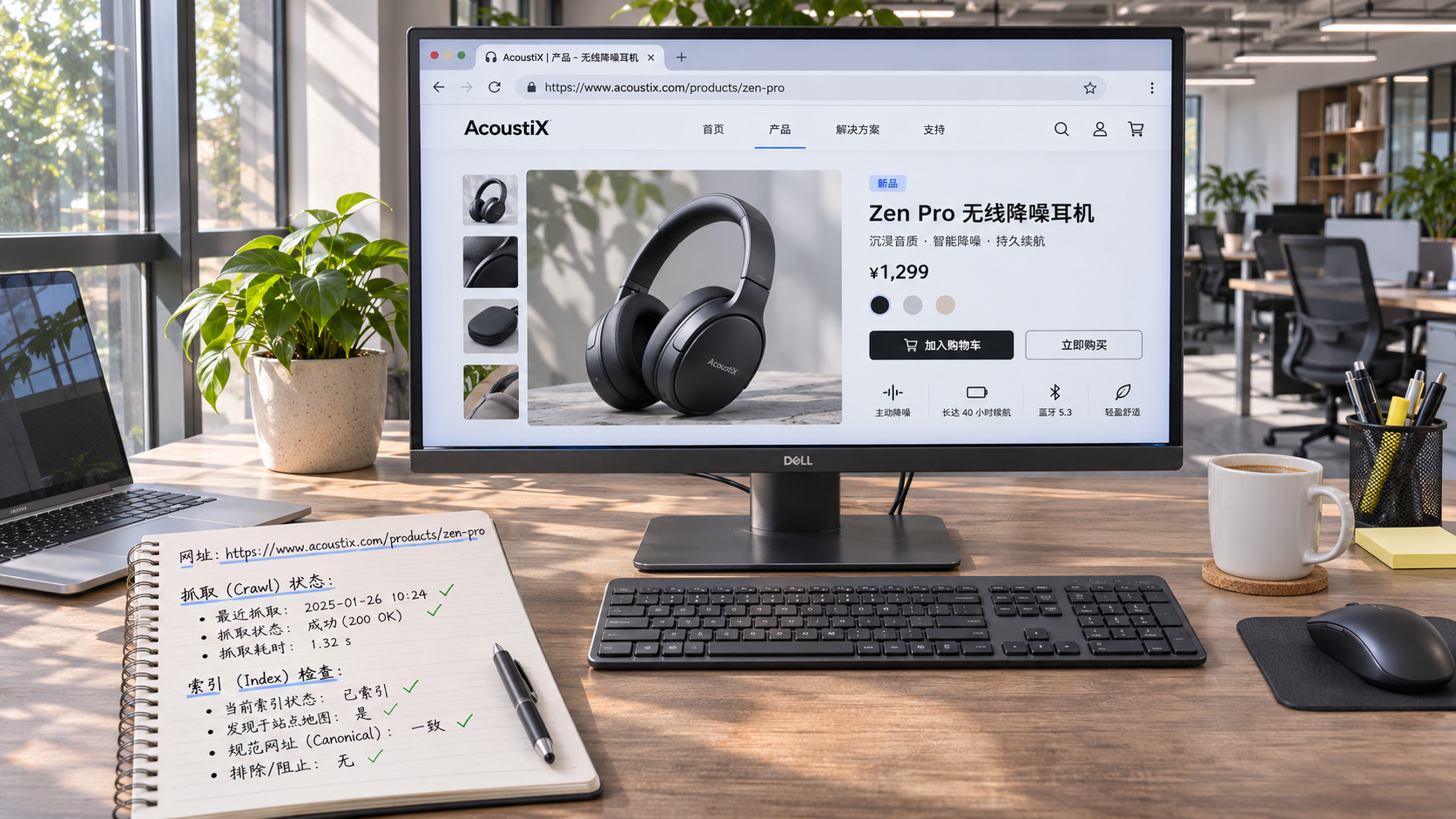
 How to troubleshoot when your website isn’t indexed by Google?
 How to Add Structured Data to Product Pages with JSON-LD
 How Long Does It Take to See an Increase in Inquiries from SEO for Your Website?
Related Products
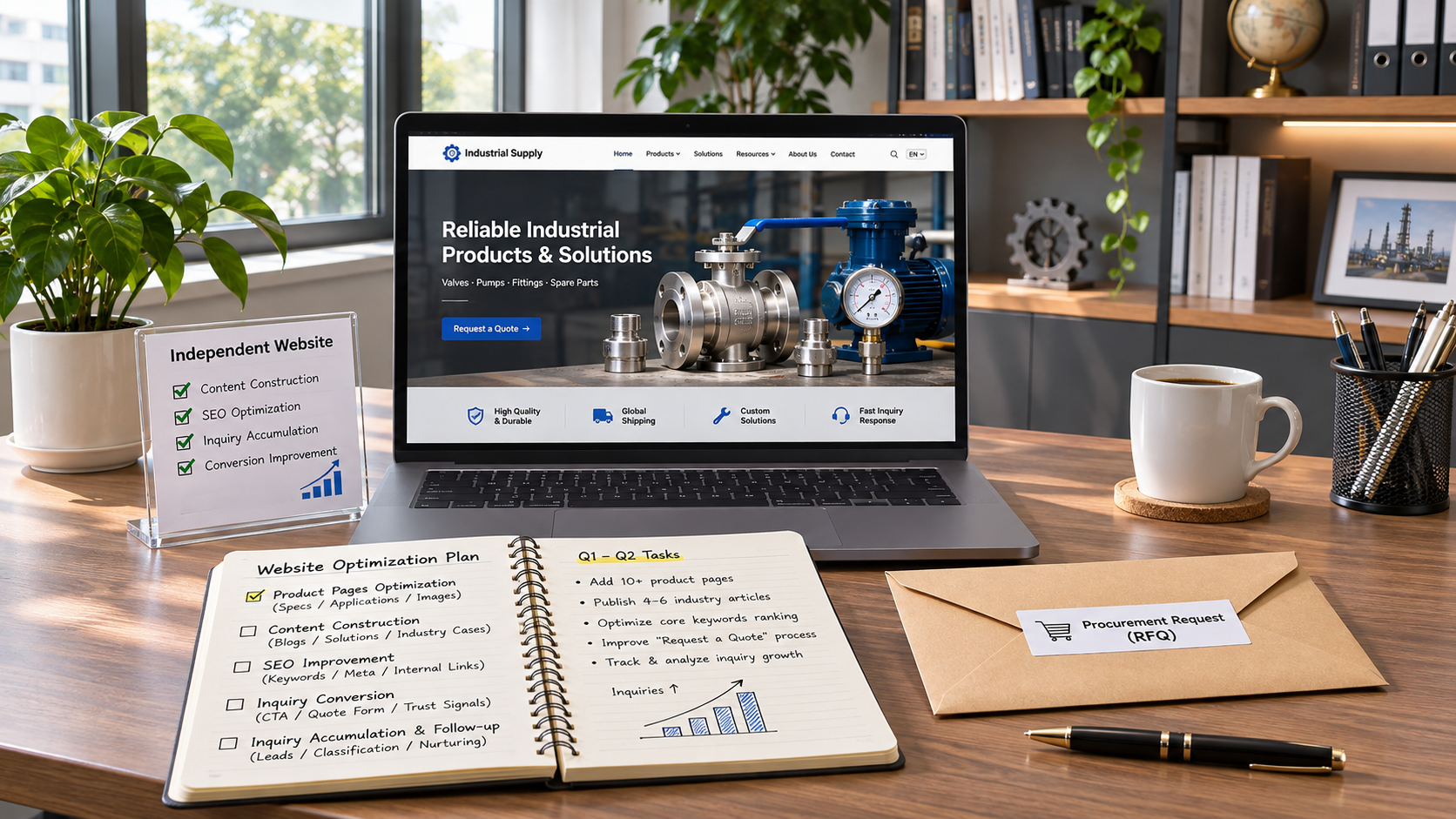
 Yiyingbao SaaS Intelligent Website Building and Marketing SystemYiyingbao SaaS Intelligent Website Building and Marketing System, AI-powered no-code website building, rapid creation of multilingual B2B international websites in 10 minutes, global server acceleration, AI-powered SEO optimization, helping businesses connect efficiently with global markets. The perfect integration of technology and operation makes building an international trade website remarkably simple
 AI+SEM Intelligent Advertising Marketing SystemAI+SEM drives intelligent ad creation, empowering full-funnel precision advertising marketing. The system automatically generates weekly/monthly reports, AI recommends keywords and target countries, monitors core metrics in real-time with intelligent alerts, and enables one-click high-conversion ad solutions to help quickly acquire customers and improve ROI.
 AI+SEO Dual-Engine System Optimization ServicesYiyingbao’s AI+SEO dual-engine optimization system helps foreign trade enterprises acquire high-quality organic traffic through AI-powered keyword research, content generation, and comprehensive technical optimization, significantly improving search rankings and conversion rates.
 AI+SNS Social Media Marketing SystemYingbao AI+SNS Social Media Marketing System - Precision social capture for the social media era. Supports one-click content synchronization across major platforms like Facebook and LinkedIn. AI intelligently rewrites posts for enhanced relevance. 24/7 AI customer service and user profiling analysis empower businesses to efficiently expand into global markets.
 AI+SEO营销解决方案易营宝AI+SEO营销解决方案,通过AI批量写作、智能生成TDK、精准关键词扩词等功能,全面优化网站SEO效果,提升流量与转化率。助力企业构建高效智能网站新生态。
 AI+SEM Advertising Marketing SolutionsAI+SEM Advertising Marketing Solution leverages AI technology to deeply empower SEM ad campaigns. It automatically generates weekly/monthly reports using AI, presenting account data across multiple dimensions for comprehensive insights into campaign performance and trends. The system precisely recommends keywords and target countries, intelligently generates high-conversion ad copy, and enables one-click activation of efficient campaign plans to help businesses rapidly acquire customers. Simultaneously, it monitors core metrics in real time, intelligently identifies abnormal fluctuations, and issues timely alerts to ensure stable, high-return advertising results.
 Domain Name ServicesEasyWin provides professional domain name services, including intelligent queries, one-stop registration, brand protection, and full lifecycle management, helping businesses build a digital brand image.
 EasyOperate B2C Cross-Border E-Commerce Platform & Independent WebsiteEasyStore B2C Cross-border E-commerce Independent Store is an intelligent website building and cross-border e-commerce integrated solution independently developed by EasyStore Information Technology (Beijing) Co., Ltd. The system is specially designed for small and medium-sized as well as large export enterprises, integrating 'website building, operation, marketing, advertising, and conversion' into one, helping enterprises quickly establish cross-border e-commerce independent stores to achieve brand globalization and global sales growth.
The platform supports multiple languages, multiple currencies, and multi-channel marketing, with built-in AI intelligent translation and SEO optimization systems, suitable for mainstream markets such as Southeast Asia, Europe and America, Latin America, and the Middle East, assisting Chinese manufacturing enterprises in efficiently deploying international e-commerce strategies. SSL证书易营宝提供专业SSL安全证书服务,包括单域名和泛域名证书,确保网站数据传输加密、身份验证和完整性保护,助力企业建立安全可信的在线业务环境。









