









- Amazon Raises Fulfillment Fees Twice, Yet the Median Platform Fee Remains Around 40%Oct 22, 2026View details
- AliExpress and YouTube Partner to Expand Marketing Opportunities for Chinese Brands Going GlobalOct 22, 2026View details
- Publicis says AI marketing is developing at two speeds, with agentic AI helping win clientsOct 21, 2026View details
- Salesforce Plans to Acquire Braze for $5.66 Billion to Enhance AI Marketing CapabilitiesOct 21, 2026View details
- Levanta’s Inaugural China Summit Held in Shenzhen, Focusing on AI and Cross-Border Brand GrowthOct 20, 2026View details
- The October Edition of the 2026 GGE Shenzhen Cross-Border E-Commerce Expo OpensOct 20, 2026View details
Will generative AI marketing content be demoted by Google?
Will Generative AI Marketing Content Be Demoted by Google?
Introduction: Will marketing content written by generative AI be demoted by Google? The key is not whether AI is used, but whether the content is authentic, useful, and meets users' search intent. Businesses should focus on quality, original value, and conversion experience rather than blindly pursuing mass generation.
For businesses building independent overseas websites, developing Google SEO strategies, or managing multilingual content, this is more than a technical discussion. It directly affects whether content investments are secure, whether organic traffic can continue to grow, and whether a brand can build long-term trust.
Here is the clear conclusion first: Google does not automatically demote a website simply because generative AI was involved in creating a piece of marketing content. What can truly create ranking risks is low-quality, mass-produced, low-value content created for the purpose of manipulating search rankings.
What Google Really Evaluates Is Not the “AI Identity,” but Content Quality
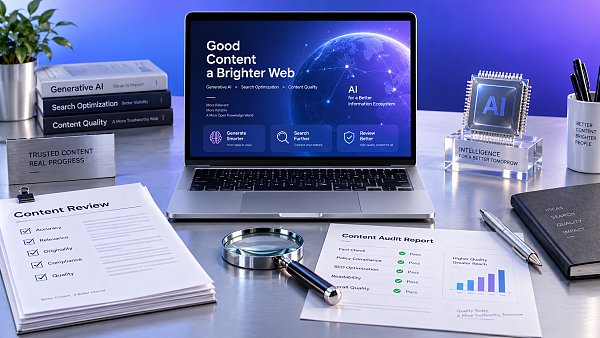
Google has publicly expressed similar principles: its search systems focus more on whether content is helpful and reliable for users and whether it has original value, rather than simply which tools the author used. AI can assist with writing, but it cannot replace professional judgment and real business experience.
Therefore, the answer to “Will marketing content written by generative AI be demoted by Google?” should not be simply understood as yes or no. If businesses use AI for research organization, first-draft generation, content translation, and efficiency improvement, followed by human review, it generally does not pose a problem.
However, if a website publishes a large number of similarly structured pages with vague information and repetitive keyword stuffing within a short period, it may be regarded by search systems as low-value content even if there are no obvious AI traces. The root problem is not AI, but that the content does not solve users' problems.
For Google, a high-quality page should help searchers make decisions. For example, when users search for a supplier of a certain type of equipment, whether the page explains product specifications, delivery capabilities, application scenarios, certification standards, and procurement processes is far more important than whether the article “looks human-written.”
Four Types of AI Content Risks Businesses Are Most Likely to Encounter
The first risk is mass-generating pages that appear complete but are actually hollow. Many businesses use the same set of prompts to generate dozens of articles in order to quickly cover keywords, replacing only country names, product names, or industry terms. As a result, the pages lack substantive differences.
The second risk is factual errors. Generative AI may fabricate industry data, product features, regulatory requirements, or customer cases. In fields such as export manufacturing, medical devices, chemicals, and industrial equipment, such errors can not only affect SEO but also damage corporate credibility.
The third risk is ignoring search intent. When users search for “how to choose a CNC machine supplier,” they expect to see selection criteria, factory audit factors, quotation considerations, and common risks—not a brand promotional article that repeatedly claims to be a “quality supplier.”
The fourth risk is a lack of genuinely incremental information. If an article merely rewrites existing search results without company cases, technical experience, product data, project processes, or unique perspectives, Google may index the page but may not be willing to give it stable rankings.
What Kind of AI Marketing Content Better Meets Google's Long-Term Requirements
A safer approach is to position AI as an assistant in the content production process rather than a complete replacement for editors, sales teams, product managers, and industry experts. Businesses can use AI to improve the efficiency of topic selection, outlines, first drafts, multilingual rewriting, and content updates.
What truly determines a page's competitiveness is whether a business can add information that AI cannot generate out of thin air. For example, factory production line photos, product test reports, real customer FAQs, delivery lead times, after-sales processes, project experience, and frontline market feedback are all important, credible content.
For B2B foreign trade websites, content should also demonstrate clear commercial value. Buyers typically care about MOQ, sample policies, certifications, customization capabilities, payment methods, logistics arrangements, and quality control. Pages that answer these questions are often more likely to generate inquiries than general industry articles.
For B2C cross-border online stores, AI-generated content needs to be designed around consumer decision-making. Product pages should clearly present specifications, instructions for use, compatibility, return and exchange policies, and review information, avoiding lengthy descriptions that obscure key purchase information and affect user experience and conversions.
To Determine Whether an AI Article Can Be Published, Consider These Five Questions
First, is the content accurate? Before publication, product specifications, pricing logic, regulations and policies, case names, and data sources should be verified. Multilingual pages in particular should not rely solely on machine translation; terminology should also be checked to ensure it matches the expression habits of the target market.
Second, does the content provide more information than existing pages? If users still cannot understand the differences, make a choice, or take the next step after reading the article, then even if the writing is fluent, it will be difficult to become a competitive SEO asset.
Third, does the content match the search intent behind the keyword? Informational keywords need to answer knowledge and methodology questions, comparison keywords need to present differences and selection criteria, while transactional keywords should provide products, solutions, pricing clues, or inquiry entry points.
Fourth, does the page have clear author accountability and corporate endorsement? It can display company qualifications, team experience, contact information, service scope, and case content. For highly specialized topics, appropriately identifying the content reviewer or industry source can also help strengthen credibility.
Fifth, is the page experience smooth? Search rankings do not depend on text alone. Website loading speed, mobile responsiveness, page structure, internal links, form experience, and multilingual navigation all affect whether users stay and how search engines evaluate overall page quality.
How AI Content Can Support SEO Rather Than Create an Indexing Burden
Businesses should not interpret an AI content strategy as “how many articles to publish each day.” Instead, they should build content topic clusters around business objectives. First define core products, key markets, target customers, and inquiry paths, then plan product pages, solution pages, industry articles, case pages, and FAQ pages.
For example, a packaging machinery exporter can build core pages around different types of equipment, then use AI to help organize high-intent content such as “how to select packaging speed,” “how different materials should be matched with equipment,” and “how to calculate maintenance costs,” forming a sustainably expandable content system.
In multilingual SEO, it is especially important to avoid directly launching content in bulk after one-click translation. Purchasing habits, units of measurement, compliance requirements, and keyword expressions differ across countries. AI can provide a first draft, but localized proofreading and market adaptation determine whether a page is truly effective.
At the same time, content performance should be continuously monitored through Google Search Console, website analytics tools, and inquiry data. Focus on which keywords generate impressions, which pages receive clicks, and which articles bring effective inquiries, then update content accordingly rather than focusing only on the number of pages.
For Business Managers, the Focus Is Return on Investment and Content Governance
AI can indeed reduce content production costs, but it does not automatically reduce customer acquisition costs. Mass content without a strategy may increase the pressure of review, revision, maintenance, and indexing management. Businesses should instead measure whether content improves organic traffic, qualified inquiries, conversion rates, and branded search volume.
It is recommended to establish a basic content review mechanism: AI is responsible for efficiency, business personnel for authenticity, SEO personnel for search intent and structure, and marketing personnel for brand expression. This approach can both leverage the scalability of generative AI and control the long-term risks posed by low-quality content.
For businesses seeking to expand into overseas markets, website content is not a one-time project but a long-term digital asset. AI-powered website building, SEO optimization, advertising landing pages, social media content, and AI search visibility need to be developed in coordination around the same set of customer needs and brand information.
Conclusion: AI Does Not Inherently Cause Demotion; Low-Value Content Loses Ranking Opportunities
The core answer to whether generative AI marketing content will be demoted by Google is this: it will not be directly penalized for using AI, but content that lacks value, authenticity, and user focus is unlikely to achieve stable rankings. The tool itself is not the risk; an incorrect content strategy is the risk.
Businesses should use AI to improve research, creation, and operational efficiency, while maintaining human review, the addition of real information, search-intent alignment, and continuous optimization. Only content that helps users solve problems and helps buyers make decisions can generate both search traffic and business conversions.
Related Articles
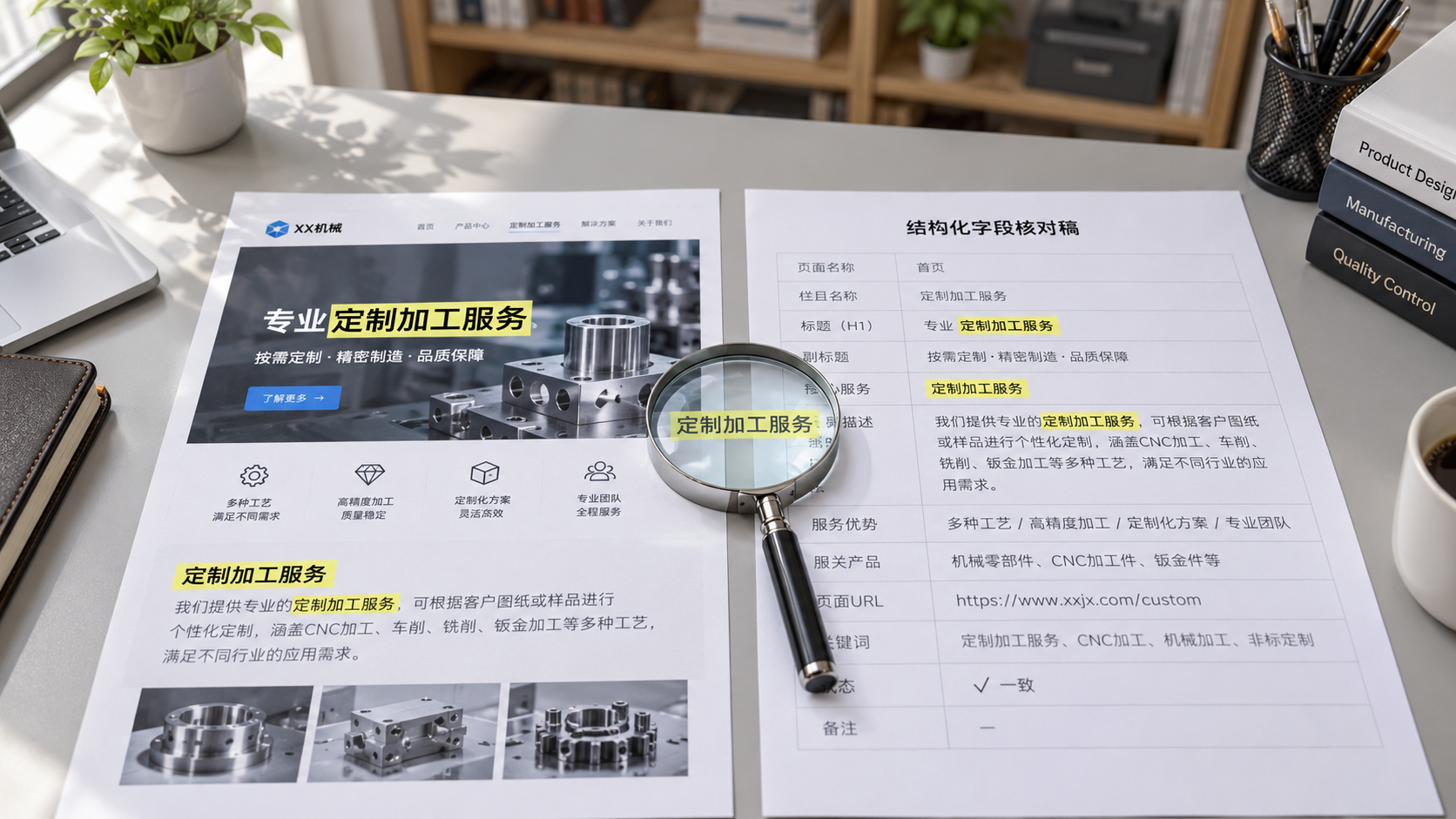
 How can you check whether Schema markup matches the visible page content?
 Why Are Core Web Vitals Still Failing After Website Speed Optimization?
 Why Does Google Indexing Keep Declining After a French Website Is Launched?


Related Products
 Yiyingbao SaaS Intelligent Website Building and Marketing SystemYiyingbao SaaS Intelligent Website Building and Marketing System, AI-powered no-code website building, rapid creation of multilingual B2B international websites in 10 minutes, global server acceleration, AI-powered SEO optimization, helping businesses connect efficiently with global markets. The perfect integration of technology and operation makes building an international trade website remarkably simple
 AI+SEM Intelligent Advertising Marketing SystemAI+SEM drives intelligent ad creation, empowering full-funnel precision advertising marketing. The system automatically generates weekly/monthly reports, AI recommends keywords and target countries, monitors core metrics in real-time with intelligent alerts, and enables one-click high-conversion ad solutions to help quickly acquire customers and improve ROI.
 AI+SEO Dual-Engine System Optimization ServicesYiyingbao’s AI+SEO dual-engine optimization system helps foreign trade enterprises acquire high-quality organic traffic through AI-powered keyword research, content generation, and comprehensive technical optimization, significantly improving search rankings and conversion rates.
 AI+SNS Social Media Marketing SystemYingbao AI+SNS Social Media Marketing System - Precision social capture for the social media era. Supports one-click content synchronization across major platforms like Facebook and LinkedIn. AI intelligently rewrites posts for enhanced relevance. 24/7 AI customer service and user profiling analysis empower businesses to efficiently expand into global markets.
 AI+SEO营销解决方案易营宝AI+SEO营销解决方案,通过AI批量写作、智能生成TDK、精准关键词扩词等功能,全面优化网站SEO效果,提升流量与转化率。助力企业构建高效智能网站新生态。
 AI+SEM Advertising Marketing SolutionsAI+SEM Advertising Marketing Solution leverages AI technology to deeply empower SEM ad campaigns. It automatically generates weekly/monthly reports using AI, presenting account data across multiple dimensions for comprehensive insights into campaign performance and trends. The system precisely recommends keywords and target countries, intelligently generates high-conversion ad copy, and enables one-click activation of efficient campaign plans to help businesses rapidly acquire customers. Simultaneously, it monitors core metrics in real time, intelligently identifies abnormal fluctuations, and issues timely alerts to ensure stable, high-return advertising results.
 Domain Name ServicesEasyWin provides professional domain name services, including intelligent queries, one-stop registration, brand protection, and full lifecycle management, helping businesses build a digital brand image.
 EasyOperate B2C Cross-Border E-Commerce Platform & Independent WebsiteEasyStore B2C Cross-border E-commerce Independent Store is an intelligent website building and cross-border e-commerce integrated solution independently developed by EasyStore Information Technology (Beijing) Co., Ltd. The system is specially designed for small and medium-sized as well as large export enterprises, integrating 'website building, operation, marketing, advertising, and conversion' into one, helping enterprises quickly establish cross-border e-commerce independent stores to achieve brand globalization and global sales growth.
The platform supports multiple languages, multiple currencies, and multi-channel marketing, with built-in AI intelligent translation and SEO optimization systems, suitable for mainstream markets such as Southeast Asia, Europe and America, Latin America, and the Middle East, assisting Chinese manufacturing enterprises in efficiently deploying international e-commerce strategies. SSL证书易营宝提供专业SSL安全证书服务,包括单域名和泛域名证书,确保网站数据传输加密、身份验证和完整性保护,助力企业建立安全可信的在线业务环境。









